.png)
.png) 1 month ago
34
1 month ago
34

Published May 2, 2026, 2:10 PM EDT
Usama Mehmood is a Senior Writer at DualShockers with more than five years of experience in the video game industry. He has been writing professionally since 2021 and covering games since 2022, with work spanning guides, lists, reviews, and features across action-adventure games, JRPGs, open-world titles, racing games, and narrative-driven releases.
Before joining DualShockers, Usama contributed to eXputer, where he worked as a Senior Writer and Editor for over three years, managing editorial teams while continuing to write guides, reviews, lists, and featured pieces. He also previously contributed to Phrasemaker and worked as a short-term media journalist for his university’s article outlet. Usama holds a Doctorate in Physiotherapy from the University of Lahore.
The ever-evolving video game medium has continually impressed and captivated me since I was a wee little kid with my cousins' hand-me-down PS1 and PS2. I may not have had the luxury of experiencing Nintendo's dominant generation in the '90s, but you can be assured that with every video game I could get my hands on, I was ready to be fascinated and intrigued by what I played.
And now, as an adult who's navigating his tumultuous mid-20s, this medium has become a solace for me and many others out there; a candle in the dark to give us hope through the stories that resonate within them, or just the sheer sense of creativity showcased by the gameplay itself. I'm proud to say that the latter statement is bestowed gracefully on Housemarque Studios.
It's a studio I had no prior knowledge of back when I played Resogun as a teenager, but when Returnal dropped, you'd best believe I was there rolling credits on the epilogue and raising my hands up in awe like Martin Scorsese's "Absolute Cinema" meme.
 Related
Life is Strange: Reunion Review
We're truly in the Pricefield endgame with this one.
Returnal is the game that truly pushed my instincts to the limit, testing all the grit I had developed from playing various tenacious and challenging games over the years. And now, with Saros, that moment took flight again, but this time, I was firmly convinced it would be much more than "Returnal 2," as many had otherwise proclaimed.
After numerous runs of being locked-in and finally rolling credits on Arjun Devraj's tormented yet gut-wrenching tale in Carcosa, I've now also locked in Saros as my Game of the Year front-runner. But just how did I come to that decision, you ask? Well, let me tell you all about it.
You're Not Suffering Alone This Time
Played by the talented and still underrated Rahul Kholi, Saros follows Arjun Devraj and the crew of Echelon IV as they crash-land on Carcosa and conduct a secure goods operation of sorts for the Soltari Corporation. Carcosa is a planet that's engulfed with mystery and underlying chaos. It's a place that stands on the thin line between death and rebirth, the same one that Arjun walks on as he battles the countless abominations of the planet while unknowingly regaining his life after every gruesome death.
Under the hellacious and scorching eclipse of the planet, the strain of it slowly creeps under the skin of the Echelon IV's crew members. Which is ironic, because Carcosa is derived from the cursed and mysterious setting of the same name in Robert W. Chambers' short-story collection, The King in Yellow. And whilst Arjun is fighting back against the forces of monstrosities, Carcosa's melancholic atmosphere psychologically twists everyone's minds, causing distrust and paranoia amongst them.
While Returnal had a single character the game focused on, Saros instead opts for a broader approach. That's because you've now got an actual assemblage that accompanies Arjun during his downtime back at The Passage. While a lot of their time in the sun is dependent on how much you interact with them over the course of the story, the game still takes an ambiguous storytelling approach by making you decode the world-building through various pieces of text and audio collectibles.

While you can easily identify character traits through their spiraling demeanor, there are various collectibles you can uncover that delve deeper into unraveling their personalities and focal points. That includes Commander Sheridan, voiced by the timeless Jane Perry (who also voiced Selene in Returnal), and Arjun's other fellow operatives, like Sebastian and Kayla, who all have different conflicting matters that you get to see unfold as you clear each biome.
Carcosa is a planet that's engulfed with mystery and underlying chaos.
There's a lot more meaningful stuff happening to pique your interest. But what I absolutely adore most here is the mirrored contrast between the protagonists of Returnal and Saros. Selene, for the most part, is shown to be a reserved individual who endures a desolate suffering in her cycles on Atropos, but Arjun is the exact opposite of her; like an engulfing and raging fire that's determined to find answers on his wife's whereabouts, of possible survivors, and even trying to keep his team in check.
With that said, Saros isn't all ambitious either, even though it has a larger cast at play. It still follows Returnal's narrative philosophy of studying the protagonist, but with more characters as building blocks and loose threads for you to interpret through visions, obscure text logs, and cryptic character holograms. The narrative hooks you in much more than the prior entry, but don't expect a clear-cut start-to-finish structure here, because Housemarque still embodies Saros with its equivocal storytelling formula that'll make you have more questions than answers.
 Related
Dying Light: The Beast Review
Kyle Crane's back in the driver's seat again.
Every Death is a Beacon to Coming Back Stronger
Housemarque achieves an impossible feat—capturing lightning in a bottle twice. Saros is a treasure trove of innovative gameplay ideas that have been evolved and executed to perfection since Returnal. I genuinely mean it when I say that the technical evolution in the overall foundation itself feels like the one FromSoftware went through from Demon's Souls to Dark Souls.
There are myriad gameplay mechanics, improvements, and accessibility features that make this game a triumphant entry over Returnal, enough to appeal to both hardcore fans who loved the tenacity factor and newcomers who struggled with it. It finally feels like a true Roguelite after how much Returnal stripped you down to zero after each of your runs on Atropos.
The core Bullet Hell gunplay format is still the same as the previous game, but the marketing tagline truly hammers itself in here like a ton of bricks: Come Back Stronger. Much like the landscape on Atropos, Carcosa's deadly and perilous biomes will push you to your utmost limits, each with its own unique thematic layout and infrastructure, but only this time, Arjun's indomitable human spirit burns brighter with each successive run with his feats.
And just like his fueling spirit, Arjun has access to more firepower than Selene, with a wider selection of weapon archetypes, just in case you prefer a marksman pistol over the charged one. Amongst your usual roster of primary weapons, you'll have a separate Power Weapon that can be used to slowly but surely shift the tides of battle in your favor, especially in cornered situations. And that Power Weapon gauge is tied to your brand-new shield, which allows you to absorb incoming projectiles with a limited uptime.

But here's the neat twist and one of my favorite things about Housemarque's use of color identities: there are different layers to the projectiles this time around. Going by the default color options for each orb, the shield only allows you to absorb the blue orbs. The yellow ones cause corruption, so avoid them; otherwise, they chip away and negate your total HP. And lastly, the red ones can only be parried; an ability that gets unlocked towards the mid-game biomes and is one of my favorite things to perform.
Another standout feature that elevates the groundwork is the Armor Matrix. The Lucenite that you pick up and earn from dropped enemies is one of the main currencies that you spend here in exchange for permanent upgrades; from upgrading Arjun's HP, damage, weapon proficiency, and providing passive bonuses like extra keys or redraw chances at the start of your runs. Focusing on this is vital, as it will be the main way to topple those same odds that end up being the run-killers.
Saros is a treasure trove of innovative gameplay ideas that have been evolved and executed to perfection since Returnal.
And then you have the Carcosan Modifiers, which are essentially a customizable difficulty scaling menu for all the players who are coping with some possible skill issues. You can tone down enemy damage, Corruption damage, or even decrease their health. And for all the ones feeling overzealous and masterful of their capabilities, you can even balance that out by extending the difficulty from removing your extra life to downsizing your own HP.
Of course, you'll need to prove yourself on that by at least overcoming the first two boss fights. Regardless, this is still such an incredible display of accommodating as many people as possible to this game, especially if they're not (understandably) built to play titles like these. And for all the die-hard players, don't let this perplex you by any means; the game will still shred you at every chance it can get, especially if you venture through biomes under the Eclipse state or tackle any of the Nightmare Strands that it throws at you.
 Related
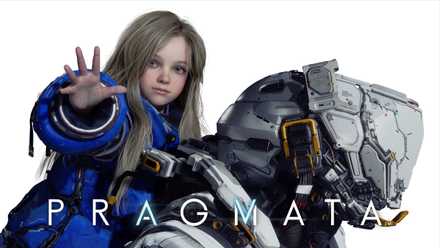
Pragmata Review
In space, no one can hear you make a dad joke.
The Sun is Forever
In current times, Sony and PlayStation are known for their high-budget cinematic entries, especially as the PS5 itself faces an identity crisis due to its bare-bones lineup of first-party titles. But beneath all that facade, Housemarque still manages to deliver an exhilarating, obsessive Bullet Hell Shooter that carves out a special identity, far beyond its predecessor. Even the audio design is absolutely sick at every step of the way, especially when it continuously shifts with each phase of a boss fight.
Saros carries the Roguelite DNA through its haunting roots, with quick decision-making scenarios that can break anyone prone to indecisiveness, and countless adversities that will continually make you stumble toward your exit back at The Passage. And the latter is such an introspective detail about this game. You do get stronger for sure, but the fact is that the game indirectly makes you adapt and persevere in order to stand tall against even the most formidable of abnormalities.
The difficulty spike in the Blighted Marsh biome was so brutal, yet despite that, I became more infatuated with beating the Nightmare Strand zone it offered. The zen-like state that you need to enter to overcome them ends up being one of the most rewarding feelings ever, once you actually get to the climax after plowing through their constant array of foes.
Even besides that, just generally adapting to each varying area, learning when to stop trailing after enemies, and knowing what weapon and perk combination suits your playstyle best; there are so many small but extremely vital building blocks at stake here that end up making you feel like a force to be reckoned with. If you're like me, these incredible runs through Saros will start to cause you to lose track of the countless hours passing by. It's that good.

Saros stands tall as a bold evolution for Housemarque, proving the studio wasn’t content with simply recreating the magic of Returnal. Instead, it refines and expands on it in meaningful ways by pairing its punishing bullet-hell combat with smarter progression systems, broader accessibility ideas, and a narrative that trades clarity for intrigue. Arjun’s relentless, emotionally driven journey through Carcosa gives the experience a fiery contrast to Returnal’s isolation, while the “come back stronger” philosophy is felt in every run, every failure, and every hard-earned breakthrough back at The Passage. It can be overwhelming and at times unforgiving, but that tension is exactly what makes its victories so intoxicating. And by turning struggle into growth and persistence into something deeply rewarding, Saros cements itself as a serious GOTY contender and a lot more than just a sequel in spirit.

Systems

Released April 30, 2026
ESRB Teen / Blood, Language, Mild Suggestive Themes, Violence
Pros & Cons
- Evolved gameplay loop that meaningfully builds on Returnal
- Satisfying progression with permanent upgrades
- Smart new mechanics and additions like the shield, parry, power weapons and more
- Stellar audio design and boss fight presentation
- Excellent accessibility and difficulty customization options
- Story remains deliberately ambiguous and may frustrate some players
- Heavy reliance on RNG can occasionally disrupt runs
 Next
Next
8 Ways Saros Improves On Returnal
These are all the ways that Saros improves on Returnal.





![ELDEN RING NIGHTREIGN: Deluxe Edition [FitGirl Repack]](https://i5.imageban.ru/out/2025/05/30/c2e3dcd3fc13fa43f3e4306eeea33a6f.jpg)

 English (US) ·