.png)
 5 months ago
35
5 months ago
35

Published Feb 23, 2026, 8:00 AM EST
Joe Merrick runs the world's biggest Pokémon fan site, and is more dedicated than you will ever be
 Image: Joe Merrick
Two major life events collided unexpectedly for Joe Merrick in June 2022. One was his stag party, a pre-wedding celebration his friends had planned months in advance. The other was Pokémon Go Fest, which none of them realized would be happening at the same time.
Pokémon Go developer Niantic made a special variant of Pikachu available that weekend, but otherwise, it was a fairly ordinary event. But Merrick had staked his career and reputation on keeping his website, Serebii.net, updated with timely, in-depth coverage of all things Pokémon, and Pokémon Go was one of the site's pillars. The bachelor party shenanigans would, sadly, have to wait. Merrick pulled his phone out and sat in the corner for as long as it took to write and publish his coverage.
"So while I was quickly doing that, my friends were preparing drinks and patiently waiting for me to finish," Merrick tells Polygon over a Zoom call. "They were so accommodating."
That Merrick didn't ditch the party and go home was a noteworthy event in itself. He tells me in years past, he would cancel gatherings and decline invitations to birthday parties if there was any possibility they might clash with Pokémon updates.
"I have to be around people who are more tolerant of me and my work," Merrick says. Most of my friends are people who I've met through the site, like content creators, [so] they know the situation and they respect it because without what I do, it makes what they do a bit harder. Some long-term friends [outside the Pokémon fandom] mock me for it sometimes, but even they get it now."
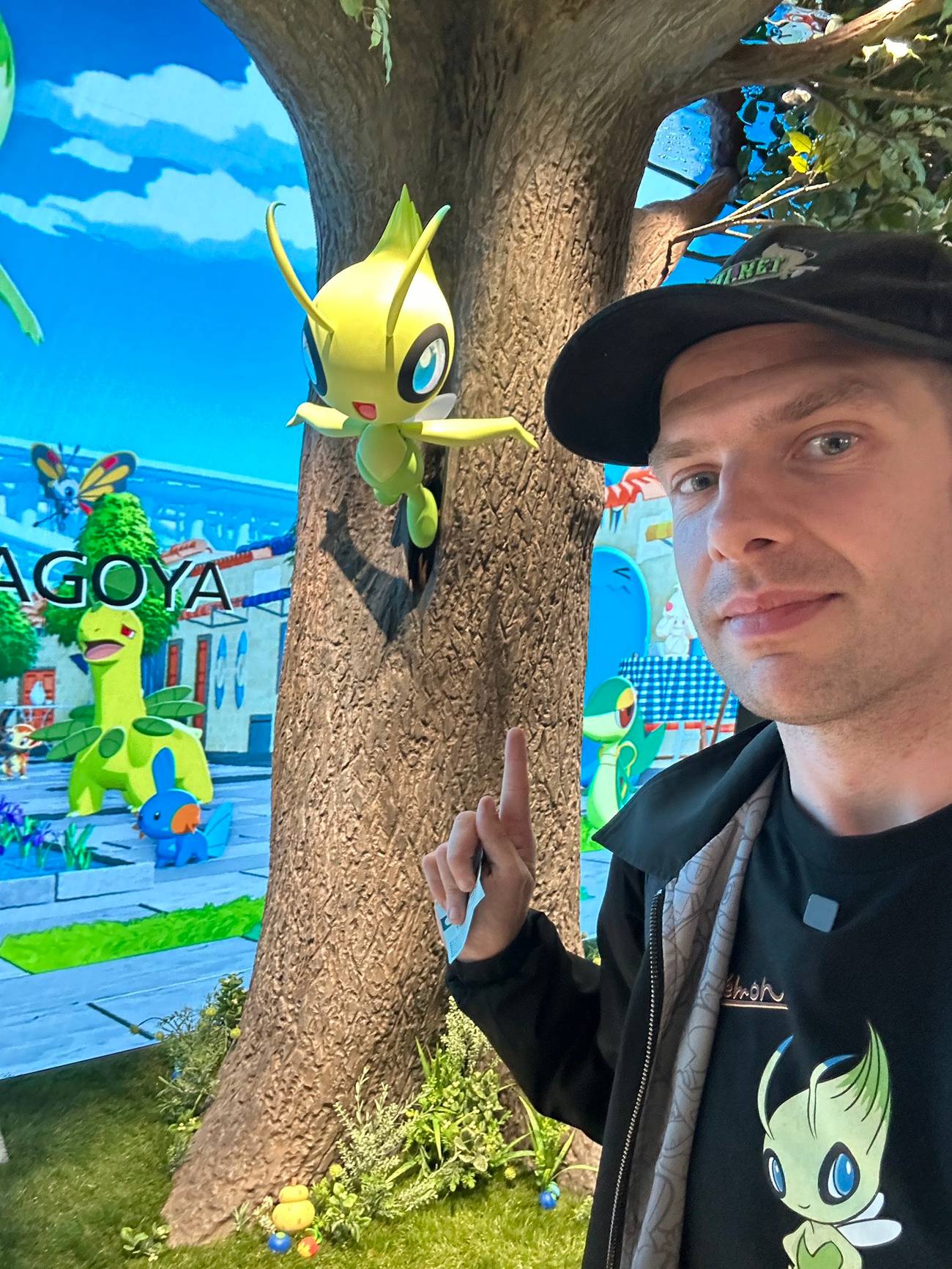 Image: Joe Merrick
This kind of conflict — and a life built around Pokémon — wasn’t something Merrick ever imagined when he started his fan site back in the late 1990s, but it’s now one of the most widely recognized Pokémon authorities in the world. In fact, when Merrick first learned about Pokémon, it was just another Nintendo game to him. Those were already a common feature in the Merrick household. While other parents debated whether video games could harm their kids, Merrick's parents (accurately) believed they could help with spatial awareness and hand-eye coordination, among other things, so they bought the family a Nintendo Entertainment System around 1990.
"I might have played games a bit more than they would've liked when I was younger," Merrick laughs, "but they thought it would help set us up for the future."
Like other '90s game enthusiasts, Merrick turned to print publications like the Official Nintendo Magazine to keep up with news, which is where he first read about Pokémon's unexpected success in Japan. In 1999, a friend traveled to the U.S. and came back with a copy of Pokémon Red. Merrick recognized it from the magazines and wanted to see what the big deal was. Popular turn-based RPGs like Final Fantasy held little appeal for him at the time, so he didn't expect much from Pokémon. But it was a big new Nintendo game, and that was enough reason to give it a try. Pokémon Red and Pokémon Blue launched in September 1998 in the U.S. and wouldn't be available in Europe until October 1999, so Merrick asked his parents to import it for him.
"They were like 'okay, but it will be your birthday present,'" Merrick recalls. "But they had no problem importing it. They were always good like that."
Merrick was surprised at just how much he enjoyed it. The creature design was part of the appeal, as was the game’s sunny outlook on the bonds that exist between man and monster.
"I'm a big sci-fi person, and always have been," Merrick says. "My parents sat me down and watched Star Trek: The Next Generation when I was three, and that imprinted Star Trek on me to this day. And I love Marvel stuff and The Expanse. I like the fantastical parts of life. I'd like to look away from how drab and depressing the world is, so if a TV show or something is too rooted in realism, I lose interest. I sound like such a hippie, but I like to look for a utopian view of the future."
But Merrick wasn’t thinking of better and brighter futures when he decided to start Serebii.net a few months later. He was just bored. He and some friends were trying to think of a way to pass the time during a computer lab block at school when the idea struck.
"The internet was still young at that point, and most people didn't have computers at home that connected to the internet," Merrick says. "It was mostly just schools, and even at school in the late ‘90s in the U.K., you'd be lucky to have that access. So [the start of Serebii] was just basically me and friends messing about [because] I wanted to make a Pokémon site and post about my favorite Pokémon things. It wasn't like me sitting down thinking 'I'm going to make an encyclopedia.' I was just bored at school."
 Image: Joe Merrick
Merrick launched Serebii.net, then called "Joe's Pokémon Page," in October 1999 and had no real plans for it beyond covering what interested him. He plugged away at it for a few years, and then a friend of his who lived in Okinawa started translating Pokémon updates from CoroCoro Magazine, a video game and manga enthusiast publication, which Merrick would then run on the site. The timing was fortuitous. Pokémania was waning ahead of Ruby and Sapphire's launch, and most English-language magazines and websites published next to nothing about the Japanese video game scene. Merrick saw a coverage gap he believed he could fill, and decided to go all in.
He set reasonable expectations for himself, hoping the combination of his unique coverage and gradual lessening of competition might encourage more people to check out his website. It wasn't a sure bet, though. Google and other search engines didn't favor small blogs at the time, so word-of-mouth was the only reliable way to attract people's attention. But soon enough, a lucky accident ensured he had more attention than the site could handle.
The Pokémon Company accidentally posted images of the Hoenn starters and details about Ruby and Sapphire's anime accompaniment on the official Pokémon website early. Someone took them down after a few minutes, but not before Merrick recorded them and posted the info on his website. Now, plenty of people knew about Serebii.net and were eager to see what else Merrick had for them. He decided to cover Ruby and Sapphire in as much depth as possible, relying on rudimentary Japanese language skills he'd picked up over the years and help from his friend in Okinawa when he got stuck. Even now, Merrick prefers playing video games in intense sprints rather than short bursts over long periods of time, so he decided to experiment with full-game breakdowns of Ruby and Sapphire. He acquired launch copies of the games and posted frequent updates as he progressed, updates that attracted so much attention the free server hosting his site crashed.
"A new generation of Pokémon is always a big thing, so I wasn't too surprised that people were interested," Merrick says. "I guess I was just surprised that people went to me because there were other Pokémon fan sites out there."
The server stayed down for six months while Merrick occasionally tried to get things working again. He kept compiling updates and writing new posts as if the site were active, so he could upload them eventually, but he felt no great sense of urgency to get things back on track again. Pokémon and the site were still part of a little side hobby at this point, not a career or way of life. A friend offered to finance a dedicated server for him, and when Serebii came back online, Merrick's readers were there waiting.
By the mid-'00s, global interest in all things Pokémon may have dropped from the feverish levels it reached in the late '90s. But the brand was firmly entrenched in the cultural landscape, and The Pokémon Company continued expanding its presence outside of the mainline video games. Outside of the anime's annual seasons and other general merchandise pushes, The Pokémon Trading Card Game continued growing — though wasn't as lucrative as it is today — and spinoff games started popping up, like Pokémon Mystery Dungeon (which Merrick says he can't stand), Pokémon Ranger, and Pokémon Pinball. One reason for the franchise's long-term success, Merrick says, is that Pokémon managed to establish a reputation for both experimentation and quality throughout the ‘90s and ‘00s — recent technical problems with games like 2022’s Scarlet and Violet excepted. If something didn't work, like Pokémon Rumble, then it was left behind. But the important thing was that The Pokémon Company was willing to try new things and keep Pokémon in front of people nearly all the time.
 Image: Joe Merrick
Merrick says Pokémon's social element often gets overlooked, but he believes it's the reason Pokémon remains as globally recognized as it is today. It goes beyond mere nostalgia, though that certainly plays a role.
"You've got parents who are in their 20s or 30s passing it on to their kids, and their kids are loving it, and it's just a constant renewal now," he says. "The nostalgia that started in the ‘90s is continually passed on to the next generation and the next. Pokémon has its ebbs and flows between major releases, but there's always some new 'you've got to check this out' moment."
That constancy is true of most successful brands, but Merrick says Pokémon is unique in its ability to cultivate deep personal attachments. It's something almost intimate that fans can share with family and friends.
"With cards and with main series games, you're building your own thing, your own teams. You raise your own Pokémon, and that makes trading and battling yours. There's not as much individuality in many other games, and I think that is what hooks people in more. When you're sharing it with someone, you're kind of like sharing part of yourself."
It became part of Merrick's life too, mostly for the better. Merrick met most of his closest friends through Pokémon, in some way or another. Back in 2021, after Nintendo revealed Pokémon Black 2 and White 2, an editor at the U.K.'s Official Nintendo Magazine commissioned Merrick to do some freelance work. He suggested Merrick team up with another Pokémon writer, and after they exchanged a few messages, they became friends. They started dating four years later and married in 2022. They enjoy Pokémon in vastly different ways — she's a competitive streamer, he's more of a casual collector — but the franchise has always been at the center of their relationship.
Merrick maintains that keeping up with constant Pokémon coverage doesn't control him, but he’s also had more than a few moments like his stag party, where news happens and duty calls. When he wakes up, he checks for any news drops. When there's a chance that news might break, he plans his day around it. And if he's in the middle of a night out with friends or a non-Pokémon-related trip, he drops everything and updates the site. Over the years, that’s meant missing out on birthday celebrations, canceling plans, and staying in and working while others spent time together.
That pattern hasn't changed over a decade or more of increasingly more frequent and in-depth Pokémon coverage. If anything, it grew more intense after Pokémon Go launched in 2016. Merrick says he was "a bit of a snob" and initially dismissed the augmented reality game. Mobile games had, to that point, developed a reputation as "lesser" than their console counterparts, and few people expected Niantic's take on Pokémon to reach the heights that it did. But it did, and other sites — fan blogs, mainstream publications like Newsweek, gaming websites like Polygon — were quick to capitalize on the trend.
Merrick realized if he wanted Serebii to remain relevant, he needed to think competitively. He took the in-depth approach he used to cover mainline Pokémon games and wrote about everything related to Pokémon Go: spawns, updates, in-game tasks, and real-world events. That led him to think more ambitiously about how he could cover other Pokémon games, which led to the birth of one of his favorite projects on the site, a large interactive map with detailed information about every location in every Pokémon region — what items and Pokémon you can find on a given route, which opponents are waiting for you, and even what Pokémon they have.
Location databases have become standard on most Pokémon sites now because of this feature, Merrick says, and the competition pushes him to find better, more useful ways to present the information so people still want to visit Serebii. (And they do continue visiting. Merrick had no way of measuring the traffic when the first version of his site crashed, but given the limits of the server he used, he estimates it was likely about what the site gets in every hour or so in 2026.)
Despite all the sacrifices, Merrick can't see himself doing anything else. Coding is a source of comfort for him, a relaxation technique as much as a job. And the fact that he can combine it with another hobby he enjoys makes it that much more appealing.
 Image: Joe Merrick
"I just love what I do," he says. "One time I got mugged when I was in London for a Pokémon event. It was a horrible day, and I struggled a lot. My release was when I got home. I couldn't sleep because it was such a traumatic experience, so I just got up and focused on my work. I find myself the calmest when I'm coding thousands of lines. It's just cathartic, and I find joy in it."
Even with the increase in his workload over the last 10 years, Merrick's sacrifices have shifted into the texture of a daily routine. Both mainline and mobile Pokémon games have settled into more consistent update patterns since Pokémon Go’s barnstorming debut.And improved technology means Merrick doesn't have to rush home if there is a surprise announcement. He still doesn't have time to play as many non-Pokémon games as he'd like, but it's a healthier balance.
"I can take the chance to have more freedom now," he says. "If something happens, I can just grab my phone and take care of it. Some people might get angry and think it's rude. But most of my friends, even if they don't understand it, respect that it's just part of being self-employed. It's no different to being a plumber having to go out on an emergency call. And in this economy, you do what you have to do."
Merrick intentionally tries not to think about himself as having a prominent place in the global Pokémon community — "It's just always something which I'm never going to get used to, and I don't think I want to get used to it because if I do, then I think that means my ego has gone out of check" — but it's also impossible to ignore. So for his next venture, he hopes to use his authority to counter online misinformation, a phenomenon that certainly isn’t unique to Pokémon.
"That's just how things are. If people have grown out of Pokémon, or Pokémon has gone in the direction they don't want, they get angry and start spreading rage. They don't look at it like 'this might be the way for Pokémon to reach new audiences.' They just think, 'no, it should be like this for me'. And then with YouTube and rage culture, the misinformation spreads and grows."
Merrick is working on plans to start expanding onto YouTube and says he has a responsibility, as someone with decades of knowledge and a standing in the global community, to make sure people have accurate information and context to form their own opinions. Like when he started Joe's Pokémon Page, he's under no illusion that success is guaranteed. He’s still doing it for the love of the game. But after 26 years of covering Pokémon, he believes it's the best thing for him to do next — and the right way forward.
And if it doesn't work, that's fine too. For all its challenges and restrictions, sacrifices and new opportunities, Joe Merrick's life of Pokémon was never inevitable. It's not an obligation or a trap he can't escape.
"I've always promised myself that if I stop enjoying what I do, then I will stop."







![ELDEN RING NIGHTREIGN: Deluxe Edition [FitGirl Repack]](https://i5.imageban.ru/out/2025/05/30/c2e3dcd3fc13fa43f3e4306eeea33a6f.jpg)
 English (US) ·