.png)
 5 months ago
102
5 months ago
102

A self-aware cinéma vérité that completely revamps the Nosferatu myth
 Image: Lions Gate Films
F. W. Murnau’s 1922 horror classic, Nosferatu: A Symphony of Horror, is an atypical Dracula adaptation. The departures from Bram Stoker’s epistolary novel were very much intentional to skirt around copyright violations. But Murnau’s vampire, Count Orlok (Max Schreck), cemented the tropes inherent in vampire allegory, including the undead being carriers of pestilence and a thematic stand-in for xenophobia.
Since then, every adaptation of Nosferatu has used Murnau’s film as a foundation to further Orlok’s mythos. For example, Werner Herzog’s 1979 Nosferatu the Vampyre indulges in grotesquely beautiful imagery, while the more recent Nosferatu weaves a tale of obsession and ambient dread. But no film has treated Murnau’s classic like E. Elias Merhige’s Shadow Of The Vampire, which fabricates the behind-the-scenes production of the 1922 film with a satirical edge.
In Shadow of the Vampire, an actor named Max Schreck (Willem Dafoe) is cast to play Orlok by Murnau (John Malkovich), but the director’s quest for authenticity presents a serious problem for the film’s production. Turns out, Dafoe’s Schreck is an actual vampire, and Murnau’s promise that he can feast on co-star Greta Schröder (Catherine McCormack) post-filming is the only thing stopping him from tearing people’s throats out. To hide Schreck’s true nature (who naturally looks like Orlok, sporting gaunt skin, clawed nails, and pointy fangs), Murnau presents him as a method actor who’s comically dedicated to his craft.
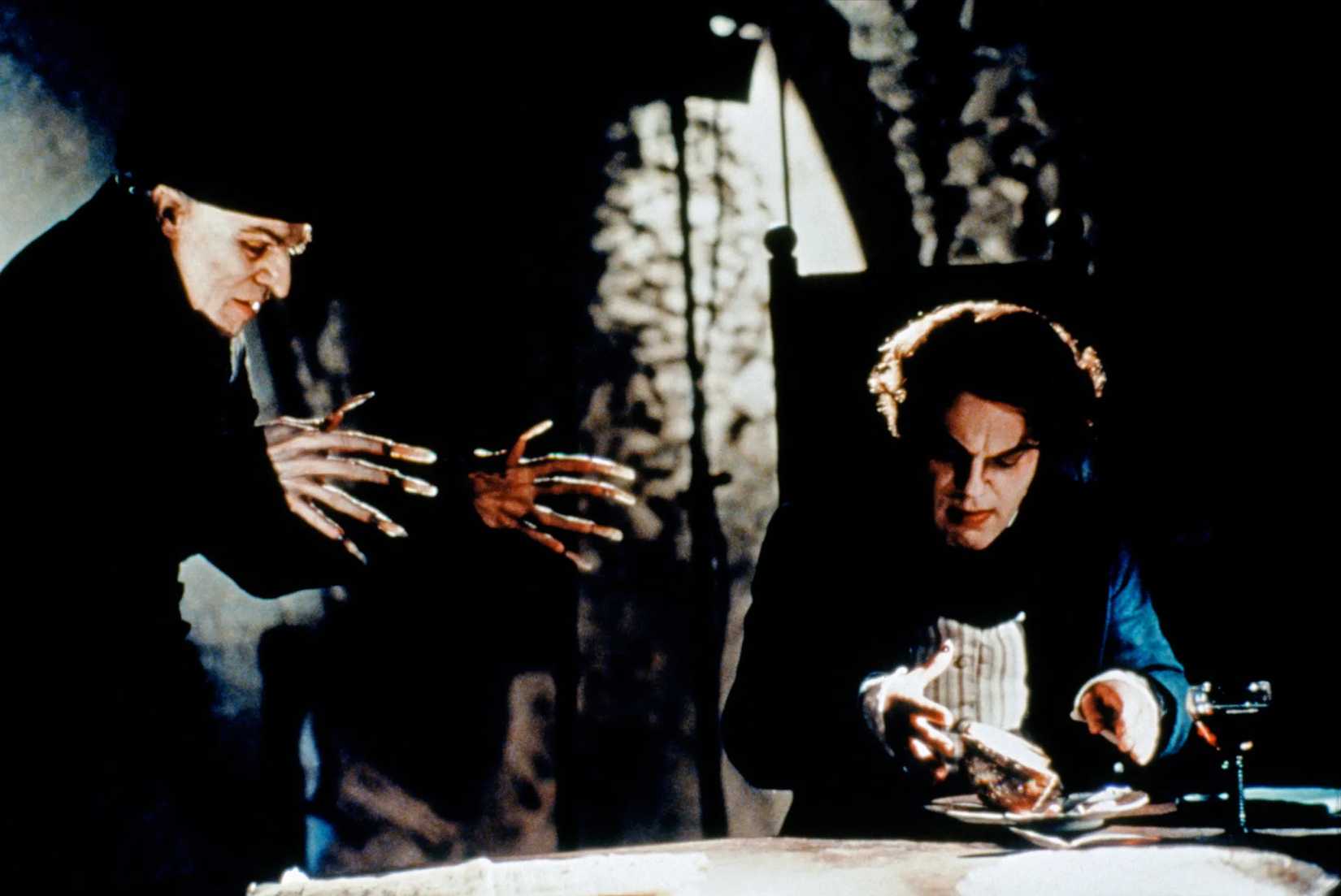 Max Schreck plays Orlok on the Nosferatu set in Shadow of the VampireImage: Lions Gate Films
Merhige’s film alternates between terror and comedy, which is faithful to the smidge of black humor that the original (and almost every adaptation) embraces. The only exception to this is Robert Eggers’ version, whose self-seriousness pervades every aspect of its doomed central love story. In stark contrast, Shadow of the Vampire feels almost gleeful in its subversive treatment of Murnau’s vampire story: it’s not interested in the text itself, but the meta-textual implications of filming Nosferatu.
To that end, Merhige’s comedy-horror mimics the actual circumstances surrounding the production of the 1922 and 1979 films: little to no funds by the end, only one available camera to shoot, and a rushed resolution where Murnau used a metronome to pace the actors. Merhige’s meta-commentary is somewhat tongue-in-cheek, but he reframes Murnau and Schreck as terrifying figures come alive to haunt. Dafoe, as Schreck playing Orlok, exudes a demented hunger that the character instinctively gives into, but he also yearns for mortality, as seen when he is fascinated by footage of the sun rising. But these moments of genuine curiosity are overshadowed by his need to feed, as Schreck gives into his mad thirst and kills almost everyone on set.
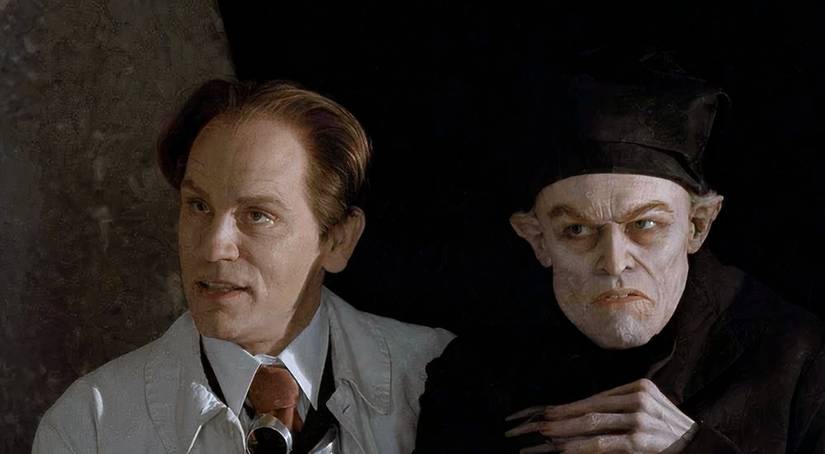 Murnau forces Schreck to cooperate on-set in Shadow of the VampireImage: Lions Gate Films
Malkovich’s Murnau emerges as the bigger monster here, as he continues to film these murders for the sake of completing his Nosferatu. Shadow of the Vampire lampoons the idea of the filmmaking process taken to extremes, to the point that moral compasses disintegrate as the artist gets closer to achieving their vision. When compared to Murnau’s willingness to gloss over countless deaths, Schreck’s thirst for blood feels restrained, as his initial instinct is to feed only for survival. The film’s turning point is triggered only when Murnau, in his hubris, threatens the immortal vampire, pushing Schreck to attack on provocation.
After Murnau shoots the final scene in Shadow of the Vampire, Schreck is set ablaze under the sun, a scene that takes place amid the windswept archipelago of Heligoland. This is an image meant to horrify, where a laudanum-addled Murnau demands an end slate from his traumatized crew members, calmly stating, “I think we have it,” as he finally stops the camera. By situating Murnau as more monstrous than an undead creature of the night, Merhige transposes the vampire allegory to the creative process, where life is literally and metaphorically drained from a film production doomed to end in tragedy. Only Murnau seems untouched by the carnage he is directly responsible for, too consumed by the nectar of artistic immortality, for which he is ready to pay any price.
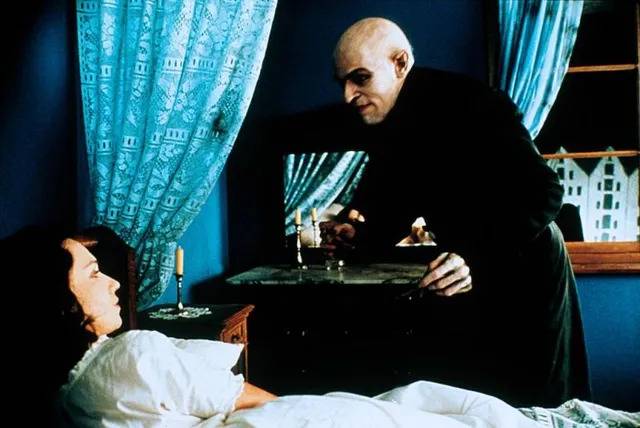 Orlok in a scene with Greta in Shadow of the VampireImage: Lions Gate Films
To put things into perspective, Shadow of the Vampire doesn’t offer any meaningful interpretation of the characters in the original Nosferatu, as it leans into cinéma vérité (also known as truthful cinema, a style of filmmaking that prizes realism) and metatextual mythmaking about Schreck and Murnau. It is nothing like Herzog’s treatment of vampirism as a contagion that cannot be survived, or Eggers’ dramatic odyssey steeped in suffering and sacrifice. It is also not a faithful replication of the 1922 original, like David Lee Fisher’s Nosferatu, which takes more stylistic liberties than thematic ones.
This absence of commonality makes Shadow of the Vampire a Nosferatu adaptation like no other. The Dafoe-Malkovich duo is reason enough to take a peek into this unforgettable tragicomedy, but this is a mandatory experience for anyone who loves the vampire myth and the vast interpretations it can accommodate.




![ELDEN RING NIGHTREIGN: Deluxe Edition [FitGirl Repack]](https://i5.imageban.ru/out/2025/05/30/c2e3dcd3fc13fa43f3e4306eeea33a6f.jpg)

 English (US) ·