.png)
.png) 4 months ago
101
4 months ago
101

Published Mar 12, 2026, 2:22 PM EDT
Jaime Tugayev is the News Editor for DualShockers with over a decade of experience, and a much longer love for fantasy, shooters and strategy games.
If you stumble into a debate about the best tanks during the Second World War, you will almost immediately identify a few camps. There's Wunderwaffe Walter, whose delusion over German engineering makes him ignore logistics. You have Soviet Sally, ready to stake her life on sloped armor. No one in their right mind actually argues for British tanks. And finally, there is the humble Sherman enthusiast.
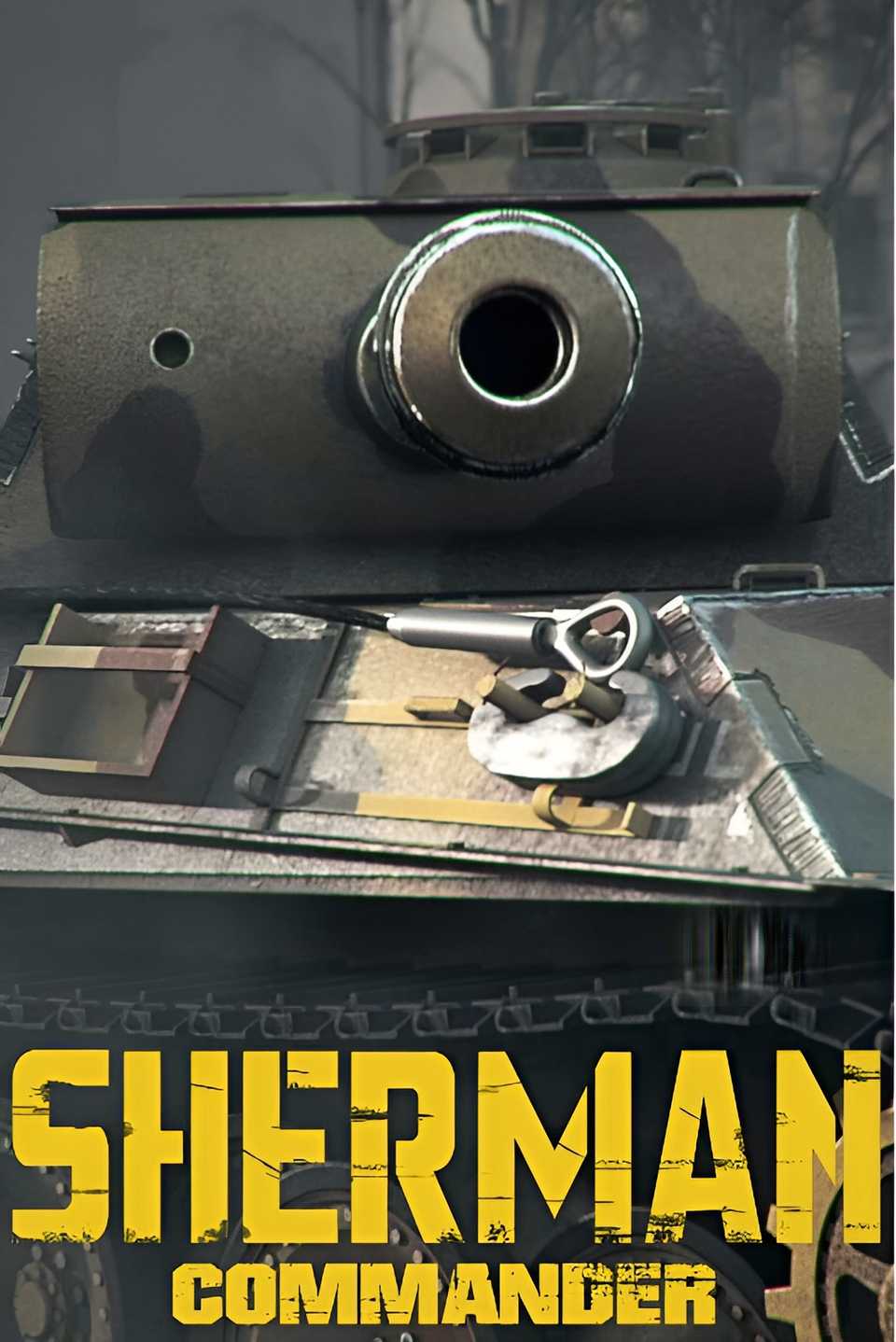
The M4 Sherman was the backbone of Allied armor since its introduction in 1942. Easy to produce and maintain, it made the best out of American industrial capabilities during the conflict, serving with distinction in all major Allied armies. There really is no better tank to star in a game like this.
Sherman Commander tries to tackle one of the biggest gripes I have with tank games, which is the lack of meaningful infantry. For all the bravado about tank duels, from the tank's inception up to the present day, a tank's main function is as an enabler for the humble grunt to get in there and take ground.
Iron Wolf Studio tries to solve this by making three games into one: a tank sim-lite, a ground-level tactical game, and a traditional map-based RTS. This ambitious design is Sherman Commander's biggest strength, but it also leads to some of its weakest points.
The Sherman Tale: From the Beach into Germany
In keeping with the tradition established by Steven Spielberg with the original Medal of Honor, Sherman Commander kicks things off in Normandy. You and your Sherman crew, sometimes joined by other tanks, are tasked with leading and supporting American infantry through the liberation of France to the strike into the heart of darkness.
The action in Sherman Commander takes place on medium-sized maps with destructible environments and unique, area-specific architecture. You can see the team went all out in making each mission feel different, which is a nice touch.
Related
8 Most Realistic Flight Simulators
From bush flying to Mach 2 fighters, these sims do it best.
Victory conditions are your standard king of the hill: get your troops into the primary objective, capture it, and hold it. If you want a higher score, you can also take and hold secondary objectives. These also serve a practical purpose, as German troops there act as mobile reserves when not engaged.
Beyond the objective markers, the missions are a tactical sandbox. You and 'crunchies' can fight block to block, you can bypass entire parts of town, and you can even try a mad dash into the objective. You will probably die, but you can try it.
German tanks and infantry are awarded similar tactical freedom, so you have some incentive to try and keep that momentum going. If you sit still for too long, you might get flanked, and your whole mission might collapse.
The View from the Commander's Hatch
My first bona fide tank simulator was probably Steel Fury: Kharkov 1942, a no-nonsense tank sim developed by Graviteam and Discus Games. It was hostile to the player to the point of comedy, but it remains one of the finest tank simulators ever made.
Since that experience, I have gotten used to seeing the world via viewing blocks and periscopes, only occasionally peering out of the hatch. Most of my time in Sherman Commander was spent in the simulator mode, without the War Thunder-esque 3rd-person cam. That makes for a much more immersive experience, but also highlights some of the problems with doing so much at once.
You and 'crunchies' can fight block to block, you can bypass entire parts of town, and you can even try a mad dash into the objective. You will probably die, but you can try it.
You can command your troops from the tank or by using the map. The former is much more intuitive, and Iron Wolf did a good job with the controls, but the AI is fairly anencephalic. Soldiers and friendly tanks will engage enemies in sight, but they have zero tactical initiative on their own besides that (except for occasionally stopping in the middle of an open field because a stray bullet whizzed by).
The result is that, instead of commanding your Sherman, most of your time is spent micromanaging a dozen infantry squads who need a personal invitation to fight a war.
Now, from the evil third-person view, selecting and ordering units is more or less manageable, but when you're in the tin can, the map becomes the default, and you spend less time enjoying the immersive atmosphere of the game.
Wartime Manufacturing Issues
The visual presentation of Sherman Commander teeters on the dated side of things, but the art direction makes up for this by committing to immersion. War is a dusty, loud, and confusing affair, and that is exactly what you feel when you're spinning the periscope around trying to understand what is going on.
The one main issue with the visuals is that the anti-aliasing options in-game are still not enough to get a clear view from unmagnified optics, so you spend a disproportionate amount of time using the gunsight as binoculars to find targets.
Unfortunately, that is betrayed by the audio, which is by far the weakest point of the game. The combat sounds are not bad in and of themselves, but the inconsistent voice acting completely takes you out of it.
Instead of commanding your Sherman, most of your time is spent micromanaging a dozen infantry squads who need a personal invitation to fight a war.
The 1st Polish Armored Division took part in the fighting in Normandy and beyond. However, this formation was subordinate to the British 21st Army Group rather than an American formation.
In retrospect, it feels like a missed opportunity for a Polish studio to not cover the incredible story of the 1st Armored Division, especially since it also operated Sherman tanks. Instead, we have an ostensibly American unit where half the voice lines are very audibly Polish. Voice talent is expensive, but skimping on it costs even more later down the line.
Small arms sounds also have a cartoonish sound to them that doesn't match the gritty visuals the game succeeds in presenting.
Still, when it all comes together, and you are done herding all your cats in the infantry, it all comes together. A friendly tank is pushing down the boulevard to bait a Panzer, and you, accompanied by riflemen and an anti-tank squad, are pulling the quiet flank of the century to blow it to smithereens from behind.
With some extra polish, Sherman Commander could be an excellent game. As is, it is a good, if flawed, simulator of mechanized warfare and the symbiotic relationship between infantry and armor. Now, if you'll excuse me, I have some HE to deliver to that window. Fire!
Like most of the Sherman tanks exposed to the elements in underfunded museums, Sherman Commander is a work of art that could really use another finishing pass. The game accurately captures the role of a tank commander in World War 2, and the individual units are exciting to lead, but the amount of micromanagement required means you spend more time staring at the map than inside your tank. Still, there are moments where it all comes together, and you get to see why this is a game like no other.
Systems

Developer(s) Iron Wolf Studio S.A.
Publisher(s) Iron Wolf Studio S.A.

Pros & Cons
- Accessible simulation of leading a Sherman crew
- Amazing destructible environments
- Open-ended maps with tactical freedom
- Immersive atmosphere
- Poor friendly AI requires constant micromanagement
- Commanding units is extremely hard in simulation mode
- Awkward voice acting for friendlies
- Aliasing makes it difficult to pick up targets
Next
9 Best RTS Games For Beginners
Chaos, strategy, and endless clicks. Learn, adapt, dominate—or crumble spectacularly





![ELDEN RING NIGHTREIGN: Deluxe Edition [FitGirl Repack]](https://i5.imageban.ru/out/2025/05/30/c2e3dcd3fc13fa43f3e4306eeea33a6f.jpg)
 English (US) ·