.png)
 1 month ago
13
1 month ago
13

Published May 3, 2026, 3:01 PM EDT
Parrying isn't everything
 Image: Studio Doodal/Shinsegae I&C
I made a big mistake shortly after starting Solateria, a parry-based Metroidvania with Dark Souls-like elements (if you'll forgive the label spewing) from Studio Doodal that launched in March. In the first hour, Solateria seems gentle, even forgiving. Only a small handful of enemies haunt each pathway, and the trek between rest points is comparatively short. Then a rock giant smashed me into the ground before I had a chance to react. I mistook Solateria's gentle learning curve and approachable design for ease, as if it were a Soulslike for newbies. It isn't just that, but it can be if you need it to be. And that flexibility is part of what makes it special.
Solateria casts you as a tiny flame warrior fighting through shadows to find out the truth behind their king's disappearance, which just so happened to coincide with a plague of darkness that gave everything a murderous bent. The story is fairly standard Hollow Knight-like stuff, but it uses the concept of warmth and light in some memorable ways that keep everything from feeling derivative. All the gorgeous, hand-drawn maps play on light and shadow; your health is warmth; all your attacks have some kind of fire element to them; and you can't swim. Because you're made of fire! It's one of the few times the "water will kill you" trope actually makes sense.
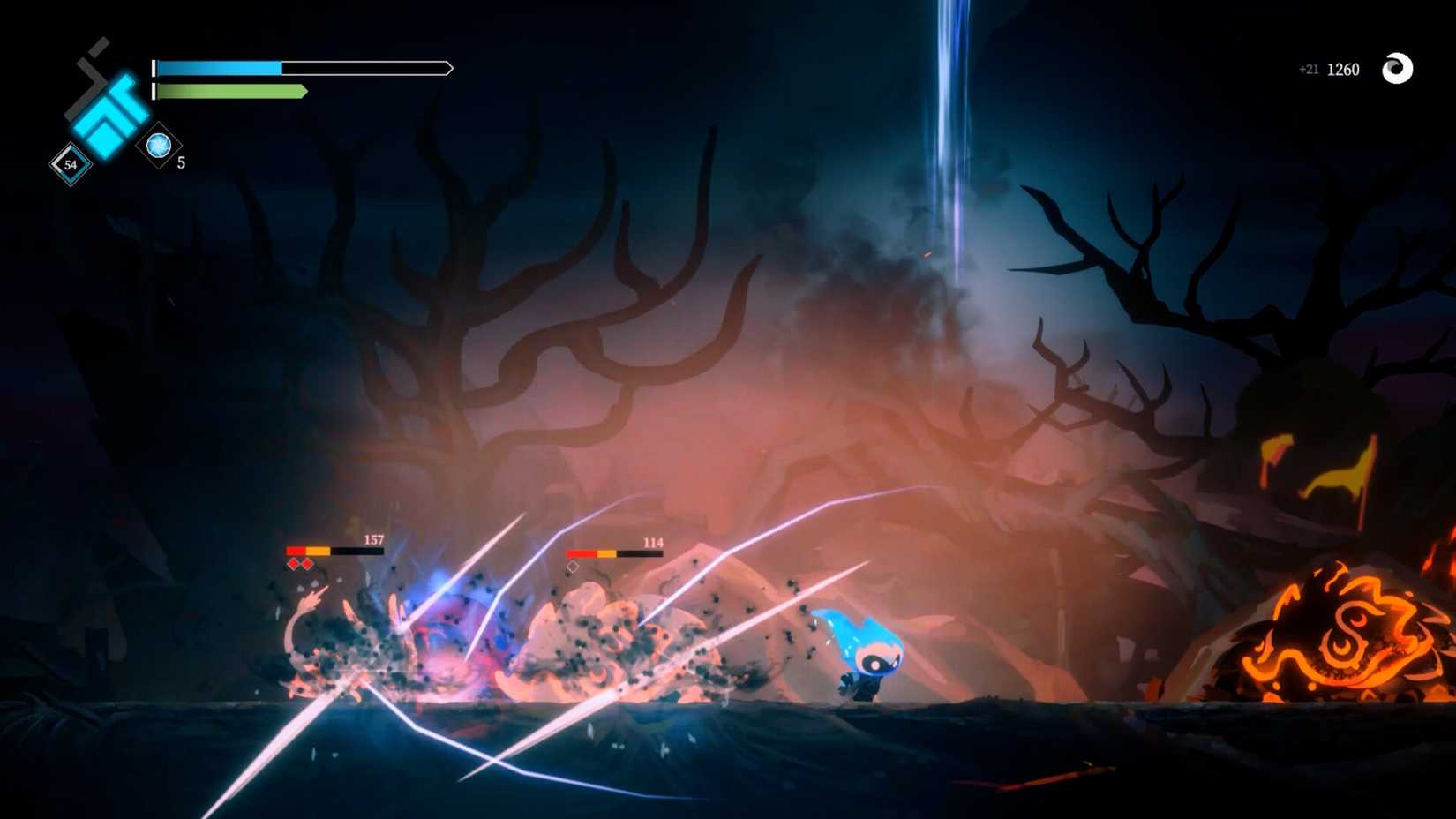 Image: Studio Doodal/Shinsegae I&C
In a move that makes Solateria more like Dark Souls than its other Soulslike peers, you have a stamina meter depleted by actions like blocking, dashing, and certain attacks. Careful timing and resource management are, I quickly found out, very important in Solateria, and you're supposed to use all the moves at your disposal, not just parrying. A successful parry opens a tiny window for you to deal burst damage, but if you're not dodging, blocking, and using other skills as well, especially during boss fights, things probably won't go well.
Those boss fights are a major highlight, too. Every one of them is like a little puzzle. In the very first one, you're facing a foe with impenetrable defenses, at least until you break its guard by parrying or find another way around. This boss also has a habit of popping up from underground at unlikely moments, making the dash skill you learned just before the battle an essential part of your strategy. With so many games trying to copy the combat of Elden Ring and Sekiro: Shadows Die Twice, it's immensely refreshing to play one that folds those styles into its own thing, instead of treating them like a holy relic — something to revere, but never question.
Things get more complex in later fights. One of the more memorable brawls involves a wall of buzzsaws, an endless stream of enemies, and a device that manipulates flame and souls. The device is (mostly) harmless and doesn't fight back as you try to destroy it. The challenge comes from balancing your time between defeating enemies that appear, attacking the device, and pulling switches to keep the saw wall at bay.
Despite the difficulty spikes and the often brutal challenge of learning an enemy's timing, Solateria is still an approachable, gentler Metroidvania. Or Soulsvania, or whatever the heck label you want to use. The parry window is more generous on normal mode than you find in most similar games, and if you can't quite get it right, Solateria commits the genre's biggest taboo: it gives you options and help. The options are built into enemy designs and your abilities. You can parry pretty much any monster to instantly break their guard and deal a big burst of damage, and parrying usually plays a role in dealing with unique boss gimmicks.
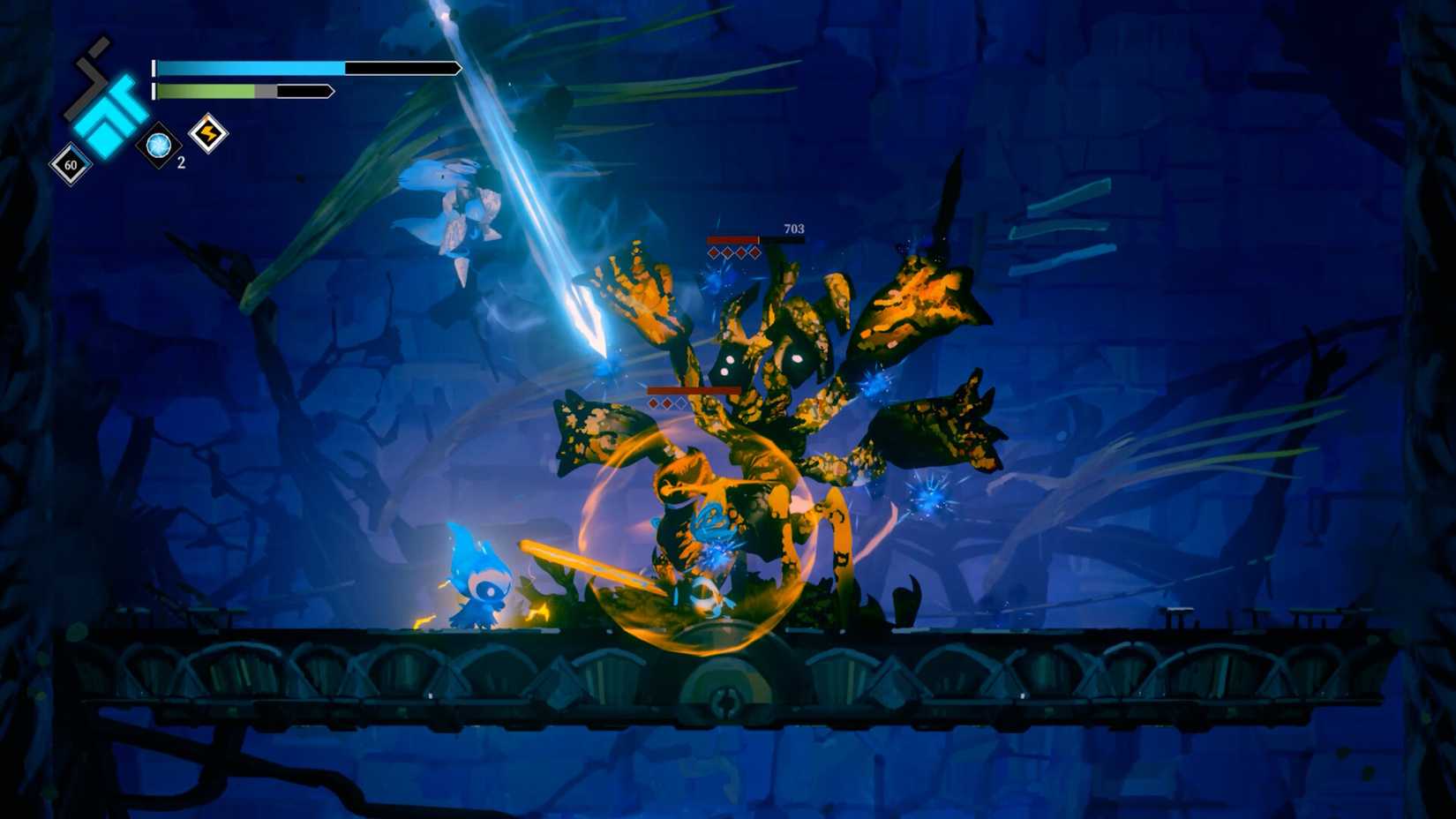 Image: Studio Doodal/Shinsegae I&C
It's not the only way to deal with tough enemies, though. You can invest in skills that give you an edge as well, and you even get one for free at the start that has you dash and strike an enemy from behind. This method works just as well as parrying, though the resource that fuels special moves eventually runs out, until you rest at a recovery point.
If you're struggling to get the parry timing right, you can drop the difficulty level so blocking counts as a parry. It's ideal for learning enemy patterns and far less frustrating and discouraging than learning by a thousand defeats. You can also spend the game's version of gold on slates that point out locations of important items, and if you run into a path you can't access yet, Solateria automatically marks it on your map. It doesn't tell you what power you need, but you at least know where to check later when you get a new ability.
I enjoy difficult games, and my least favorite parts of Hollow Knight: Silksong (aside from the unfulfilled story and obnoxious parrying) were the overly simple boss fights in much of the game's first act. However, I've never understood why these games don't give people the option to make things easier while they learn, or to mark locations so when you pick the game up again you're not completely lost. Solateria proves a game can have both — complexity and approachability — without losing anything mystical or special along the way.



![ELDEN RING NIGHTREIGN: Deluxe Edition [FitGirl Repack]](https://i5.imageban.ru/out/2025/05/30/c2e3dcd3fc13fa43f3e4306eeea33a6f.jpg)

 English (US) ·