.png)
 5 months ago
126
5 months ago
126

Published Feb 8, 2026, 12:00 PM EST
Still a dorm-poster favorite, Taxi Driver is prescient in more pressing ways
 Image: Columbia Pictures
The biggest movie of 1976, at the box office and at the Oscars, was John G. Avildsen and Sylester Stallone’s Rocky, an underdog sports film that doubles as a gritty character study. But another unlikely big-city underdog character study inspired by the real-life struggles of its screenwriter was released in 1976, and turns 50 on Feb. 8: Martin Scorsese and Paul Schrader’s Taxi Driver, which at times resembles Rocky recast as psychological horror.
Rocky makes it clear that without boxing, its title character would likely continue muscling around Philadelphia on behalf of loan sharks, despite his generally good nature. It’s harder to tell whether Travis Bickle (Robert De Niro), the antihero at the center of Taxi Driver, is being kept from similar criminal activity by the cabbie job we see him attain early in the movie, or if that experience radicalizes him further, nudging him toward vigilantism. Bickle is such a loner that we only get bits and pieces of his backstory. His parents are still alive but not in close contact. He was honorably discharged from the Marines in 1973 (or so he says) and is presumably a veteran of the Vietnam War, now suffering from insomnia — hence the job driving a taxi at night through a New York City he sees as a hellscape.
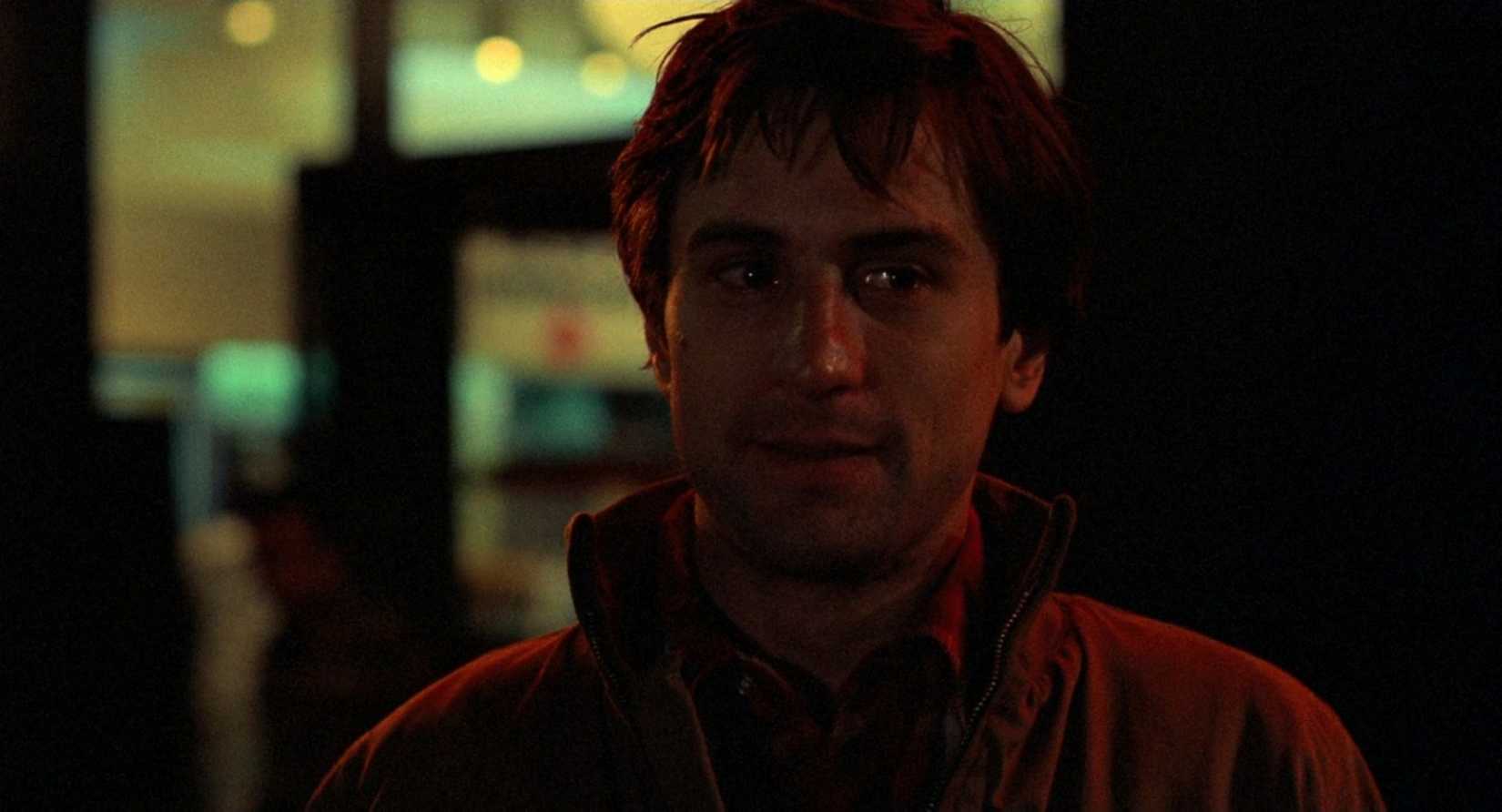 Image: Columbia Pictures
New York no longer looks much like the nighttime streets of Taxi Driver. Then again, maybe it didn’t ever look exactly like this. Granted, the filmmakers were able to take advantage of plenty of real-world blight. Producer Michael Phillips recalled “row after row of condemned buildings,” particularly on the West Side, as the film shot on location during a 1975 heat wave. It was just a few months before the infamous “Ford to City - Drop Dead” newspaper headline, with New York on the edge of bankruptcy. But Scorsese and cinematographer Michael Chapman also use heightened visual strategies to make New York look particularly shadowy, the low-level skylines dominated by the noisiest neon lights rather than shining skyscrapers.
The first shot of Taxi Driver is a cab emerging from street steam, like a monster from the fog. Throughout the movie, Bickle’s vantage from within his cab leaves his face clear while the outside world often looks out of focus or otherwise distorted. The final shootout, where Bickle “rescues” the 12-year-old prostitute Iris (Jodie Foster), is lurid and grimy even (or maybe especially) with the desaturation process Scorsese and Chapman used to tone down the redness of the blood and avoid an X rating.
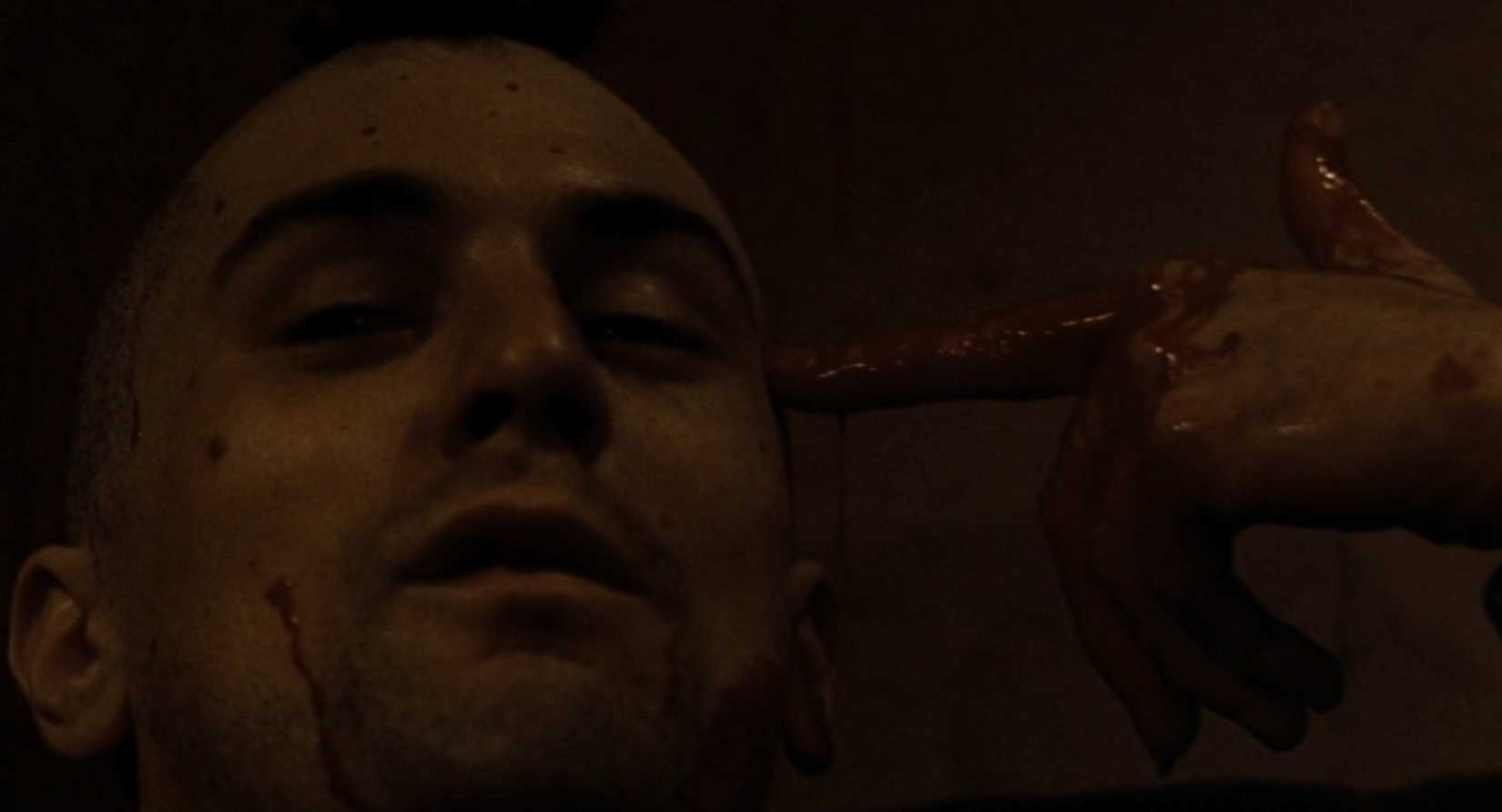 Image: Columbia Pictures
What it all looks like, even today, is the fevered imaginings of anyone who regards the city as a trash-strewn hell pit from afar. It’s even arguable that movies like Taxi Driver have helped perpetuate that vision of the city long after crime plummeted and many of the formerly seedy neighborhoods depicted in it became family-friendly. At the same time, the movie isn’t strictly a paranoid fantasy. Or rather, it depicts the mentality that produces a paranoid fantasy with scary accuracy.
One part of Taxi Driver that feels particularly prescient and still relevant is the incoherent personal politics of Travis Bickle. When he enters the New York campaign offices for a presidential candidate, hoping to get a date with Bety (Cybil Shepherd), the organizer he admires from afar, Bickle doesn’t seem to have even a passing familiarity with Betsy’s employer. Later, he meets that same candidate and gushes admiringly; still later, he attends a rally planning to kill him. At no point does he seem to have any inkling of the man’s political positions. In voiceover, Bickle notes that, unlike some other cabbies, he won’t refuse to drive to Harlem or pick up Black fares; he also makes these notes using racist language, buttressed by repeated wishes that some force would come and wash the “scum” from the streets. He frequents porno theaters but seems far more disgusted with random people he passes on the street than his fellow XXX patrons.
 Image: Columbia Pictures
None of this plays like Bickle engaging in hypocrisy, or the movie taking shots at its lead’s inconsistency. Half a century later it seems, if anything, chillingly familiar; how many mass shooters or assassins have left similar pieces of ideology that don’t fit together into a single clear picture? That the movie inspired a real-life assassination attempt from John Hinckley — hoping to impress Jodie Foster, even — understandably disturbed Scorsese. But with the fullness of time, Taxi Driver seems more like a movie that simply understands the lonely, mixed-up motivations of the people who commit those sorts of crimes.
De Niro makes that understanding seem especially vivid without feeling exploitative. It’s difficult now for a movie to take influence from Taxi Driver without seeming like, on some level, a self-conscious stunt; think of Joaquin Phoenix, contorting himself into awkward expressions of pain in Joker. The effort is fully sincere, but the movie and character never feel particularly real. Bickle could also be played as a horrific figure. He’s a scarily intense guy, the streets around him are framed as darkly menacing, enhanced by the score from frequent Hitchcock composer Bernard Hermann (much of it is downbeat jazz, but it sometimes drifts into a more sinister register). Yet De Niro never appears to be showboating. There’s his famous mirror scene, of course, the kind of improvisation you’d never peg as one because of how naturally it fits and how widely imitated it became. But his performance accumulates countless little moments of social discomfort. Watch as he tries to flirt with the counter girl at the porno theater, then dithers through buying a variety of sugary snacks. He makes “like a kid in a candy store” seem suddenly pitiable.
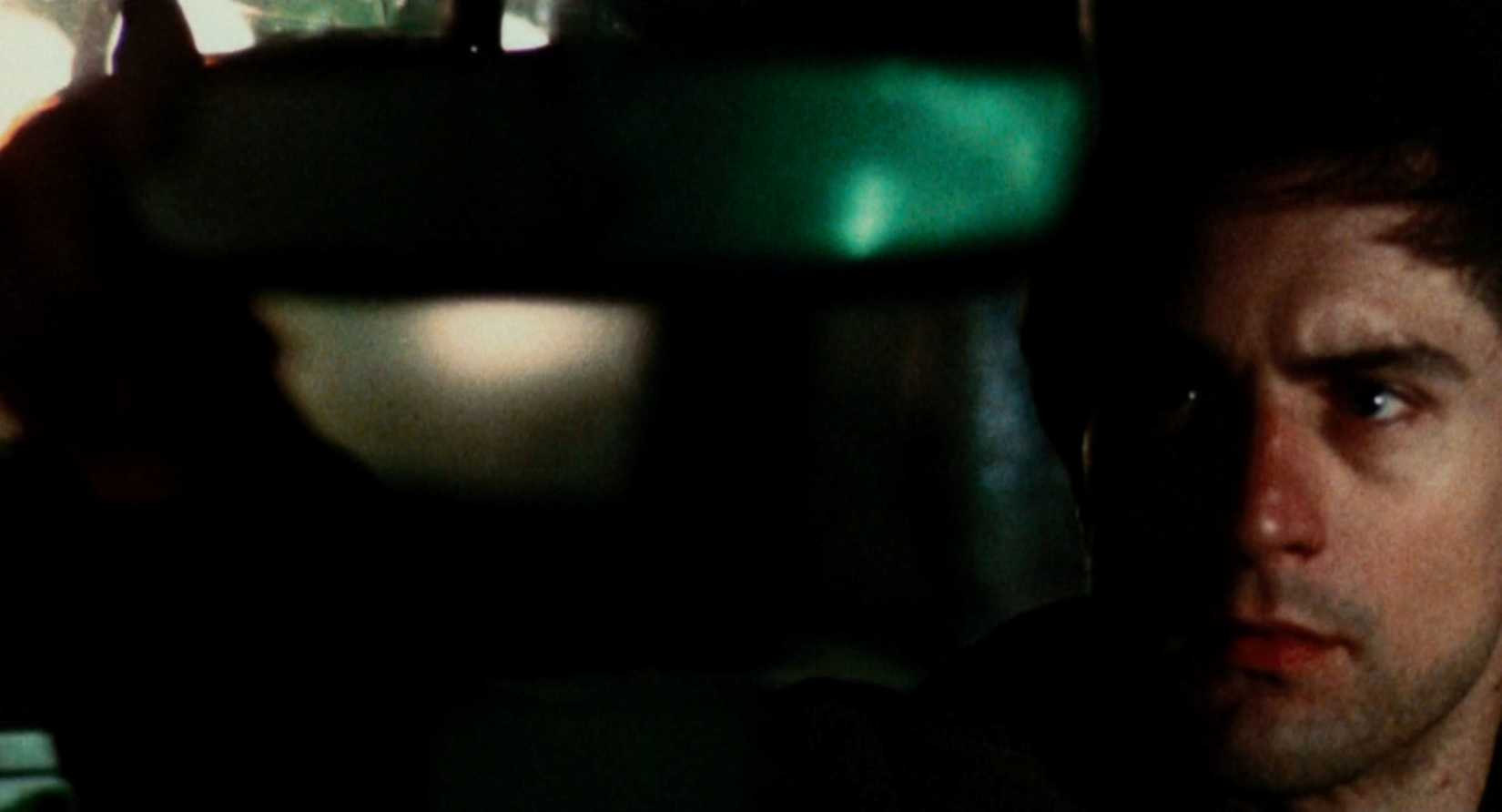 Image: Columbia Pictures
These are the moments that transcend Taxi Driver’s status as a dorm-room-poster movie, where indelible images of a mohawked and unhinged De Niro are extracted and decontextualized because they look edgy. In this fannish context, the movie remains a flipside to the more intentionally inspirational Rocky, and pioneered that wall space for the likes of Fight Club or American Psycho. It’s not necessarily that these movies have been misinterpreted by their biggest fans, but that their filmmaking is too gripping, and irresistible in its iconography, for viewers to simply sit in its discomfort.
It’s a result that echoes Taxi Driver itself. At the end of the movie, Bickle has survived his violent rampage, happened to kill some bad people, and has been hailed as a hero in the press, though he’s also back to driving a cab at night. His rearview glances, among the final shots of the film, suggest that little has changed with his mental health; the city streets look more distorted than ever. Regardless of what’s been extracted for cool posters or painted-clown homages, Bickle’s underdog triumph (on paper more of a “win” than Rocky’s split-decision loss, but far less of a moral victory) has failed to remove him from his loop. He’s still that monster, perpetually emerging from the mist.






![ELDEN RING NIGHTREIGN: Deluxe Edition [FitGirl Repack]](https://i5.imageban.ru/out/2025/05/30/c2e3dcd3fc13fa43f3e4306eeea33a6f.jpg)
 English (US) ·