.png)
 5 months ago
34
5 months ago
34

Published Feb 6, 2026, 1:00 PM EST
Mark Fischbach clearly knows his audience
 Image: Markiplier/Everett Collection
David Szymanski’s 2022 submarine-sim horror game Iron Lung packs a lot of huge ideas into a comparatively small game. The premise is expansive enough to fuel an entire multimedia franchise; the questions it leaves behind after a playthrough are vast and cosmic. Mark Fischbach’s surprise-hit movie adaptation, also called Iron Lung, seems like a natural place to answer some of those questions, or to expand on Szymanski’s world and queue up more stories. So it’s almost gleefully perverse that instead of addressing any of the game’s lingering puzzles, it actually deepens them, adding new questions to boot.
Some viewers — especially those who aren’t familiar with the game — are guaranteed to find that tactic frustrating. But the approach is entirely in keeping with the Gen Z audience the film seems to have been made for. And judging from online discussions, it looks like keeping Iron Lung enigmatic and mysterious has paid off — at least within the immense fandom Fischbach has built as game streamer Markiplier.
Szymanski’s game is simple and straightforward, in spite of its odd premise. The player is a condemned convict sealed into a wretched, rusty, tiny submarine, and ordered to explore an ocean of blood on a mysterious moon. Gameplay consists of navigating to a series of set points on a map and activating the sub’s external camera to send images back to some punitive authority above. Tension builds throughout the game as the sub breaks down, the camera’s captured images get creepier, and the ambient sound effects get progressively more sinister.
But there isn’t a lot of variation between playthroughs, and when the player gets to the final map point, Iron Lung ends abruptly. The game doesn’t last long unless the player ignores the goals and just tools around fruitlessly in the submarine. Shortly after the game’s release, Fischbach, whose channel has more than 38 million followers, released a full playthrough that’s just over 46 minutes long.
But the backstory is much bigger than the game’s on-screen narrative. Szymanski sets the game in a horrific future where “every known star” suddenly, inexplicably disappeared, along with every inhabited planet and moon, and everyone on them. Humanity’s few remaining survivors — the people living on space stations or starships — call this event the Quiet Rapture. What happened? Why? And how does that event relate to the discovery of a random moon featuring a sea of what turns out to be human blood? The movie version answers exactly none of these questions, though it does lean hard into the Lovecraftian horror and cosmic unknowability of the Quiet Rapture.
Fischbach, who independently produced, directed, and distributed the Iron Lung movie, also stars as Simon, aka “Convict,” the film’s analogue to the game’s first-person player. Simon was one of the few survivors when a group from his culty space station, Eden, sabotaged another station, killing 62 people and rendering it uninhabitable. In response, the ruling collective, the Consolidation of Iron, scapegoats him as a terrorist and murderer. He insists he’s innocent, that he pushed back against Eden’s plot and refused to participate, and that the Filament Station explosion “wasn’t supposed to happen.” Simon’s culpability in the specific series of events behind the Eden sabotage is one element of the story the movie expands on, without making his backstory fully clear.
Subjective experience and questionable reality are a major focus in the Iron Lung movie, in a way they aren’t in the game. Welded into his submarine and facing a series of threats he can’t see because the sub’s single porthole is sealed, Simon exposes himself to terrifying levels of radiation by using his X-ray camera as a survival tool. His growing fear, his frustration over being enslaved and sent on a likely suicide mission, his exposure to the blood sea through leaks in the sub, his guilt and disorientation as he relives past events, and several disturbing alien unknowns all play havok with his senses and his focus. The approach leaves viewers with a lot to discuss and debate about Iron Lung — several key events may or may not be real, and the outcomes can be interpreted in different ways.
Fischbach and Szymanski’s script doesn’t hand the audience easy answers. They don’t unpack the nature of the Quiet Rapture or the blood ocean. Instead, they focus tightly on Simon’s increasingly fractured point of view, using him as a filter for what the audience knows. Intentionally kept in the dark by his handlers, then presented with events beyond his understanding, he’s the smallest and most hapless part of a story that’s far bigger than him.
It’s an unusual approach for a horror story. The “lone hero” dynamic that characterizes so many American movies in particular usually divides horror-movie characters into disposable victims, monstrous villains, and a lone survivor or two who seize control of their story and make a difference. While Simon makes significant choices and heroic efforts in Iron Lung, he’s also in no position to answer galactic-level questions, much less understand how his choices or experiences might change anything.
Like so many other things about Iron Lung, Fischbach and Szymanski’s choice to keep the protagonist in the dark seems like it’s aimed at a generation that grew up on online creepypasta — specifically, on ambiguous, open-ended mysteries designed for viral spread, group participation, and endless speculation. Over on the Markiplier subreddit, the approach has clearly paid off, with fans energetically trading theories about which of Simon’s experiences are real, which are hallucinations, how his history plays into the movie’s themes, and what the movie’s definitive but open-ended finale might ultimately signify.
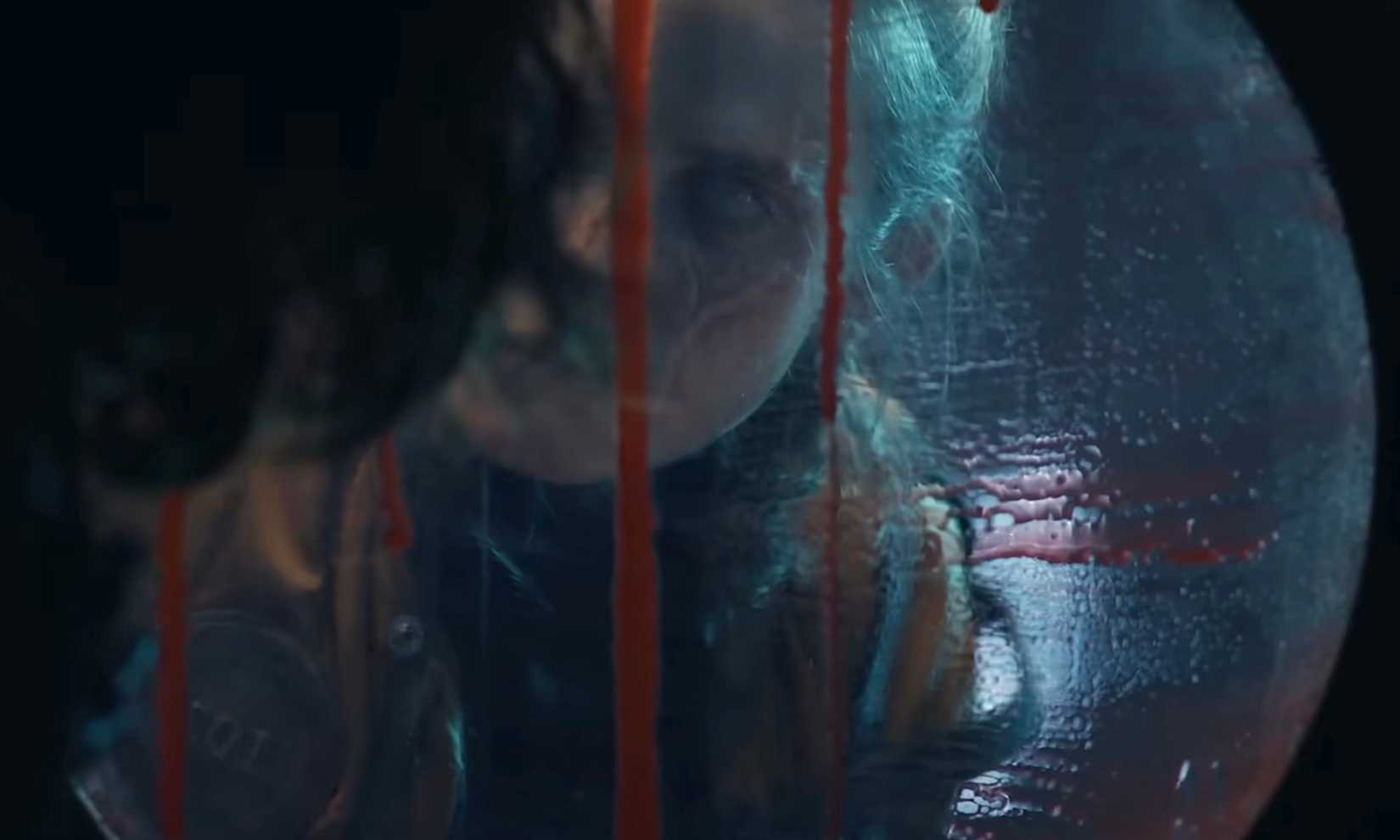 Image: Markiplier/YouTube
Credit Fischbach with knowing his audience, as any successful creator needs to. (And Fischbach is an extremely successful creator, with two hit podcasts and several interactive YouTube Originals projects on his resume, in addition to those tens of millions of subscribers.) While Iron Lung certainly has elements of a more mainstream horror movie, like jump scares, effective use of darkness and the unknown, and toothy alien monsters, it’s unconventional in its calculated limitations. Like the game it’s adapting, it’s designed as the smallest slice of what seems like an immense story.
A studio version of this movie would undoubtedly have different aims, from simplifying the story to serve the widest audience possible to positioning Iron Lung as exploitable IP, ripe for the endless sequels and spin-offs that characterize so many hit horror projects. (Scream 7 and the fifth Strangers movie both hit theaters this month.) With Iron Lung, Fischbach and Szymanski signal that for now, at least, they’re perfectly willing to put any continuation of the story in their audience’s hands instead.
Their movie won’t satisfy anyone who wants simple stories or easy answers — but it isn’t aimed at those viewers. It feels like it was designed specifically for internet-era fans who enjoy speculation, conversation, and interactivity. It isn’t a closed loop like so many movies, designed to be forgotten five minutes after the credits roll. Iron Lung is intriguing specifically because its ending isn’t an ending, it’s just a starting point.






![ELDEN RING NIGHTREIGN: Deluxe Edition [FitGirl Repack]](https://i5.imageban.ru/out/2025/05/30/c2e3dcd3fc13fa43f3e4306eeea33a6f.jpg)
 English (US) ·