.png)
 3 months ago
80
3 months ago
80
Typically, my PAX East experience consists of a few constants: I sleep very little, I eat very poorly, I walk around a lot, and I play a ton of video games. In 2026, much of this remained true. I still slept very little in my ratty shoebox of a suite and primarily subsisted on junk food, which was largely countered by the tens of thousands of steps I took throughout the weekend. But one thing was very different about my PAX East experience this year: I played very few video games, opting instead to play trading card games with friends and strangers, making for a refreshing change of pace.
It’s not that there were no impressive video games on the showfloor. Kotaku’s very own Kenneth Shepard saw many very same promising titles, some of which I played for myself, like Poly Fighter and Canvas City, though I might also add Inkblood for all my fellow Golden Idol sickos. But overall I found myself less drawn to the video game booths than ever before and was instead transfixed by something else that made our list. Something a little different: a TCG based on Cyberpunk 2077.
I first heard murmurs of a Cyberpunk TCG being on the showfloor while I was actually receiving a friendly tutorial in another game entirely. Upon hearing about it, I almost immediately set off to find the booth and sign up for an introductory game. As it turned out, PAX East marked the Cyberpunk TCG’s first major showing, and attendees’ excitement at the opportunity to get an early look at the game was pretty evident. Every time I circled the booth, there were a number of fans either gawking at the cards near the front or playing at the packed tables on-site.
I guess I shouldn’t be too surprised about the attention; within days of my visit to the booth, the Cyberpunk TCG’s Kickstarter became the single most-funded game campaign ever on the platform, a fact which TCG content creator Amy “Amazonian” Demicco partly chalks up to brand association: “As someone who has been burned by Kickstarter games never shipping out physical products, I think that part of the success of this fundraising is that it’s tied to a major IP and company, so it’s more likely to deliver.” It was certainly easier for me to get excited for the game upon seeing that it actually existed and was playable, unlike the horror stories to which Demicco alluded.
I was eventually able to sign up for a game, and even managed to drag Ken, who doesn’t really play TCGs but relishes any chance to look at Kerry Eurodyne, to the booth for an intro session. We didn’t get to see Kerry (sorry, Ken) or even the end of our game within the 30-minute slot we were given, but I did get a decent impression of the Cyberpunk TCG’s mechanics and enjoyed how it adapted the language of the game (like programs, gigs, and legends) to a compact and sleek tabletop experience.
Little did I know at the time that TCGs would go on to dominate my weekend at PAX. Before the first day of the show was even upon us, me and a number of friends partook in a Commander game—a multiplayer format of the popular TCG Magic: The Gathering in which players use 100-card decks to do battle against one another. And while I wouldn’t play another match for the whole weekend, I did watch another and also took part in cracking several packs from the recently released TMNT set, which took over half of the Magic booth on the showfloor. The other half was dedicated to the upcoming Secrets of Strixhaven expansion, while a small storefront sold packs, bundles, and even Secret Lair drops at MSRP.
That last point feels worth mentioning because though the officially sanctioned booths were hotspots on the showfloor, the secondhand shops selling significantly marked-up expansions, like the ridiculously difficult-to-find Edge of Eternities set, were also attracting a fair amount of attention elsewhere at the convention. When I asked Demicco what she made of the buzz around TCGs this year, she said it was a result of both the great variety of games available these days as well as “lots of people involving themselves in card games as scalpers. Gotta take the good with the bad.”
The aforementioned games weren’t the only noticeably buzzy TCGs either. Numerous conversations eventually turned to the One Piece TCG, which I’ve never actually seen in action but have been hearing about a lot lately. One of those conversations actually occurred in the middle of a Sealed draft match of Riftbound, the recently released card game from Riot Games set in the world of League of Legends and, also, my newest fixation. After watching some friends play a match, I miraculously found myself invited to not one, but two, Sealed events for the card game, and it was all I could think about for most of the weekend.
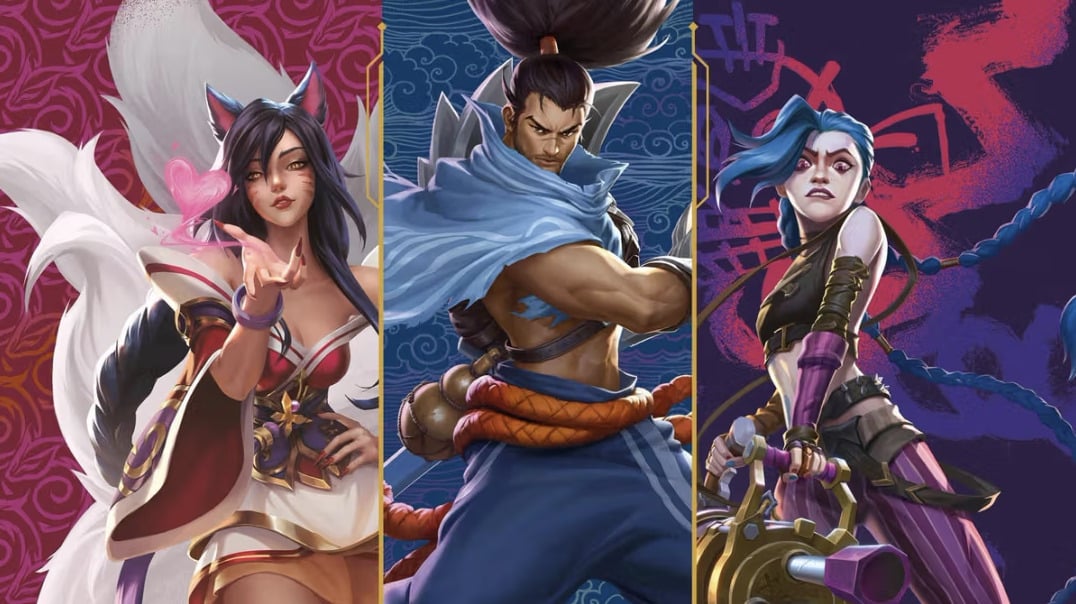 ©Riot Games
With far fewer cards (and card types, abilities, and proper nouns) than the average card game—due mostly to being brand new—Riftbound feels like a perfect game to pick up if you’re a beginner with even an inkling of interest in the space. Hell, I managed to win all of my games, which basically never happens, and the ambiance at the tables was delightful as both veteran and green players assembled decks and made sense of new mechanics and cards.
Such was the case for Nala Wu, a developer who, in their own words, has “zero experience with TCGs” and largely avoids them for fear of being sucked into a money pit, which, given the resale prices on the floor, was a very well-founded apprehension. About a year ago, though, Wu found themself playing League of Legends and gravitating toward the champion Renata Glasc (“Renata is exactly the type of character I like,” they said, followed up by describing her as a “hot, evil woman”) which paved the way for them to make a Renata deck at PAX East this year and give Riftbound a shot.
Wu had better fortune than me, lucking into one of the learn-to-play Riftbound demos, 32-player sessions which were packed all weekend long.
Despite the rising class of TCGs and all the excitement surrounding them, we shouldn’t expect anything to dethrone the champ anytime soon. When asked which game players might want to keep an eye on, Demicco affirmed, “Magic. They’re going wild with IP crossovers and while some of them are stinkers (looking at you, Spider-Man), it means plenty of new players are attracted because their favorite franchises are involved.”
And it’s true. A crossover is what brought me into the fold, and it seems like it’s been a great on-ramp for many of my friends and colleagues as well. Though the Magic community has openly discussed the notion of crossover fatigue, these kinds of sets keep doing pretty well, even if some leave a lot to be desired. And with The Hobbit and more Marvel crossovers in the game’s imminent future, only time will tell whether or not criticisms of Magic’s “Fortnite-ification” are well-founded or whether we’re making a mountain out of a molehill.
But this influx of players also seems to be creating a bit of a rising tide. Wu observed that PAX East having “[fewer] big gaming companies present in the expo hall” than in past years created an opportunity that makers of card games could capitalize on during this burgeoning TCG renaissance, and they seemed to share in my thinking that Riftbound, at least, successfully generated excitement around itself through the weekend. I know I had more great conversations about card games than I did video games throughout the show. And all the while, it was hard to escape their large shadow, whether it was on the showfloor where fans excitedly demoed the upcoming Cyberpunk game, in the shops where folks were picking up their rare pursuit cards at marked-up prices, or in the surrounding hotel lobbies and mezzanines packed full of pods of gleeful players.
For better and for worse, TCGs are having their moment in the limelight. I, for one, can’t wait to see how the space looks in a few years.




![ELDEN RING NIGHTREIGN: Deluxe Edition [FitGirl Repack]](https://i5.imageban.ru/out/2025/05/30/c2e3dcd3fc13fa43f3e4306eeea33a6f.jpg)
 English (US) ·