.png)
.png) 6 months ago
88
6 months ago
88

Laurence is an avid writer, gamer, and traveller with several years of journalistic writing experience under his belt. Having helped create a student-focused magazine at university, he is keen to reach the gaming community with his guides and game reviews.
Whether it's trudging through the world of Elden Ring, or grinding out raids in Old School Runescape, Laurence is always up for a challenge. However, in real life, his current challenge is learning how to speak Spanish and cooking authentic Mexican cuisine.
Ah Biology! One of the most important roles in planetary exploration. You might look at a game like StarRupture and think it’s all about creating sprawling factories and draining the planet of its bountiful resources. But there’s so much more than that.
Because, of course, you’re not a robot, unlike your faithful machines. You need food and sustenance, energy to keep you building and creating. And the only way to keep yourself alive is to head out into the great beyond and scavenge up anything that you can find.

Related
Luckily for you, Arcadia-7 has a wealth of flora for you to utilise. So let’s take a look at the types of plants that are available and just how to get the most out of them. Just watch out for Vermin while you're out picking flowers! They can get pretty protective.
Plants and their Uses

Before we delve into the actual plants themselves, it’s essential to understand their functions and how we can utilise them.
There are two types of plants: Primary and Secondary. The primary plants can be used as the base in the recipe station, while the secondary plants can be mixed with the primary to create an item with a unique effect.
When researching the recipes for the first time, you’ll also have to insert data points to be able to create the item.
The majority of plants can be consumed to give you health benefits, whether that’s HP restoration or gaining calories and hydration. However, many of them will also increase your toxicity. When your toxicity level reaches 100, you will become sick. Thankfully, some plants also reduce toxicity.
If you’re low on data points early on and want to rush a company-level, plants can also be exchanged for points in the analysis terminal.
Primary Plants
Polifruit
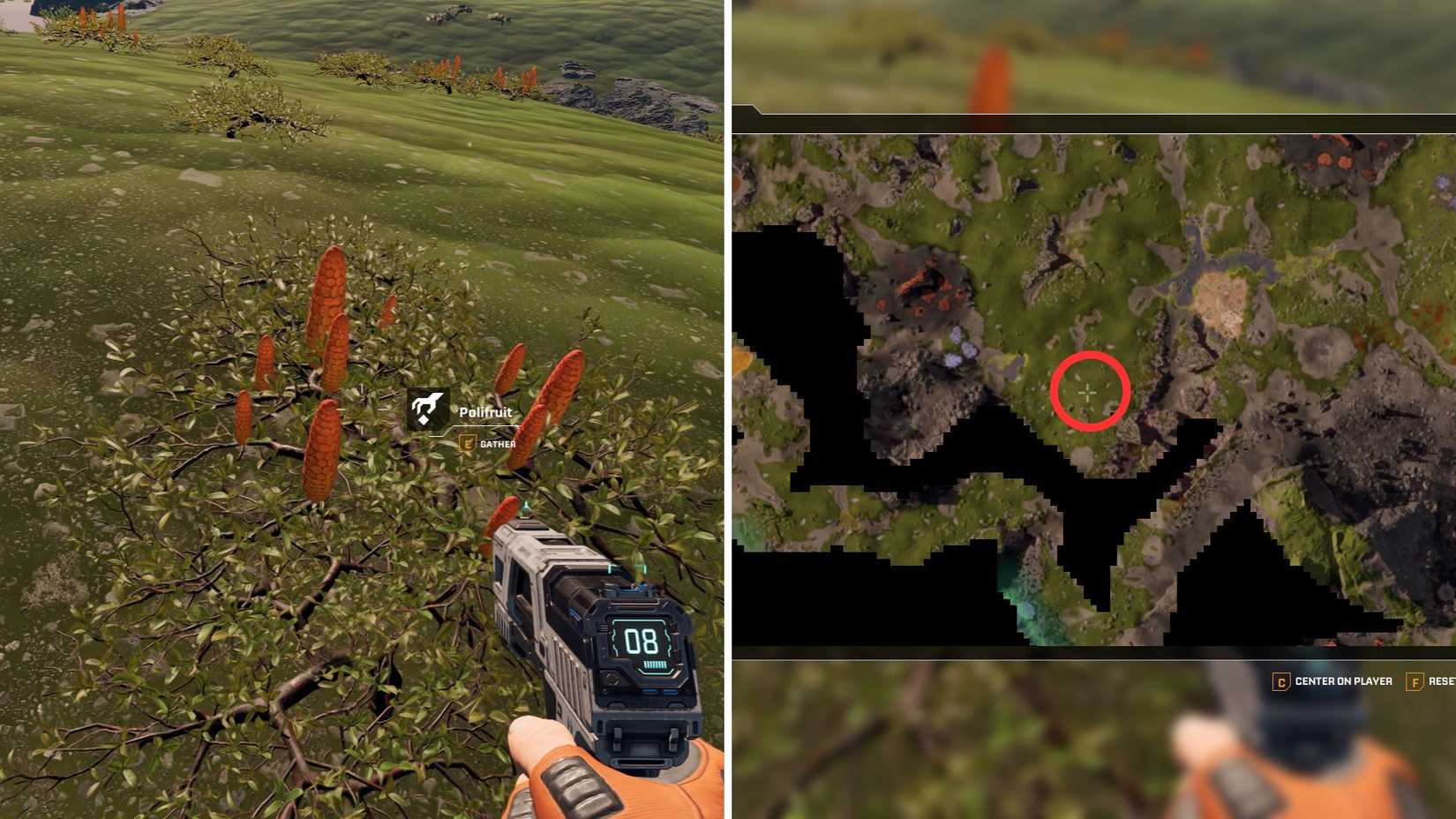
This is likely to be one of the first plants that you encounter when first beginning to explore out in the wilds. Polifruit is a great early-game resource, as when eaten, you will gain 11 calories. It doesn’t sound like a lot, but the metres run down pretty slowly in StarRupture, so you won’t have to eat too often.

Related
StarRupture: How to Connect Power
In StarRupture, you need power for everything you connect to your base, so you best know how it works.
Polifruit doesn’t really have a set location, as wherever grass spawns, you’re likely to find it. You can find a ton of these in the grass around the starting area, south and east of the first Titanium nodes.
Hydrobulb
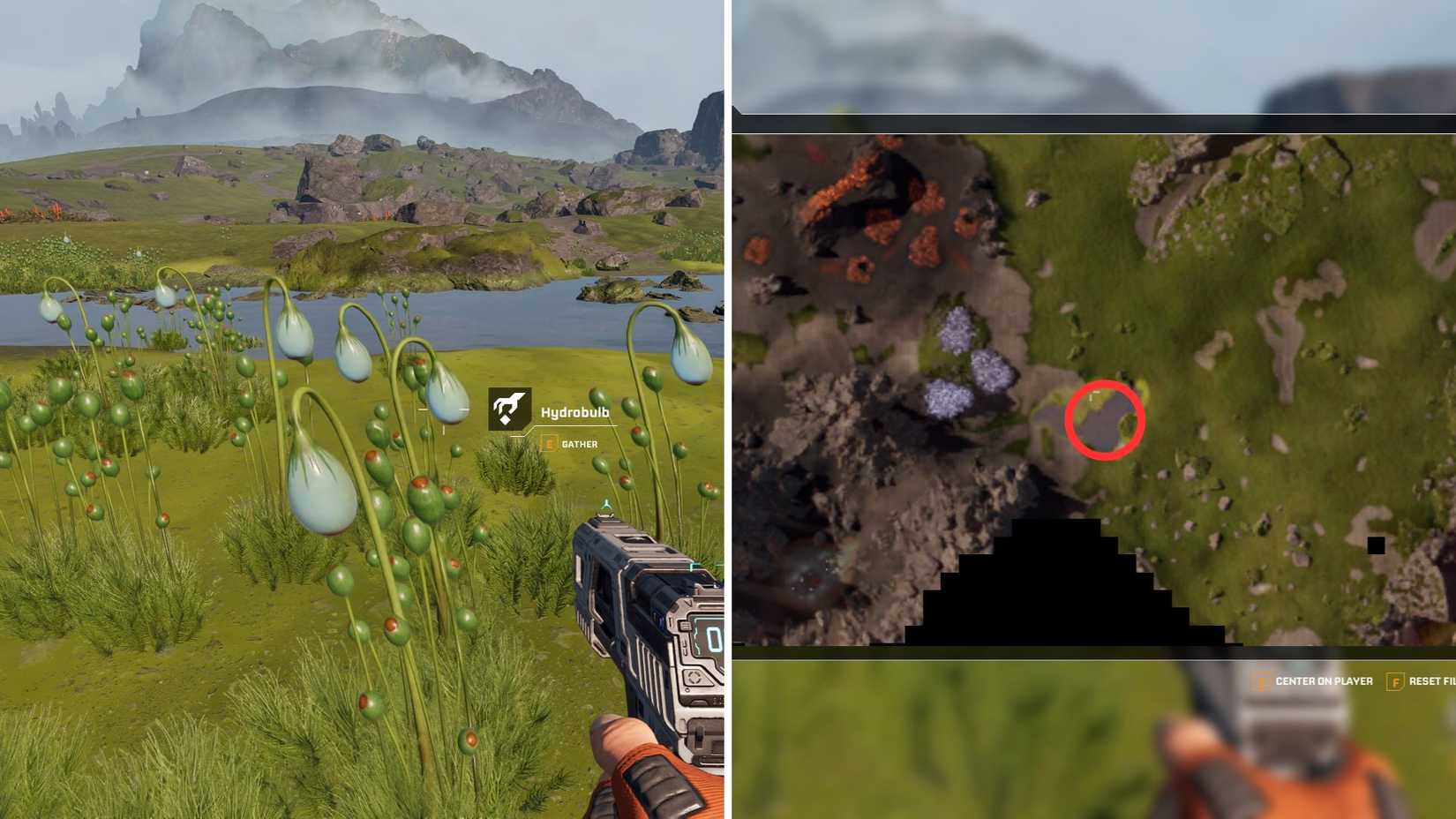
Similar to Polifruit, this will be one of the first sources of hydration that you’ll stumble across. Each Hydrobulb can give you 15 points of hydration; however, they aren’t quite as plentiful as the polifruit.
You shouldn’t really struggle with your hunger or thirst meters much in this game, as once you have a food station, both the Hydrobulb and Polifruit as some of the most important plants used to create food items. When combined with some of the plants later in these lists, you can make extremely powerful items, basically nullifying the survival cost.
Hydrobulbs can also be found pretty much everywhere on the map, so long as there is clear water nearby.
Prickler
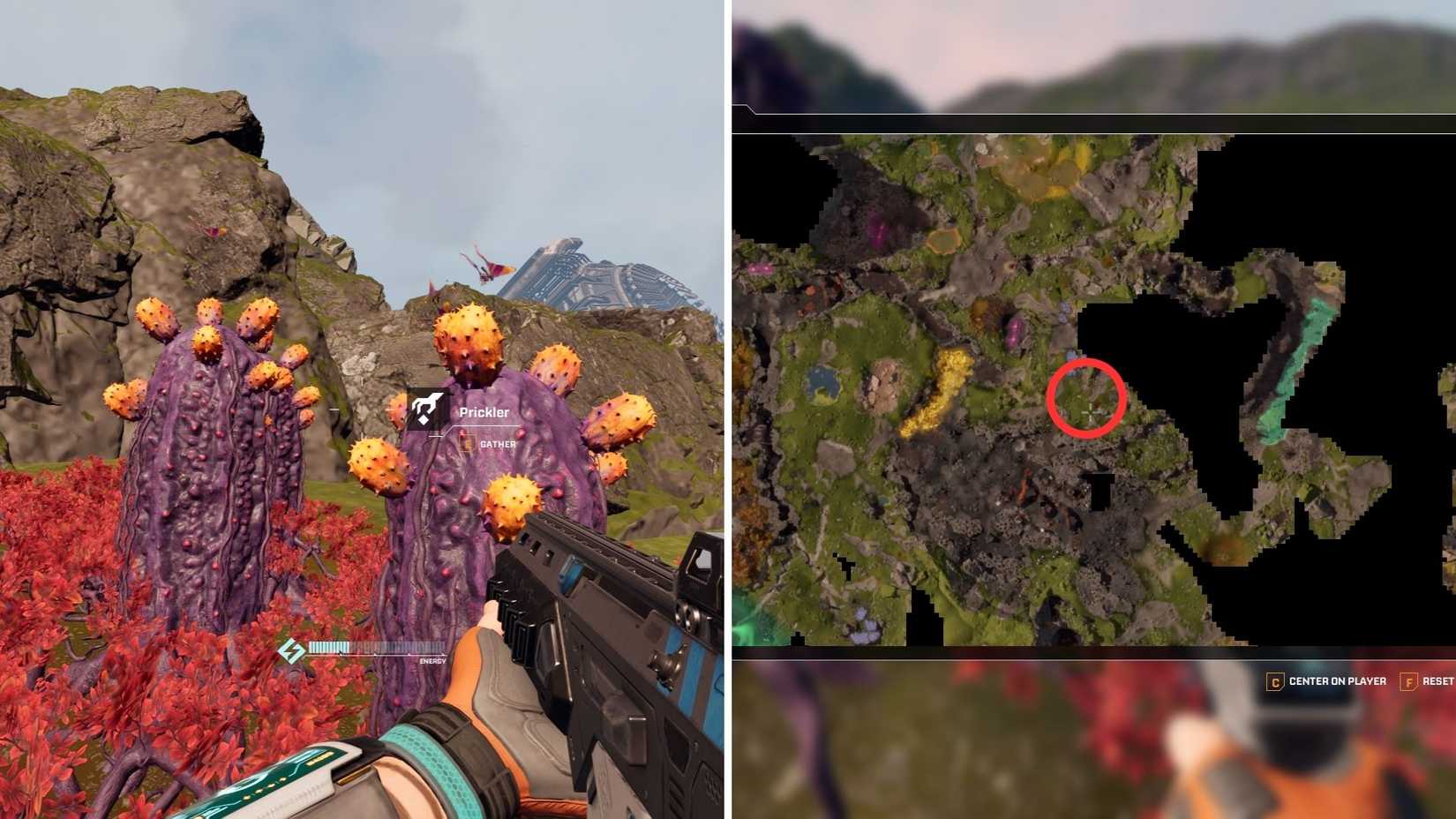
Now, if you were looking for a plant with both calories and Hydration, then you’re in luck! If you come across any of those red cactus plants that grow in the grassy plains, you can grab some Pricklers for a tasty snack.
These can be easily found across the whole planet, simply by looking for the small red fern-like bushes on the ground. All the recipes that you create using Pricklers also have the dual ability of restoring both hunger and thirst!
Nutri stim shards can be a game-changer for those who often forget to restore their metres. By boosting your calorie and hydration metres by 30% you can boost above the limit, allowing you more time to ignore it.
Purplant
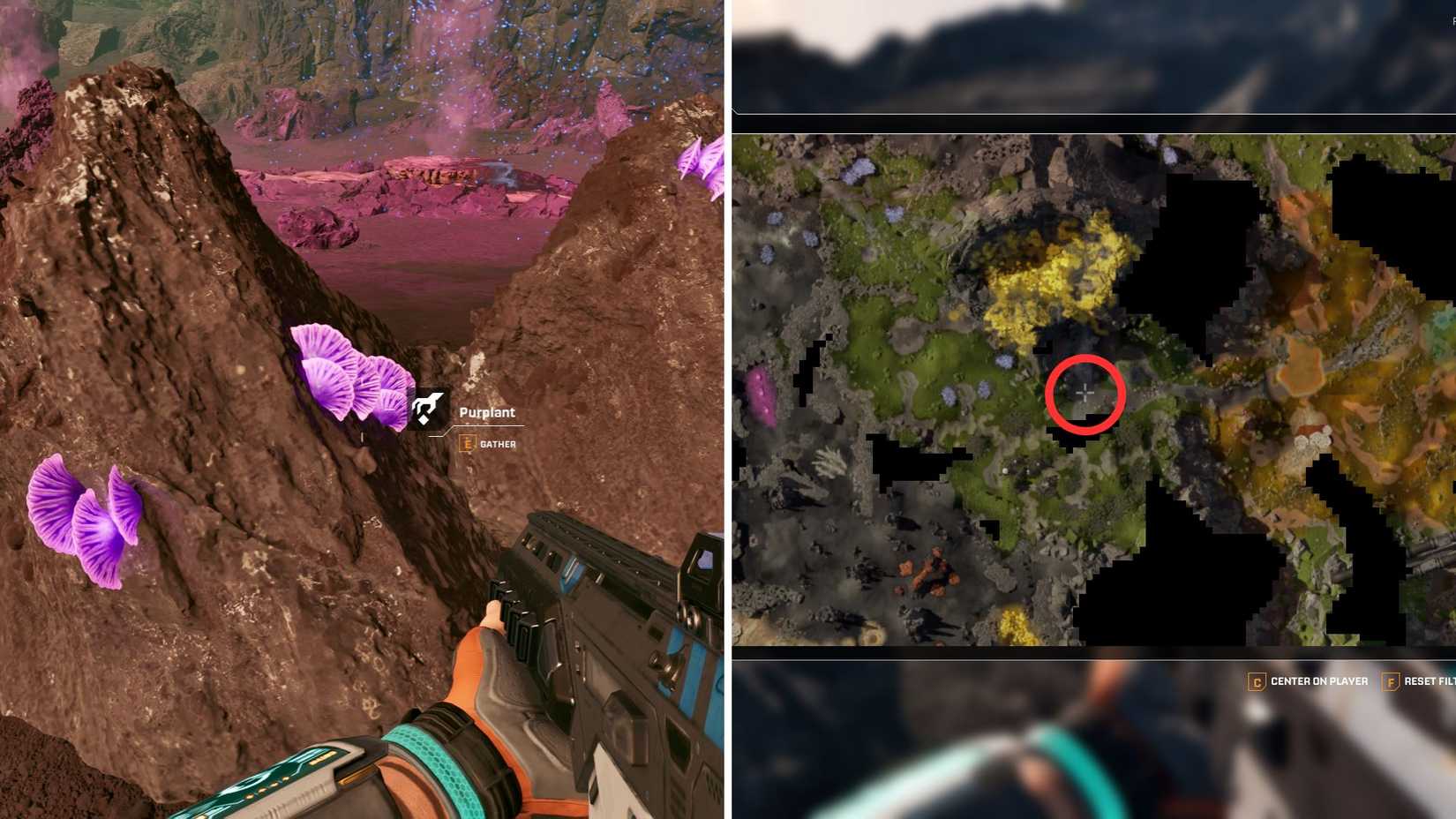
Struggling to manage that toxicity counter? When your toxicity gauge spikes, chow down on one of these Purplants to reduce that metre.
However, there is a caveat: the Purplant will remove any positive effects gained by eating food items, for example, bonus stamina regeneration. So you should only eat this when you don’t have any active bonuses. When using extra effects, always be wary of how much each food item increases your toxicity.
Purplants are extremely common and can be found all over the mountainous regions, growing on the sides of rocks. More often than not, you’ll find multiple on one rock, as they grow in small groups.
Serpent Root
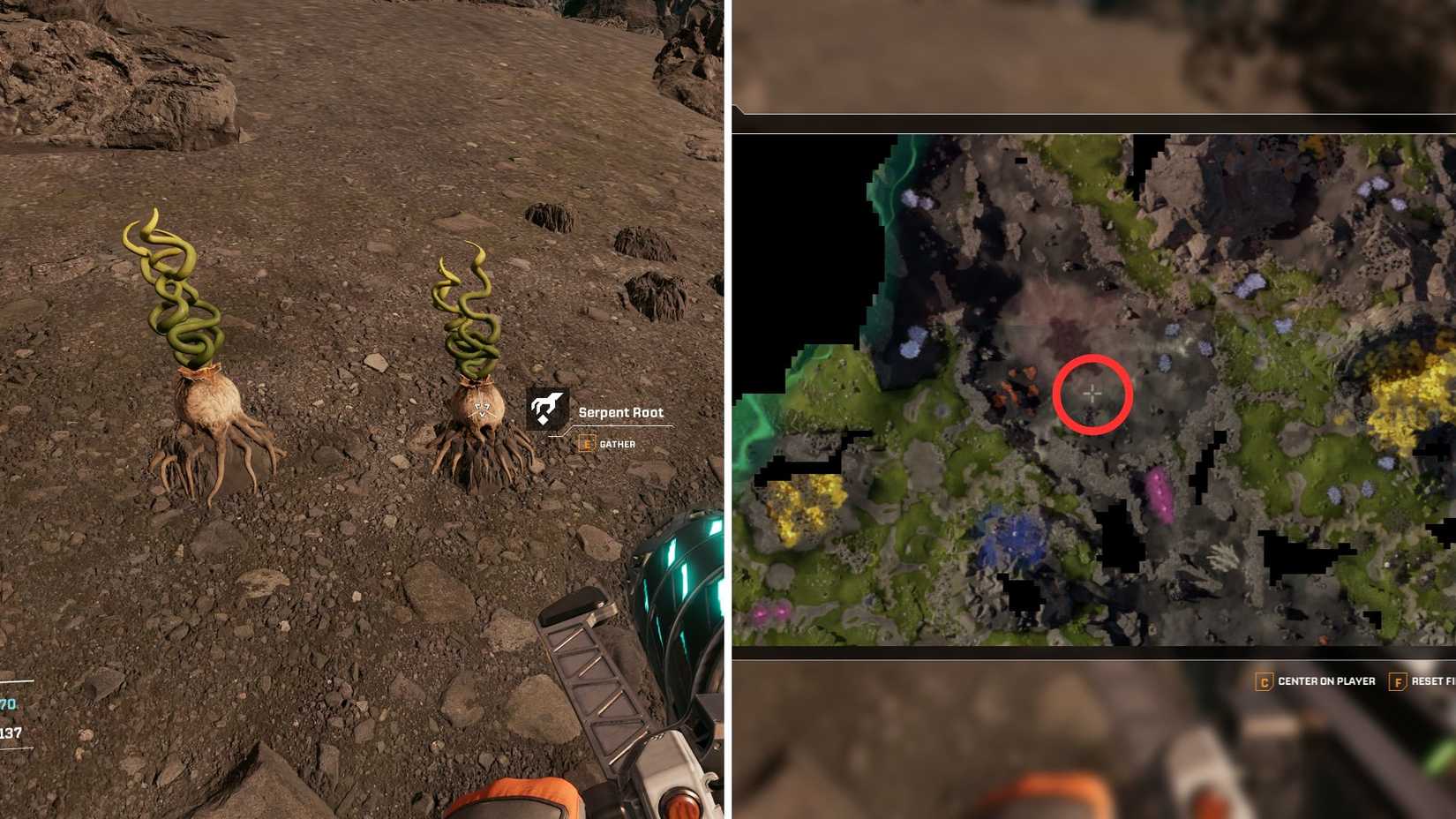
Alike the previously mentioned Purplants, Serpent Roots can be found in similar locations, growing on barren stretches of mountain. However, these grow on the ground and can be a bit more sparse.
These toots, when eaten, will give you bonus energy regeneration for a short amount of time, which means less time walking and more time sprinting and dashing. When combined with other plants, you can get foods that give you multiple effects. Just beware of the toxicity when eating these.
Star Tears
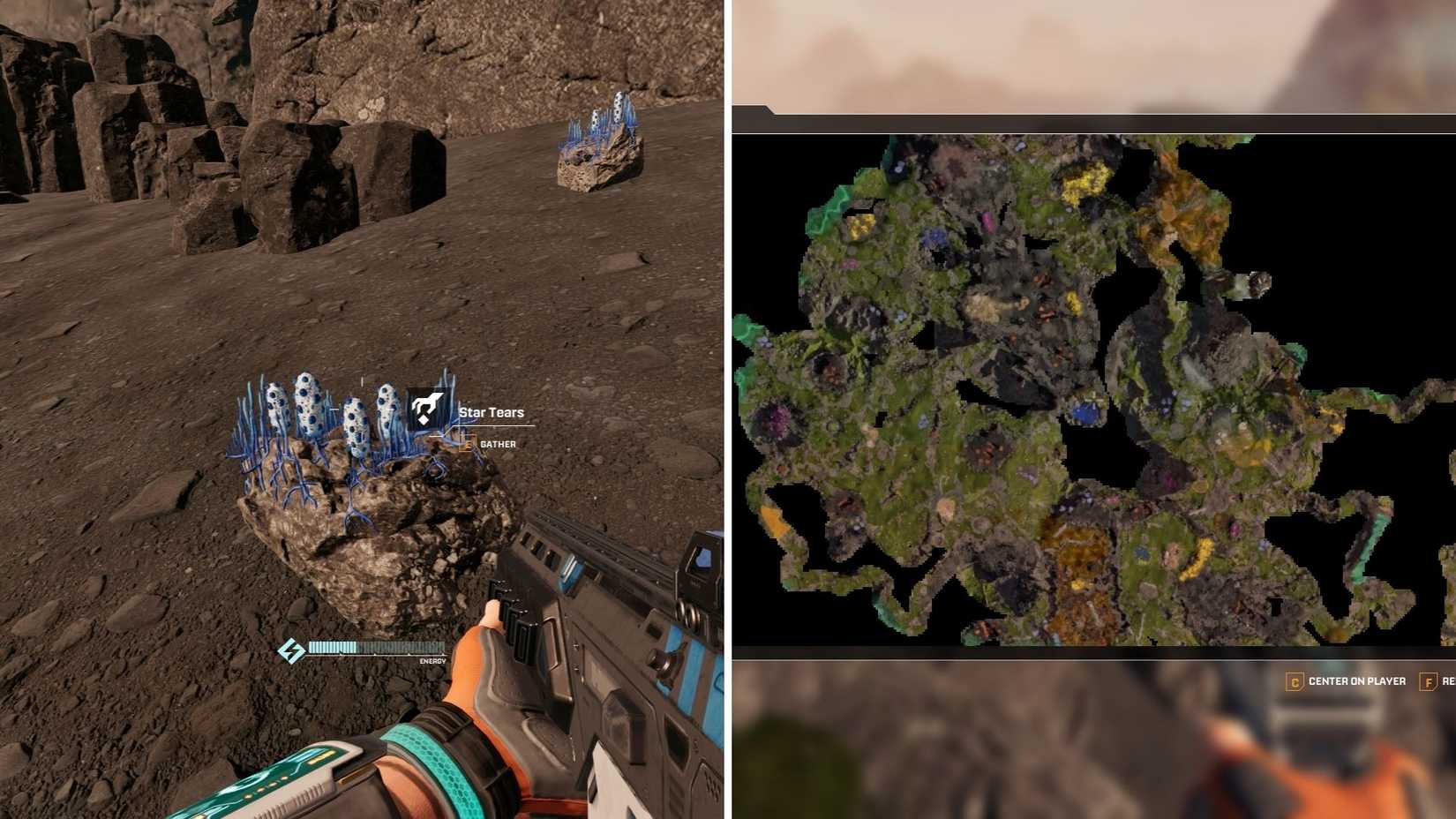
Star Tears can be found pretty early on and are one of the first sources of pure HP regeneration, healing 20HP.
However, these can be a bit of a pain to farm as they don’t often appear in clusters. They may be scattered all across the map, but you’ll only find 1 or 2 from time to time. So when you’re out exploring, always be sure to pick these up, as you’ll need a lot for future recipes.
Glowcap
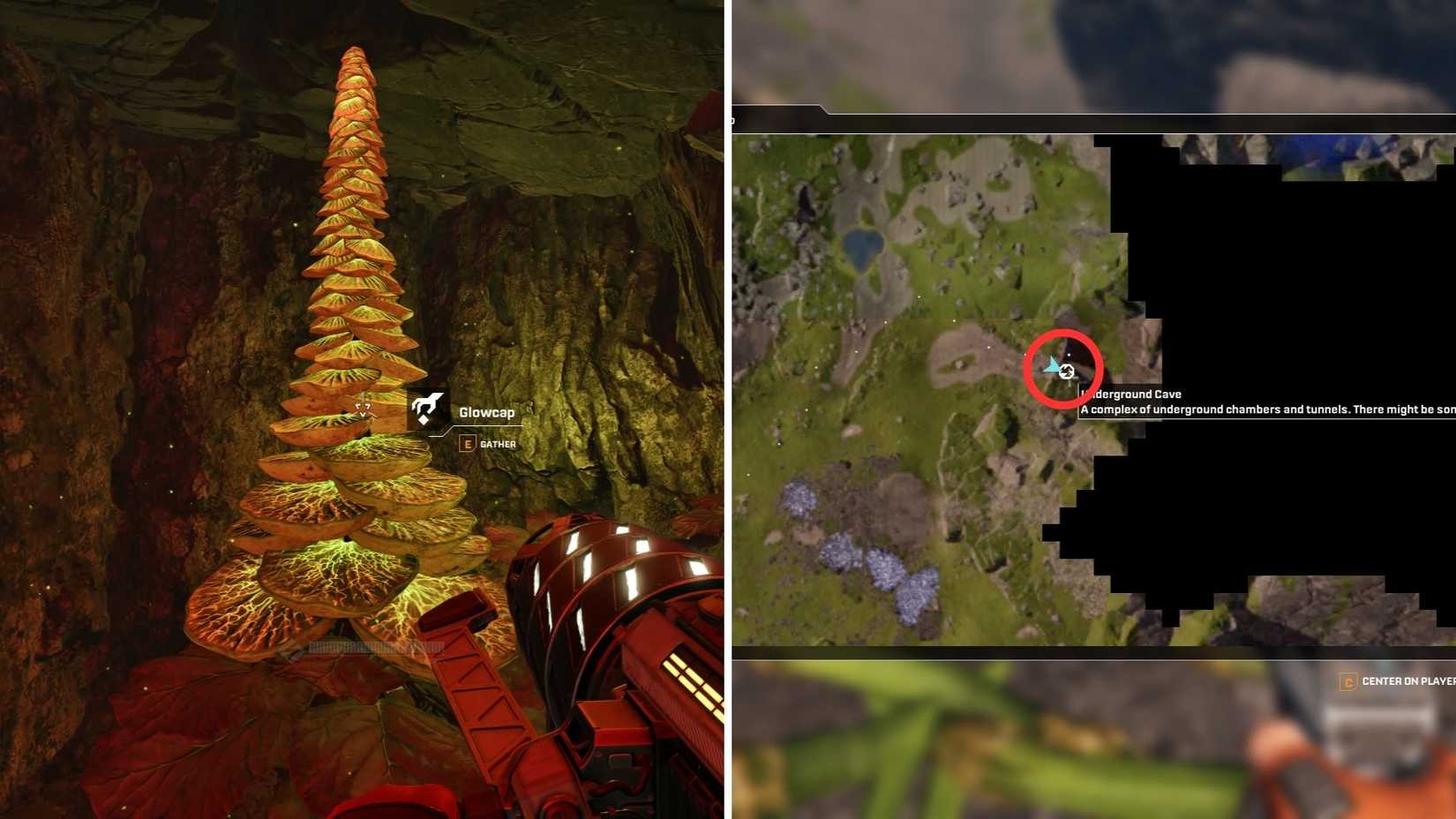
Glowcaps, oddly enough, I found to be one of the most broken items in the whole game. These can be found exclusively in the underground caves found throughout the Planet. While you might have to wait for the rupture to strike to enter these caves, once it does, you can easily loot 2–3 if they’re close together.

Related
Not only do these plants heal you 50HP, but they also give you 20 calories and 30 hydration, while being super easy to farm. Once you get a good stack of these, you won’t really need any other food items. What’s more, they can also be used to create the Plasm items, which double your resistances to debuffs for a short time.
Secondary Plants
Prism Herb
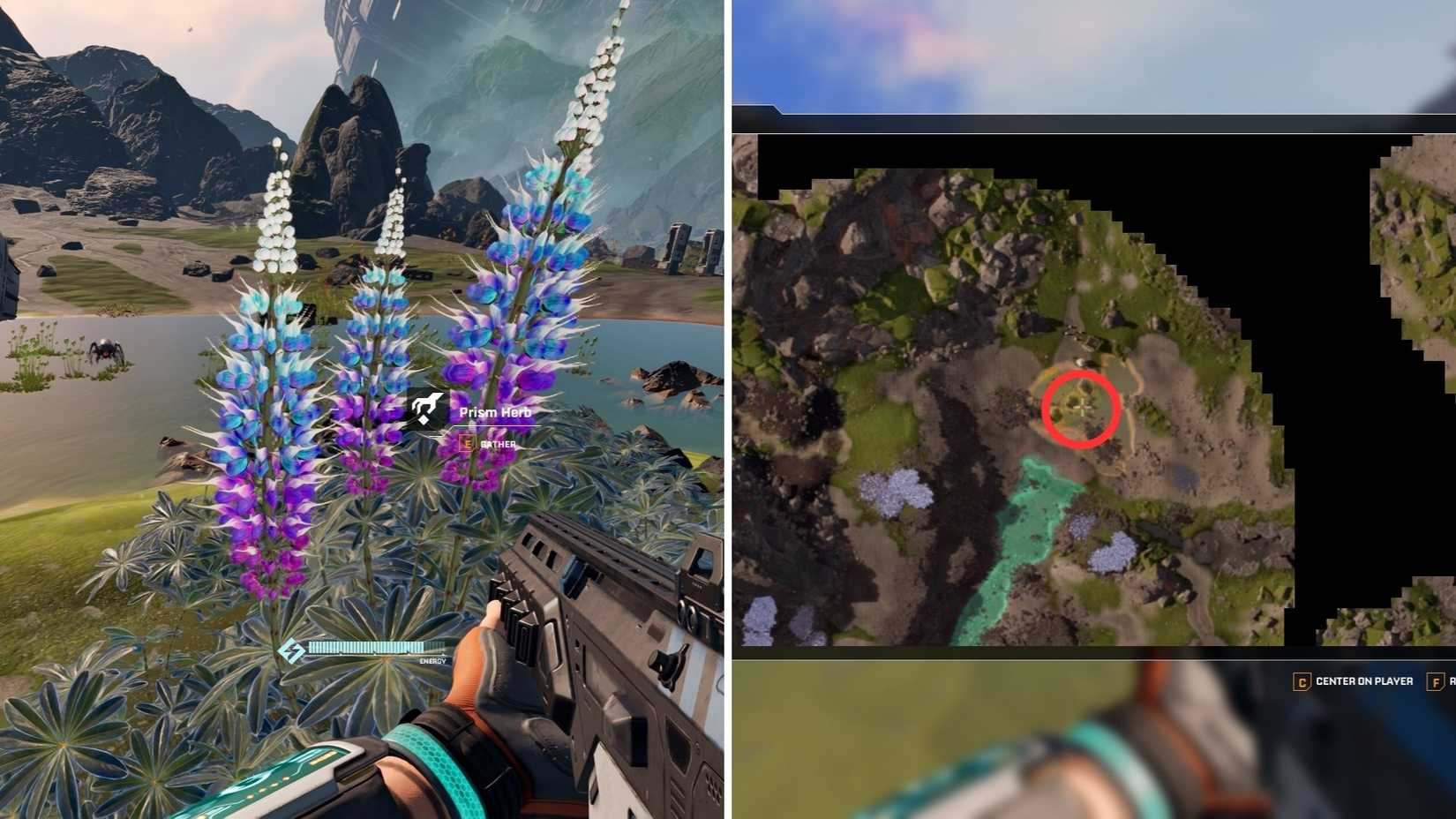
Prism Herb may be one of the rarest plants in the game, appearing quite far east on the map and in rather thin groups. It’s one of the only plants that doesn’t actually give you any positive benefits by eating it. Like the Hydrobulb, it also grows around water.
Instead, you’ll have to use it as part of a recipe to make certain Chews, which give fairly powerful restorative effects. Just watch out for enemies while you pick up this colourful beauty.
Grubbler
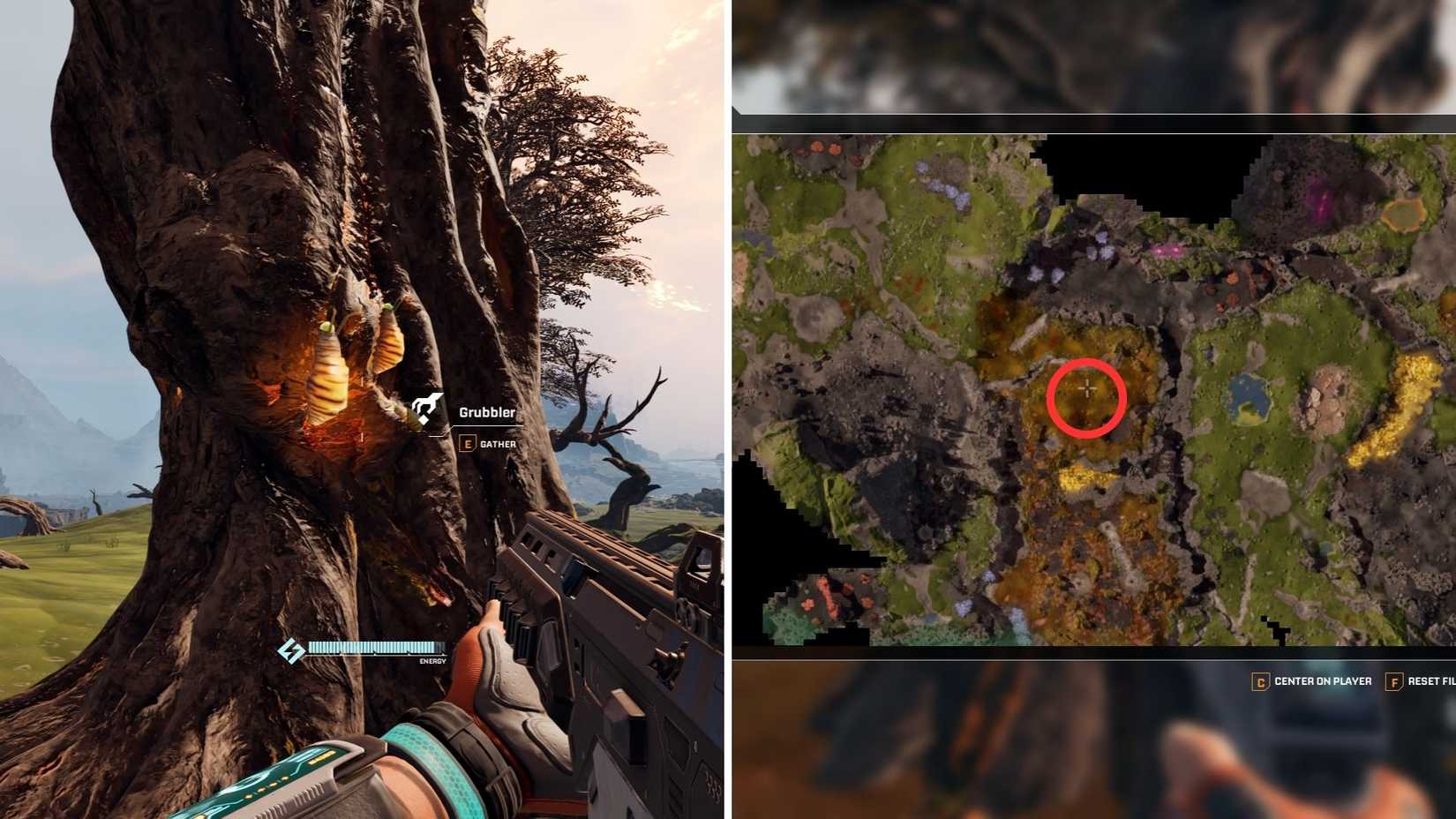
While the Grubbler may not be a plant per se, instead it’s a consumable item that grows on the windswept trees you might have seen around. If you’re looking for trees with Grubblers, you’ll be able to tell by the yellowish glow emanating from them and the leaves growing overhead.
The Grubbler, by itself, will heal 30HP. However, the Gels that it can create are far more potent, while also ridding it of the toxicity aspect, which is a nice buff!
Sulheart
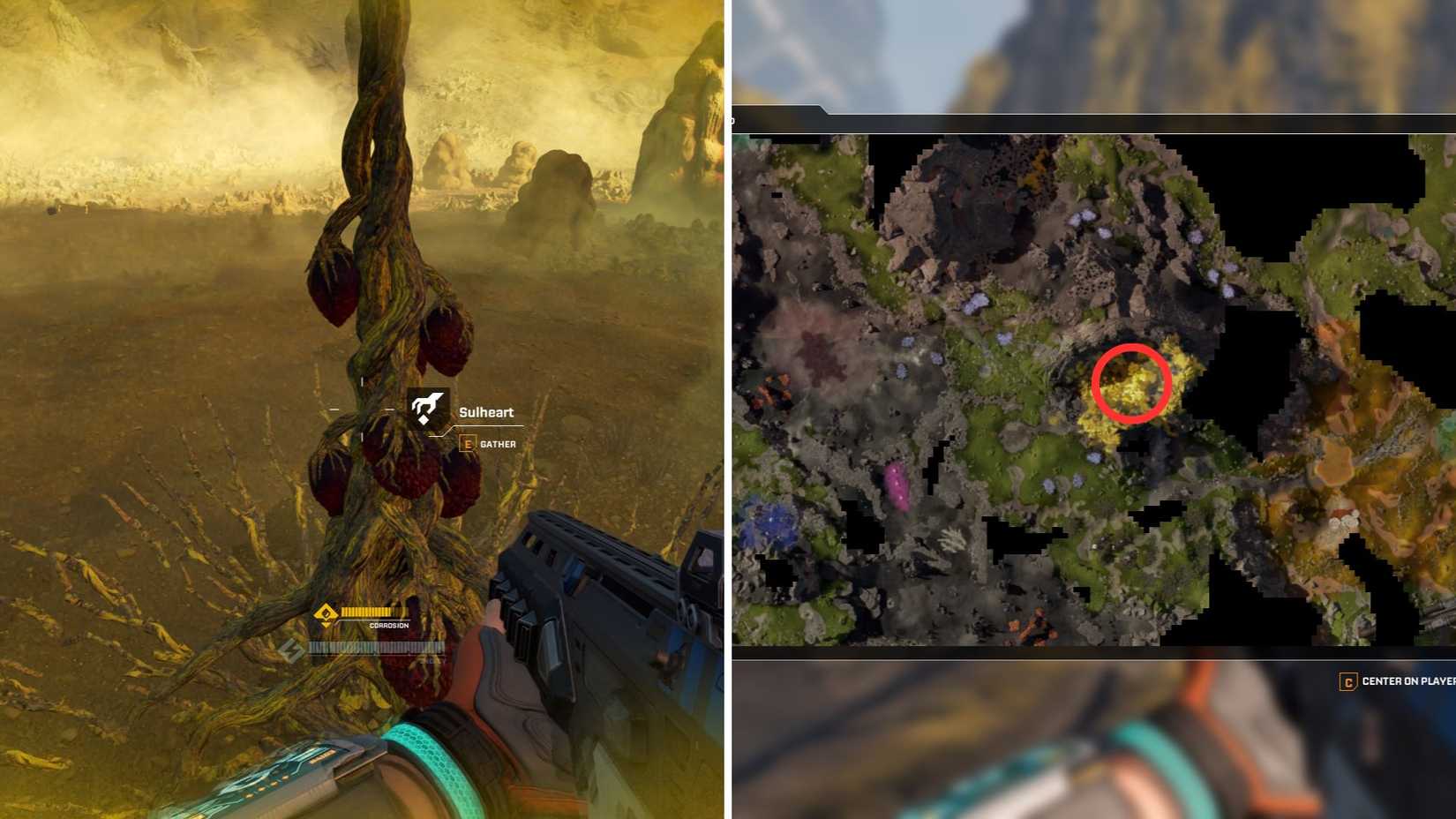
Sulheart is probably one of the trickiest plants to collect. As you might have guessed by the name, these grow exclusively in Sulfur fields dotted around the world map.
If you want to gather a good amount of these, try consuming a Corrosium Plasm Res to boost your resistances while you're bathed in the Sulfur.
Just like the Prism Herb, this doesn’t actually do anything if you eat it raw, save for dosing you with a good chunk of toxicity. However, the Shard items that it creates are extremely powerful in the right hands.
These items can boost the natural limits of your main gauges for up to 60 minutes at a time! This is particularly useful for your energy gauge when paired with Serpent Roots.
Oxallop
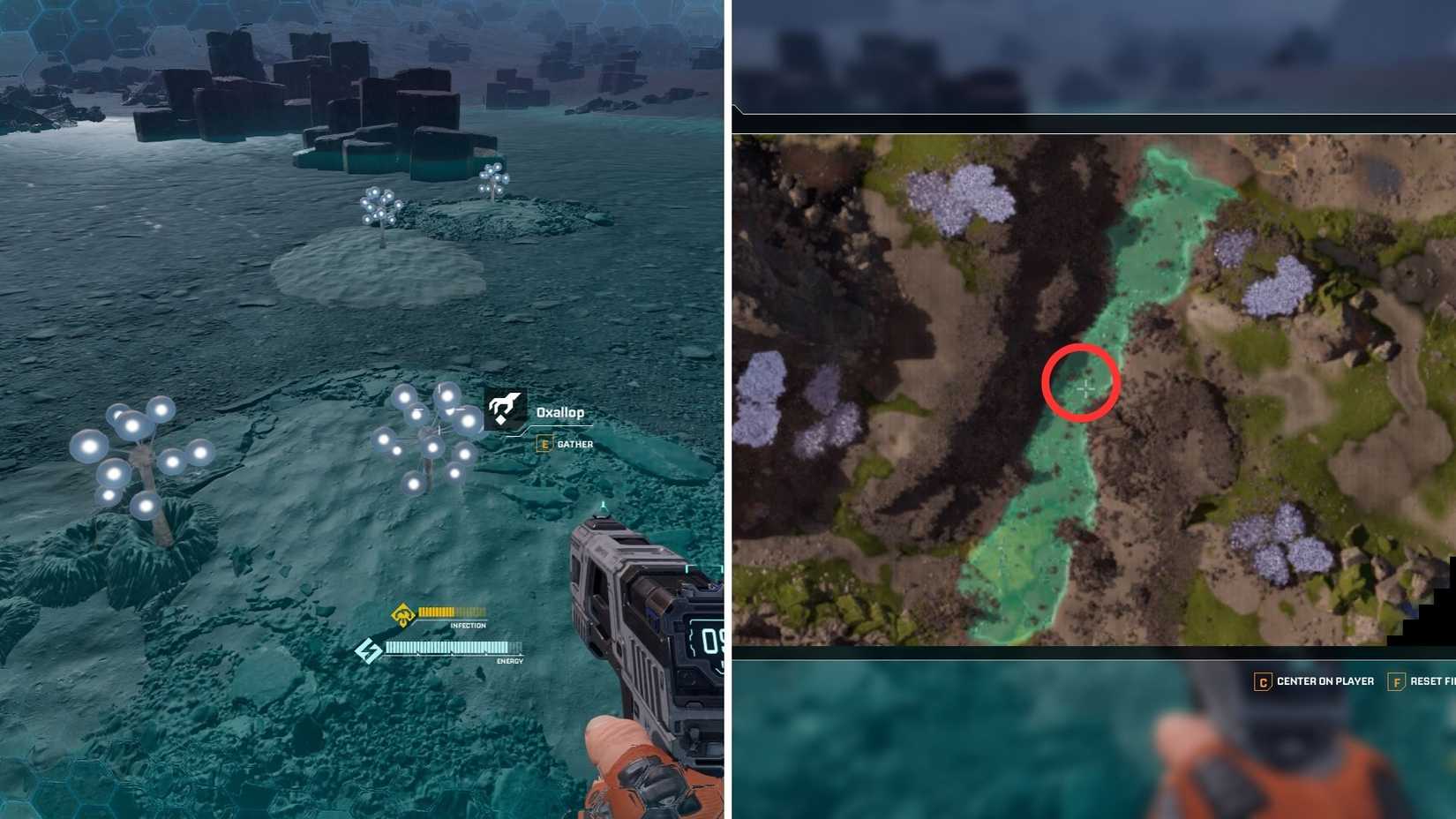
Finally, we come to perhaps the rarest herb in the game. Honestly, I came across this one by pure chance! The Oxallop can only be harvested directly after the Rupture strikes.
Once the planet cools, rush out of your habitat and run to the huge blue vein of water in the far Southeast of the map, or the red water in the northeast. The oxallop blossoms only in the aftermath of the disaster, and only for a short time. Run up and down the channels, collecting as much as possible before the water returns to the riverbed.
These plants create Capsules, which, similar to the Sulhearts, can have passive effects that last a certain amount of time. This can range from stopping your gauges from going down to speeding up toxicity loss, and even giving you passive HP regeneration. Just watch out for that toxicity level, as these effect-giving items can be pretty dodgy.
Next
StarRupture: How to Get and Drink Water
You need to know how to get and drink water in StarRupture if you want to survive more than a day.

Systems

Released January 6, 2026
Developer(s) Creepy Jar
Publisher(s) Creepy Jar
Multiplayer Online Co-Op
Number of Players Single-player








![ELDEN RING NIGHTREIGN: Deluxe Edition [FitGirl Repack]](https://i5.imageban.ru/out/2025/05/30/c2e3dcd3fc13fa43f3e4306eeea33a6f.jpg)
 English (US) ·