.png)
.png) 2 hours ago
2
2 hours ago
2


Published Jul 17, 2026, 2:18 PM EDT
Daniel Trock is a Contributor at DualShockers specializing in PC games, lists, and reviews. He has been writing professionally since 2018 and covering games since 2020, with previous work spanning guides, news, lists, and reviews across multiple publications.
Before joining DualShockers, Daniel contributed guides to GamerJournalist and lists to TheGamer. He currently covers tech topics for SlashGear and BGR. He holds a Bachelor’s Degree in Psychology from Marist College and a Master of Fine Arts in Creative and Professional Writing from Western Connecticut State University.
Sign in to your DualShockers account
Adventure is one of the bedrock genres of video games, and most fiction and consumable media in general. Of course, the difference between an adventure game and, for example, a show, is that a game has to be interactive, not just present an adventure, but guide you through one. We have so many different types of adventure games these days, but a lot of the building blocks of the adventure genre were laid out decades ago.
Much of the DNA of adventure games is rooted in old text-based and point-and-click games, which were, for their time, the best ways to interact with a digital world in an in-depth fashion. It was thanks to these games, and several others more in line with what we know today, that adventure is such a sprawling genre, and frankly, more people could stand to know these games’ names, their histories, and the vital contributions that they made.
10 Zork
Use Your Imagination
|
Infocom |
|
Adventure |
|
1977 |
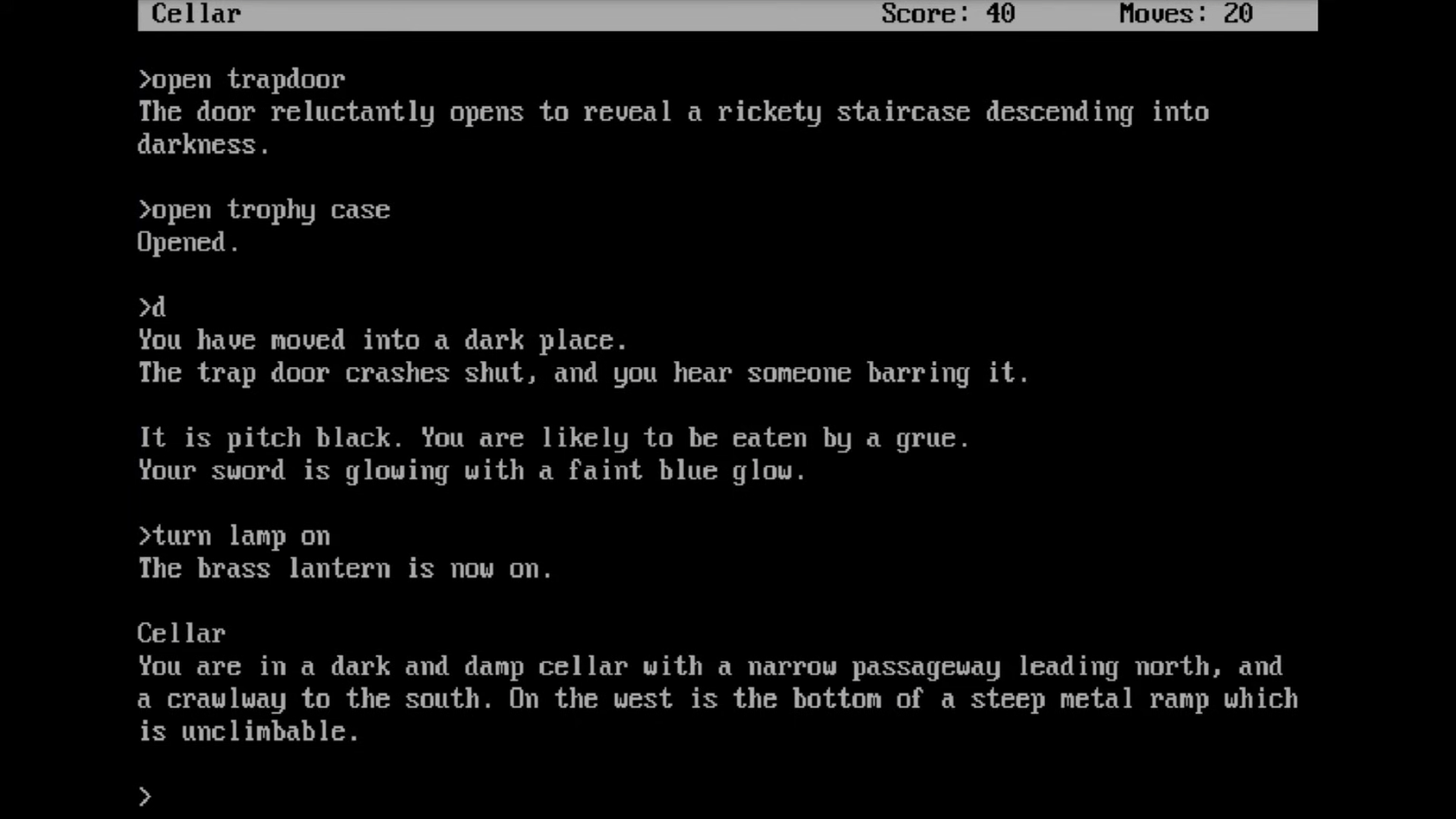
Adventure gaming began in earnest in the mid-to-late 1970s, starting with titles like Colossal Cave Adventure. The thing you have to understand was that computers were barely even consumer electronics back then, much less advanced enough to facilitate anything fancy, so trying to piece together a genuine adventure on one was… an undertaking, to say the least. The game that really started to push the needle was 1977’s Zork.
Zork was a text-based adventure for the PDP-10, no visuals, no sound, no voice acting. All you got was a text description of your surroundings, and an entry field where you could type commands. What was interesting about Zork was that, compared to earlier adventure games, it was capable of parsing much more elaborate commands. Colossal Cave Adventure couldn’t parse anything longer than two words, but Zork could successfully receive longer commands composed of several related actions. Obviously, it was still very primitive by today’s standards, but it was the first step toward more advanced settings and puzzles.
9 Adventure
Multiple Screens

Adventure games were mostly relegated to early PCs in the olden days, as fledgling game consoles like the Atari 2600 had neither the necessary interface nor processing power to handle those kinds of games. However, what the 2600 did have was graphical capabilities, and a certain developer named Warren Robinett put those graphics to work for him in creating 1980’s Adventure.
Coincidentally, Adventure was actually conceived as a visual version of Colossal Cave Adventure, ditching the text in favor of an all-graphical style. Where many console games of the time were either relegated to a single screen or presented in a strictly linear fashion, Adventure had multiple screens, which you could freely travel between as you attempted to track down the magical chalice and return it to the castle. Fun fact, as described in the novel Ready Player One, Adventure was also one of the first games to feature an easter egg, a secret room with Robinett’s name in it. Atari didn’t give public credit to programmers back then, so it was kind of a secret rude gesture to the company he slipped into the game.
8 Mystery House
Text And Visuals!
|
On-Line Systems |
|
Adventure |
|
May 1980 |
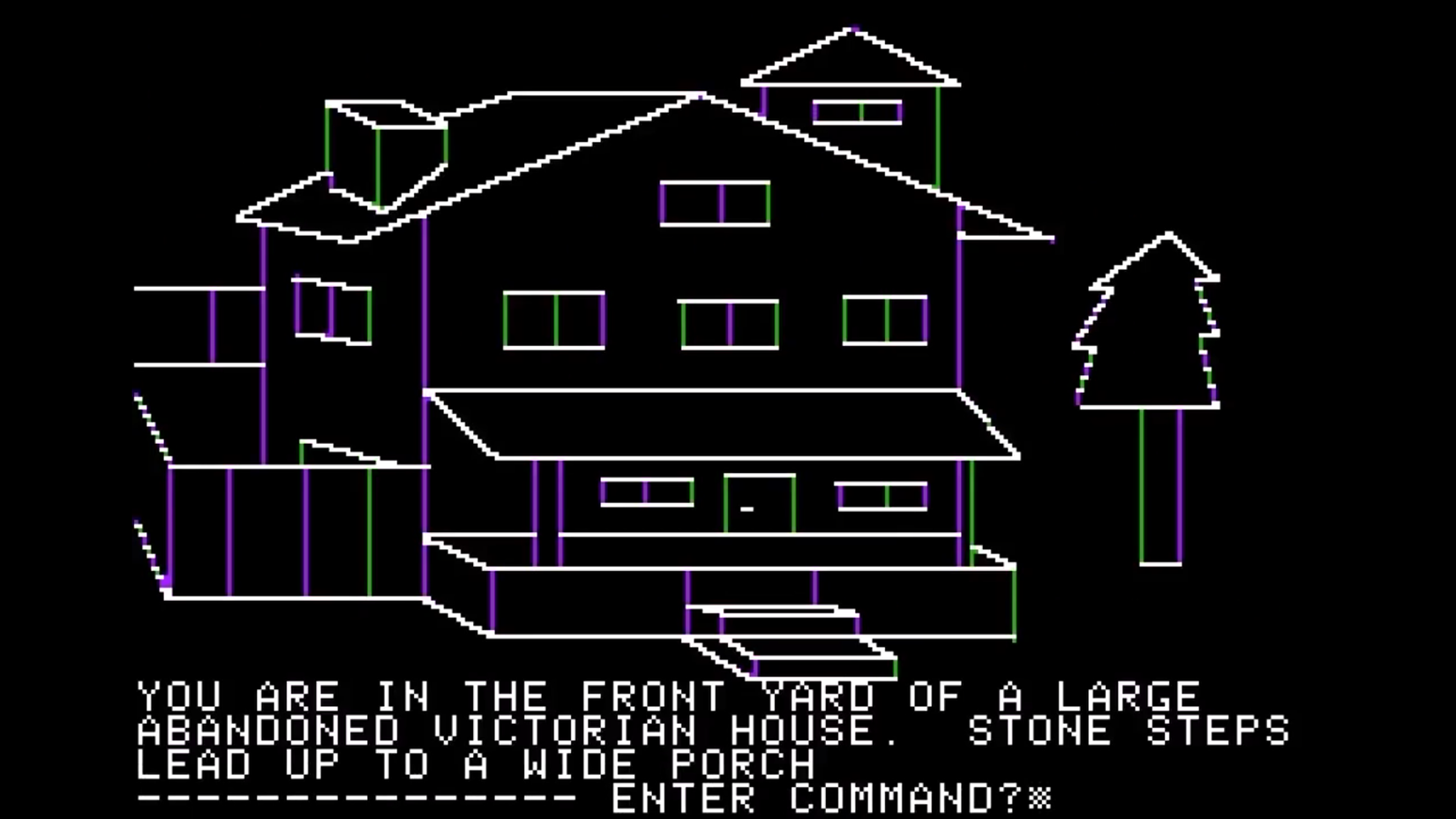
It wasn’t impossible to make an adventure game with graphics, but it took a lot of work to render them, about as much as it took to display scrolling text. This meant that games could have graphics, or they could have text, but they couldn’t have both. As computer hardware evolved starting in the 1980s, though, that hurdle was very gradually surmounted, with one of the most prominent adventure game examples being 1980’s Mystery House.
Originally released for the Apple II, Mystery House is one of the first graphical adventure games, featuring both illustrations and scrolling text with a command line at the bottom of the screen. With this new visual prowess, the game presented a horror story in which you are trapped in a spooky house with a bunch of randos, one of whom is a murderer out to getcha. Not only did this game set the bar for combining text and visual interfaces, but it was also a major milestone for its developer, On-Line Systems. If that name doesn’t sound familiar, you might know it better by its subsequent name, Sierra.
7 The Portopia Serial Murder Case
A Game Without a Game Over
|
Yuji Horii |
|
Adventure |
|
June 1983 |
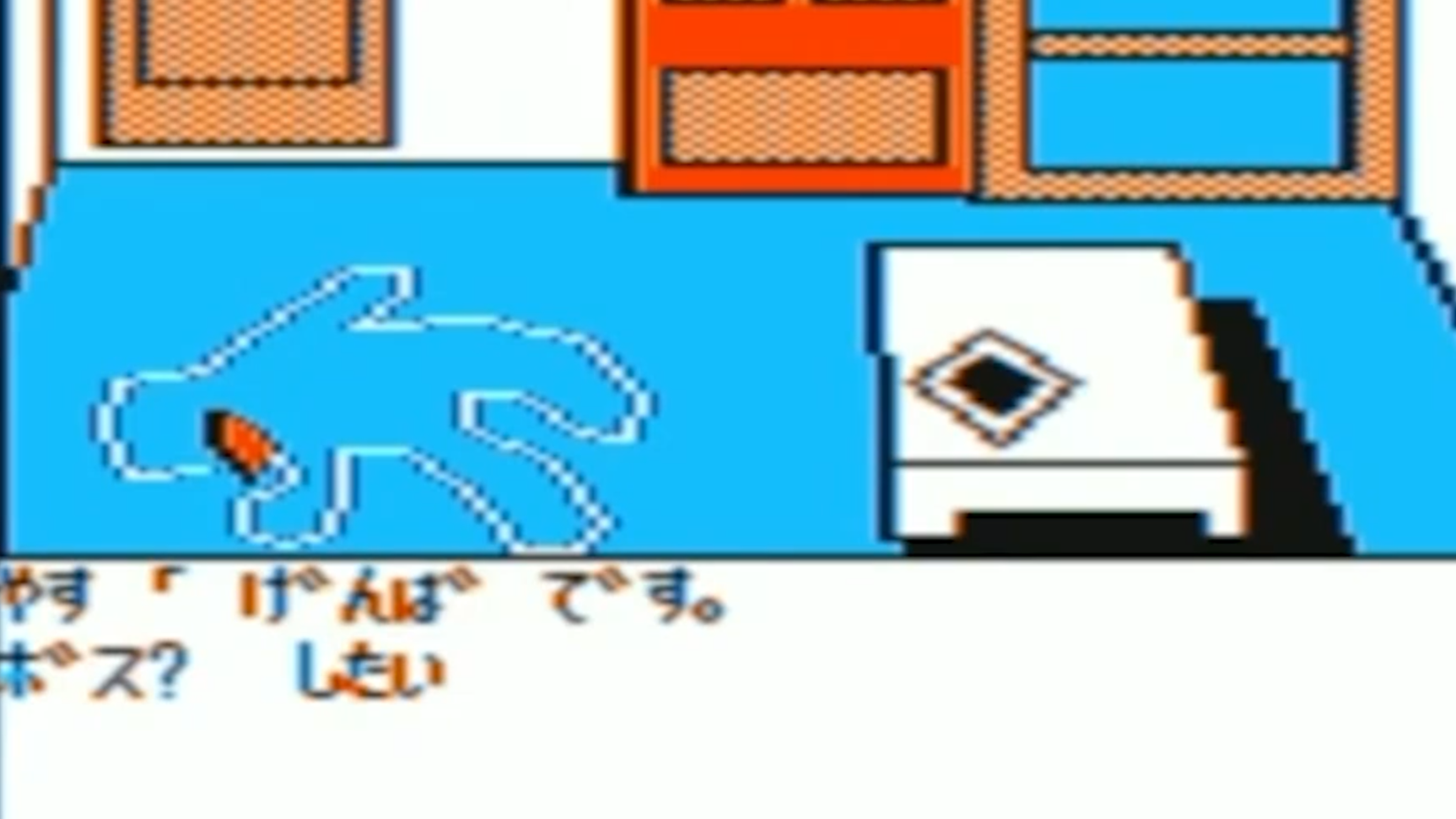
Adventure games were hardly exclusive to the western computing scene; Japan also got in on the fun wholeheartedly, with eastern programmers putting their own text, visual, and hybrid adventure games together for both PCs and, eventually, game consoles. A particular Japanese adventure game with a very important pedigree is The Portopia Serial Murder Case, originally released for the NEC PC-6001 in 1983, then ported to the Famicom in 1985.
The Portopia Serial Murder Case follows a detective solving various mysteries, questioning witnesses, picking up clues, and all that other good stuff. The game used a branching dialogue system, with multiple different endings for each case depending on how you approached them. The PC version had a regular text input, while the Famicom version was operated with drop-down lists. Something nifty is that the game isn’t programmed with game over states; if you botched a case, you’d get chewed out by the police chief and have to re-open it, but there were no full-on fail states. Besides being a very advanced adventure for its time, it was also both the seminal work of Dragon Quest creator Yuji Horii, as well as the game that inspired Hideo Kojima to get into game design.
6 King’s Quest
Put Those Arrow Keys to Work

|
Sierra On-Line |
|
Adventure |
|
May 1984 |
By 1984, text and graphical adventures had managed to find a consistent midpoint, and more and more games were opting for the hybrid approach over one or the other. However, there were still more advancements to be made, and it would be that very year that one of the most influential adventure games in gaming history would start achieving them: Sierra’s all-time classic, King’s Quest.
While King’s Quest still used a command input like many of its contemporaries, it wasn’t a first-person view, and it didn’t use static artwork. It had animated character sprites and controllable movement, allowing the game to add an extra layer of complexity to its commands by requiring you to maneuver King Graham next to objects and characters in order to interact with them. This helped pave the way for more intuitive contextual button inputs. The game was also notoriously full of death states and softlocks, which is how the classic Sierra adage of “Save Early, Save Often” came about.
5 Maniac Mansion
Graced Us with the SCUMM Engine

Not everyone liked the traditional adventure game approach of command prompts and text inputs. Some developers found the approach clunky and unintuitive, moreso as graphics became more widely available. One such developer was Lucasfilm Games’ Ron Gilbert, who, alongside his partner Gary Winnick, wanted to facilitate a more streamlined system for adventure gaming. The two would realize this dream in the form of the SCUMM Engine, and its first game, 1987’s Maniac Mansion.
Maniac Mansion scraped the text input entirely, instead using a new point-and-click command interface. Using your mouse cursor (which was new at the time), you’d click on a command from the interface, then click on an object or character on the display that you wanted to use that command with. You had a total of fifteen action commands at your disposal, which led to a surprisingly open-ended puzzle-solving system. The ease of use that came with the SCUMM Engine would help Lucasfilm Games, eventually rebranded to LucasArts, blaze the adventure gaming trail alongside Sierra.
4 Sam & Max Hit the Road
Now With Silly Voices

By the 1990s, not only had graphical interfaces been definitively cracked, but games could also have music and sound effects. The next puzzle on the table, then, was getting game characters to talk. Once again, LucasArts proved to be a trailblazer in solving this particular pickle, with one of the earliest adventure games to feature full voice acting being 1993’s Sam & Max Hit the Road, released for MS-DOS.
Based on Steve Purcell’s lovably irreverent comic series about a pair of anthropomorphic Freelance Police, Sam & Max Hit the Road combined the ease of the SCUMM Engine with the newly-developed iMUSE audio system. This audio system allowed multiple tracks of audio to be synced up with visual elements, allowing for music, sound effects, and yes, voice acting to be played, and particularly hilarious voice acting at that. The only catch was that only the CD-ROM version of the game had the voice acting included, as the floppy disc version didn’t have enough memory.
3 Myst
The Power of CD-ROM

By the mid-90s, adventure games were running up against the limit of what could be feasibly stored and presented on floppy discs and their drives. If the genre were to keep growing, it needed to move onto the next big piece of hardware: CD-ROM. Games like Sam & Max were a good start in showing CD-ROM’s efficacy, but arguably, the game that really forced the industry to take the next step was 1993’s Myst.
Originally developed by Cyan for Mac OS, Myst utilized a beautiful combination of pre-rendered objects and backgrounds, full-motion video, and surprisingly elaborate voice acting to tell a very artistic tale of a mysterious world found inside a book. Interestingly, a lot of PC gamers at the time actually didn’t like Myst, thinking it was too slow-paced and artsy, but the game sold like hotcakes anyway. Besides being a major score for Cyan and the game’s publisher, Broaderbund, it helped push the industry at large into adopting the CD-ROM format, which helped to get future adventure games on track to being even bigger and better.
2 Shenmue
A Living World

Over the decades, multiple adventure games have incorporated some manner of real-time elements, like having characters move between screens independently of you or having a ticking clock in the background. However, none of it was ever really congruent with actual, real-life people and their daily lives. The game that would attempt to bridge that tricky gap would be Yu Suzuki’s mildly infamous Dreamcast classic, 1999’s Shenmue.
Shenmue was an action-adventure game in which young Ryo Hazuki needed to investigate around his hometown in order to track down the man who killed his father. While the game had its action and combat segments, its major defining feature was the schedule system. Time was always ticking by in a day/night cycle, with the town’s residents going about their own schedules, which meant you sometimes needed to be in the right place at the right time to solve puzzles and progress the story. The game was a commercial failure, unfortunately, largely due to its overbloated budget, but it was a major step in introducing the concept of real-time systems to adventure games.
1 Cave Story
The Efficacy of Indie
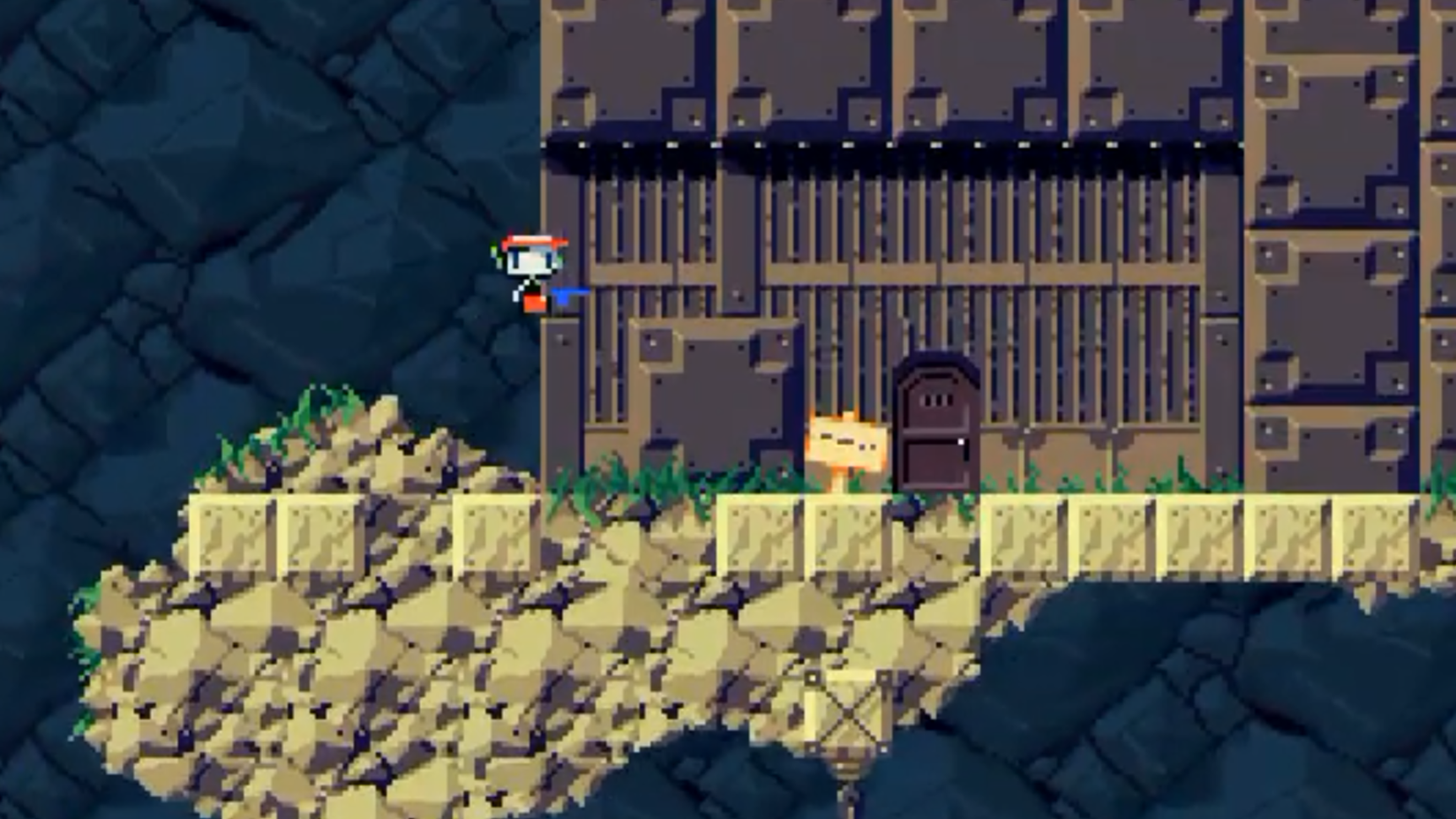
Many of the earliest adventure games were put together by only a handful of designers, as there wasn’t enough money in gaming back then to warrant corporate investment. By the early 2000s, though, the proper gaming industry was in full swing, with any new adventure games being assembled by enormous teams. However, it was during this time that the seed of the indie game renaissance we currently find ourselves in was planted. It all started in 2004 when a man named Daisuke Amaya released his homemade action-adventure game, Cave Story.
Cave Story was a Metroidvania game released right around the time that term actually came into being, inspired by the Metroid and Castlevania games Amaya played in his youth. Amaya developed it in five years, mostly just as a hobby, and released it online with no particular expectations. However, the game slowly but surely accrued a massive positive reputation, thanks to both its action combat and its open-ended adventure elements, eventually prompting indie developer Nicalis to reach out to Amaya to release a more polished version, Cave Story+. Cave Story proved that adventure games can still be competently assembled by small teams, and it’s it and games like it that keep that spirit alive in the modern day.





![ELDEN RING NIGHTREIGN: Deluxe Edition [FitGirl Repack]](https://i5.imageban.ru/out/2025/05/30/c2e3dcd3fc13fa43f3e4306eeea33a6f.jpg)
 English (US) ·