.png)
 1 hour ago
2
1 hour ago
2
Hajime Isayama’s Attack on Titan is one of the most nuanced stories about the cycle of hatred and the heavy weight of sacrifice. What starts as a tense, action-heavy tale about humanity’s survival against man-eating Titans evolves into a dizzying conspiracy and the complex motivations of one man: Eren Yeager. One of the most compelling hero-to-antagonist arcs ever written, Eren’s gradual turn feels brilliantly fleshed out, and Attack on Titan is better for it.
Even so, the ending of Attack on Titan remains controversial. Isayama’s original manga ending drew backlash at the time, which the manga author dutifully addressed by adding eight extra pages to provide a more satisfying conclusion. Although this extended ending and its anime adaptation (which adds further context) are better received than the source material, aspects of this epic saga still feel flawed. Although Isayama always intended to end the saga on a bittersweet note, some last-minute character actions feel abrupt, which unfavorably recontextualize aspects of the story.
Isayama himself has misgivings about his much-debated ending. “I found myself depicting him [Eren] with a certain closeness and sympathy,” he wrote for a block print displayed at the Attack on Titan Museum in Hita City, Japan. “As a result, I feel there remains a sense of insincerity in the story's conclusion — at least in my own assessment.” Whether or not you agree, it’s safe to argue that Attack on Titan ends on a note that is both flawed and compelling.
With that in mind, here are 10 anime whose endings offer more coherence, conviction, and catharsis.
[This article contains spoilers for the anime endings referenced below.]
Fullmetal Alchemist is one of those rare stories that flesh out and reinforce its themes with absolute coherence. An exceptional adaptation to begin with, Fullmetal Alchemist: Brotherhood follows Elric brothers Edward and Alphonse, who lose parts of themselves after a failed transmutation ritual. This prompts them to embark on a long, eventful journey that ends with Edward learning the true meaning of Equivalent Exchange, allowing him to weigh the high cost of sacrifice.
The final arc is nothing short of perfect, as the series antagonist, Father, is defeated in a way that echoes what Fullmetal Alchemist is all about. Also, every one of Edward’s allies is given the chance to resolve their inner turmoil and achieve what they had set out to do. There’s thematic closure, rich character growth, and a deeply satisfying payoff right up until every loose end is tied up.
2 Takopi's Original Sin
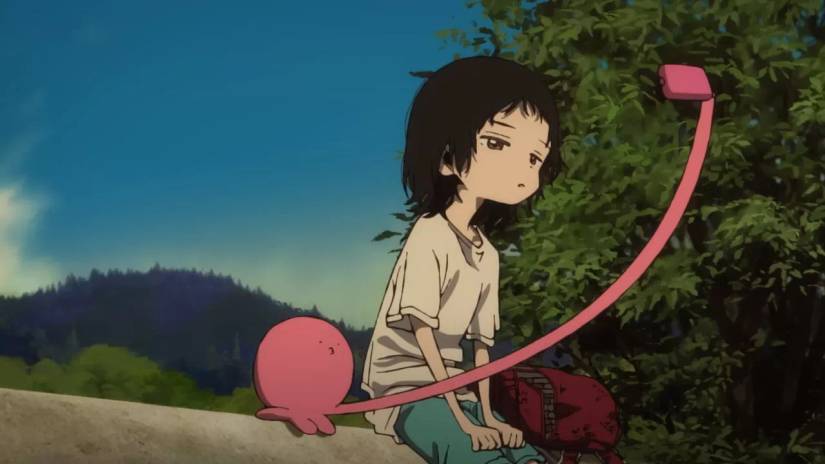 Image: Enishiya
Using only six episodes to tell an emotionally devastating story, Takopi's Original Sin revolves around a child named Shizuka and an alien who crash-lands on Earth. Shizuka and the alien cross paths, and she calls him Takopi. During Takopi’s attempts to make Shizuka happy, the alien notices signs of bullying and abuse that Shizuka has been silently enduring for a while. The anime’s ending doesn’t opt for a quick fix to systemic trauma. Instead, Takopi realizes that his “happy gadgets” cannot heal complex emotional wounds, and that affected children like Shizuka must work through their trauma through self-acceptance and human connections. It is a realistic, if bittersweet, ending to a story that opens with the expectation that magical fantasy can provide escapism from pain but ultimately ends with the realization that escapism is but a temporary solution. While it’s a tender sentiment, Takopi’s Original Sin approaches this wish with sincerity.
3 Code Geass: Lelouch of the Rebellion
Code Geass maps the journey of exiled prince Lelouch vi Britannia, who takes on a ruthless alter-ego after attaining the power of Geass, through which he can command anyone to do his bidding. The ending works well due to the brilliant Zero Requiem twist: Lelouch’s grand plan is to unite the world against him. The payoff is massive, as it involves his childhood friend Suzaku Kururugi, who deliberately assassinates him while taking on the mantle of Zero. Lelouch’s plan triggers a wave of shared relief in a nation broken by endless war, allowing characters like Nunnally to inherit a gentler world. Lelouch’s sacrifice not only adds greater complexity to his actions throughout Code Geass, but also brings his belief of “the only ones who should kill are those prepared to be killed” full circle.
4 Gurren Lagann
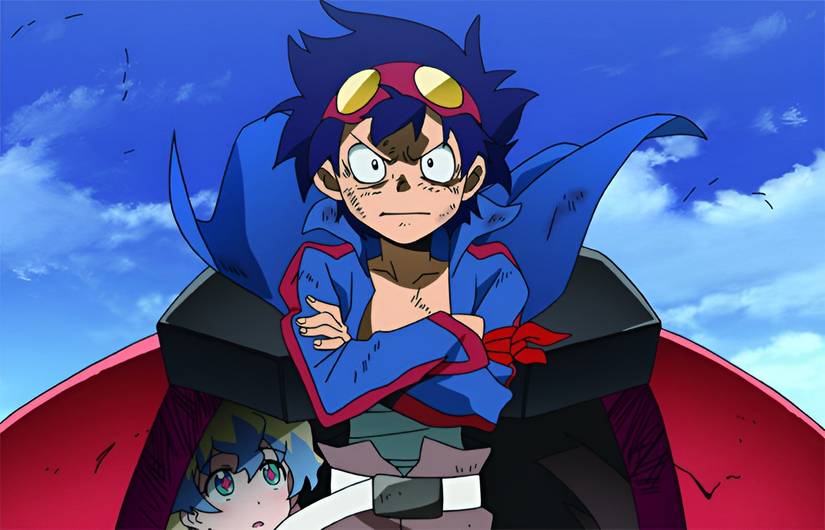 Image: Gainax
Gurren Lagann has always been about defying impossible odds. The young outcast Simon breaks through the ceiling of his subterranean village at the beginning of the story to discover that those living on the surface are constantly at war. This leads Simon and his friend Kamina on a journey to fight the tyrannical Spiral King, which ends with our protagonist heeding the warning that uninhibited power can destroy the universe. Instead of assuming godhood and using his power to revive the dead, Simon hands his Core Drill to Gimmy, passing the torch to the next generation. There’s tenderness and comfort in this act, as Gurren Lagann champions a world where people aren’t held back due to the past. Grief might be an impossible hurdle in our lives, but it can be overcome once we realize that the future is a shared responsibility, and not a lone burden.
5 Cowboy Bebop
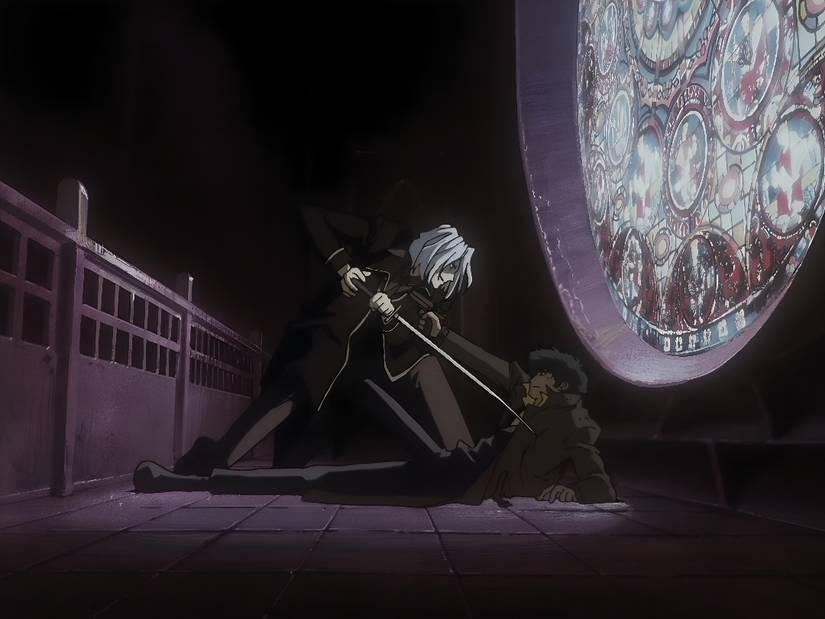 Image: Sunrise
Cowboy Bebop ends with some of the most tragic thematic closure in all of anime. The effortlessly aloof Spike Spiegel is forced to confront his past, which leads to a fatal conflict with Vicious and the Red Dragon Syndicate — both part of the life he had left behind. Spike’s death isn’t tied to shock value. Instead, it resonates as the culmination of his heartbroken melancholy that he had been wrestling with ever since Julia’s assumed death. Before this climactic juncture, Spike viewed the present as a waking dream, embracing a “whatever happens, happens” mindset to further his dissociation. This coping mechanism is shattered towards the end, as Spike realizes that he has no choice but to face Vicious and end things once and for all. The closing text of “You’re gonna carry that weight” feels especially heavy considering those Spike leaves behind, like the Bebop crew, who must keep moving forward despite suffering such a profound loss.
6 Sonny Boy
The ending of Sonny Boy might feel unsatisfying if you’re expecting a traditional conclusion, but it is pitch-perfect if we consider the anime’s experimental approach to storytelling. The story is not only non-linear, but it also skips over major events to focus on the aftermath of how characters react to those events. The resolution to a group of middle school students being transported to an alternate dimension isn’t straightforward, as the reality that awaits them back on Earth is far from perfect. That said, Sonny Boy rallies for everyday mundanity, even if it constitutes hardships that are a part of being an adult. There’s quiet optimism here, as the story allows Nagara and Mizuho to choose a more mindful existence now that they are better equipped for their inevitable transition to adulthood. It won’t be easy, but these children are no longer held back by passivity, as they know that change is the only constant.
7 Mob Psycho 100
 Image: Bones
Shigeo “Mob” Kageyama wears a comically stoic expression for the majority of Mob Psycho 100, given that he has suppressed intense emotions all his life. Although Mob learns to open up and make new connections along the way, his repressed trauma manifests as the entity ???% (or Unknown), a force so destructive that its existence threatens to endanger everyone. Mob Psycho 100 discards its shonen trappings in favor of an unconventional final arc where the overpowered protagonist accepts the messiest parts of himself without attempting to heal on a whim.
Trauma cannot be forgotten overnight, which is why the anime ends on the note that much work needs to be done to attain inner peace. The final shot of Mob laughing his heart out is the most beautiful and life-affirming conclusion to a story about traumatized children and their sincere efforts to navigate adulthood with radical empathy.
8 Akudama Drive
 Image: Pierrot
In the dystopian world of Akudama Drive, some exceptionally skilled criminals (dubbed Akudama) are sent an anonymous message to free the death row prisoner, Cutthroat, before execution. Four Akudama respond to this mission, but soon realize that they’ve been roped into a larger conspiracy that involves pulling off an incredibly dangerous heist. This high-stakes thriller ends on a powerfully poignant note, where some characters, like Swindler, are allowed to shine by embracing a rebellious cause with a purpose. The true enemy is the state, which emerges as a shadowy force orchestrating violence in the streets through systemic oppression and police brutality. In contrast, the Akudama act as morally grey enforcers of justice, willing to break every law just to protect the innocent. The ending is brutal and feel-bad, but true to the reality of rebels sacrificing themselves to trigger a city-wide uprising.
9 Neon Genesis Evangelion
Neon Genesis Evangelion is one of those stories that never ends. The franchise has ended three times so far (four, if we count Yoshiyuki Sadamoto’s manga), but every conclusion feels fitting with regards to the buildup preceding it. The 1996 anime ends on an abstract note, with Shinji Ikari confronting his deep-seated fears and insecurities to break through the chaos, proving that human connection requires vulnerability. The End of Evangelion takes a more action-heavy route, bringing the horrors of the Human Instrumentality Project to life while Shinji rejects comforting illusion and chooses painful reality. Then comes Evangelion: 3.0+1.0 Thrice Upon a Time, which offers the most hopeful conclusion to this trauma-laden saga by allowing Shinji and his friends to exist in a world without Evas. No matter which ending speaks to you, Evangelion understands the messiness of the emotional spectrum like no other.
10 Steins; Gate
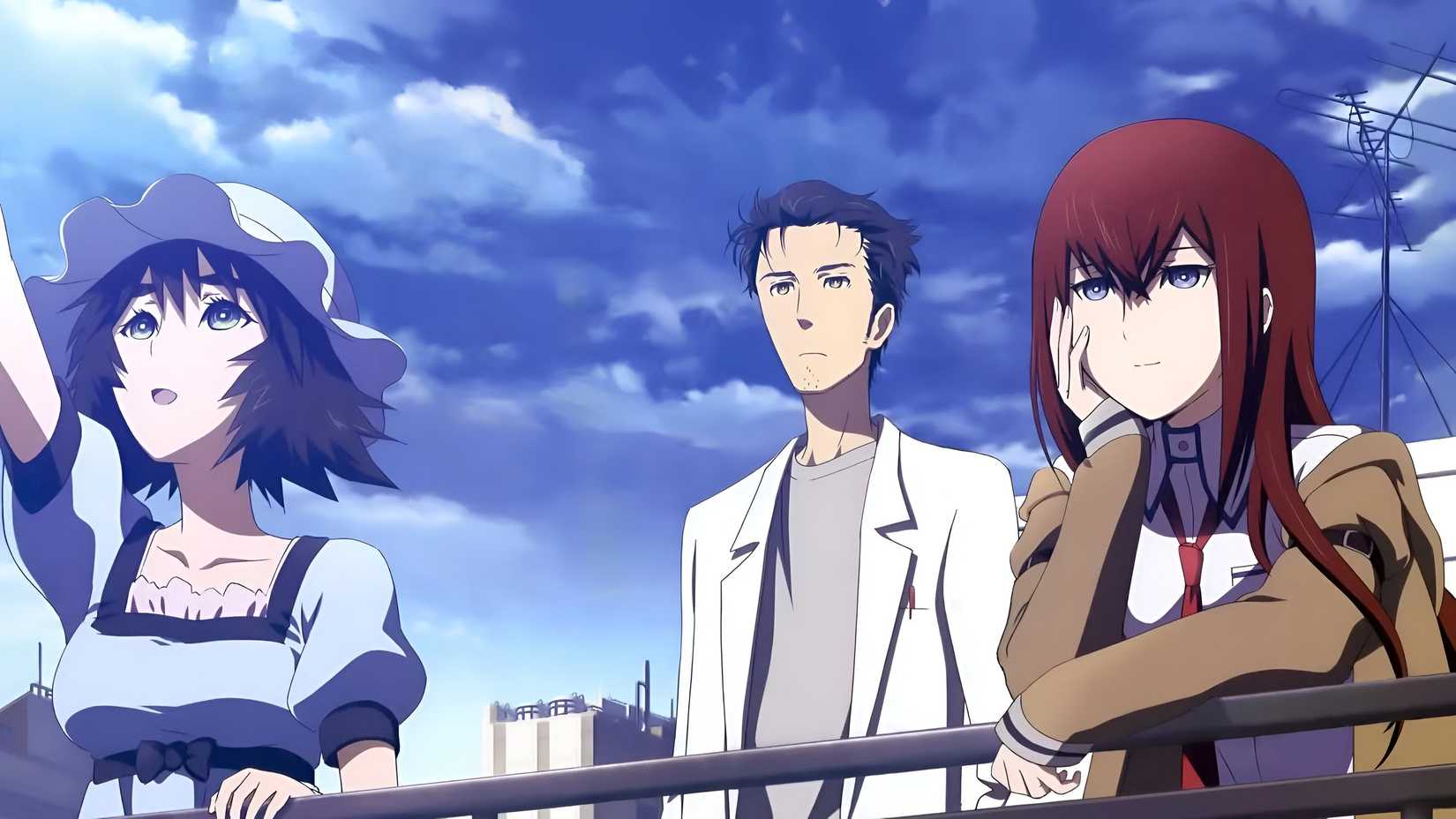 Image: White Fox
The time travel mechanics of Steins; Gate feel more polished than typical genre fare, and its ending reinforces the story’s inner logic and emotional resonance. Rintaro Okabe attends a conference about time travel one day, and this inciting incident unravels endless possibilities once Kurisu Makise dies inexplicably. The ending feels immensely cathartic due to its hard-earned nature, where the time loop closes perfectly while allowing Rintaro to attain genuine emotional maturity. Steins; Gate plays around with causality throughout the series, making the ending feel especially profound, as the cost of finally arriving at the “correct” timeline is unthinkable. Nobody is sacrificed to further the wheel of suffering, which lets the story end on a note that feels both pleasant and satisfying.




![ELDEN RING NIGHTREIGN: Deluxe Edition [FitGirl Repack]](https://i5.imageban.ru/out/2025/05/30/c2e3dcd3fc13fa43f3e4306eeea33a6f.jpg)
 English (US) ·