.png)
.png) 4 months ago
95
4 months ago
95


Published Mar 18, 2026, 11:30 AM EDT
Murillo Zerbinatto is a contributor from Brazil. He's a JRPG enthusiast who has been around the world of games and content creation for more than six years now. He has a particular love for Final Fantasy and has absorbed all the content this long-running series offers, including its obscure spinoffs such as Dimension I & II, Explorers, and My Life as a King. While playing JRPGs is already a time-sinking endeavor, Murillo doubles down by being a platinum hunter as well.
Sign in to your DualShockers account
Nintendo opened the door to the handheld console market, winning over audiences worldwide with the Game Boy. Still banking on the massive success of its first handheld, Nintendo doubled down, releasing new iterations such as the iconic Game Boy Advance.
To capitalize on the GBA's strong sales, countless developers began releasing their own games on the handheld, often touted as spinoffs but still very much new titles. As a result, several JRPG series that didn't make the jump to the PS2 chose the GBA as their new home, whether to maintain a pixel art style or to partner with Nintendo.

Related
10 Nintendo DS JRPGs Still Trapped on Original Hardware
That old folding console is clamped down tight on these JRPGs.
Nowadays, while many GBA JRPGs have been slowly making their way onto the Nintendo Switch Online service, others remain stuck on the original hardware, and the only way to experience them is by owning the console and the original cartridge or, well, trying your luck in uncharted waters.
10 DemiKids: Light Version / Dark Version
Family Friendly-ish Shin Megami Tensei

There is nothing more confusing in the JRPG world than trying to keep up with the countless branching spinoffs that stem from Shin Megami Tensei. Persona is undoubtedly the most famous one, but we also have Devil Summoner, Digital Devil Saga, Devil Survivor, and the one in question here, Shin Megami Tensei: Devil Children.
As the name suggests, Devil Children, better known as DemiKids, is a more lighthearted and kid-friendly take on the series, while still tackling demon-summoning themes (and if there is one thing K-Pop Demon Hunters taught us, it is that kids are not afraid of demons.) The biggest difference is that some monster designs were changed to better appeal to a younger audience, so do not expect to see Mara in DemiKids.
The story follows three friends, Jin, Akira, and Lena, who find a book that summons demons, kicking off their adventure. DemiKids features two versions, Light and Dark, each offering exclusive demons (promoting cable link trading) and a different protagonist. Jin is the protagonist of the Light Version, while Akira takes the lead in the Dark Version.
9 Shining Soul
The Shining Reboot

The Shining series is one of SEGA's most traditional franchises, beginning on the Sega Genesis and even receiving more recent entries like Shining Resonance Refrain. Along the way, the developers created the Shining Soul games, a dungeon crawler RPG for the GBA that served as a reboot of the series.
The goal of the reboot was to move away from tactical RPG gameplay toward a more action-based approach, while still keeping some staples of the franchise, such as the Dark Dragon villain. Shining Soul puts us in the role of a hero from the Shining Fleet, the only one capable of defeating the big bad and saving the world.
The gameplay moves entirely away from tactics into a more real-time format. We control a single character, who can be a warrior, archer, wizard, or dragonute, as they explore dungeons, defeat enemies, gain experience, and collect new equipment. As expected from a GBA title, it was possible to play co-op with up to 4 players via the link cable, as long as everyone had their own copy of Shining Soul.
8 Rebelstar: Tactical Command
XCOM Inspired

Rebelstar: Tactical Command
While Rebelstar: Tactical Command is not technically a JRPG since it was developed by a British company and published by a Namco US subsidiary, it certainly feels like one, from its design to its narrative and tactical gameplay. Think of it as an XCOM-inspired JRPG built on the foundation of the Rebelstar strategy series.
An alien race known as the Arelians has invaded Earth and enslaved humanity. Jorel's parents are killed during the invasion, and he decides to join a rebel cause. As Jorel rises through the ranks, he recruits new members to the resistance, each bringing their own specialties to the table.
Combat is grid-based, and before each mission, we go through a setup phase where we choose which characters will participate and what equipment they will carry. Each character has a pool of AP that is spent on every action, such as moving or shooting. It is also possible to place them in Overwatch mode, and when an enemy enters their line of sight, the character will fire immediately.
7 Boktai: The Sun Is in Your Hand
Kojima's JRPG

Boktai: The Sun is in Your Hand
Hideo Kojima is not just about Metal Gear or Death Stranding. Back in the day, he produced Boktai: The Sun Is in Your Hand, a GBA JRPG. In true Kojima fashion, the game introduced an innovation that, as the name suggests, revolves around the sun. The cartridge included a photometric light sensor that literally powered the game's solar guns.
Boktai carries a lot of Kojima's DNA. The gameplay focuses heavily on stealth, allowing the player to hide against walls, knock on them, and lure enemies away to avoid confrontation. For instance, when encountering a zombie, the ideal approach is to shoot it with the solar gun, stun it, and slip past. Each area also features numerous puzzles.
The story follows a mysterious boy named Django, who appears to be descended from one of the world's greatest vampire hunters. His mission is to reach the City of Death and prevent the end of the world. All things considered, given the sun-powered cartridge gimmick, it is easy to see why the game has not been ported to other platforms.

Related
10 PS1 JRPGs Still Trapped on Original Hardware
Some are in dire need of a port, I would say, simply because I want to replay them.
6 Dragon Ball Z: The Legacy of Goku
A Saiyan Adventure

Dragon Ball Z: The Legacy Of Goku
Dragon Ball has always been one of the most licensed series in gaming, and among its many titles, there are a few scattered RPGs here and there. While my favorite is Dragon Ball Z: Super Saiya Densetsu on the SNES, there is also plenty to enjoy in the Dragon Ball Z: The Legacy of Goku trilogy.
In The Legacy of Goku, we play as the series' eponymous protagonist in an action RPG format as he goes through the events of the Frieza Saga. Combat is quite simple, with buttons for melee attacks and another for Ki-based abilities. Defeating enemies grants experience, which in turn increases Goku's level and makes him stronger.
There is a full RPG layer, allowing Goku to explore towns, enter houses, and talk to NPCs. It is also possible to access a menu and use items such as Senzu Beans. The Super Saiyan transformation is present, but only during the final battle against Frieza. Meanwhile, the second and third games expand on this by allowing transformations during combat, and despite the title, you can also play as other characters.
5 Mother 3
Trapped in Japan as Well

Mother 3 is not only a JRPG trapped on the GBA, but also one that remains stuck in Japan. The game received a fan translation long ago, but there are still those who don't want to rely on emulation to experience Mother 3, and that is completely understandable. It is a real shame that Nintendo never officially localized the game, and, with creator Shigesato Itoi now retired from game development, it seems unlikely that it ever will.
Just like Mother 2, AKA EarthBound, is often regarded as one of the best JRPGs on the SNES, Mother 3 earns that same reputation within the GBA library. We play as Lucas and his quirky party as they take on the Pigmask Army. The writing retains the series' signature charm, but instead of a satirical real-world setting, it takes place in a fantasy environment that is far more character-driven.
Combat remains turn-based but introduces a musical gimmick. If players press inputs in rhythm with the music, they can chain combos that keep the character attacking. It is a shame the game never saw an international release. And while Mother 3 is available on Nintendo Switch Online, it is only in Japan, leaving international audiences out in the cold once again.
4 Final Fantasy Tactics Advance
The Two Sides of Marche

Final Fantasy Tactics Advance
The first Final Fantasy Tactics was one of my earliest experiences with the franchise. It had everything to make it a classic, and it did. Naturally, when I went to play Final Fantasy Tactics Advance, I expected something similar, not just in gameplay, but in tone, themes, and narrative. I could not have been more wrong.
That is not to say Final Fantasy Tactics Advance is a bad game, far from it. Even though I am not a fan of the Judge system, I understand its purpose and how it encouraged me to rethink my party composition for each battle, which in turn made encounters more dynamic with new races and Jobs. On the other hand, the story was not really my cup of tea.
The protagonist Marche is isekai-ed into Ivalice, meaning he is transported from the real world into a fantasy one, and all he wants is to return home. The thing is, his life is not great, and the same goes for his friends who were transported with him, so there is not a particularly strong reason to go back. The tone of Final Fantasy Tactics Advance is also much lighter than I expected, which, again, isn't a bad thing, but it doesn't hold a candle to the original. Comparison may be the thief of joy, but it is hard not to make it when the game carries the same name.
3 Lufia: The Ruins of Lore
The Gaiden Version

|
Atelier Double |
|
Taito (JP) Atlus (NA) |
|
May 6, 2003 |
Back in the GBA era, it was common for JRPGs to be released as spinoffs, often signaled by the "Gaiden" label. There were many reasons for this, whether due to different gameplay styles or because they didn't follow the same canon, even though sometimes not even mainline entries did. That said, none of that applies to Lufia: The Ruins of Lore, the fourth game in the Lufia series.
Lufia: The Ruins of Lore is fully canonical within the main timeline, taking place between Lufia II: Rise of the Sinistrals and Lufia & the Fortress of Doom, and it retains the same turn-based gameplay as the other entries, even featuring Disc Monsters, monsters that can be captured and used in battle. This time, we can even fuse them with party members.
Eldin is the protagonist of the JRPG, a young man inspired by his father, a great treasure hunter who never returned from an expedition. Alongside his friends Torma or Rami, Eldin sets out on a journey and eventually crosses paths with the priestess Rubius, whose conflict with a man named Ragule soon escalates into a world-saving adventure.
2 Summon Night: Swordcraft Story
Becoming the Craftlord

Summon Night: Swordcraft Story
Still within the realm of spinoffs, we have Summon Night: Swordcraft Story, a spinoff of the tactical series Summon Night. We play as either Pratty, the female protagonist, or Cleru, the male, and the story remains largely the same. The protagonist is a Craftknight aiming to become the next Craftlord, and for that, crafting is at the heart of everything.
Combat is fought solely with the protagonist in a side-scrolling arena. We can bring multiple weapons and switch between them on the fly. We also receive support from our Guardian Beast, which provides magic abilities in battle. However, the real core of Summon Night: Swordcraft Story lies in crafting our own weapons.
The key to becoming stronger is forging new weapons, which require both knowledge and materials. One of the four Guardian Beasts also assists in the process by enchanting the equipment. The gameplay loop revolves around exploring dungeons, gathering materials, and either defeating bosses or winning tournaments, progressing through the days and, consequently, the main story.
1 Tactics Ogre: The Knight of Lodis
The Ogre Spinoff

Tactics Ogre: The Knight of Lodis
The Ogre series began with Ogre Battle and later evolved into Tactics Ogre. While the former featured a more real-time strategy approach, the latter is a more traditional tactical JRPG, where we engage in battles on grid-based maps and move our units, each acting on their turn by attacking, using skills, or items.
Interestingly, the first Tactics Ogre is considered a mainline entry and has received two remakes, one for the PSP and another for modern platforms. Meanwhile, Tactics Ogre: The Knight of Lodis, released only for the GBA, is treated as a spinoff and remains stuck on the handheld to this day, which is a real shame because I genuinely enjoy it despite some of its somewhat obtuse systems, such as acquiring new emblems to change classes, whose requirements can be rather obscure.
In this spinoff, we play as Alphonse, a knight from the Holy Lodis Empire who becomes disillusioned with the oppression carried out by his own kingdom and decides to renounce his knighthood. Another quirky aspect of Tactics Ogre: The Knight of Lodis is how its endings are obtained. There are five in total, and the best one requires completing the game in under 25 hours, which can feel a bit anticlimactic if you are the type who likes to explore every mechanic. Even so, it is still a fantastic tactical JRPG, and I would gladly welcome a remaster, remake, or port.
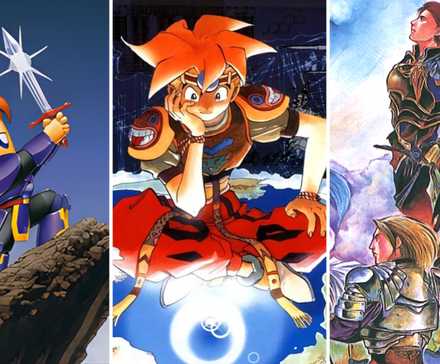
Next
10 SNES JRPGs That Are in Dire Need of a Modern Port
There are still many SNES JRPGs that could be rescued from the console with a modern port.





![ELDEN RING NIGHTREIGN: Deluxe Edition [FitGirl Repack]](https://i5.imageban.ru/out/2025/05/30/c2e3dcd3fc13fa43f3e4306eeea33a6f.jpg)
 English (US) ·