.png)
.png) 3 months ago
30
3 months ago
30


Published Apr 6, 2026, 2:43 PM EDT
Daniel has been playing games for entirely too many years, with his Steam library currently numbering nearly 750 games and counting. When he's not working or watching anime, he's either playing or thinking about games, constantly on the lookout for fascinating new gameplay styles and stories to experience. Daniel has previously written lists for TheGamer, as well as guides for GamerJournalist, and he currently covers tech topics on SlashGear.
Sign in to your DualShockers account
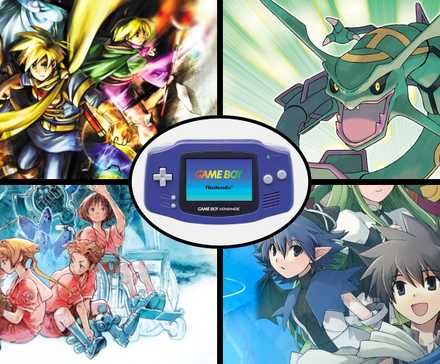
Much like its brick-shaped predecessor, the main appeal of the Game Boy Advance was that it was a game console you could just whip out and enjoy anywhere, moreso with the increased portability of the SP. The GBA was home to all sorts of games, from platformers to adventures to a pretty healthy library of JRPGs.
Related
10 Best GBA JRPGs, Ranked
Those who wanted to explore Nintendo's JRPG catalog in the 2000s would have to rely on its handhelds rather than home consoles.
JRPGs were particularly invaluable for those long trips in the car or on a plane, where you’d feel that most powerful of hankerings to flick on the GBA’s power switch. While a JRPG is great for keeping your mind occupied for a while, there is a certain expectation of portable games to get things moving a little faster than home console games. The GBA had processing power roughly on par with the SNES, so it could handle a little more flash than the regular Game Boy, but you wouldn’t boot it up to play something like Final Fantasy X. If you wanted a JRPG that would cut to the good stuff quickly, these were the games you’d slot in.
10 Lufia: Ruins of Lore
Don’t Worry About the Other Ones

|
Atelier Double |
|
GBA |
|
March 2002 |
In the early 2000s, games media wasn’t quite as unified as it is today. If a series was spread out amongst like, four consoles, there wasn’t really any way of confirming that beyond just being in the know somehow. This is why it may have been a little confusing for those who played Lufia: Ruins of Lore on the GBA, not knowing it was actually the fourth game in a series, but it wasn’t that big a deal.
Ruins of Lore is a pretty straightforward JRPG: you’re an adventurer, you’re going on adventures, and cool fantasy stuff happens. There is a background story, but it’s all conveyed pretty quickly in the opening cutscenes, so you can just get right to the fun bits. You get your initial party setup about 15 minutes in, and 5 minutes later, you’re in a dungeon. Play the first bit at home, and you’re ready to kill time in the car afterward.
Something nice about this game over other GBA JRPGs is that, in something of a rarity for the time and platform, it used on-field enemy symbols instead of random encounters. If you were in a rush, you could just juke them in the field to avoid the fight altogether rather than getting constantly blindsided.
9 Breath of Fire
A Capcom Classic

Something nice about the GBA was that it presented many opportunities for those who just missed the SNES growing up to play that console’s games again, and with visual and graphical improvements at that. For example, I didn’t get to play Capcom’s original JRPG, Breath of Fire, as a kid, but I got my chance when it was released on the GBA in 2001.
Breath of Fire has a simple setup that makes a generally good introductory JRPG for those new to the genre. The initial story hook is presented fairly fast, albeit with the appropriate pomp and circumstance that comes with a whole village being wiped out, before quickly moving you along to adventuring out in the world at large. The game’s combat system is also heavily expedited, using abbreviated menus and fast animations, creating a fast-paced tempo of strategizing and commanding. You’re not in a rush or anything, but it feels good to quickly plug in commands one after the other.
Incidentally, both Breath of Fire and its sequel, Breath of Fire 2, are on the GBA, and both have a similarly brisk pace. Either’s a good choice if you want a quick-start GBA JRPG, but Breath of Fire 2’s story does follow directly from the first game, so you might be a bit lost if you start on the second one.
8 Tales of Phantasia
Better Late than Never

By the mid-2000s, the western audience was already familiar with the Tales series, thanks to console titles like Tales of Destiny and Tales of Symphonia. However, western audiences were playing quite a game of catch-up, as the series got its start in 1995 with Tales of Phantasia for the Super Famicom. It wouldn’t be until 2006 that we got to try this game for the first time on GBA.
From the moment you start a new game, you’re dropped into a high-level battle between four do-gooders and Dhaos, with their sorcerer going through the whole chant to cast Indignation with full voice acting. It’s only a quick scene, but it gives you a good idea of what to expect. After that, there’s a bit of bumming around in the village before things start popping off and you get to experience the game’s real-time combat system for itself.
Admittedly, the GBA port of Tales of Phantasia isn’t great. The voice acting is hammy, and the battle gameplay is slower than it should be. That said, if you were already a fan of Tales games at the time and wanted a version you could take on the go with you, you could do worse. At least it gets to the combat quickly, even if the combat itself takes a hit.
7 Golden Sun
Put Your Mind to It

Am I nuts, or do a lot of these games start with a village being attacked, damaged, or otherwise menaced? I swear, I’m not doing this on purpose. Well, even if it’s not the most original introduction, 2001’s Golden Sun arguably had the most interesting take on it, paired with a surprisingly climactic battle system that, together, hooks you quite quickly.
The game starts with a massive magic-induced storm completely tearing up Isaac’s village which, while not exactly gameplay, does a pretty good job of setting up the game’s story and making you care about the main party with a degree of drama you wouldn’t expect from a GBA game. After all that’s said and done, you get to start experiencing the game proper, including its combat system full of dramatic camera angles and flashy animations.
Not long after getting into the game proper, you also quickly learn about the gameplay concepts of Psynergy and Djinns, which make up the real meat and potatoes of the game’s overall systems. It’s nice to get all the basics up front so you can appreciate what comes later.
6 Final Fantasy I & II: Dawn of Souls
Many’s First Exposure to the OG

Final Fantasy I & II: Dawn of Souls
The original Final Fantasy was released all the way back in 1987, 1990 for western audiences. I wasn’t even born yet when it came out, so perhaps unsurprisingly, I didn’t play this game in its original form. However, I got my chance to experience the OG when it came to Game Boy Advance in the form of a two-pack, Final Fantasy I & II: Dawn of Souls.
The version of Final Fantasy present in this two-pack is an overhaul of the original, with improved gameplay, graphics, music, and all that other good stuff. It is still a prototypical JRPG at its heart, though, dropping you right in front of Corneria to meet with the King and get your first mission to go slap Garland in the span of about 15 minutes. There’s a nonzero chance you’ll get your first random encounter before you even set foot in the city, which is definitely a great example of “fun from the start.”
Of course, you can play Final Fantasy II on this cartridge, and as far as prototypical JRPGs go, it’s got its own place in history and is worth experiencing. I would’ve, but I never managed to beat Chaos in the first game, so I never got around to it.
5 Mega Man Battle Network 3
Battle Routine Optimized

Mega Man Battle Network 3
The Game Boy Advance is home to one of my most favorite things to come out of the Mega Man IP, the Battle Network series. Of course, I didn’t get into this series until it was already a couple of entries deep, jumping on with Battle Network 3, though honestly, I picked a pretty good place to start.
Since Battle Network 3 is the third game in the series, it doesn’t really need to waste any time establishing its general premise or the most basic elements of its gameplay and combat systems. Odds are good you know what you’re here for, and if you don’t, the tutorial’s been optimized enough over several games to quickly convey the important bits of managing battle chips and busting viruses.

Related
Mega Man Battle Network 10 Best NetNavis, Ranked
Mega Man Battle Network features many powerful NetNavis, but which one stands above the rest? This list ranks the best NetNavis in the series.
Battle Network 3 also featured some substantial overhauls to the game’s back-end systems, such as establishing the battle chip classifications and introducing the Navi Customizer, which just makes it a good game to start with in general. Also, of the game’s two versions, Blue version is better because it has BowlMan.exe, and he is awesome.
4 Fire Emblem
The First in the West

Fire Emblem: The Blazing Blade
In the modern day, Fire Emblem is one of Nintendo’s hot ticket IPs in both the east and west, but back in the 2000s, nobody on this side of the pond knew about it. You can imagine how confused we all were when Marth and Roy showed up in Super Smash Bros. Melee, only speaking Japanese. It wouldn’t be until 2003 that western players got to try Fire Emblem properly on GBA.
Obviously, this game isn’t the first Fire Emblem, just the first to be localized, so its systems were already fairly well optimized. After about three minutes of dialogue with Lyn following the start of a new game, you’re dropped right into your first tactical battle. The initial tutorial is a little heavy, but that’s kind of a necessity for this particular subgenre of JRPG. Subsequent battles gradually ramp up the complexity, which does a good job of getting you properly locked in and engaged.
Besides being a good quick-start game in a vacuum, the GBA Fire Emblem also serves as a handy introduction to the series’ whole vibe for anyone new to it. Since it’s available on Switch Online, you could try it before playing any of the newer games just to get a basic idea on whether it’s your cup of tea.
3 Mario & Luigi: Superstar Saga
As Simple as Jumping

Mario & Luigi: Superstar Saga
If you want a JRPG that knows how to cut to the chase, Mario is usually a reliable provider of such experiences. His various JRPGs, solo or with his brother Luigi, are relatively simple experiences, and simple means fast. The Game Boy Advance in particular was home to the first of the latter category, bringing us Mario & Luigi: Superstar Saga.
Superstar Saga gives a fairly quick overview of the situation as soon as the game starts: an evil bean witch stole Peach’s voice, so Mario and Luigi, with Bowser’s help, have to cross into the neighboring kingdom to get it back. You get your first tutorial bout against Bowser within three minutes, followed by wandering around Bowser’s carrier and fighting Fawful, with environmental exploration tutorials scattered throughout. By the time you enter the first major area, you’ve pretty much got the whole basic gist.
Part of what helps Superstar Saga be such a brisk experience is its simple combat systems. At least at first, Mario and Luigi just jump on and over everything, with the only more complicated maneuver being Bros. Attacks. The game spaces out its major mechanics, ensuring you have ample time to understand and enjoy each one.
2 Mother 3
Still Waiting, Nintendo

The Mother series of JRPGs, also known as Earthbound, had a rather protracted development, starting on the NES, moving onto the SNES, and rounding out on the GBA. I wouldn’t blame you if you didn’t know that, though, because the best game in the series, Mother 3, is still a Japan-exclusive, Nintendo.
Mother 3 sets its tone fairly quickly, starting out with the young Lucas and Claus up in the mountains, showing you the basics of the combat system, before moving down to Flint in the village running into the burning forest. It’s kind of remarkable how well the game flows from story to gameplay, all without sacrificing its vital plot and tone beats. It’s the kind of game I would’ve adored if I could play it on my western GBA growing up, Nintendo.
You could probably discern that I’m a tad bitter that this game remains unplayable outside of unofficial channels, especially considering that it is available on the Japanese version of Switch Online’s GBA library. You just gotta release a translation, Nintendo, I will literally give you money for it. I’ve played this game three times and would happily pay to do it again officially. Stop tormenting me.
1 Pokémon FireRed & LeafGreen
A Certified Classic with a Fresh Coat of Paint

Pokemon FireRed and LeafGreen
The GBA is home to a grand total of five mainline Pokémon games. Pokémon games in general, as part of their kid-friendly, highly-accessible nature, usually cut straight to the heart of things fairly quickly, so any of these games are good for quick-start fun. That said, if we had to pick one, technically two, it would be FireRed and LeafGreen.
As remakes of the original Pokémon games from the Game Boy, FireRed and LeafGreen have an equally brisk start. You meet Professor Oak, you get your starter, you smack Blue upside the head, and you’re out the door, battling and catching Pokémon in the wild. It goes without saying that the main grab of any mainline Pokémon game is “catching ‘em all,” so the sooner you can get to the catching, the better. That’s part of how the original games got their hooks into us, and the remakes are no different.
FireRed and LeafGreen were home to all kinds of little improvements over the original games, including various optional tutorials for simple interaction and wayfinding in the open world. Using these may stretch out the opening minutes a smidge, but they were still a very smart inclusion for newer players.






![ELDEN RING NIGHTREIGN: Deluxe Edition [FitGirl Repack]](https://i5.imageban.ru/out/2025/05/30/c2e3dcd3fc13fa43f3e4306eeea33a6f.jpg)
 English (US) ·