.png)
.png) 2 months ago
22
2 months ago
22
With the power of hindsight, we can look back and appreciate the legacy left by the most memorable video games of each generation, which is an exercise I love to do.
Having the opportunity to revisit our history and appreciate the impact of certain special adventures is fascinating to me because of my love for video games as a cultural medium. Thus, now and then, I study where we've been to understand where we are now.
 Related
10 Best Action Game Maps
These are the most beautiful walls in the interactive industry to fill with blood.
You can set your sights in many directions and find numerous answers to the question about video games' current state, but some in particular have managed to stand out for both their visibility and impact.
Therefore, in order to recognize these turning points for genres, game design, and more, I invite you to read this list of ten games that felt like the end of an era for experimental AAA development.
10 Mirror’s Edge Catalyst
Running to Heaven

Whether referring to the grand first-person platformers or, as in this particular case, Electronic Arts' desire to create games with their own identity through their subsidiaries, Mirror's Edge Catalyst feels like a farewell in many ways.
Although it's a significant step backward compared to Mirror's Edge, especially due to the inclusion of numerous artificial elements to lengthen gameplay that actually contradict its predecessor's special legacy, it still felt more like a creative endeavor than a commercial one.
However, it already hinted at the developer's unwavering intention to begin promoting a specific type of experience, less concrete and more expansive over time. This ultimately led to their devotion to games as a service, a path they haven't abandoned to this day.
I understand Mirror's Edge Catalyst wasn't excellent or well-liked, but it was the last time an internal EA studio made something I found interesting, even though it was clear that the impression wasn't going to last very long.
9 Need for Speed: Most Wanted
One Last Race with Decals and Neon
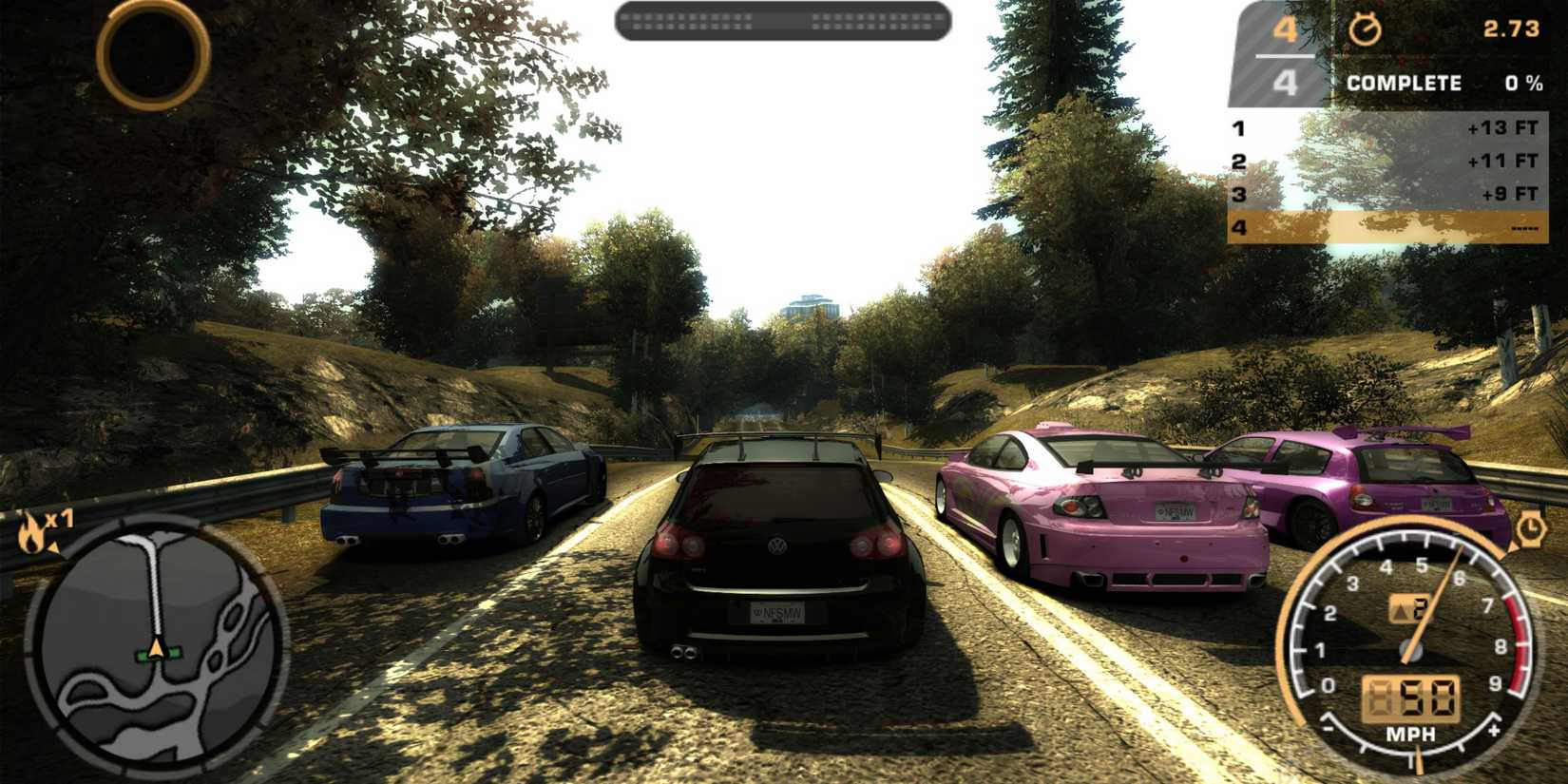
Although it wasn't the last title to do so by any means, Need for Speed: Most Wanted continues to embody the arcade racing genre based on street racing, neon lights, and decals, and no one has taken up the mantle in over 20 years.
Alongside the Fast and Furious franchise, Need for Speed instilled this kind of racing subculture into the collective consciousness, though it gradually faded, especially due to the lack of a successor.
Except for those of us who experienced the era firsthand and therefore return to the game every few years out of nostalgia (and its excellence, of course), street racing games with such stylization and customization ceased to be at the forefront after the sixth generation of consoles.
Since reaching its peak, developers stopped prioritizing fun and emphasized simulation, which gave us incredible franchises but, in the process, caused us to lose some quite important ones.
8 Max Payne 3
Rockstar Says Goodbye to All of Its IPs

Although it may not seem like it, there was a time when Rockstar published games of all genres and styles, though the last time we got a taste of that company was with Max Payne 3, which wasn't just an adieu for the series.
This is, of course, a relative statement considering how much the latest installments of Grand Theft Auto and Red Dead Redemption borrow from its gunplay, but the similarities don't change the fact that Max Payne was the last to star in a Rockstar adventure that wasn't part of either of the two major franchises.
Since then, the developer has not only remained closed off between both IPs, but has also completely reduced the release rate to which they once accustomed us, abandoning other well-known names like Bully, Midnight Club, and L.A. Noire.
Therefore, although we may not have known it at the time, Max Payne 3 was the last vestige of a Rockstar that ceased to exist after Grand Theft Auto 5's release, and I find it tough to believe it will ever return to what it once was.
7 The Last Guardian
Closing the Spiritual Trilogy

Fumito Ueda captivated the world with Shadow of the Colossus and ICO, revolutionizing the video game industry in the process, while The Last Guardian met a rather different and disheartening fate.
Although the developer has now returned after years of hiatus with Project Robot, his last published game felt like the end of an era for a creative director whose ability to tell interactive stories has yet to find a match.
 Related
10 Video Game Sequels Where the Budget Is Written All Over the Screen
Some sequels don't bother hiding how much more they cost than the last one. These ten wear it completely on their sleeve.
It wasn't widely discussed, though the title's mixed reception and the silence with which Sony disavowed its existence in the following years, given its lack of impact, always gave the impression that there was no longer room for truly unique AAA titles in the PlayStation lineup.
Since then, with a couple of exceptions, the last 10 years have been marked by more conservative, less auteur-driven, and more market-satisfying exclusives, especially since no one wants to risk “failing” again as they did with The Last Guardian.
6 Far Cry 3
Ubisoft's Latest Revolution
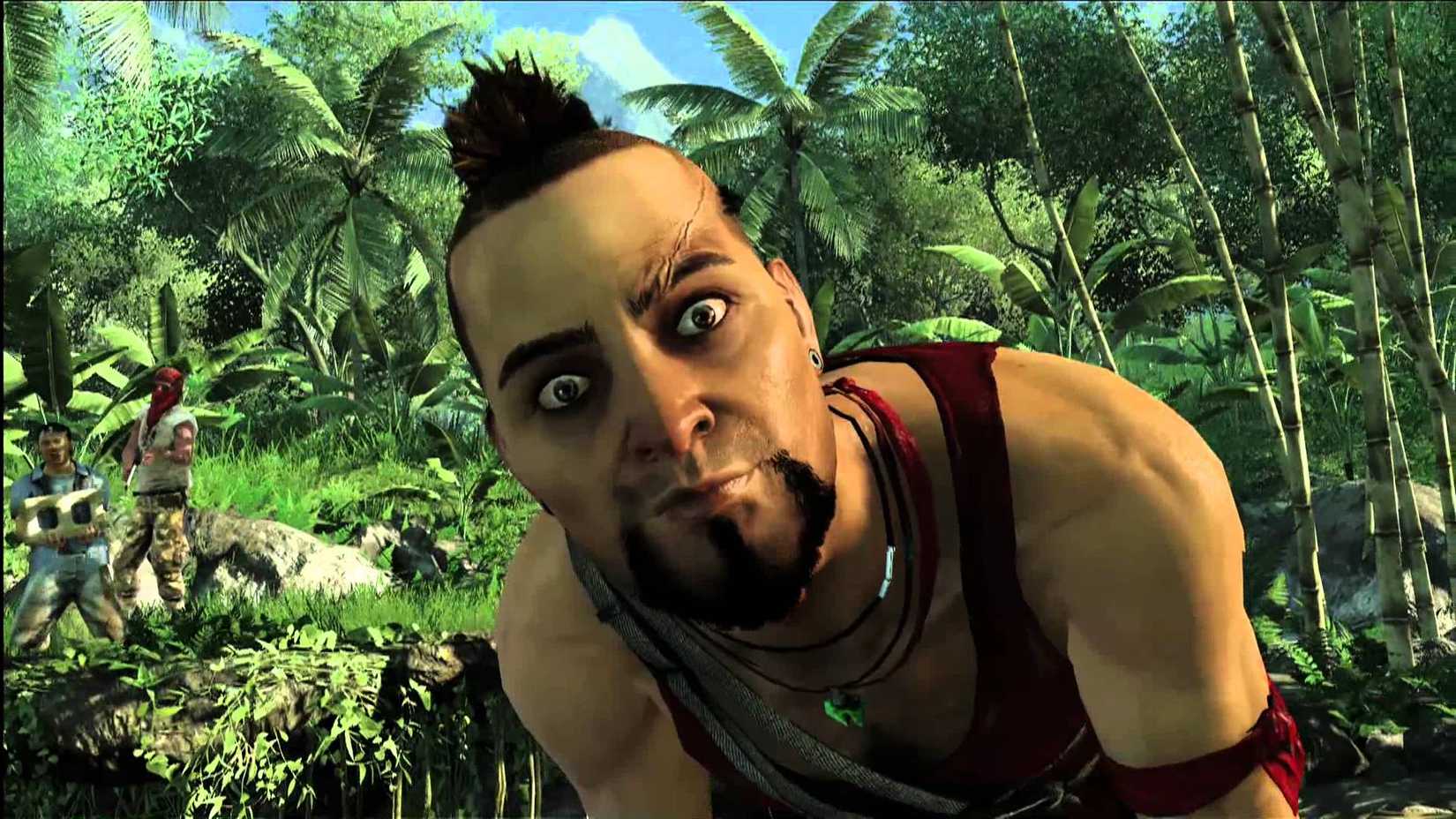
Ubisoft became one of the seventh generation of consoles' most influential developers, setting the standard for future open-world action-adventure games, though Far Cry 3 reached a peak they never again attained.
The French company's formula for tackling these expansive, content-rich, and spontaneous experiences found its most refined version in Jason Brody's journey, so much so that it was easy to assume they couldn't surpass it.
After 2012, they managed to release numerous excellent titles, but none achieved Far Cry 3's revolutionary status, whose influence can still be seen in virtually every major non-linear production in the video game industry.
Unfortunately, Ubisoft was indeed never the same after the game's success. They became so focused on replicating and maximizing their impact that they lost any semblance of creativity, fundamentally straying from what initially captivated the community about their work.
5 Deus Ex: Mankind Divided
Rest in Peace, Immersive Sims

Many of us grew up in an era where immersive sims were the ultimate synonym for video games, pushing the boundaries of interactivity in every project, yet the passion for them waned, reaching its lowest point with Deus Ex: Mankind Divided.
The passage of time itself brought a growing disinterest in the genre that had given so much to the medium, but Deus Ex: Human Revolution's unfinished sequel hammered the final nail into the coffin, a point from which we haven't recovered.
To be honest, the moment the credits rolled, a cold sweat ran down my back as I quickly realized neither Deus Ex nor immersive sims would ever again hold any significance in the upper echelons of video game development, and it would immediately be relegated to the realm of indie authors.
No sooner said than done, and despite Arkane Studios's extraordinary effort, no other developer has ventured to make a large-scale immersive sim. Deus Ex: Mankind Divided figuratively killed its offspring, and I don't know if the family tree will ever grow again.
4 Death Stranding 2
The Blossoming of Kojima Productions

Although Death Stranding 2: On the Beach is an outstanding game that reminds us why Hideo Kojima is an absolute genius, I can't help but think that its restraint and continuity are symptomatic of a developer that has already outgrown its honeymoon phase.
After a decade of work, which included a second title that, timidly and without taking risks, tackles the groundbreaking 2019 formula, it felt like a constant inhibition of what Kojima Productions would have done under different circumstances.
It's still very much a Kojima title, that's evident, but it lacks the conceptual irreverence that cemented its predecessor, which I understand as a consequence of a team that has matured and is pursuing a more concrete and restrained objective.
Both Physint and O.D. will be atypical masterpieces, and I don't doubt that, though Death Stranding 2: On the Beach is a warning that we will most likely never see a AAA title as daring as the first.
3 God of War 3
A Consummated Revenge

From the inclusion of a multiplayer mode to the exploration of an unexciting side of Kratos' life, God of War: Ascension was the result of a design philosophy that had reached its limits.
The same puzzle styles, bosses, enemies, fixed camera angles, quick-time events, and other elements that characterized the original trilogy were repeated in a prequel that, while offering an excellent campaign, felt too far removed from what Santa Monica Studio had previously achieved.
 Related
10 Soulslikes You Should Definitely Avoid
As much as you might like FromSoftware games, these titles are very difficult to recommend.
I don't think anyone was surprised that, after God of War: Ascension, the developer took a break to rethink what to do with Kratos and, eventually, drastically change the IP's formula.
Nevertheless, since God of War wasn't just another hack-and-slash series, its change of direction completely transformed the genre, significantly reducing the number of AAA hack-and-slash games, eradicating the fixed camera, and completely abandoning the desire for linear characters as protagonists of big blockbusters.
2 Portal 2
Valve's Single-Player Farewell

Speaking with the benefit of hindsight makes it unfair to truly appreciate how things felt at the time, but looking back, I can't help but think Portal 2 is among the most subtle farewells ever conceived.
I ignore if Valve approached the story with an awareness of what they would do to future generations by only releasing a single-player game in a decade and a half, but it certainly feels like Chell wasn't the only one to find her freedom.
Since the sequel's release, the developer has been completely immersed in the growth of Steam and the development of multiplayer titles, achieving such success in both areas that they may never have to create another story-driven game.
Portal 2 was the last time Valve acted like a traditional game developer, while now, more than ever, it embraces its role as the owner of the most beloved platform in the video game industry, at the expense of probably never releasing a game with the number 3 in the title.
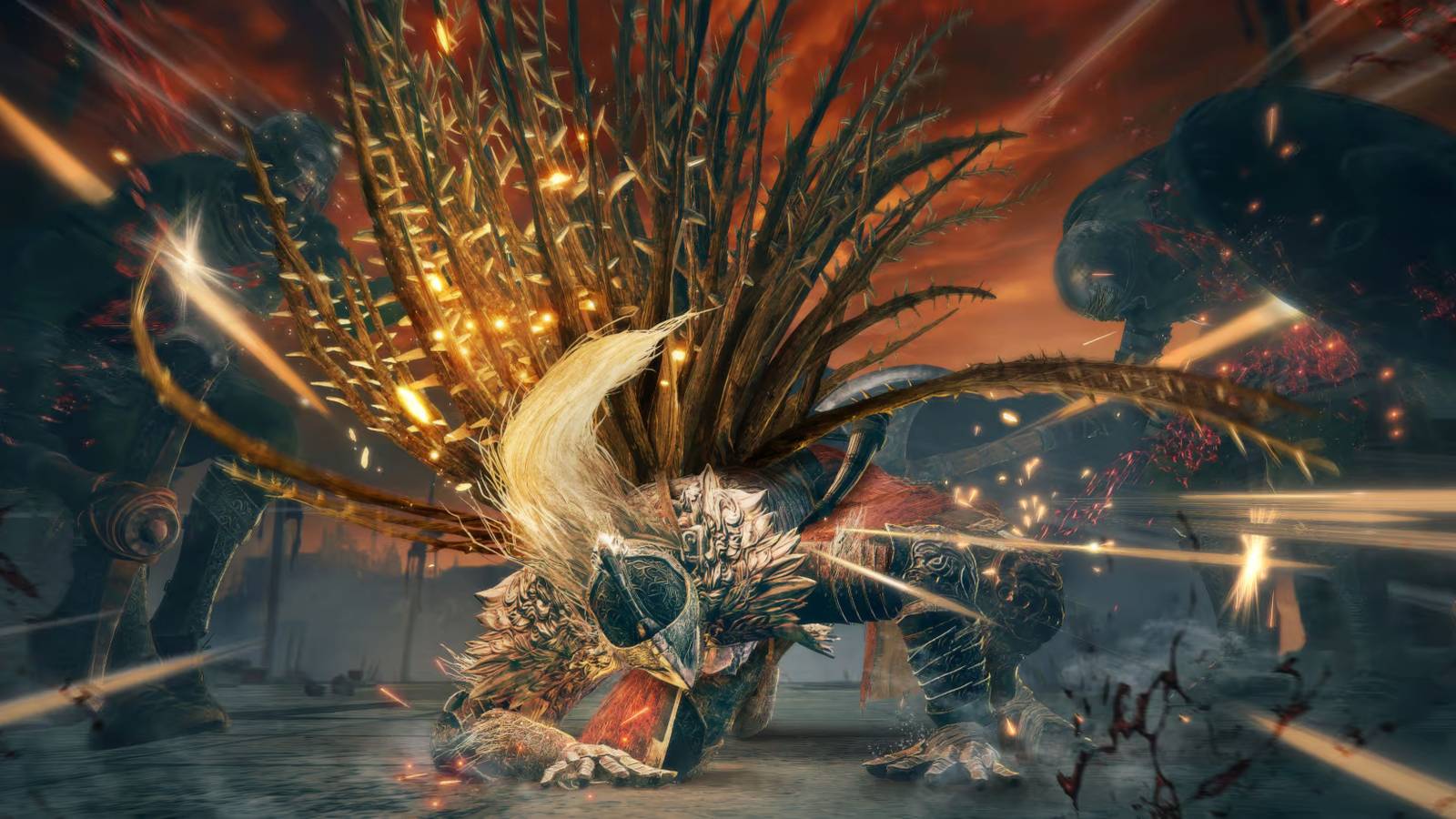
1 Elden Ring
Soulsborne Games Found Their God

Despite my initial belief that Elden Ring was utterly unbeatable, FromSoftware managed to reach a new pinnacle for the Soulsborne formula with Shadow of the Erdtree, definitively eradicating any possibility of anything even coming close.
Including the aesthetics, themes, level design, bosses, weapons, and everything else, the expansion feels like the most direct reference to all the games that brought the subgenre to this point, planting a flag atop a mountain that will never be climbed again.
Yes, Dark Souls 3 is an even more direct farewell, and yes, neither Elden Ring: Nightreign nor The Duskbloods seems to stray too far from what the developer has been doing these past few years, but these two realities don't diminish the fact that Shadow of the Erdtree feels like the Soulsborne series' true final blessing.
I doubt it will be surpassed, no matter how hard FromSoftware tries, partly due to the exhaustion this philosophy has caused in a gaming community that already shows disdain for so many Soulslikes on the market.
After seeing the half-baked experiment of the multiplayer, and with no hype whatsoever for its new title, Elden Ring: Shadow of the Erdtree was the ultimate destination. From here on out, nothing will feel the same, despite the effort they put in.
 Next
Next
10 Best Shooters That are Unapologetically Weird
Most of the genre takes itself too seriously, but these titles do the exact opposite.



![ELDEN RING NIGHTREIGN: Deluxe Edition [FitGirl Repack]](https://i5.imageban.ru/out/2025/05/30/c2e3dcd3fc13fa43f3e4306eeea33a6f.jpg)
 English (US) ·