.png)
.png) 3 months ago
63
3 months ago
63


Published Apr 10, 2026, 3:22 PM EDT
Daniel has been playing games for entirely too many years, with his Steam library currently numbering nearly 750 games and counting. When he's not working or watching anime, he's either playing or thinking about games, constantly on the lookout for fascinating new gameplay styles and stories to experience. Daniel has previously written lists for TheGamer, as well as guides for GamerJournalist, and he currently covers tech topics on SlashGear.
Sign in to your DualShockers account
The release of the original Game Boy in 1989 was a monumental game changer, to say the least. While it technically wasn’t the first handheld game Nintendo had made, with that honor going to the Game & Watch series, it was the first proper, cartridge-based console, rather than a simple LCD puppet show. The games may not have been as elaborate as their NES and SNES cousins, but just being able to play something with a comparable degree of complexity on the go was a massive deal.

Related
The fact that many of the Game Boy’s games were simpler than those of home consoles actually played to its strengths. You could enjoy a lengthy JRPG adventure on the Game Boy if you were so inclined, but most of its games were designed to be quick, snacky, and fun, something you could pull out of your pocket and flip on almost immediately while you were in the car or waiting in public. Even if these games had longer campaigns, as long as they hooked you right from the jump, that was all that mattered.
10 Gargoyle’s Quest
Let Ol’ Firebrand have a Turn

In 2000, a port of Capcom’s curb-stomping platformer classic, Ghosts ‘n Goblins, was released for the Game Boy, specifically the Game Boy Color. If you weren’t in the know, though, Ghosts ‘n Goblins technically had a presence on the console prior to that, a good ten years, in fact. That presence was Gargoyle’s Quest, a spin-off starring Firebrand the Red Arremer.
Much like its parent series, Gargoyle’s Quest wastes no time getting off the ground, delivering a few lines of exposition and kicking you out into the world at large. Firebrand is already a very capable, mobile character, especially compared to Arthur, possessing the ability to breathe fire, fly horizontally, and climb up walls, so there’s very little stopping you from quickly surmounting the first level and beyond.
The game does have some pseudo-RPG elements in a similar vein to Zelda II, such as traversing an overworld between levels, getting into random encounters, and upgrading your stats. This doesn’t really slow the pace, though, as you’re still experiencing the core, fun gameplay at a steady clip.
9 Mega Man III
Different from Mega Man 3

While the mainline Mega Man series was doing the rounds on the NES in the 80s and 90s, a companion series was running on the Game Boy, opting for Roman numerals instead of numbers to differentiate them. The Game Boy Mega Man games were a little hit or miss, but if I had to pick the best of the bunch, I’d settle on Mega Man III.
Mega Man III has the same basic gameplay as its console contemporaries: you pick a stage, you run ‘n gun through it, and try really hard not to die, which was easier said than done. Amongst the Game Boy Mega Man games, III had some of the tightest platforming, as well as gameplay mechanics cribbed from the console games like the Charge Shot. It’s immediately fun in the same way the original games are fun: as long as you don’t fall into spikes, it’s satisfying to run, shoot, and jump.
Side note, Mega Man III also introduced my favorite of the three Game Boy-exclusive Mega Man Killer robots, Punk, with his awesome razor blade mohawk and spiked shoulder pads. I know what I’m about.
8 Donkey Kong Land
A Land, Not a Country

1994 saw the release of Rare’s classic platformer Donkey Kong Country on the SNES. Since that game did such big numbers, it was a no-brainer to bring it to the Game Boy as well. It took a bit of finagling, as the original’s pre-rendered 3D models didn’t exactly play nice with the Game Boy’s simpler hardware, but they made it work with Donkey Kong Land.
Donkey Kong Land, which was also developed by Rare, incorporates most of the gameplay design from Country, including level layouts and basic mechanics, while tweaking things a bit for the smaller screen. While those compressed sprites looked a little janky, the fun was still there, and immediately at that. If you liked playing Country, you’d probably like playing Land, and you’d probably still like it even if you hadn’t played Country.
Donkey Kong Land had a bit of an esoteric saving system, requiring you to collect all four letters of KONG in each level to reach a save screen at the end. Odd choice, but the letters were easier to find in Land than in Country, so no big whoop. It just gave you a good reason to pay attention to the game.
7 The Legend of Zelda: Link’s Awakening
Up and At ‘Em
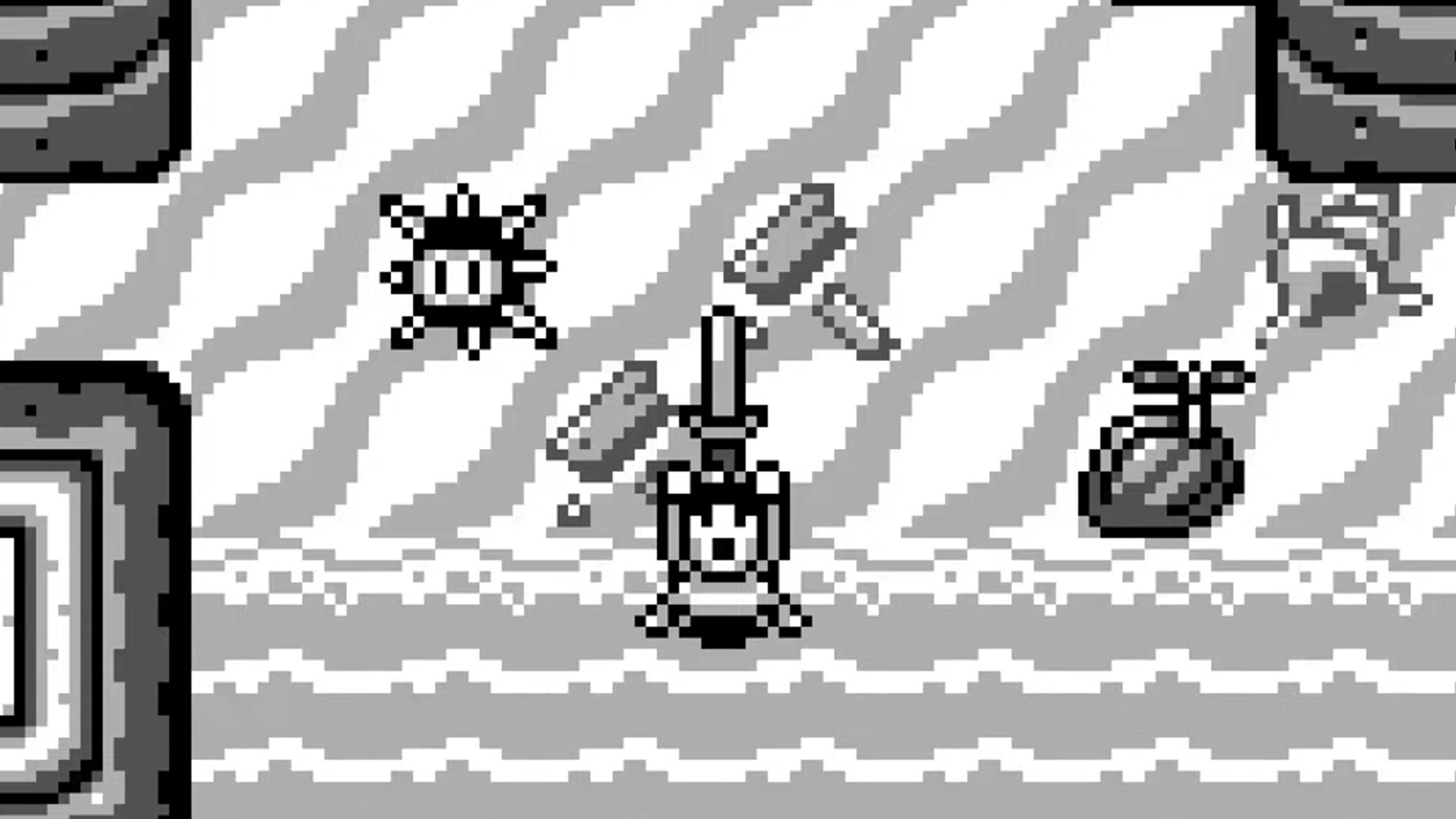
The Legend of Zelda: Link's Awakening
Barring the original Legend of Zelda games on the NES, most of the games in this series don’t exactly have the most brisk of paces. Even Link to the Past has you bumming around in Hyrule in the rain for a few minutes before you get down into the dungeon and find Zelda. If there were a game in that specific vein that knows how to get things started a little faster, though, it’d probably be Link’s Awakening on the Game Boy.
Compared to similar adventures, Link’s Awakening gets started almost as soon as Link wakes up in a bed on Koholint Island. Aside from some quick exposition, and assuming you don’t bum around town too long, he’s off to the beach, grabbing his sword, and exploring the first dungeon in less than ten minutes. While Link’s Awakening is a pretty big adventure for a Game Boy game, it does make sense that it would adopt some brevity to get you to the meat and potatoes a little faster. Dreams don’t last forever, and we don’t have all day here.
I think perhaps the most indicative element of Link’s Awakening’s faster pace is the fact that it’s one of the only games in the Zelda series with a manual jump button. We don’t have time for the whole contextual jumping thing, just get to where you need to go already.
6 Metroid II: Return of Samus
Alright, One Quick Adventure

Metroid II: Return of Samus
In nearly every Metroid game, Samus starts with her full array of weapons and abilities, until something blows up in her face, and she loses all of them. You could probably cut down the total playtime of any Metroid game if that just didn’t happen, and I have empirical proof of that assertion called Metroid II: Return of Samus.
Rather than its exploration-focused predecessor, Metroid II sends Samus into an alien world with a specific goal: kill 47 Metroids. In aid of that simplified goal, Metroid II makes the miraculous decision to not arbitrarily strip Samus of all of her abilities at the start of the game. From the moment you step off her gunship, you’ve got your missiles and Morph Ball.
That’s not to say there are no power-ups at all, of course. There’s plenty to find, like the Morph Ball bomb, Space Jump and Ice Beam, it’s just nice to have a little head start for a change instead of getting stopped by little gaps you could easily Morph Ball roll through.
5 Wario Land: Super Mario Land 3
It’s-a Wario Time

Wario Land: Super Mario Land 3
The Game Boy saw the original introduction of Mario’s inverted nemesis, Wario, starting as the antagonist of Super Mario Land 2, which we’ll get to later. Following that game, for Super Mario Land 3, Nintendo decided to give Wario a little more time in the spotlight, making the entire game solely his and calling Wario Land.
Notwithstanding the introductory cutscene, the game gets rolling from the moment you start a save file, with Wario dropping right into the first level from the map. Due to his larger frame, Wario doesn’t move as fast as Mario does, but he’s still immediately fun to play as for the same reason. His large, brutish vibe and signature shoulder-check attack lets him quickly plow through levels and crush enemies underfoot.

Related
10 Best Wario Games, Ranked
Over the years, we've seen several amazing Wario games coming out for the community, but these are indeed the best ones in the franchise.
Where Mario games are largely about speed and agility, Wario Land is about forcing your way down a path of your choosing. It’s of a comparable speed, even if Wario himself is slower, because he doesn’t need to bother stopping to jump over things. Wario goes where he darn well pleases.
4 Kirby’s Dream Land 2
More in Line with the Kirby We Know

Kirby’s first adventure on the Game Boy, and indeed, the first Kirby game, period, was Kirby’s Dream Land. However, Kirby’s Dream Land was a bit of a prototypical game, missing many of the hallmarks we’d come to expect from the series. Following the release of Kirby’s Adventure on the NES and the introduction of the Copy Ability, Kirby’s ideal form became clearer, which helped Kirby’s Dream Land 2 become a much more rounded experience.
Kirby’s Dream Land 2 incorporates the broader abilities of Kirby’s Adventure with the compact level design of the first game, creating something uniquely fitted for the Game Boy while still embodying the elements people like about the character, i.e. Copy Abilities. Once you’ve got an ability you like, you can just start rolling through levels at your own pace, relishing in the destruction.
Dream Land 2 also introduced the first three of Kirby’s animal friends, specifically Rick, Kine, and Coo, each of whom help to add a little extra meat to the core gameplay loop when they show up. I wish the animal friends would show up in more games…
3 Pokémon Yellow
Here’s Your Mouse, Get Going

As I mentioned at the top, the Game Boy actually had plenty of traditional JRPGs on tap, and they were great for particularly long trips in the car or on the plane, at least as long as you had a plug-in light. That said, if you wanted a JRPG experience that didn’t beat around the bush, Pokémon was the name of the game. Any of the original games fit the bill, but I’d like to highlight Pokémon Yellow in particular.
Much like Red and Blue, Yellow starts you off in Pallet Town, though rather than going to the lab, you meet Oak in the tall grass, where he catches a Pikachu. This Pikachu becomes your first partner, following around behind you instead of staying in its Poké Ball. After this introduction, which takes about 5-6 minutes tops, you’re already on the road to Viridian City, ready to catch more ‘Mons and get that Pikachu to stop giving you the stink eye.
Part of what made Pokémon such a killer app back in the day was that, as far as JRPGs went, it had a very simple system, trimming out things like classes or equipment and focusing on basic stats and types for individual Pokémon. Being able to save your game anywhere meant you could very easily pick it up and put it down too, so you could play at your precise level of leisure.
2 Super Mario Land 2: 6 Golden Coins
As Close to the Console as it Got
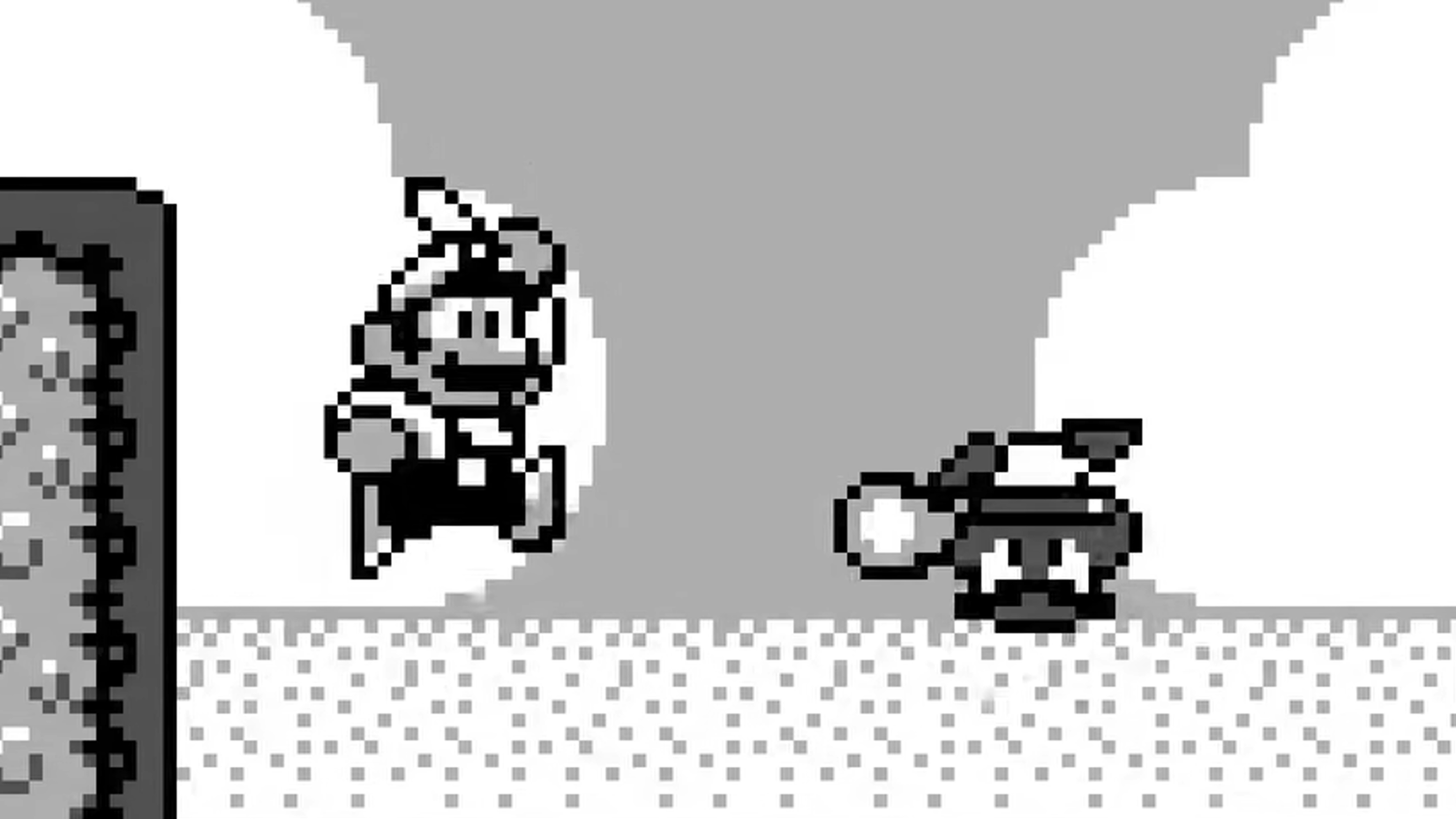
Super Mario Land 2: 6 Golden Coins
As a Nintendo console, the Game Boy obviously had to have a Mario presence, the primary being the original Super Mario Land. However, compared to Super Mario Bros. on the NES, Super Mario Land was missing a certain… je ne sais quoi, both in the way it played and in the way its levels were laid out. It wasn’t bad, but it wasn’t quite right. Thankfully, Super Mario Land 2 brought things more in line with what we wanted.
Compared to the first game, Super Mario Land 2 has much larger, more detailed sprites, which helps to improve both the visibility and overall flow of the gameplay. With this improved flow, the game recaptured more of that classic speedy, sidescrolling vibe that Mario hit it big with on the NES, though it also carried over the map from Super Mario Bros. 3 and Super Mario World. This allowed you to replay completed stages, which was nice if you just wanted something quick to do.
At the heart of it all, sidescrolling Mario games are just naturally fun in more or less whatever form they take. That said, being closer to the specific kind of fun we all fell in love with back in the day, only did Super Mario Land 2 favors.
1 Tetris
Put the Game Boy on the Map
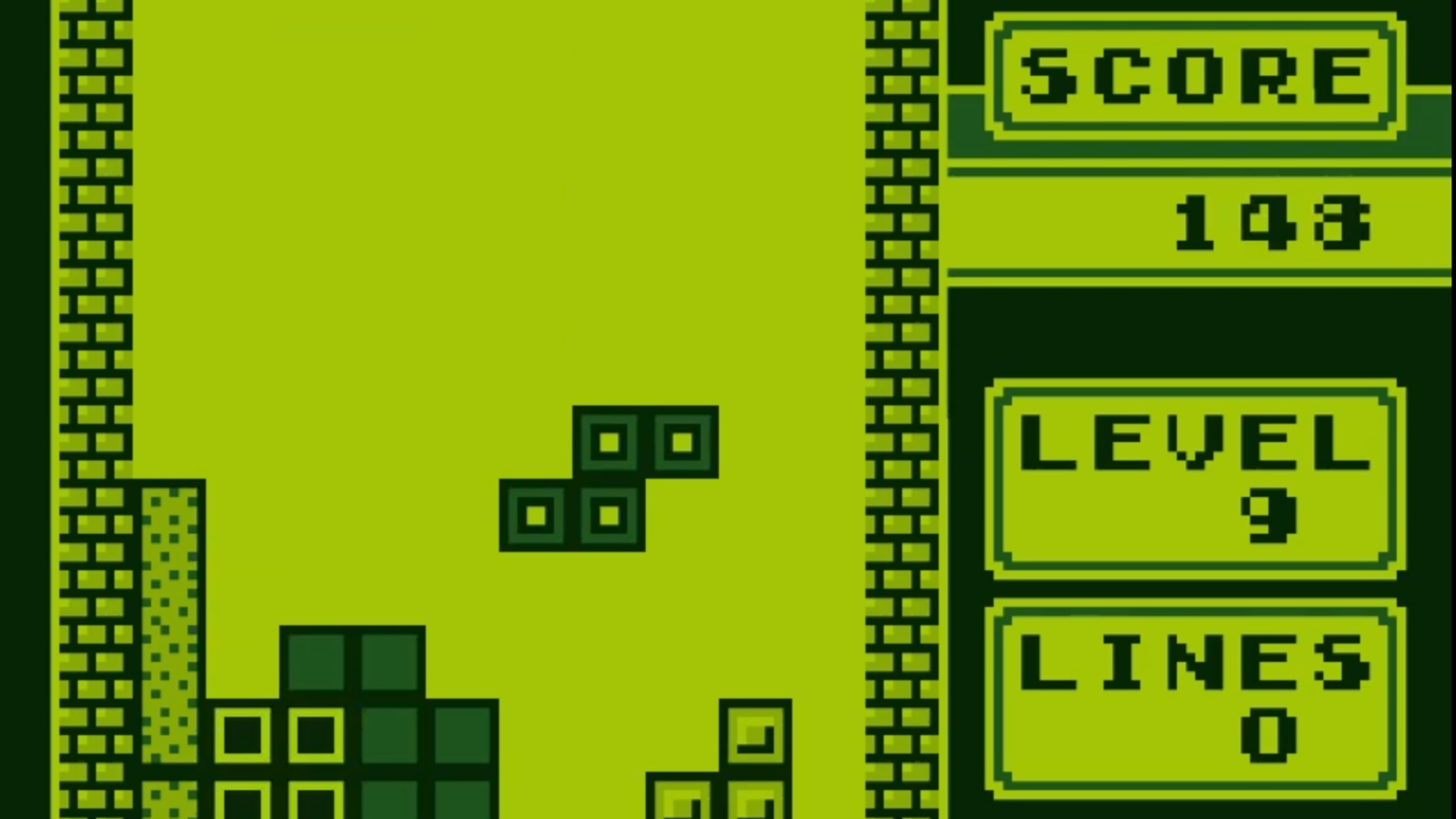
It shouldn’t come as any particular surprise that Tetris would be present on this list. It was, after all, the game that really sold the Game Boy to the playing public at large, so deviously simple yet infinitely complex that anyone and everyone could lose themselves in it. Tetris on the Game Boy was to the 90s what phone games are today: the ultimate compact time-waster.
If you somehow don’t know how Tetris works, you’re presented with a large grid, within which various geometric blocks fall from above. You have to arrange these blocks at the bottom of the grid, making them disappear when you form at least one straight line and scoring points. That’s the whole game; you just keep doing that and doing that, with the speed gradually increasing as you go, until you can’t do it no more.
No matter how many years go by, the delicious simplicity of Tetris maintains its enduring charm, just the same as it did on the Game Boy. You don’t need to know a story, and the rules are very easy for anyone to understand, although high-level Tetris play is full of some pretty wild maneuvers that I can’t imitate.

Next
10 Best Game Boy Games With High Replay Value
Put on your black and white lenses, and join us as we reminisce about several Game Boy games with lasting value.





![ELDEN RING NIGHTREIGN: Deluxe Edition [FitGirl Repack]](https://i5.imageban.ru/out/2025/05/30/c2e3dcd3fc13fa43f3e4306eeea33a6f.jpg)
 English (US) ·