.png)
.png) 1 hour ago
2
1 hour ago
2


Published Jul 14, 2026, 6:30 PM EDT
Murillo Zerbinatto is an Editor at DualShockers specializing in JRPGs, RPGs, reviews, guides, and lists. He has been writing professionally since 2018 and covering games since 2020, with previous work published at Xfire, RPGInformer, IndieGameCulture, and GameRant.
A longtime JRPG enthusiast, Murillo has played more than 250 JRPGs and earned over 100 platinum trophies, giving him deep hands-on experience with the genre’s progression systems, side content, collectibles, and completionist challenges. His coverage often focuses on franchises such as Final Fantasy, Dragon Quest, Trails, Tales of, and Star Ocean.
Sign in to your DualShockers account
When Clair Obscur: Expedition 33 was released, it quickly became one of my favorite RPGs in the world. Everything about it enchanted me. The problem is that a portion of the fanbase started a toxic discourse, attacking other turn-based RPGs in the industry, established series, and using Expedition 33 as a scapegoat to channel their frustrations.
The thing is, Sandfall Interactive and their employees always wore their inspirations on their sleeves, and many of the games that influenced Expedition 33 are JRPGs. There were always mentions of Super Mario RPG, Final Fantasy, and even Sekiro: Shadows Die Twice (which is not a JRPG, by the way). However, my point here is not to give a platform to these groundless complaints, but rather to showcase some JRPGs that discreetly reinvented the genre yet never received the credit they deserved.
Super Mario RPG is known as the forefather of timed inputs in JRPGs, but did you know there were many others after it that also used this mechanism, even better than the RPG of our favorite plumber? Pokémon, by the way, wasn't the first creature-collecting JRPG in the world. Today, I want to highlight the forgotten ones, those that deserved more spotlight because their relevance was pivotal at some point in JRPG history.
10 Shadow Hearts
Timed Input Judgment Ring
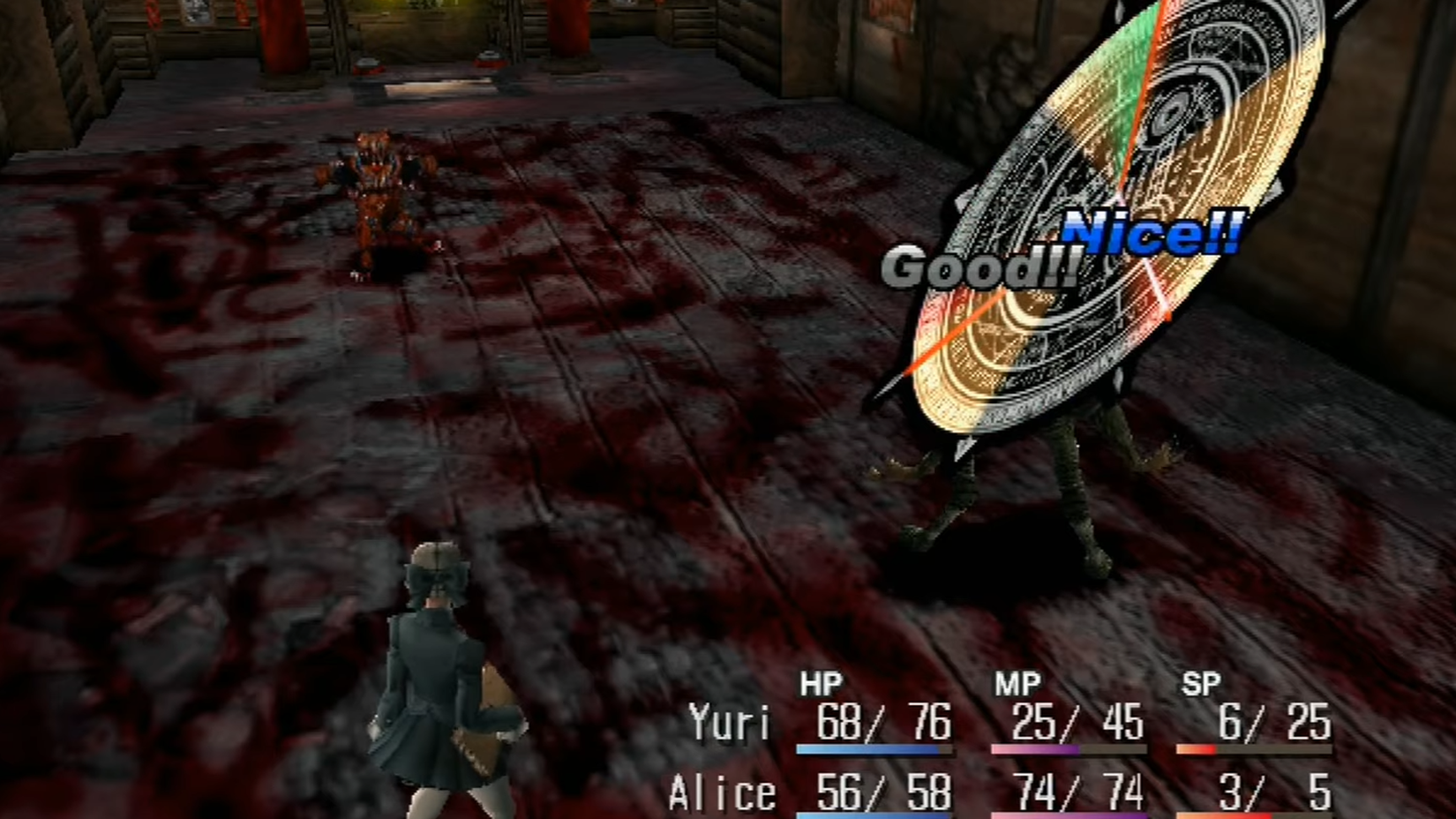
Much is said about Super Mario RPG and The Legend of Dragoon when we discuss turn-based combat with timed inputs, but what about Shadow Hearts, this gorgeous, grotesque horror-like JRPG on the PS2? Here we have the Judgment Ring, which is activated during most of our actions and dictates whether they are successful, deal critical damage, or miss altogether.
The difference here is that you could equip different rings, which were more difficult to use, but the reward was greater. Most actions also triggered the input, such as healing spells, so if you risked trying a critical heal and missed, you might not help a party member and, well, you know. I love some timed inputs in my turn-based JRPGs, and among the older titles, I believe Shadow Hearts did it best. And possibly, it directly influenced Lost Odyssey.
9 Wild Arms
Tools and Puzzles

For a long time, exploration in JRPGs was just advancing through a dungeon, facing random battles, and defeating the boss. Some games emerged that introduced neat puzzles into their labyrinths, such as Lufia, but if there is one that deserves greater recognition, it is Wild Arms. Wild Arms is a staple JRPG that features all the standard design of the genre, but it had a component that enriched dungeon crawling even further: tools.
Clearly, Wild Arms didn't invent exploration tools. After all, any The Legend of Zelda game features them, as well as many other Nintendo titles that would go on to create the future genre called Metroidvania. But in a bona fide JRPG whose focus is not dedicated solely to exploration? Wild Arms certainly innovated.
Each of the three protagonists learned new tools throughout the game, some mandatory, but others that expanded the scope of exploration. I remember when I got Rudy's Radar, and it started showing me all the hidden items in pots and barrels. That was genuine happiness, alright? Since not all tools are required to finish the game, acquiring a new one meant the possibility of backtracking to find new secrets and treasures, something that is always welcome to any JRPG player.
8 Digital Devil Story: Megami Tensei
Creature Collecting
 YouTube via Dia Lacina
Digital Devil Story: Megami Tensei
Playing Digital Devil Story: Megami Tensei nowadays is a tough call because the game, despite still having an impeccable script - after all, it was based on a novel - hasn't aged very well. Even so, it is undeniable that it introduced one of the most unprecedented features of the genre, or perhaps even of the gaming industry itself: creature collecting.
When someone tells you there were games with a monster capture system before Pokémon, it's hard to believe. And if it's said it was a 1987 game for the Famicom, it sounds like fan fiction. But that is exactly what happened. In the progenitor of the SMT series, we could talk to the demons and persuade them to join our group and build a cult.
The first time I learned this, it was mind-blowing. I thought Dragon Quest V had been the first JRPG that allowed using monsters in the party, but I was wrong. Since Digital Devil Story: Megami Tensei never left Japan and the franchise is known for an infinite number of spin-offs whose titles get confused with one another, it never received the proper credit.
7 Suikoden
Base and Army Building
 Mobygames
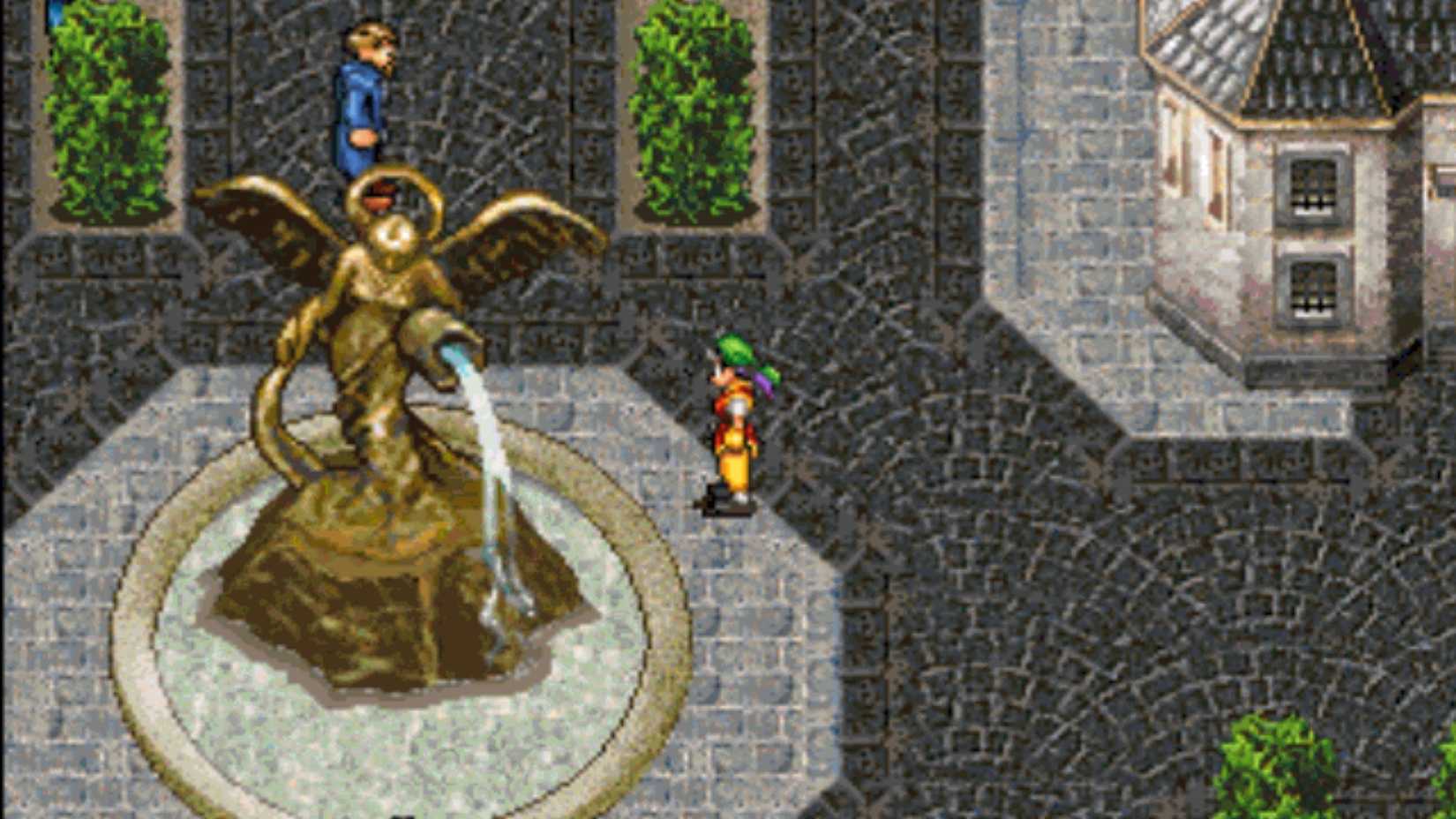
It is quite difficult to find which JRPG pioneered a system of town building, base recruiting, or any of those variables. Some say it was Romancing SaGa 2, with the possibility of expanding our empire by annexing new regions. Others talk about Breath of Fire II, which indeed launched before Suikoden and allowed us to expand the Township as we recruited more NPCs.
The reason I put Suikoden here is that, not only does it have a base expansion system (not really construction), but it also enhances the system by recruiting 108 party members, which was yet another really innovative mechanic at the time. Not all party members participate in combat, but these serve to add new features to the base, be it a bathhouse, a fast travel system, or simply to brighten our lives.
Of course, Suikoden II may seem mainstream nowadays; after all, it is the favorite JRPG of many out there. But in truth, it remains largely unknown, even more so given how influential it was for other developers. If there is a series that deserves more spotlight than it received, it is definitely Suikoden.
6 Front Mission
Modular Health

When we play a tactical JRPG, we already expect a battle system with grids, characters moving square by square, and using skills to defeat nearby enemies. Some JRPGs deviate from this system, but in general most follow the same design. Front Mission, being a sci-fi game, had the opportunity to introduce a novel feature to battles: modular health.
We control Wanzers in these games, which can be customized by changing their body parts, such as both arms, legs, and body. When facing an enemy, our attacks will not necessarily be aimed at the body and can, in turn, destroy other parts of the Wanzer. Destroying the legs decreases that unit's movement, while destroying the arms removes the possibility of attacking with the equipped weapons. The body, as you can imagine, destroys the enemy for good.
This modular health system is a lot of fun and makes the entire experience even better. Though I hoped that my units would attack the body of an enemy Wanzer, since the hit is a tad random, it was somewhat maniacally satisfying to destroy a Wanzer piece by piece and sometimes watch the enemy pilot eject and try to flee for their life. If one day you see another tactical JRPG with targetable parts on enemies, there is a good chance it used Front Mission as a reference.
5 Grandia
Real-Time and Turn-Based
 Mobygames / Game Arts
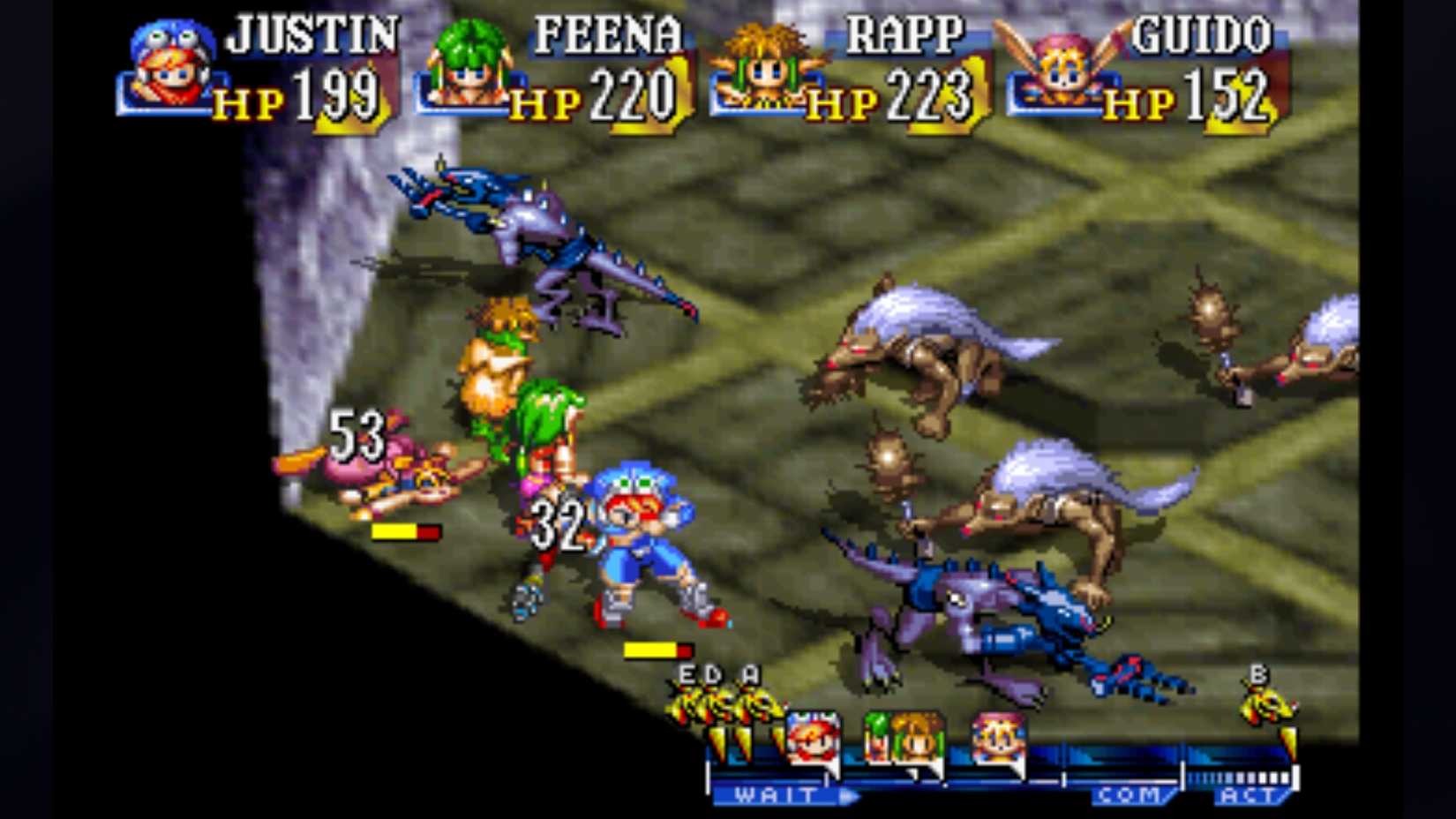
Nowadays, if there is one thing I like, it is JRPGs that mix two styles. Trails through Daybreak was one of the first that introduced a mix of action and seamless turn-based combat, which has been seen in the remake of Trails in the Sky the 1st and games like Metaphor: ReFantazio. But long before them, there was another game that, although not entirely action-focused, already tried to merge turn-based with more real-time action. I'm talking about Grandia.
Every battle in Grandia features a timeline that, in a way, simulates an ATB system, but for all characters at the same time. When a turn arrives for an involved participant, they choose an action, and each action has a weight that dictates how long it will take to be charged and executed. Meanwhile, it is possible to interrupt these actions, whether of the ally or the enemy, which adds a new tactical layer to every battle.
It is a really elegant and efficient battle system that made me think about every action instead of always spamming the attack button or the strongest skills. Sometimes, it was better to use something faster and guarantee an attack. Other times, I would try to match the timing of my skill with the enemy's turn to interrupt them. Beautiful game and a great combat system. Grandia is definitely one of the series that deserve a new entry nowadays.
4 Live A Live
Asymmetrical Storytelling

If there is a remake I never expected to see in my life, it was Live A Live, but there we have it. Square Enix not only resurrected the JRPG from the ashes but also gave me hope that we can see other games from the developer, stuck in Japan, get HD-2D remakes fully. But before I digress any further, I want to highlight why Live A Live deserves a spot on this list: its anthological, asymmetrical storytelling... or another complex word like those.
Upon starting the game, we choose one of seven distinct chapters, each featuring a protagonist, a timeline, and sometimes even brand-new gameplay. It is a totally unusual style of storytelling, but it somehow works. I won't say whether the story connects or not because I want to keep the surprise, but know that the payoff is very satisfying.
This kind of asymmetrical storytelling wasn't explored much in later JRPGs, since many titles still follow a highly linear structure. Still, the model certainly influenced games within Square Enix itself, such as SaGa Frontier. The thing is, if I see different stories told in parallel from distinct perspectives, I automatically think of Live A Live.
3 Breath of Fire: Dragon Quarter
Roguelite Progression

Breath of Fire: Dragon Quarter
When there is a chance to talk about Breath of Fire, I will certainly take it. Breath of Fire: Dragon Quarter is often considered the worst of the series, the one that caused the downfall of the franchise, and so on. I disagree, but I understand why many felt betrayed coming from Breath of Fire IV. However, after being unfairly criticized at launch, Breath of Fire: Dragon Quarter began to gain cult status among those who understood its systems.
Understand that although the game Rogue is extremely old and we already had some titles that followed its blueprint, like Mystery Dungeon, the roguelike subgenre wasn't very widespread at the time. So the fact that Breath of Fire: Dragon Quarter had great difficulty, but allowed us to carry our level, skills, and even narrative events over to the following playthrough, wasn't well appreciated at the time.
Breath of Fire: Dragon Quarter was never meant to be finished in one playthrough (although it is possible.) The game is daunting, but it gives you the tools to restart the gameplay stronger, more experienced, and prepared for the journey to the surface. If Dragon Quarter had been released nowadays, it would be much more lauded than it was and would receive the proper credit and affection.
2 Tales of Eternia
Skits

One thing that every JRPG likes to do, and what makes the genre my favorite, is to deepen and develop its characters. It is not just a staple hero's journey, with that development from a weakling to an almighty warrior. JRPGs develop even the mundane tastes of a character, their hobbies, motivations, pasts, and the most unusual things possible.
However, I recognize that this can be a bit dull to some people who just want to dive into the main narrative. For this, the Tales of series invented a completely non-intrusive storytelling mechanic: skits. Every now and then, a pop-up will appear indicating that a new skit is available. If you press the button, you will see a lovely interaction between party members, feeding their personalities better and enriching the whole party.
Many of these skits are trivial and don't technically add anything to the main conflict, but their optional nature makes them attractive. I love to watch all the skits whenever possible, and upon reaching the end of a Tales of game, I feel completely close to all the party members. The skits originated in Tales of Eternia and are present in all titles to this day. Perhaps the feature hasn't been fully implemented in other JRPGs, but it certainly has influenced character development in some.
1 Star Ocean
Character Relationships

Persona 3 is always used as an inspiration for any JRPG that has some modicum of Social Link. Can you talk to NPCs and party members and feed a gauge that changes based on interactions? Social Link-inspired, someone will say. However, there was another JRPG that already featured a system for interacting with party members via a hidden mechanic revealed only at the end of the game.
The Star Ocean franchise has featured Private Actions since its first installment, released on the SNES in 1996. Sometimes, upon arriving in a new town, we would have private events with a party member, which fleshed out their personality further. It could range from them buying a single accessory to discussing their favorite food or the main story goals.
Each interaction increased the relationship between our protagonist and the party member, which could change the ending with a new scene. Private Actions were doubled down on in future installments, with Star Ocean: The Second Story R featuring more than 80 different endings. They are small scenes, yeah, but still different according to your interactions.


![ELDEN RING NIGHTREIGN: Deluxe Edition [FitGirl Repack]](https://i5.imageban.ru/out/2025/05/30/c2e3dcd3fc13fa43f3e4306eeea33a6f.jpg)
 English (US) ·