.png)
.png) 1 month ago
35
1 month ago
35


Published May 4, 2026, 2:45 PM EDT
Daniel Trock is a Writer at DualShockers specializing in PC games, lists, and reviews. He has been writing professionally since 2018 and covering games since 2020, with previous work spanning guides, news, lists, and reviews across multiple publications.
Before joining DualShockers, Daniel contributed guides to GamerJournalist and lists to TheGamer. He currently covers tech topics for SlashGear and BGR. He holds a Bachelor’s Degree in Psychology from Marist College and a Master of Fine Arts in Creative and Professional Writing from Western Connecticut State University.
Sign in to your DualShockers account
In the current state of the gaming industry, big-name developers are plentiful across all scopes and price ranges. From Grasshopper Manufacture and Quantic Dream all the way up to Capcom and Sega, you can generally gauge what kind of quality you’ll be getting from any new productions. However, even the biggest game devs all had to start somewhere, and may have had more than a few games prior to their big bangs that have gotten lost in time.
 Related
10 Video Game Adaptations Forgotten by Time
Books, cartoons, comics, short films, and so much more.
Adventure games, in particular, have had many faces over the decades, from the open-world action-adventures we expect these days to the window-based text adventures of the 80s and 90s. Even the biggest, burliest developers of today have gotten some experience making relatively smaller-scale adventures over the years, whether in their fledgling early days or their awkward teenage years. If you saw some of these games in the wild, without noticing the developer logo on the box, you’d probably never link them to the titanic brands they are now.
10 Zombi (1986)
No Relation to the Wii U One (Probably)

|
Ubisoft |
|
Amstrad CPC, Amiga, Commodore 64, Atari ST, MS-DOS, ZX Spectrum |
|
1986 |
If I asked you to name a Ubisoft game about zombies, there’s a strong chance you’d think of 2012’s ZombiU for the Wii U, later renamed to just Zombi when it was ported to other consoles. However, not only is that not the only zombie game Ubisoft ever made for itself, it wasn’t even the first game it ever made called “Zombi,” with the first being released for the Amstrad CPC in 1986.
Zombi is a first-person, window-based adventure heavily reminiscent of George A. Romero’s Dawn of the Dead (as pretty much all zombie media was back then). Your gaggle of survivors is trapped inside a shopping mall infested with the undead, and you’ll need to scope the place out in order to escape. Occasionally, a walker would shuffle on by, and you’d need to take them out with a well-placed shot to the head, lest one of your survivors get killed and become a zombie themselves.
The original version on the Amstrad CPC was pretty low-tech; no moving character sprites, very little animation, only a few colors. In 1990, the game got ported to other home PCs like Amiga and Commodore 64, which had fancier graphics and more intuitive gameplay.
9 Who Framed Roger Rabbit? (1991)
One of Mikami's Earliest Works
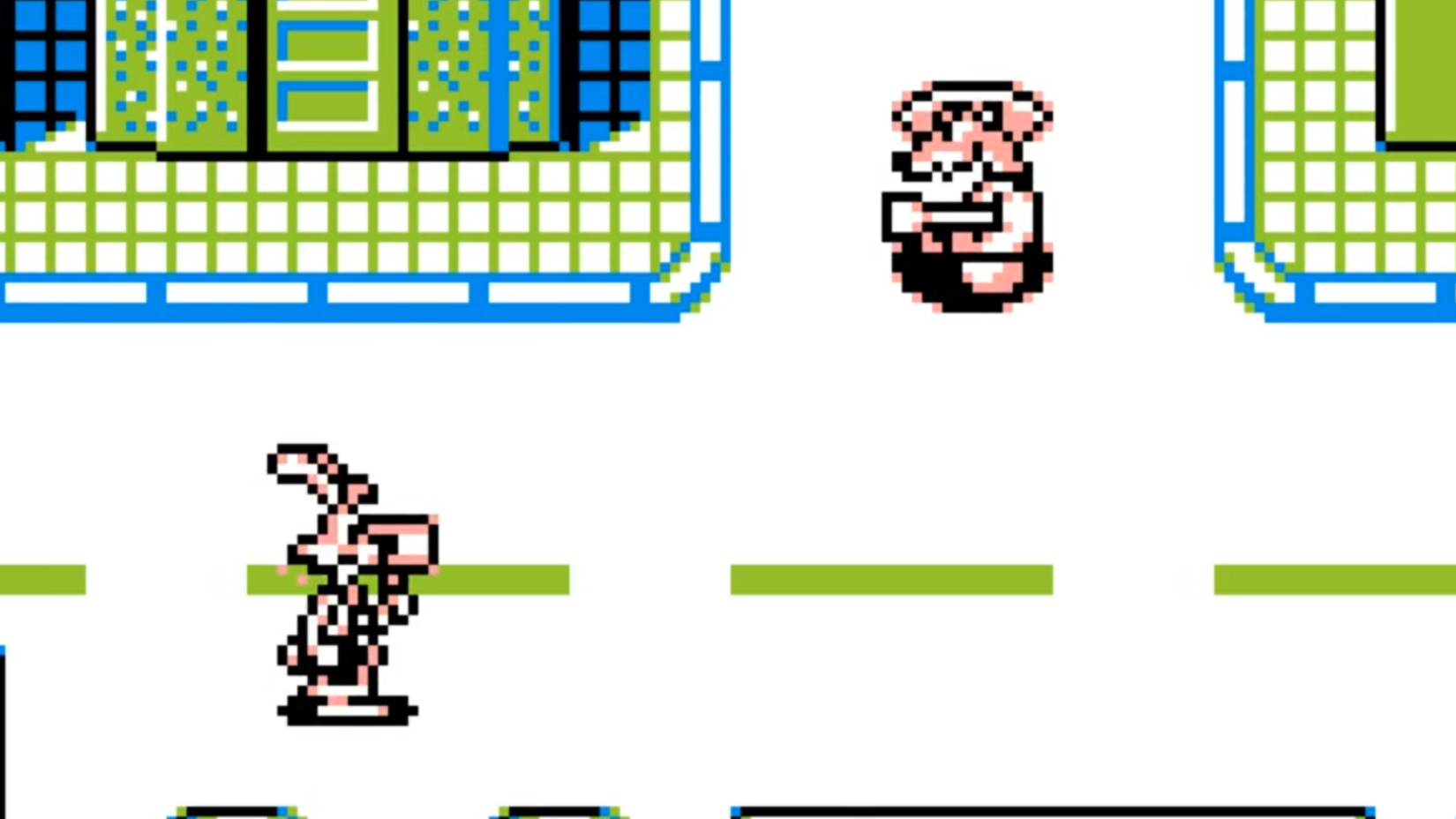
Who Framed Roger Rabbit is one of the most beloved films of all time, packing a combination of live-action actors and cell-drawn animation that still dazzles to this day. Naturally, such a popular movie got its fair share of video game tie-ins, including ones for MS-DOS and NES. What we’re highlighting here, though, is the adventure game made for the Game Boy in 1991 by Capcom, and specifically designed by the legendary Shinji Mikami.
The game loosely follows the events of the film, albeit with Roger as the main character rather than Eddie Valiant. You explore around Toontown, talking to NPCs and picking up clues while dodging the occasional cartoony trap or bushwhack from one of Judge Doom’s weaselly minions. It’s kind of like a lighter version of The Legend of Zelda with more dialogue and less dungeons.
Who Framed Roger Rabbit was the very first game Shinji Mikami ever designed, pre-dating his directorial debut on Resident Evil by five years. I can’t say for certain if any particular elements of the former influenced the latter, though it’d hardly be the most surprising thing Resident Evil drew inspiration from.
8 Panic
One of Sega’s Strangest

Did you ever read one of those choose-your-own-adventure books as a kid? You know, follow a story, then jump ahead to a particular page to make a choice on a branching path? There were actually quite a few games in that particular vein of adventure back in the 90s, particularly with the advent of fancier CD-based consoles. One of Sega’s oddest works to use this framework was 1993’s Panic for the Sega CD.
Developed jointly between Sega and Office I, Panic is an exceptionally bizarre and cartoony little story of a kid named Slap and his dog, Stick, who jump into a discombobulated digital realm to save the world from a malevolent computer virus. The only real “gameplay” consists of entering a new room and pushing one of a handful of buttons, each of which will either carry you to another room, give you a game over, or make something stupid happen like get Slap attacked by a giant vacuum cleaner.
It’s an adventure in the most literal sense, though more than anything, it’s just an excuse to bask in ridiculous cartoon slapstick for an hour or two. Hey, I can think of worse uses for that Sega CD.
7 Body Harvest
Before Rockstar North, there was DMA Design

A little quirk of this industry is that developers change their names on a semiregular basis, whether due to random interest or acquisitions from bigger brands. For instance, the name “DMA Design” probably doesn’t mean much to you, but in fact, DMA Design is the former name of Rockstar North, creators of all the modern Grand Theft Auto games. Coincidentally, the year after DMA Design made the original Grand Theft Auto, it released Body Harvest for the N64.
Body Harvest is an action-adventure game where aliens are attacking cities around the world, and you need to rush to the scene to stop them with full force. You have access to most of the open world from the drop, with aliens constantly beaming down to new cities, forcing you to check the map to determine your next destination. While you can fight on foot, the vehicles are the main draw, showing just how good DMA Design was at integrating vehicular gameplay into a 3D world even back in the day.
Body Harvest was supposed to be a launch title for the N64, but Nintendo dragged its feet on the release due to how violent it was, eventually backing out as publisher and leaving Midway to pick up the pieces. Perhaps Grand Theft Auto could’ve had a bigger Nintendo presence if it had played ball back in the day.
6 Another Mind
Square’s Cinematic Story

|
Square |
|
PlayStation |
|
November 1998 |
As I mentioned, CD-based consoles led to a little boom of interactive adventure games, particularly on the PlayStation. These games didn’t have as much of a presence out west, but in Japan, they were quite plentiful, and coming from all kinds of developers. For example, Square, best known as the company that made Final Fantasy a household name, also released interactive adventure games like Another Mind.
Another Mind is a Japan-exclusive graphic adventure following a girl named Hitomi who, after a car accident, begins hearing the voice of another person in her mind (that’s you). With you whispering on her shoulder, Hitomi begins solving mysteries surrounding the hospital she’s staying at and her hometown. The game has a very simple interface, swapping between FMV cutscenes and simple talky bits with animated character portraits.
 Related
10 Best-Selling Square Enix Games Of All Time
Spoiler alert: there’s a lot of Final Fantasy here.
Something interesting about this game is that, rather than giving Hitomi orders, you have to convince her to take certain actions by manually assembling sentences from contextual dialogue components. How eloquent you are will determine the ending you ultimately get, which is a very novel kind of game that I don’t think Square, now Square Enix, has made since.
5 The Silver Case
Grassshopper’s First Trip

Any fan of weird independent games knows Grasshopper Manufacture and its intrepid leader, game designer, writer, and director Goichi “Suda51” Suda. It’s best known for its off-the-wall action games like Killer7, No More Heroes, and the more recent Romeo is a Dead Man. However, the very first game ever made by Grasshopper, rather than an action game, was a graphic adventure, The Silver Case.
The Silver Case is set in a slightly off-beat version of contemporary Japan, wherein a special police unit investigates a series of bizarre and violent murders that may be linked to a similar series of murders 20 years prior. Most of the gameplay consists of linear navigation and text segments, though you’re occasionally asked to answer quiz questions and complete minigames. The presentation is the big highlight, with the game using a very distinctive style of window-based interface to present dialogue and animations simultaneously.
The Silver Case was originally a Japan-exclusive PS1 release in 1999. In 2016, however, it received an HD remaster for PC, followed by PS4 and Switch ports in the following years. You can actually buy it on Steam, though it’s still more of a cult hit compared to Suda’s newer works.
4 The Adventures of Cookie & Cream
FromSoft’s Cutest Creation

The Adventures of Cookie & Cream
When you think of FromSoftware, you probably think first of games like Dark Souls and Elden Ring; giant, gothic fantasy settings full of jagged swords and misshapen monsters. While that may be FromSoft’s bread and butter these days, though, it’s made many games across various genres and styles. Quite possibly one of the biggest departures from FromSoft’s current soup du jour is 2000’s The Adventures of Cookie & Cream.
This action-adventure platformer follows the two titular critters who are tasked with tracking down the missing moon to ensure they can keep celebrating their local moon festival. Both Cookie and Cream run along a course laden with obstacles and enemies and need to cross the finish line together before time runs out. It can be played either solo or co-op, with one player controlling both characters simultaneously in the former case, though you can also share a single controller with a friend for a unique challenge.
As bizarre as it is to see such a cute, pastel game come to us from FromSoft, it’s a good reminder that no developer is truly monolithic in its design sensibilities. Remember, FromSoft also made the absolutely wild Metal Wolf Chaos; it can do whatever it wants.
3 Snatcher
Kojima’s Forgotten Masterpiece

Hideo Kojima is a man who needs no introduction. He is one of the most acclaimed writers, designers, and directors in the gaming industry, with games like Metal Gear Solid and Death Stranding remaining enduring tentpoles of the genre. Before he got into making full 3D games, though, Kojima had a penchant for text adventures, with his first creation being 1988’s Snatcher.
Developed and published by Konami, and written and designed by Kojima, Snatcher is a graphic adventure set in a Blade Runner-esque future society where humanoid robots called Snatchers are killing and replacing people. It’s got a semi-open world with a point-and-click interface, bringing you around the city to investigate the Snatchers and question witnesses. It’s not a difficult game, which is good, because the main draw is the story.
Snatcher was originally a Japan-exclusive, released for various home computer systems. It did get an English port via the Sega CD in 1995, though it didn’t sell very well. I guess we didn’t know how awesome Kojima was back then.
2 Maximo: Ghosts to Glory
Couldn’t Outpace its Roots

Here’s a very specific circumstance that happens on occasion: a game developer or publisher tries to make a newer, revived version of an old IP, only for said revival to fall flat and necessitate just going back to what people liked about the original. If it sounds like something that never happens, I assure you, it does. Just look at 2001’s Maximo: Ghosts to Glory.
Another of Capcom’s forgotten endeavors, Maximo was supposed to be a modern reimagining of the brand’s classic Ghosts n’ Goblins series. You run, jump, and slash through a variety of different themed worlds, with the titular hero only having a couple of layers of armor and his heart-patterned boxer shorts to protect him. If you lose all your lives, you can pay off the reaper to reload your save, but the price increases every time it happens. If you can’t pay, your entire save gets wiped.
Maximo was actually a pretty good game, not to mention a well-advertised one. I distinctly remember seeing print ads for it in Game Informer. It even managed to get a sequel in 2003, but after that, Capcom just went back to regular Ghosts n’ Goblins stuff.
1 Omikron: The Nomad Soul
Quantic Dream’s Most Mysterious Game

Quantic Dream, the game studio owned by somewhat infamous director David Cage, has been in business since 1997. Its best-known works are its cinematic games like Beyond: Two Souls and Detroit: Become Human. Before it dabbled in interactive movies, though, Quantic Dream’s very first game, Omikron: The Nomad Soul, was a more traditional semi-open world adventure.
The premise of Omikron is that you, the player, have inadvertently stumbled into a trap set by a demon by purchasing the game, and you need to travel to another dimension by reincarnating into one of its denizens to solve the mystery and save your soul. Said mystery solving is accomplished by exploring a large city, talking to NPCs, and occasionally getting into fistfights and shootouts with thugs and lesser demons.
The game is a bit… obtuse with many of its mechanics, to put it nicely, and the way it bounces around between different gameplay styles can be very difficult to wrap your head around. Still, it was a very distinctive game if nothing else, thanks in part to both a cameo and music by none other than the late, great David Bowie!
 Next
Next
10 Best Adventure Games Still Stuck on Older Systems
These games aren't doing much adventuring these days.


![ELDEN RING NIGHTREIGN: Deluxe Edition [FitGirl Repack]](https://i5.imageban.ru/out/2025/05/30/c2e3dcd3fc13fa43f3e4306eeea33a6f.jpg)

 English (US) ·