.png)
.png) 4 months ago
104
4 months ago
104
For as long as I can remember, Metroidvanias have been characterized by great level design, immaculately addictive progression systems, and memorable bosses and platforming sections, but not so much by great combat.

Related
10 Best On-Budget Obscure Open World Games
If you're tired of the genre's usual references, visiting these worlds will be the breath of fresh air you need.
Most of the genre's representatives from my era had rather simple fighting mechanics, with attacks in a few directions, limited weapon variety, and basic control schemes… Even so, they were excellent, but the limitations were clear.
However, the passage of time has allowed us to break down both creative and technological barriers, helping us enjoy games today that, while still belonging to the genre, offer exciting and deep combat encounters.
Perhaps it's not the most intricate genre when it comes to fighting, and yet I'm here to invite you to discover these ten Metroidvanias with combat systems deeper than they first appear.
10 Princess Pomu and the 5 Moons
Learn to Hit and Shoot

|
June 26, 2025 |
|
Pixel Dominus |
|
Pixel Dominus |
|
PC, Nintendo Switch |
Despite Princess Pomu and the 5 Moons proclaiming itself a successor to Mega Man, it's actually a clear example of how 2D action game mechanics have evolved over time.
While it's an indie project with a limited budget, it compensates for its limitations with a strong gameplay identity, offering combo-based combat alongside a shooting system that greatly enhances the dynamism of each encounter.
Thanks to Pomu's arsenal of moves and the diverse uses of her weapons, the battles can be incredibly fluid and stylish, making you feel your improvement in control of the princess as you take down enemies without breaking a sweat.
Admittedly, the bosses and enemies don't possess the same level of complexity, so Princess Pomu and the 5 Moons' combat doesn't shine as much, but its brilliance is there for those who can appreciate it closely.
9 Salt and Sanctuary
Deeply Influenced by RPGs
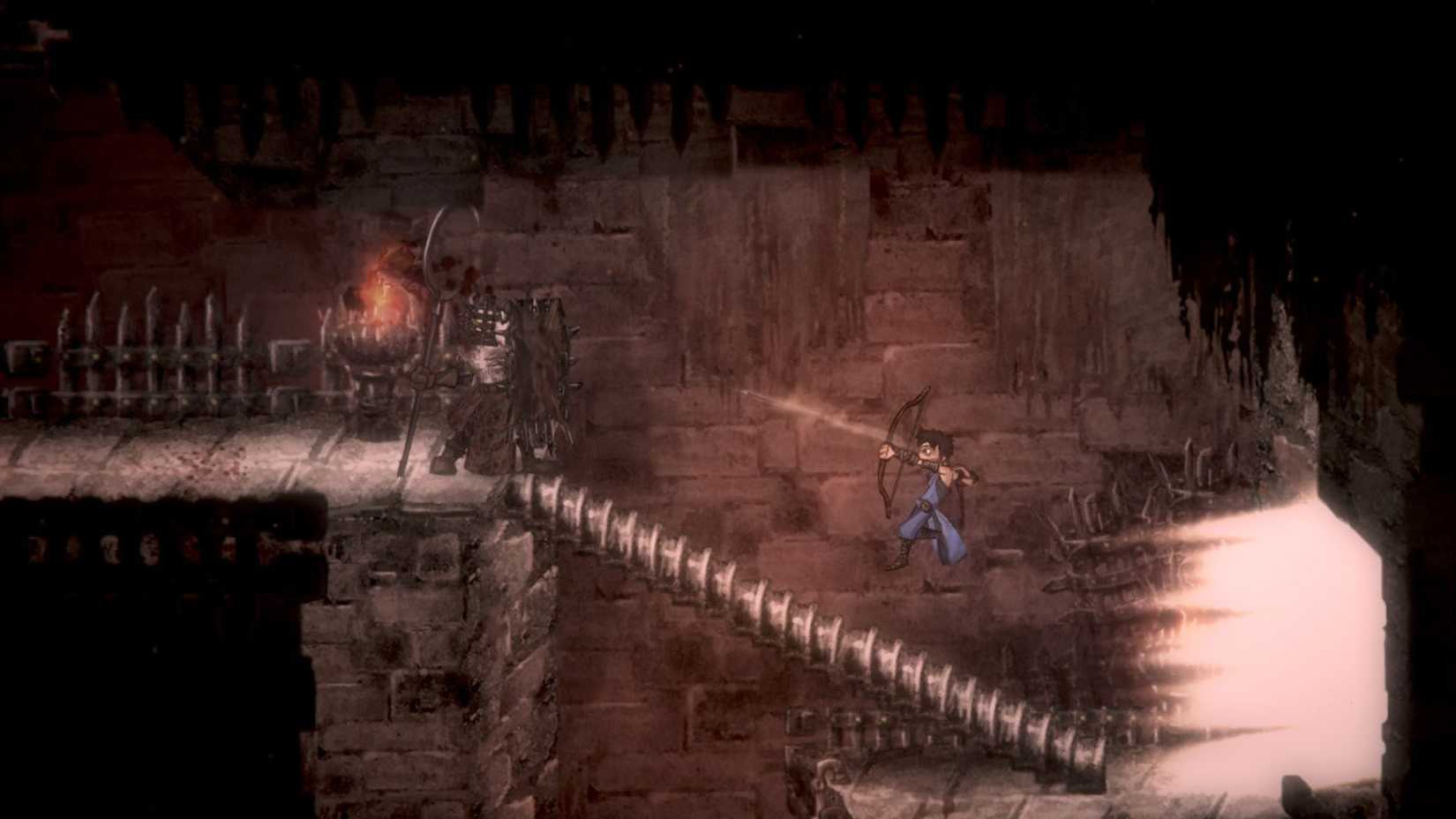
Considering Salt and Sanctuary is a Metroidvania inspired by FromSoftware's games, the variety of builds is a fundamental pillar of its design, and it's incredibly deep.
I've played through the game three times, and each instance with different abilities, weapons, strengths, weaknesses, and overall feel, making each playthrough completely unique.
Not only does the title have a rich array of bosses with intricate and challenging attack patterns, but it also gives you the tools to deal with them in multiple ways, so much so that you can even break the game by becoming overpowered.
That, however, is something we'll leave for when you've already played through it regularly, which is a phenomenal experience. Indeed, it's basically just attacking one way or the other depending on the enemy's position, though there are so many ways to execute those attacks that I simply had to include Salt and Sanctuary on this list.
8 Rabi-Ribi
A Perfectly Balanced Duality

There's nothing more exciting than seeing two genres combined for the first time, and that's precisely what I felt when I stumbled upon the Metroidvania and bullet hell fusion offered by the atypical Rabi-Ribi.

Related
10 Best Pixel Art Metroidvanias
We compiled a list of some of the best pixel art Metroidvanias out there, all from recent history. If you're a fan, check these out!
Having to control one character for melee combat and another for ranged attacks, the game's combat system stems from a premise that's easy to understand but difficult to master, with numerous possibilities and a high skill ceiling.
Bullet hell games, by their very nature, demand a level of concentration and reflexes almost no other genre requires, so when you combine that with the progression systems and the countless attack patterns of Rabi-Ribi's enemies, you get an epic result.
I usually recommend this experience only to those familiar with the genre, because it has its eccentricities that won't appeal to everyone. Nevertheless, if you're among those who do, you're about to experience dopamine rushes like nothing you've ever seen before.
7 Guacamelee!
Wrestling Has Never Been So Elaborate

Speaking of combos, few contexts seem more conducive to the idea of deep and varied combat styles than professional wrestling, so including Guacamelee! was a must.
However, its inclusion is well-deserved thanks to the creative and enjoyable way it integrates the discipline it's based on, creating sequences with pristine animations that make you feel like you're watching a hand-drawn cartoon.
It's a phenomenal feeling, as is knowing you're the one controlling the choreography, because Guacamelee!'s controls are exceptional and perfectly convey the player's inputs.
It goes without saying that, for how good it is, Guacamelee! is absurdly underrated, and anyone who enjoys fighting games, side-scrollers, or Metroidvanias absolutely has to try it.
6 Shinobi: Art of Vengeance
Many Combos and Powers
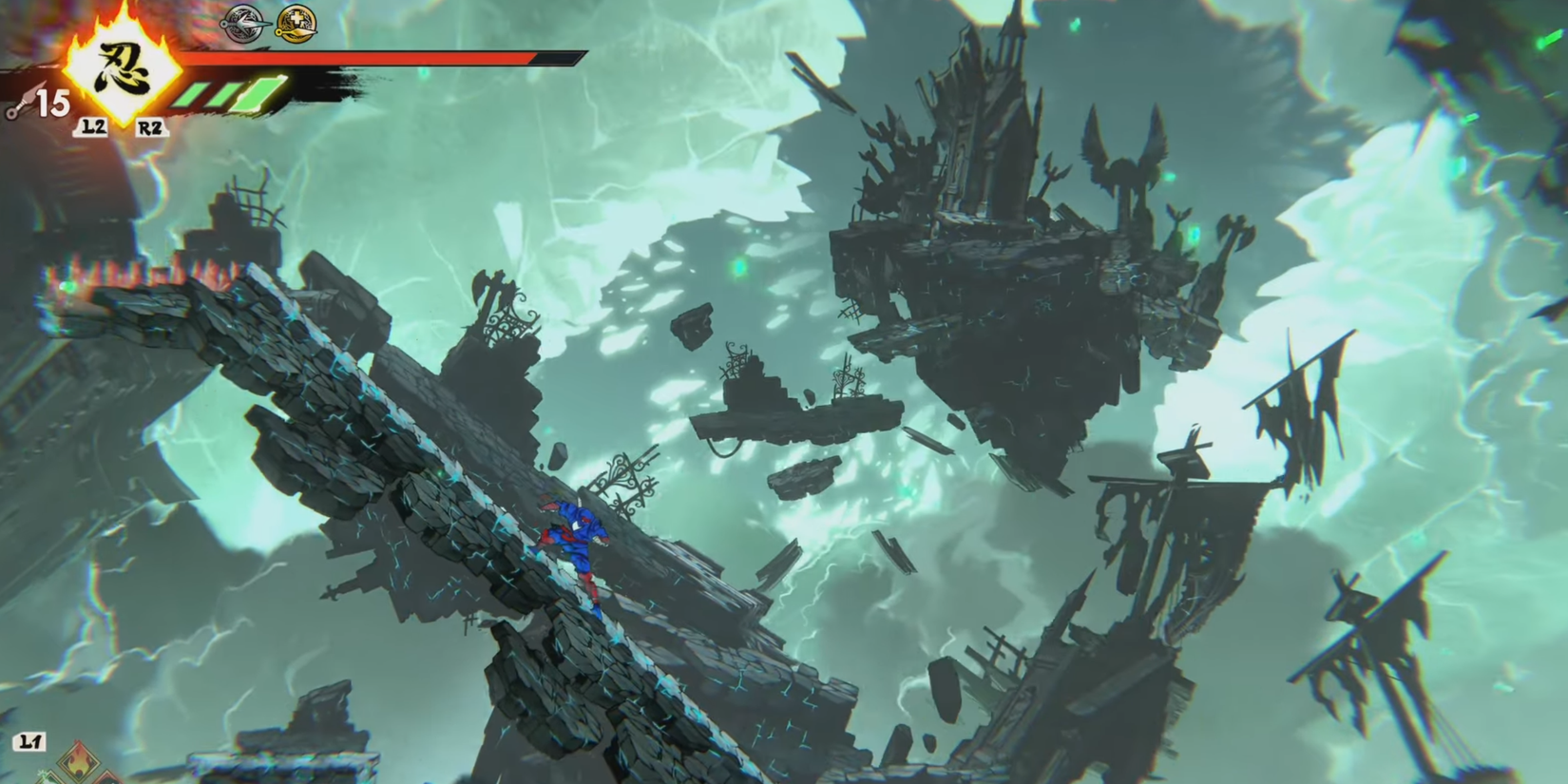
Shinobi: Art Of Vengeance
Although the Metroidvania characteristics of Shinobi: Art of Vengeance are straightforward, they serve as an excellent framework for showcasing the spectacle and flair of its combat system, both mechanically and visually.
Through a system of combos, powers, and ultimate abilities, coupled with splendid character control, you'll experience a series of incredible showdowns where you'll perform as a true ninja with superhuman skills.
It not only feels phenomenal, as mastering the possibilities is incredibly satisfying, but it also looks phenomenal, with a series of stunning effects that create a tremendous sense of power.
For every aspect in which Shinobi: Art of Vengeance succeeds as a Metroidvania, it also excels as a masterful action game, a genre in which it is undoubtedly one of the modern benchmarks.
5 Blasphemous 2
Simultaneous Complexities
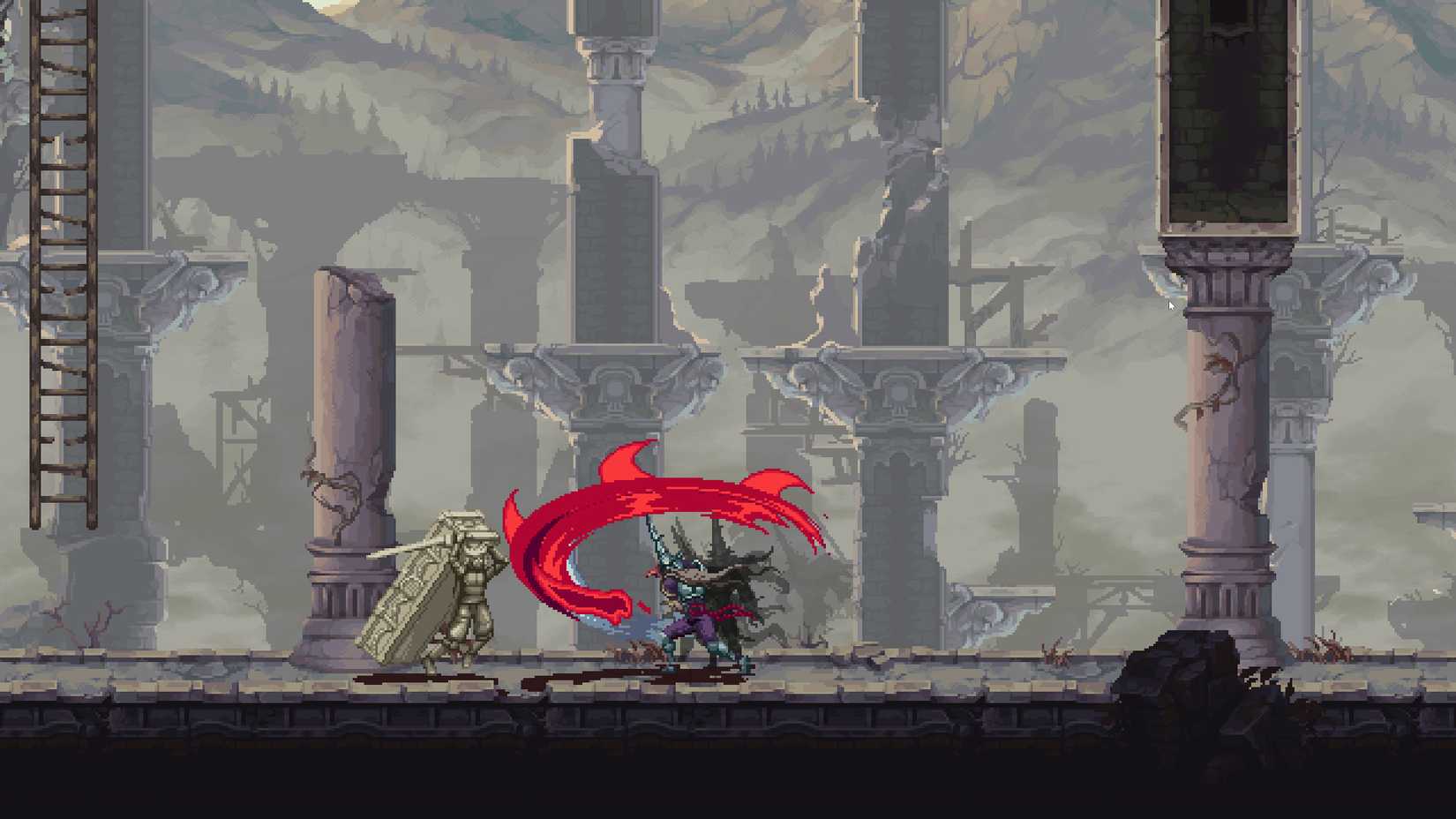
I've always seen Blasphemous 2 as an absolute improvement on the original game, though I think its most noticeable advancement is in the combat system, whose evolution is more than significant.

Related
10 Best Roguevanias You Need to Play
Two compelling genres that don't often intersect are Rogue and Metroidvanias. Here's our list of some of the best Roguevanias out there!
This sequel not only increases the number of available powers and the complexity of the enemies and bosses, but also seamlessly integrates three simultaneous weapons, allowing you to draw them at any moment during combat.
The result is a constant rock-paper-scissors dynamic where you must always be switching weapons to get the most out of each one, which is difficult given the differences between them, but fantastic because of the level of mastery you can achieve.
Unfortunately, I firmly believe only the final boss demands perfect combat mastery (overall, it's an accessible title), but that doesn't detract one iota from the glorious combat of Blasphemous 2, which is among the best Metroidvanias of the last couple of years.
4 Ender Lilies: Quietus of the Knights
An Army at Your Service
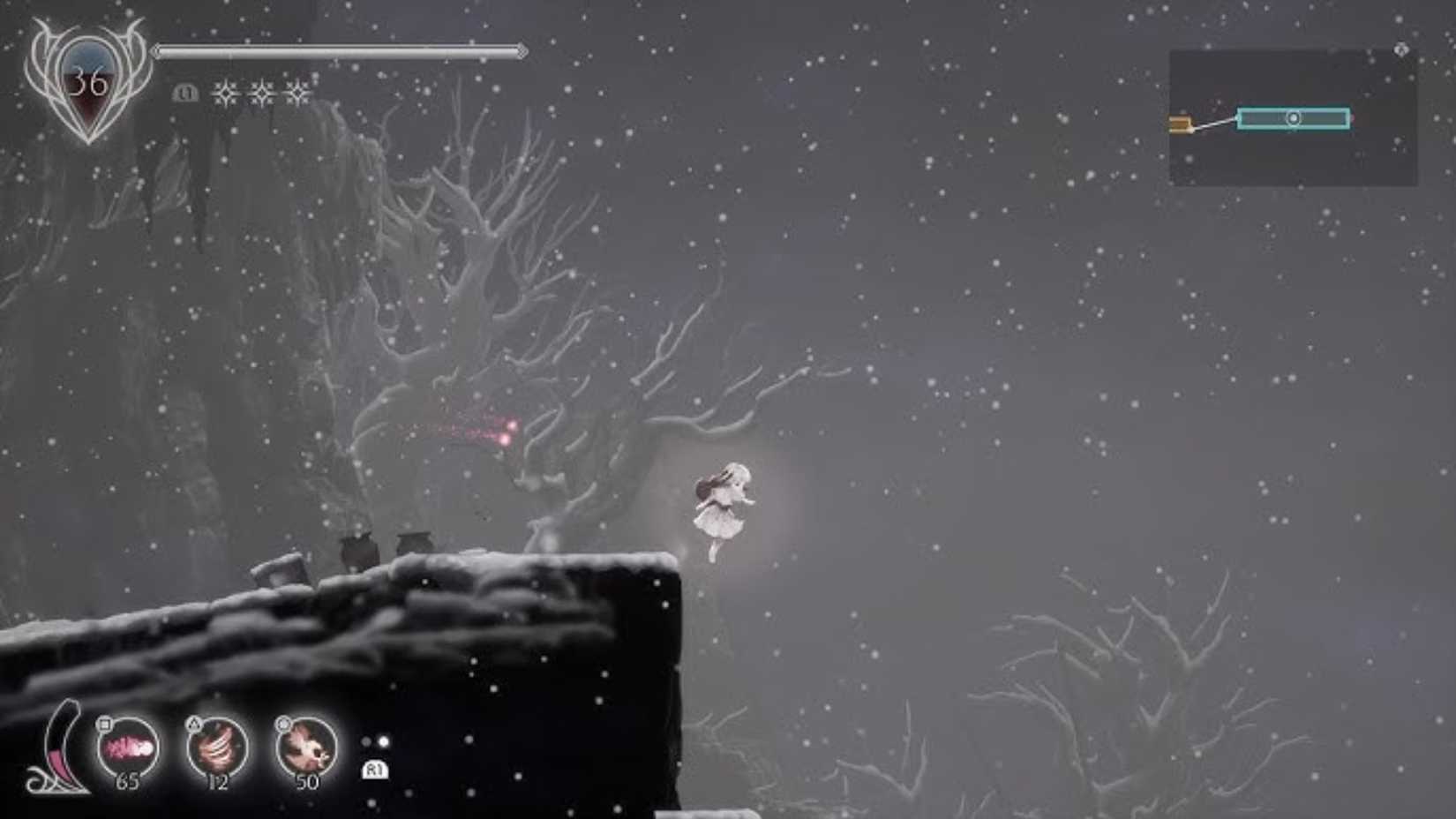
Ender Lilies: Quietus of the Knights
As a self-proclaimed JoJo’s Bizarre Adventure fan, I love any piece of entertainment that involves Stand-like summons, and that explains the presence of Ender Lilies: Quietus of the Knights on this list.
That's, at least, on a superficial level, but the truth is that its high standing in this article lies in the complexity of its combat system, where our protagonist doesn't fight but rather summons diverse beings to do it for her.
Range attacks, melee attacks, spells, parries, charges, healing, poisoning… Imagine all the typical abilities of a Metroidvania, but assigned to beings separate from our own avatar, with their own designs and backstories, and the result is this marvel.
At first, they're just a couple of summons with basic functions, but when you delve deeper, you realize Ender Lilies: Quietus of the Knights offers a much wider range of possibilities than the average game in the genre.
3 Nine Sols
More Than Just Parries

Given how often it's compared to Sekiro: Shadows Die Twice, I think no one would expect anything less than a dense web of gameplay options from Nine Sols, but even those expectations fall short.
You start with simple attacks and parries typical of the genre, but you end up dancing across the entire screen in every encounter, where you must execute regular parries, downward parries, and magical parries, each as the situation demands.
Furthermore, you have the deep customization provided by talismans that passively modify your abilities, in addition to your ranged weapons, which are indispensable for crowd control or fulfilling utility roles, thus increasing the variability of the scenarios.
Nine Sols gives the impression of being just a game about counterattacks, but it's much more, especially considering the predominance of platforming mechanics both against enemies and in practically every area of the map.
2 Aeterna Noctis
Struggling with the Laws of Physics
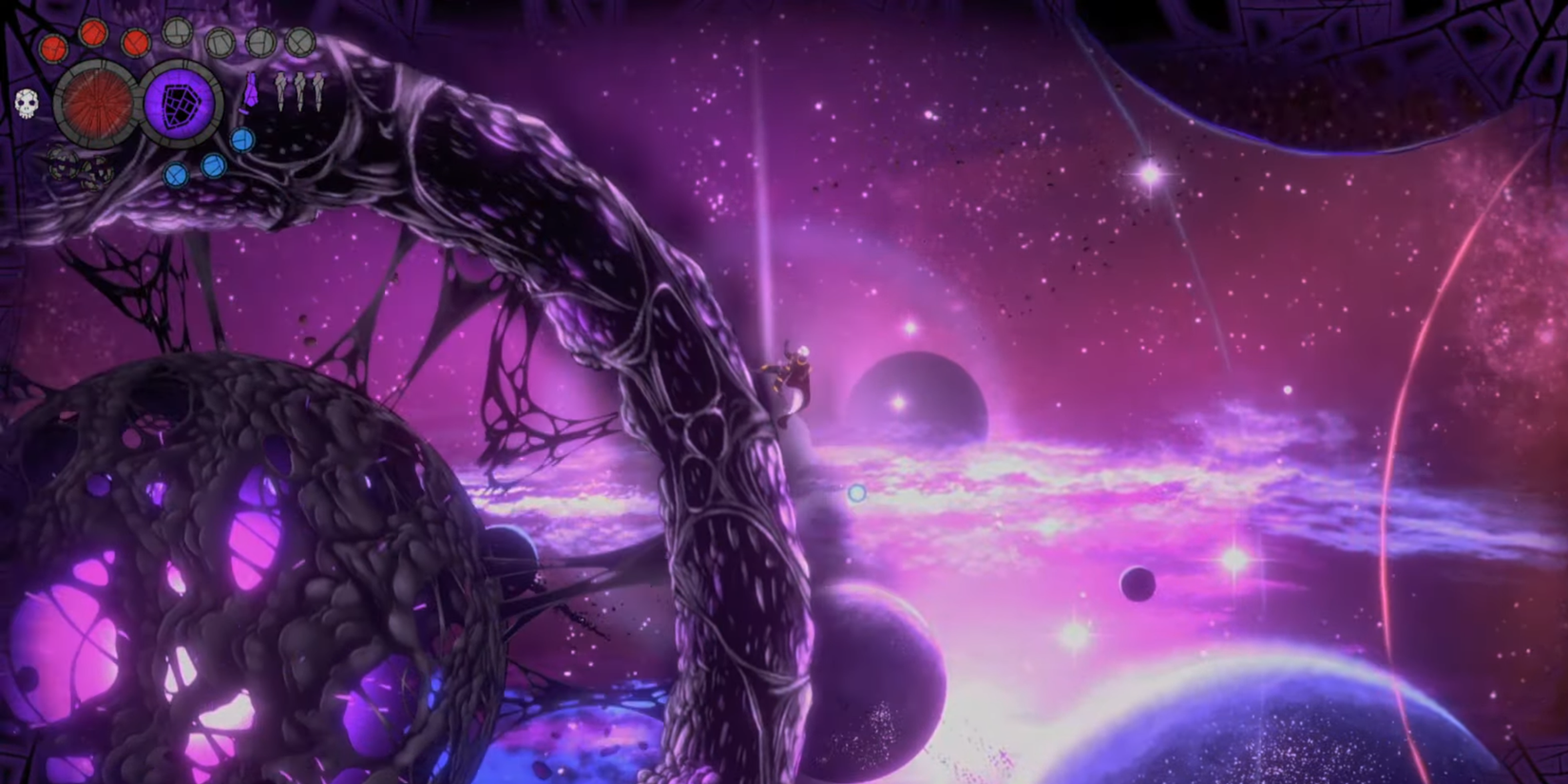
Aeterna Noctis is a curious case because, while it doesn't have a combat system as intricate as many others on this list, it's probably the most surprising for the depth hidden behind its apparent simplicity.
In the first few hours, you don't do much more than attack in the four regular directions, though as you progress and unlock new tools, you encounter a diabolical world of difficulty where only the most skilled will survive.
This is partly because the level design constantly changes the game's rules, with areas featuring multiple gravitational centers or disappearing platforms, but mostly because of the weapons you unlock.
In addition to the traditional sword, you discover various tools that fulfill different roles, including a ranged weapon that teleports you and another that deals damage, creating a tandem of melee and ranged options that turn every fight into a frenzy.
It's not the most polished mechanical compilation in the world, mainly because the controls aren't very responsive. Yet, when it comes to complexity, Aeterna Noctis breaks far more barriers and standards than you would imagine.
1 Hollow Knight: Silksong
A Divine Evolution
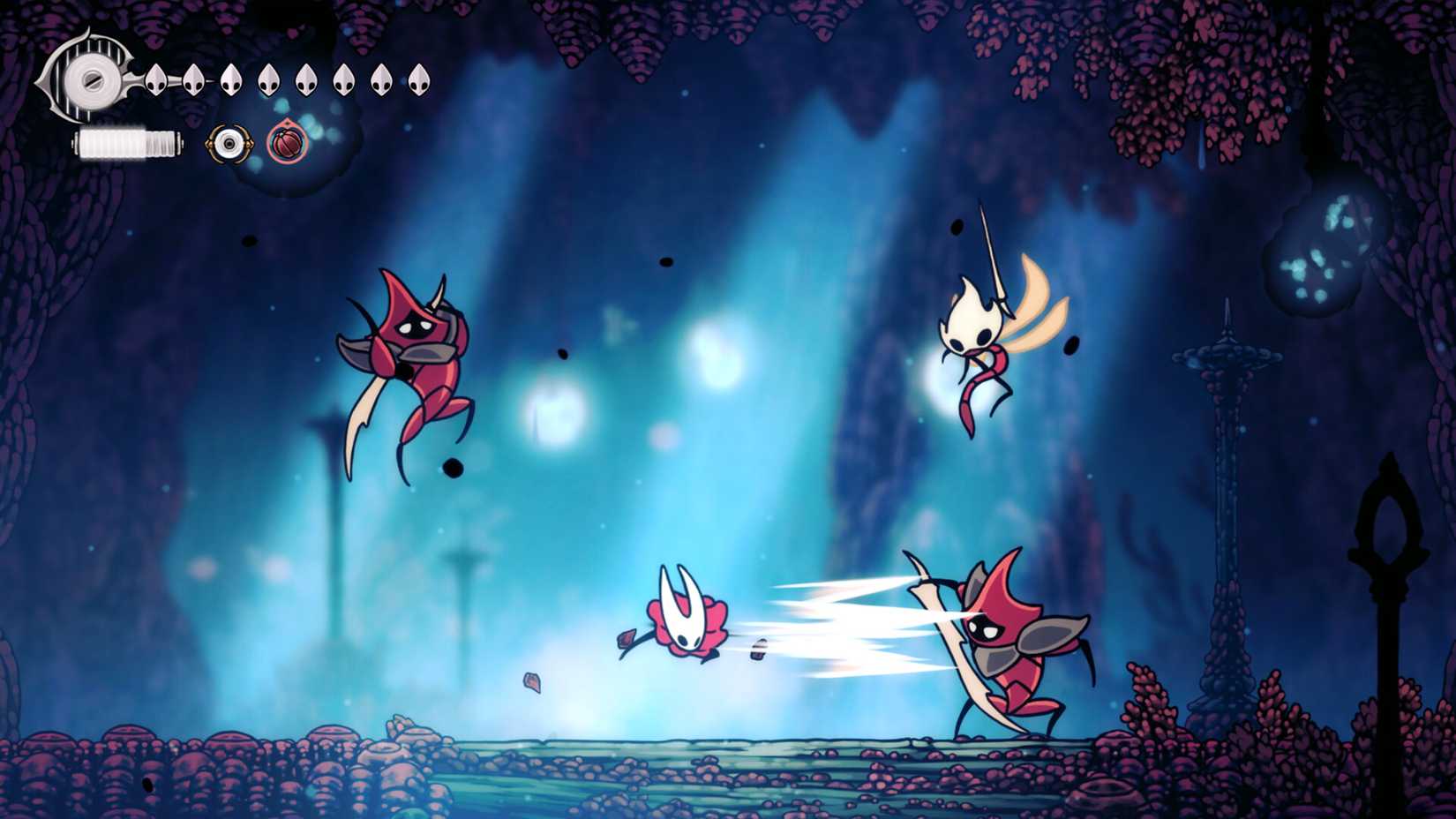
Hollow Knight is praised for countless achievements, and its combat is among them for reasons that transcend the act of fighting itself, since mostly you just throw sword swings… Or, at least, that was the case until Hollow Knight: Silksong came along.
During the game's initial phase, you familiarize yourself with Hornet and her arsenal of tools, which includes dozens of active and passive gadgets with different functions and synergies, and, of course, her trusty needle.
Then, you discover the existence of Crests, and everything changes completely. For a game as inexplicably precise as this, where every pixel of a hitbox and every point of damage matters, the idea that it has more than one combat structure with its respective animations seemed impossible.
However, unlike its predecessor, you have up to seven different combat styles, each with its own characteristics, ensuring no two playthroughs are ever the same, as long as you choose not to use the same Crest.
Overall, it's an indescribably commendable effort, but when you think about all the balancing and testing Team Cherry had to do to be able to come up with so many combinations without breaking the game, you conclude that the seven years it took them to develop Hollow Knight: Silksong were rather short.

Next
10 Franchises That Xbox Needs to Revive
Xbox's new leadership should strive to revive these 10 forgotten Xbox-exclusive franchises.





![ELDEN RING NIGHTREIGN: Deluxe Edition [FitGirl Repack]](https://i5.imageban.ru/out/2025/05/30/c2e3dcd3fc13fa43f3e4306eeea33a6f.jpg)
 English (US) ·