.png)
.png) 3 months ago
20
3 months ago
20


Published Apr 29, 2026, 2:32 PM EDT
Daniel has been playing games for entirely too many years, with his Steam library currently numbering nearly 750 games and counting. When he's not working or watching anime, he's either playing or thinking about games, constantly on the lookout for fascinating new gameplay styles and stories to experience. Daniel has previously written lists for TheGamer, as well as guides for GamerJournalist, and he currently covers tech topics on SlashGear.
Sign in to your DualShockers account
As one of the bedrock game genres, JRPGs have a lot of potential wiggle room in their concepts and executions. It doesn’t always have to be a handful of dudes standing in a line, taking turns smacking goblins. Sometimes it can be a strategy game, or have action commands, or have weird narrative setups! It’s a genre rife with potential for ambition, and debatably, there was no better home for ambition back in the day than the original Nintendo DS, a rather ambitious console itself.

Related
10 Nintendo DS JRPGs That Are Fun from the Start
Flip open the DS, and there's immediate JRPG fun to be had.
The DS has a surprisingly hefty library of JRPG and JRPG-adjacent titles, and while there are plenty of traditional “dudes standing in a line” titles, some of them tried to put their own manner of unique spin on the concept, whether in their gameplay, stories, or presentation. Granted, it didn’t always work out in the end, but as nice as profits and acclaim are, is ambition not a reward in itself? Is it not worth something to merely create an ambitious JRPG? I like to think it is.
“Ambitious” is the key word here; we’re focusing on games that did something new and interesting with their concepts, rather than their overall quality.
10 Monster Racers
Take it to the Track
|
Koei |
|
DS |
|
May 2010 |
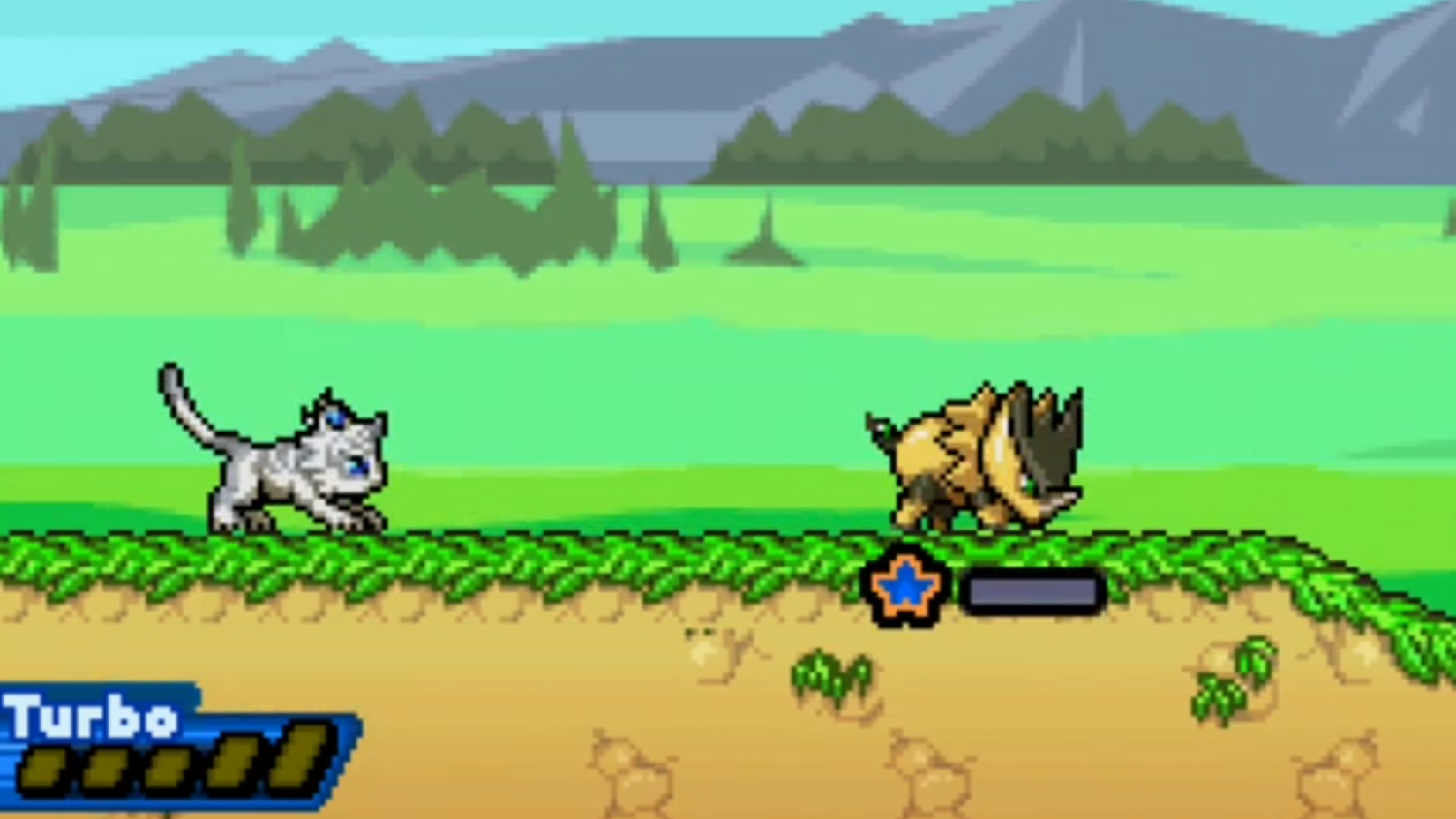
When Pokémon took the world by storm in the 90s, just about every developer and publisher on Earth wanted a piece of the monster-collecting action, which led to more than a few unusual offshoots of the concept. Take, for example, 2010’s Monster Racers, a monster-collecting game where the goal is to race ‘em rather than battle ‘em.
Monster Racers is set in an ostensibly-normal version of Earth, at least until a mysterious island rises out of the Pacific Ocean containing a myriad species of weird monsters. How does the world react? Why, adopt them and race them for fun, of course! The game’s moment-to-moment gameplay is generally similar to Pokémon, with a top-down exploratory perspective and set encounters with other trainers. When you get into a fight, though, things switch to the racetrack.
Your collected monsters will race across 2D tracks, with their stats determining how fast they run, how high they jump, how well they can tackle other monsters out of the way, and so on. It’s a little less strategic than Pokémon, but also a lot more fast-paced, and surprisingly fun to play with friends.
9 Spectrobes
Collect ‘Em All

Speaking of Pokémon, it’s no secret that Pokémon is the most profitable media franchise in the world, which must burn up Disney as the holder of the second-most profitable franchise, Mickey Mouse. This, at least I assume, is one of the reasons Disney’s game-publishing arm, Buena Vista Games, tried to take its own crack at the monster-catching craze in 2007 with Spectrobes, also known by the much cooler name Fossil Super-Evolution Spectrobes.
Spectrobes follows a galactic patroller who, by chance, stumbles upon a mysterious device that allows him to command the titular beasties, ancient, powerful creatures resurrected from fossils. As you explore the galaxy, you can dig up all kinds of Spectrobe fossils, dust them off with the touchscreen and revive them into flesh and blood, then use them to battle other Spectrobes in arena-style combat where you yourself are in the fray.
Interestingly for both the time and the platform, Spectrobes had some live-service elements. By logging onto the now-defunct Nintendo Wi-Fi network, you could download Spectrobes, equipment, and items. These all used points received from logging in at least once a week, though your points would be lost if you missed a week. Good ol’ Disney, pioneering those dark patterns.
8 Sonic Chronicles: The Dark Brotherhood
Who Asked Sonic to Wait his Turn?

Sonic Chronicles: The Dark Brotherhood
Sonic the Hedgehog has dabbled in just about every genre of game at least once, from platformers to racers to party games, mostly in pursuit of what Nintendo was doing with Mario. In the same way that Mario scored several excellent JRPG series, so too did Sonic take a swing at the turn-based adventure format with Sonic Chronicles: The Dark Brotherhood.
This JRPG, developed by BioWare of all devs, tells a new story of Sonic and friends battling a group of mysterious rogues known as the Marauders. Rather than using his usual platforming-style action, though, the game has you gradually explore various open maps using the DS touchscreen, switching to other characters like Knuckles or Tails to surmount obstacles.
The game’s turn-based combat has an unusual approach in that, rather than individual moves, everything is broken up into “rounds,” with the action you select for a character being the action they’ll commit to exclusively for that round, and special attacks and skills accompanied by a little Elite Beat Agents-style minigame. It’s kind of hard to explain in words, and it didn’t go over great with players, but nobody can say it wasn’t different from the norm at the time.
7 Solatorobo: Red the Hunter
Steampunk Furries

Solatorobo: Red the Hunter
I really wish there were more JRPGs involving giant robots. It feels like such an untapped well of potential, though it could just seem that way to me because I like giant robots and want them in everything. Still, while it’s not giant robots, we can find people-sized robots in plenty of JRPGs, including Solatorobo: Red the Hunter.
Solatorobo is an action-JRPG set in a steampunk world of anthropomorphic cats and dogs, in which the titular Red rides his personal mecha around as a mercenary for hire. Progression consists primarily of linear levels, not unlike the classic Mega Man games. To actually enter these levels, though, you need to clear sidequests to increase your Hunter Rank, which can include fetch quests, minigames, and other little distractions.
The main gameplay has you marching through levels aboard your mech, smacking and chucking foes with its extend-o-arms. Every defeated enemy gets you XP, which improves your base stats and unlocks new attacks and abilities. You can also equip new parts to your mech to improve its capabilities further, which adds some min-maxing potential.
6 Knights in the Nightmare
Strategy Meets Bullet Hell

There are certain genres of game that you would never expect to mix, or at least not mix well. For example, you could combine a JRPG and a tactical game pretty easily, and a JRPG and a bullet hell game would probably work as well. But a three-way combo between JRPG, tactics, and bullet hell? What would that even look like? Well, it would look a little something like Knights in the Nightmare, I’d imagine.
Knights in the Nightmare tells a multi-perspective story of a heroic valkyrie fighting back demonic hordes with a small, yet powerful wisp at her side. You’re not actually controlling the valkyrie or her allies here; you’re the wisp. In combat, it’s your job to fly around on the field and make contact with your allies, using the touchscreen to direct their movements and attacks.

Related
10 Best Bullet Hell Shooters, Ranked
From Ikaruga to Crimzon Clover, we've ranked some of the greatest bullet hell shooters ever made.
Here’s the twist: as your wisp flies about the map, enemies are constantly taking potshots at it, forcing you to manually guide it out of the line of fire. Taking damage, as well as charging allies’ attacks, drains your time meter, so you need to watch the flow of the field while giving orders and stay out of harm’s way.
The Hero Doesn’t Know he’s the Hero

I think it’s an unofficial rule that every Nintendo platform, handheld or otherwise, needs to have at least one exceptionally quirky, slightly off-kilter JRPG, such as Earthbound or Paper Mario. The DS definitely had its fair share of quirky games, JRPGs included, though out of all of them, the hidden gem that most frequently springs to my mind at least is Contact.
Developed by Grasshopper and published by Atlus, Contact tells a deliberately minimalistic story of a spacefaring professor crashing on a weird planet and enlisting a random kid named Terry to bail him out. If I had to categorize the game specifically, I’d call it an action-JRPG, though it’s also kind of like an auto-battler.
Both from a narrative and gameplay perspective, Terry’s actions are largely independent of your own. You control him on the overworld, but in a fight, Terry will think and act for himself. It’s your job to chime in with repositioning orders, items, abilities, and other little tricks to help him, particularly switching Terry’s current costume to change which attacks and skills he can use.
4 Infinite Space
Command the Fleet

In a typical JRPG, the efficacy of your party is largely determined by the gear you equip. Better armor makes you stronger, better shoes make you faster, and so on. In that way, could a massive vehicle like a spaceship, with equally swappable parts, not be managed the same as a JRPG party member? Hey, it worked for Infinite Space.
Infinite Space places you in command of a fleet of intergalactic mercenary ships as they traverse the cosmos. Rather than doing any fighting yourself, both combat and navigation is controlled from the bridge of your flagship. You need to lead your fleet on long expeditions, occasionally stopping to rest, refuel, and rearm as you make your way toward your destination.
When you’re attacked by an enemy fleet, you need to issue commands to your ships in real time, having them fire cannons, deploy shields, or even get into ramming distance to mop up foes. Whenever you stop at spaceports, you can purchase new parts that can be freely equipped to your fleet’s ships, optimizing their capabilities for different types of offense and defense.
3 Nostalgia
On Foot and in the Air

There’s something about ship-to-ship combat that played well on the DS. I couldn’t tell you why; I guess poking the touchscreen is kind of like navigating on a paper map? Whatever the reason for it, more than a few different games on the platform tinkered with the concept, with the most interesting JRPG to do it being Nostalgia.
Perhaps, as the name implies, Nostalgia appears at first to be a very straightforward fantasy JRPG, in the same vein as other major games on the platform like Final Fantasy III or Bravely Default. Indeed, combat often has your party members fighting in turn-based battles and using items and special abilities. However, party combat isn’t the only kind of combat in this game.
Fittingly for its steampunk setting, you may also encounter enemies while cruising the world in your personal airship. Your party members are still used in these fights, but their usual abilities are automatically translated to those of your ship, such as deploying its front guns or ramming with its frontal blade. Your ship has its own HP to worry about, so you need to be more strategic with your moves than when you’re using your party members individually.
2 Radiant Historia
Wibbly-Wobbly Timey-Wimey

These days, it’s pretty normal for games, movies, and shows to fart around with multiple timelines in their stories, but back in the late 2000s, early 2010s, it was a relatively unused concept. Coincidentally, one of the most notable games to use it, 999 released in 2009, followed by another game to try its own hand, Radiant Historia in 2010.
Radiant Historia seems like a fairly straightforward JRPG tale at a glance, depicting a massive interspecies war in a sword and sorcery setting. Combat is turn-based, with your party and your foes being placed on a 3x3 grid and positions determining things like attack damage and occasionally tripping ground hazards.
Rather than its combat, where Radiant Historia gets experimental is in its storytelling. The game uses a similar branching timeline system to 999, wherein you can freely flip between multiple iterations of the story’s progression, dodging bad endings while carrying over things like items and pertinent information. Even if you hit a dead end, you always keep your XP and whatnot, so there’s no harm in trying choices that may otherwise seem like bad ideas.
1 The World Ends With You
Nobody Said Staying Trendy was Easy

The unfortunate thing about ambitious games is that, even if they’re really cool and interesting, if they’re too ambitious, the playing public at large may not quite pick up what they’re putting down. This is one of the reasons that Square Enix’s The World Ends with You was a somewhat-obscure title for a period, despite being well-liked by those who bothered to play it.
The World Ends with You follows Neku, a young lad on the trendy streets of Shibuya who inadvertently finds himself drawn into a deadly game with no memories of how he got there and no one to rely on but a series of partner players. The game is specifically designed to take advantage of the DS’s dual screens in both its exploration and combat, though obviously, it’s in the latter where things really pop off.
In a fight, Neku and his partner take turns, tagging back and forth between the screens. Neku needs you to draw various patterns on the touchscreen to activate his abilities, while his partner requires sequential inputs of face buttons to unleash their own attacks. You need to be fast and decisive in both modes, guiding both characters out of harm’s way, because if one of them bites it, they both do.

Next
10 Nintendo DS JRPGs Still Trapped on Original Hardware
That old folding console is clamped down tight on these JRPGs.



![ELDEN RING NIGHTREIGN: Deluxe Edition [FitGirl Repack]](https://i5.imageban.ru/out/2025/05/30/c2e3dcd3fc13fa43f3e4306eeea33a6f.jpg)
 English (US) ·