.png)
.png) 3 months ago
15
3 months ago
15


Published Apr 29, 2026, 2:30 PM EDT
Murillo Zerbinatto is a contributor from Brazil. He's a JRPG enthusiast who has been around the world of games and content creation for more than six years now. He has a particular love for Final Fantasy and has absorbed all the content this long-running series offers, including its obscure spinoffs such as Dimension I & II, Explorers, and My Life as a King. While playing JRPGs is already a time-sinking endeavor, Murillo doubles down by being a platinum hunter as well.
Sign in to your DualShockers account
Coming from the PS2, many imagined that the PS3 would also bring an immense catalog of JRPGs. In some respects, that is true. There are more than a few PS3 JRPGs that are clear evolutions of formulas that came before or new attempts to introduce unusual features or mechanics.
However, with the evolution of visuals and the shift in certain graphics engines (as well as the lack of Japanese documentation for Unreal Engine at the time), unfortunately, not many series managed to survive the generational jump. I still lament that we didn't get a Breath of Fire in the seventh generation — and I won't point fingers at Dragon Quarter!
Related
10 Best Square Enix Franchises, Ranked
Square Enix is one of the most prolific Japanese developers, but not all its franchises get the love they deserve.
Still, the console brought a pretty incredible catalog of JRPGs, whether they were exclusive to the console or ports from other systems, with many more additions. Join me as we revisit the most ambitious PS3 JRPGs and lament that some of them are still trapped on the console.
10 White Knight Chronicles
Pretty Good Multiplayer Component

Level-5 has always been a pioneer in bringing unusual systems to its JRPGs, both in Dark Cloud and Rogue Galaxy, and also in the game in question, White Knight Chronicles. Much of what is seen here in White Knight Chronicles can be seen in other Level-5 games, but that's because they are successful formulas that the public has tested and approved.
Granted, the whole package found in White Knight Chronicles wasn't enough for the JRPG to be widely regarded as a great title, but the developer certainly tried. The biggest highlight is the game's Georama system and online multiplayer. In the title, we had a small settlement that we could populate with NPCs and our own buildings. We could then visit other players' Georamas or have them visit ours, fostering a sense of community.
The multiplayer gameplay featured a Guild Ranks system that was easier to farm by playing online with other players using player-created characters. Nowadays, since the server is offline, it's impossible to play (resulting in one of the longest platinums in history). But back then, it was really a joy just to delve into White Knight Chronicles multiplayer and mindlessly repeat the same quests over and over again.
9 Trinity Universe
A Crossover of Sorts

Trinity Universe is lowkey one of the most discrete JRPGs on the list, but within its parameters and the developers' intentions, it qualifies as ambitious. The game features a crossover of characters from NIS, Idea Factory, and Gust. Granted, most of the design resembles Hyperdimension Neptunia gameplay, but still, it's quite a bold premise.
To accommodate so many distinct characters, Trinity Universe offers two different scenarios. If you pick the Goddess side, you will find Gust characters, while the NIS characters will be on the Demon Lord side. The only characters in common are those from Idea Factory, which reinforces the idea that it was a product sanctioned by the developer itself.
To contextualize, on the NIS side, we have characters like Flonne, Etna, and Prinny, all from Disgaea, while on the Gust side, we have Pamela Ibis and Violet, both from Atelier Viorate: Alchemist of Gramnad 2. All the game's original characters hail from the exquisite mind of Idea Factory.
8 Valkyria Chronicles
As Much Inspired by as it Inspired XCOM
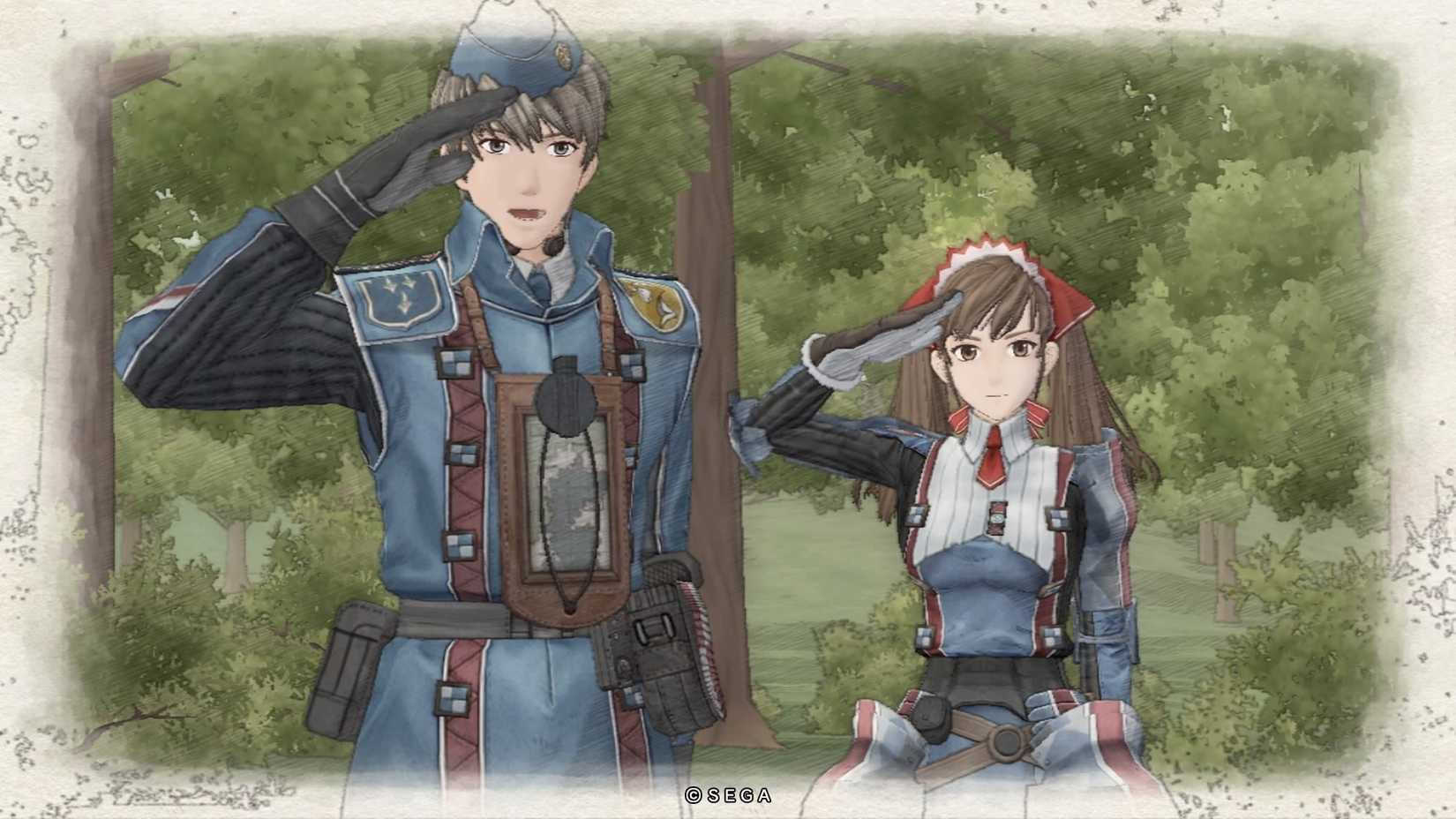
Whenever a major developer creates a new IP, it's a reason to celebrate, especially if it's a JRPG. Valkyria Chronicles was a new franchise from SEGA, in partnership with Media.Vision (Wild Arms), to create a war-based tactical JRPG for the PS3 with a totally unusual gameplay system.
Called BLiTZ (Battle of Live Tactical Zones), this turn-based system allowed players to control members individually on the battlefield and then aim to act against an enemy. The system is very reminiscent of XCOM, which Valkyria Chronicles drew inspiration from, and then the story came full circle when XCOM (2012) drew inspiration from Valkyria Chronicles. I love how the industry inspires itself.
Needless to say, Valkyria Chronicles pleased both critics and the public and went on to become a series, although it is currently on hiatus. However, we have a remastered version of the game for anyone interested in trying it out.
7 Star Ocean: The Last Hope
The Last Financially Viable Star Ocean

Whenever someone tells me that competition in capitalism is good, I always remember the initiative Microsoft took with the Xbox 360 to try to win over the Japanese public. The console's JRPG lineup was extremely loaded, bringing titles like Star Ocean: The Last Hope, The Last Remnant, Eternal Sonata, Lost Odyssey, and many others. I dare say that many of these only existed because Microsoft wanted to gain an advantage over the PS3.
While I can't confirm if Microsoft invested directly in these titles (I would bet it did), they were, not coincidentally, the most financially backed games of their respective series at the time. For example, Star Ocean: The Last Hope was a clear evolution over Star Ocean: Till the End of Time, both in graphics, given the generational jump, and in gameplay scope.
It's a pity it was the last Star Ocean to receive a deserved budget, as the fifth and sixth games, although they have their audience, were clearly developed under tight budgets. If only someone would make another Star Ocean entry with the necessary resources.
6 Tales of Xillia
Two Protagonists

From my understanding, Tales of was a relatively niche series in the JRPG world. Tales of Symphonia gave it a much-needed spotlight, and Tales of Vesperia, originally released on the Xbox 360, showed what a title in the franchise can do with good investment. Other games followed suit, but I consider Tales of Xillia to be among the most ambitious of the series.
First, the game offers two protagonists. While most of the narrative plays largely the same, we have different story beats depending on whether we play as Jude or Milla, and an entirely new chapter. Ultimately, the differences aren't so large that they demand a second playthrough, but they are there for those who want to replay the JRPG.
Tales of Xillia also significantly improved upon the systems seen in its predecessors and features one of the most engaging progression systems in the genre. It's like a variant of the Sphere Grid from Final Fantasy X, but with greater customization, giving the player more agency to build the character however they wish. Plus, the game also received a direct sequel, which shows how Bandai Namco was planning a big plot.
5 Resonance of Fate
The Steepest Learning Curve
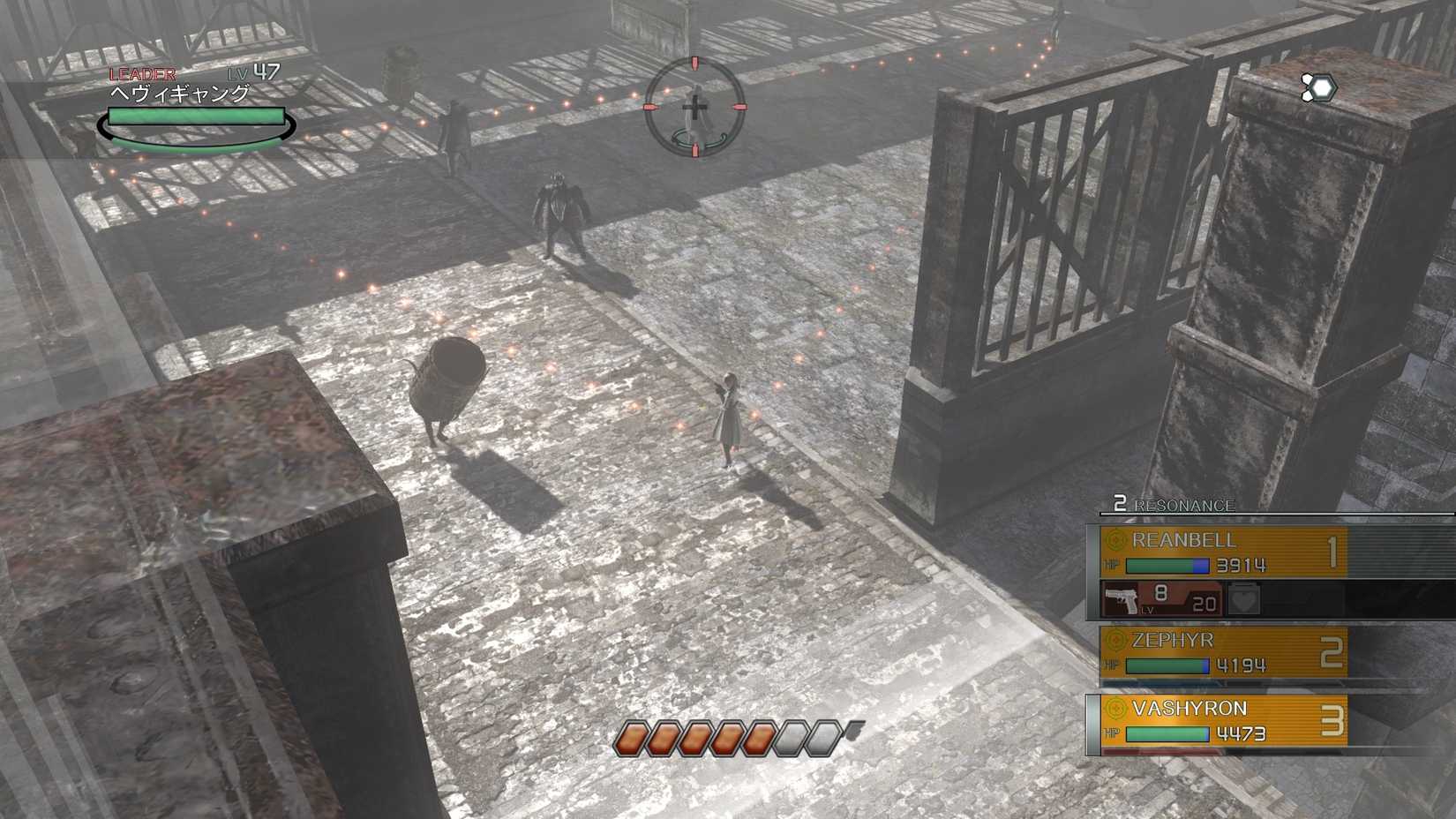
Sometimes, too much ambition and creativity can backfire. For instance, a developer who tries to make a gameplay system so unique and otherworldly that it ends up a tad convoluted can leave players dumbfounded rather than properly engaged. Enter the Resonance of Fate battle design.
First of all, I'm not saying that Resonance of Fate is a bad game—far from it. However, tri-Ace really poured all their creative juices into designing a never-before-seen battle system that, well, there's a reason we never saw it again. The combat is a mix of turn-based, real-time, and Die Hard. Kidding, but you'll be running and shooting a lot.
The JRPG's learning curve is indeed steep, and those who have the patience to learn all the system's intricacies will find a deep and engaging experience. But that's the issue, right? Sometimes we don't want to learn something, nor do we have the patience to do so. Sometimes we just want to lie down on our couch and play with our minds turned off to forget about life's struggles.
4 Ni no Kuni: Wrath of the White Witch
Visual Production Ambitions

Ni no Kuni: Wrath of the White Witch
Ni no Kuni: Wrath of the White Witch had animated sequences produced by Studio Ghibli, and if this doesn't show ambition, love, care, attention to detail, gorgeousness, and almost pixel-perfect animations, I don't know what does. Okay, no more glazing Studio Ghibli, but come on, look how infinitely adorable Oliver's journey is!
Under all the beautiful presentation is also a great JRPG. It's whimsical but has its pensive moments. The gameplay system takes a little getting used to, but once you do, you'll want to keep taming all the familiars possible, even though the RNG is agonizing and unnecessarily low on some familiars.
3 Drakengard 3
Yoko Taroisms

Drakengard is one of the most mature JRPG series I have played on the PS2 and PS3. Nothing would prepare teen Murillo to see all the sacrifices the characters were making in exchange for power, including the protagonists. Also, it was Yoko Taro, so nothing would prepare even an adult Murillo.
The third game in the series (not counting the NieR timeline), aptly named Drakengard 3, builds on the foundations of its predecessors to deliver the, debatedly I know, best installment. The hack'n slash and dragon gameplay is still here, but now it is more measured and has a basis in song magic.
Even the story had some ambitions that most JRPGs wouldn't dare traverse. The world was saved by five goddesses with song magic, called Intoners. While all was at peace, a sixth goddess appeared, saying the world didn't need them, and started a killing spree. So, Drakengard 3 is about defending ourselves against Zero? Nuh-uh. We are Zero.
2 Persona 5
Hundreds of Hours of Content

I can't wrap my head around the notion that Persona 5 was intentionally developed for the PS3 and released on PS4 at the same time, given the timing and "why not." And yeah, it doesn't have as many explosive set pieces as other PS3 JRPGs, but the dozens of hours spent talking with the same old NPCs, traversing the school, and debating with our crew in Café Leblanc are still impressive.
Persona 5 took everything the series learned from Persona 3 and Persona 4 and evolved it to the maximum, bringing what is, for me, the best turn-based combat in the series, the finest Social Link system, the most packed calendar with variable actions, and a plot that remains agonizingly contemporary today. Persona 5 is often hailed as the best JRPG in the industry and, so far, holds the highest critic score for the genre on Metacritic.
The fact that it was re-released for several future platforms, as well as a Royal version, shows how it was a timeless product even since the PS3. I don't know about you, but I think I'll explode with happiness when Atlus finally announces Persona 6.
1 Final Fantasy XIII
Fabula Old Crystallis

By now, you must be familiar with how Square wanted to dive once again into a multi-game project after the financial success of Final Fantasy X and Final Fantasy X-2. To do that, the developer created Fabula Nova Crystallis, a series of games that would follow the same mythology. Among the titles included were Final Fantasy XIII, Final Fantasy Versus XIII (which became Final Fantasy XV), and Final Fantasy Type-0 (and Final Fantasy Agito as well).
Needless to say, this was quite an ambitious project. Final Fantasy XIII was the starting point for the mythology and was meant to introduce elements we would see in all the other games. This did happen, to some extent, though it was quite obtuse in titles that weren't direct sequels to Final Fantasy XIII.
While Fabula Nova Crystallis was never entirely realized, it is still possible to play all these titles and find some fragments of what could have been the biggest mythology of separate games in Square Enix's history.

Next
10 PS1 JRPGs Still Trapped on Original Hardware
Some are in dire need of a port, I would say, simply because I want to replay them.



![ELDEN RING NIGHTREIGN: Deluxe Edition [FitGirl Repack]](https://i5.imageban.ru/out/2025/05/30/c2e3dcd3fc13fa43f3e4306eeea33a6f.jpg)
 English (US) ·