.png)
.png) 5 months ago
49
5 months ago
49


Published Feb 3, 2026, 3:13 PM EST
Daniel has been playing games for entirely too many years, with his Steam library currently numbering nearly 750 games and counting. When he's not working or watching anime, he's either playing or thinking about games, constantly on the lookout for fascinating new gameplay styles and stories to experience. Daniel has previously written lists for TheGamer, as well as guides for GamerJournalist, and he currently covers tech topics on SlashGear.
Sign in to your DualShockers account
Compared to a few decades ago, licensed games are far fewer in number, and for the most part, the ones we do get are much better, quality-wise. I have a theory as to why this is: it’s because newer licensed games are made by people who actually know and understand the IP they’re licensing. This is in contrast to the dark ages of licensed games, where even stuff like family sitcoms were getting tie-ins.

Related
10 Video Game Adaptations Forgotten by Time
Books, cartoons, comics, short films, and so much more.
Many licensed games over the years have effectively tried to squeeze blood from a stone, forcefully wrestling something resembling a game setup out of a movie, TV series, or advertising campaign that provides basically nothing to work with. This is why so many licensed games had to contrive bizarre plot reasons for characters to be running around and jumping on things, or even disregard the setting of the license entirely to make something only loosely based on it. While this didn't guarantee the game would be bad, it usually didn’t help its odds of being good. These are the licensed games that make you genuinely wonder how on Earth anyone came up with them.
Tim Allen Grunts Not Included
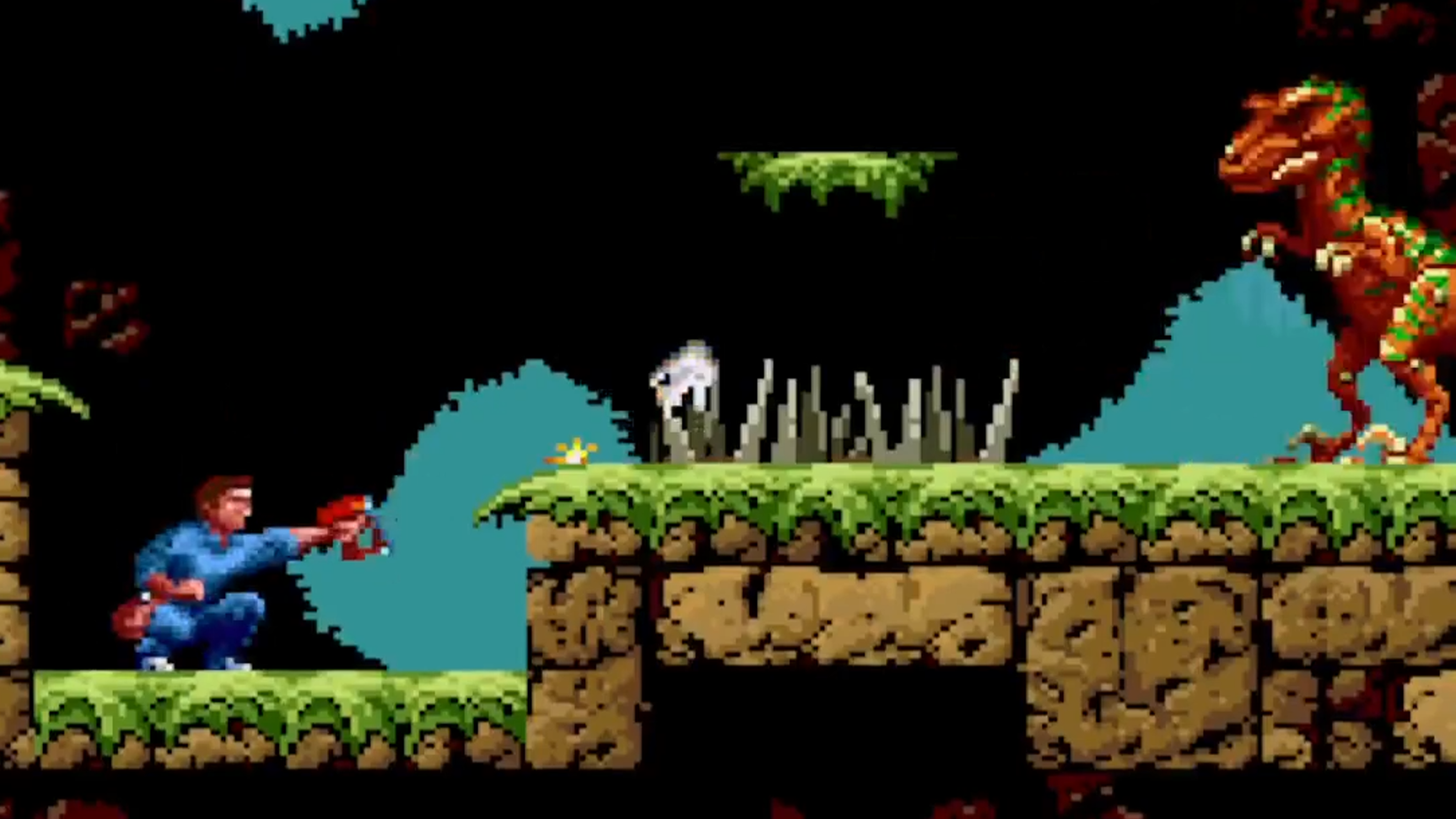
Home Improvement: Power Tool Pursuit
Home Improvement was a beloved family sitcom that ran for eight seasons between 1991 and 1999. The premise of the show was that Tim Allen, basically playing himself, is the host of a corporate home improvement TV show, and his work informs the various doldrums of his and his family’s daily life. Great show, but not much to work with in the video game department, not that that stopped ‘em from trying.
Home Improvement: Power Tool Pursuit is a 1994 SNES platformer. In it, Tim is about to reveal some new power tools, but someone swiped them and scattered them around the various sets in the TV studio. Seems like a simple fix, except these sets are inexplicably gargantuan in size and full of hyper-realistic dinosaurs, ghosts, and other assorted baddies. So, of course, the only solution is for Tim to run onto these sets, brandishing power tools, and mercilessly nailing and slicing everything in his way. What else was he going to do?
In a vacuum, it’s a pretty bog-standard platformer, but the mere image of Tim Allen rushing through a prehistoric jungle, laser-shooting chainsaw in hand, feels a little… at odds with the vibe of the show. Also, there’s no voice acting, so you don’t get to hear his signature grunts, and that’s just tragic.
9 Wayne’s World (NES, 1993)
Definitely Not Worthy

If I had a nickel for every video game based on the 1992 Wayne’s World movie, I would have two nickels, which isn’t a lot, but it really shouldn’t have happened once, let alone twice. The Wayne’s World game on the SNES and Genesis has a framing device of Wayne and Garth being sucked into a world of video games, which is bizarre, but at least there’s something resembling a lucid plot. The same cannot be said for the NES version.
The NES version, which was released many months after the SNES and Genesis versions for some reason, attempts to follow the plot of the movie. Wayne and Garth have their show’s autonomy threatened by a sleazy producer, Wayne meets his girlfriend Cassandra, yadda yadda. Here’s the weird part: between the plot beats from the movie, Wayne and Garth are running through various locales, battling sentient instruments, ninjas, and floating TV screens. Wayne uses karate kicks and Garth has a little zappy gun.
As I said, the other game with its isekai plot is definitely baffling, but at least it tries to justify its own weirdness to a degree. The NES game is just… like that. No particular reason, no particular justification for these instruments to be out for Wayne and Garth’s blood, it’s just like that.
8 Goonies 2
Did I Forget a Sequel Somewhere?
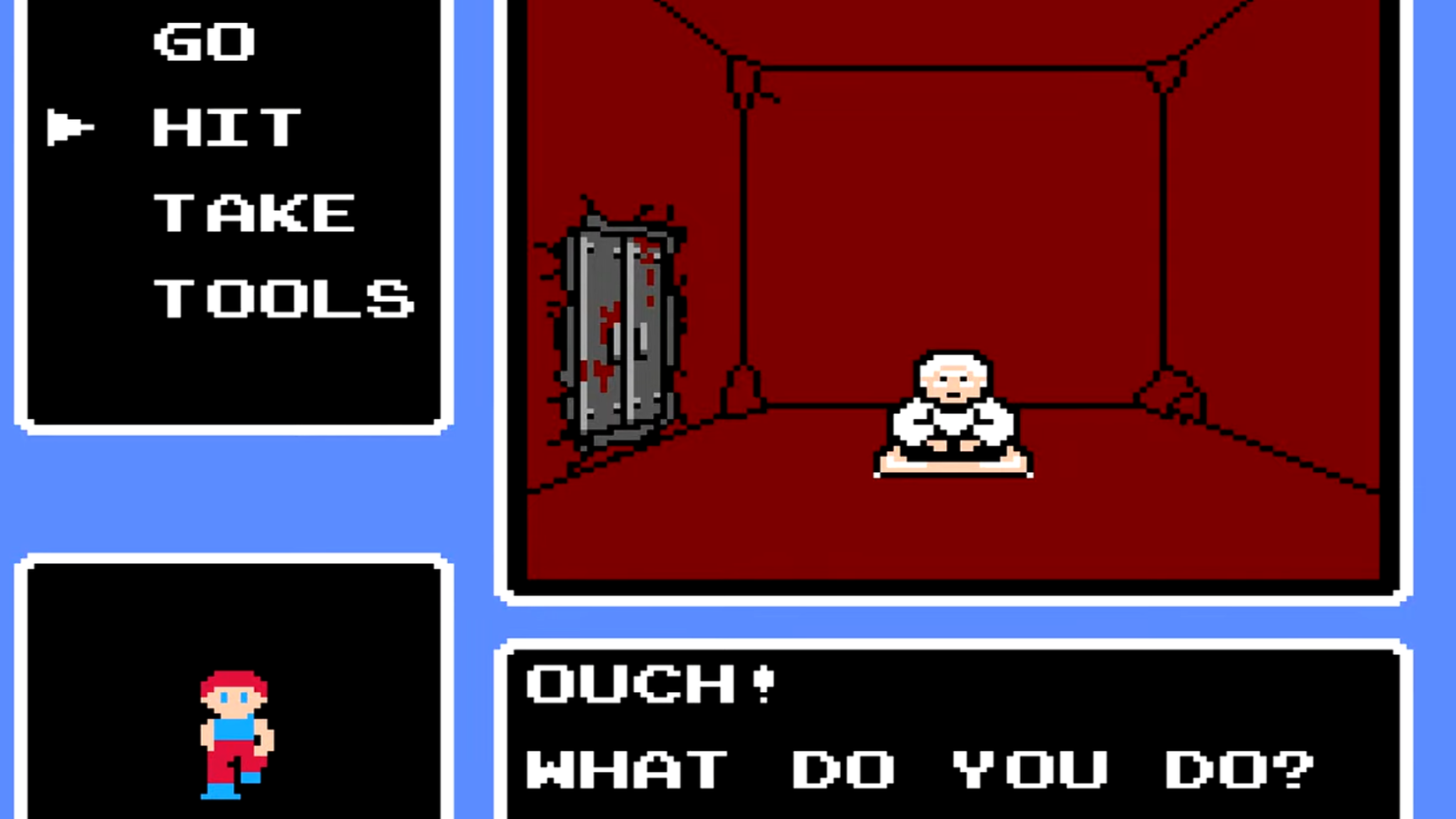
The Goonies is a beloved comedy-adventure film from 1985 in which a gaggle of preteens hunt for pirate treasure to save their neighborhood while avoiding a family of mobsters. It’s an excellent film, and is even preserved in the United States National Film Registry. There was a Goonies video game released exclusively for the Famicom in Japan, which is kind of weird, but what’s even weirder is that the game actually got a sequel, and that managed to come west.
Where the original Goonies game followed the plot of the movie, more or less, Goonies 2 has basically nothing to do with the movie beyond its general setting. The Fratellis have inexplicably returned and kidnapped every kid from the Goon Docks save for Mikey, who has to explore a large system of caverns to rescue them. Also, Mikey made friends with a mermaid named Annie at some point, and she got kidnapped too. Mermaids exist in The Goonies now, don’t question it.
Goonies 2 is a surprisingly in-depth action-adventure game. Most of the time, you’re jumping around on platforms, but you can also enter rooms with a first-person perspective, using various commands to inspect and pick up useful items, kind of like Shadowgate. It feels like one of those licensed games that didn’t really need to be a licensed game. Forget the Goonies branding and just call it “Kid Cave Adventures” or something.
7 The Ring: Terror’s Realm
The Least Scary Ring has Ever Been

Ring, as well as its American counterpart The Ring, is a classic horror film about the restless spirit of a powerful psychic murdering anyone who watches a cursed videotape in seven days. There’s plenty to make a game out of here; we’ve seen similar Japanese-style horror in games like Fatal Frame, and Sadako herself is a killer in Dead by Daylight. Rather than any of that stuff, though, we got The Ring: Terror’s Realm, the 2000 Dreamcast game.
Terror’s Realm follows a medical researcher named Meg, newly-hired at the U.S. CDC after her boyfriend’s mysterious death. While nosing around the office, she finds a computer program called “RING” that draws her into a parallel world full of weird monsters. What does all of this have to do with Sadako’s whole deal? Not much, as it turns out!
While an extremely token effort is made to link all of this nonsense back to the actual Ring mythos, the vast majority of the game is a self-contained schlocky horror plot. It alternates between bumming around the CDC building and bumming around the spooky otherworld, the latter of which plays like store-brand Resident Evil. That’s the maddening thing about some licensed games; even when they have workable source material, they just don’t use it.
6 Sneak King
A Confluence of Confusing Advertising

The vast majority of licensed games are meant to be tie-ins to particular TV shows or movies. However, there’s a lesser-used third category: product tie-ins, usually released by restaurants or snack brands as a marketing campaign. Some examples of this include Cool Sport and Chex Quest, but the most notoriously off-putting remains 2006’s Sneak King.
See, back in the mid-2000s, Burger King ran a series of commercials, in which the Burger King himself, or at least a dude in an unsettling costume, would randomly pop up behind people and present them with a burger. Sneak King was sold alongside several other games as part of this ad campaign, focusing on the King’s apparent ability to manifest out of nowhere.
It’s a stealth game in which you, as the King, sneak around various public locales in order to get the drop on a hungry target so you can present them with a burger. It’s kind of like Hitman without the murder; you can’t get rid of NPCs, only sneak around their vision cones and try to close in on your target while raising as little suspicion as possible. The game wasn’t received particularly well, but it only cost like four bucks at Burger King with a value meal purchase, so it made the company some pretty decent money.
5 The Simpsons (1991)
I Don’t Think the Devs Ever Watched The Simpsons

Everyone knows The Simpsons, it’s literally the longest-running animated sitcom on television, for better or worse. Even if you’ve never watched an episode, you could probably guess the gist of the characters through cultural osmosis alone. Though, while that’s true these days, I’m not so sure whether it was the case back in 1991, which may explain why The Simpsons arcade game has little-to-nothing to do with the series.
This classic sidescrolling beat ‘em up follows the titular family on an outing in town, when Smithers, who just robbed a jewelry store for some reason, bumps into Homer, causing them to drop a massive diamond and Maggie, respectively. Maggie takes the diamond as a pacifier and Smithers, instead of just taking it from her, decides to take the entire baby and run, prompting the family to give chase. Said chase involves battles against a professional wrestler, a wild bear, a kabuki actor, and a lot of dudes dressed like Krusty the Clown.

Related
For Me, The Best Simpsons Game Isn't Hit And Run, But This 1996 Masterpiece
Many won't remember this game, but it was a real blast for The Simpsons fans.
For all its objective weirdness, this game is actually very fondly remembered. It’s got a good, simple combat system, and the levels and bosses are colorful and distinctive. If nothing else, it’s certainly not the worst game to ever have The Simpsons name slapped on it.
4 Aqua Teen Hunger Force: Zombie Ninja Pro-Am
In Fairness, What Else Would an ATHF Game Look Like?

Aqua Teen Hunger Force: Zombie Ninja Pro-Am
Speaking as someone who genuinely loves the deadpan, absurdist humor of Aqua Teen Hunger Force, I sincerely have no idea how one would even make a game out of it. The series barely has a premise, let alone any kind of consistent framework on which to base a video game. I guess that explains why the series’ only official game decided to go for golf as its connective tissue. Because when you think ATHF, you think “golf.”
Aqua Teen Hunger Force: Zombie Ninja Pro-Am follows the titular trio of off-putting food people as they play the links on the local golf course. Why? Because Frylock got accepted, and Shake wouldn’t let him go alone. The game is, at its core, a pretty standard golf simulator. You tee up, shoot, you aim for the hole; Frylock literally says during the tutorial, “this is all that happens in the whole game.”
Technically, that’s not quite true. Between every shot, you have to manually walk over to your ball, using your club to pummel various monsters from the show, like Brownie Monsters and the Mooninites. There are even boss fights and occasional kart-racing segments. It is just completely bonkers, though unlike most of the games on this list, I could at least believe this scattershot approach was somewhat intentional.
3 Yo! Noid
Why Would You Want to Play as This Guy?

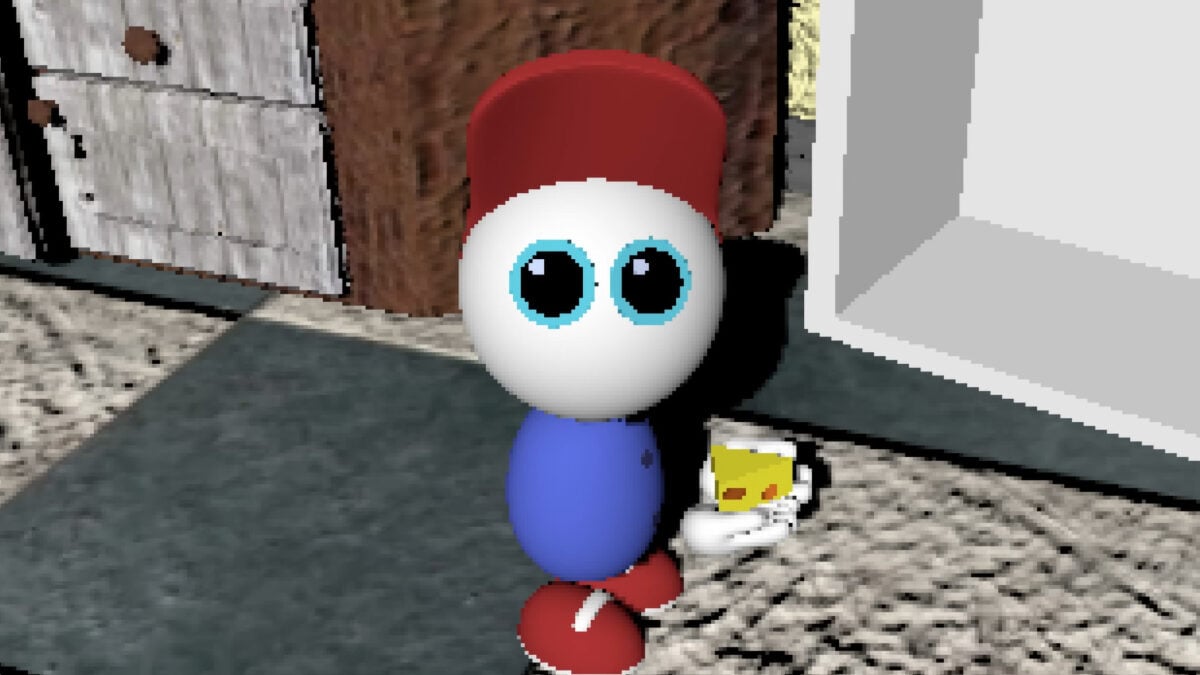
In the 1980s, Domino’s Pizza had a mascot character called The Noid. He was an obnoxious little jerk whose shtick was ruining your pizza while it was being delivered, but ordering from Domino’s would allow you to “avoid the Noid,” as it were. Not really the kind of guy you’d want as your video game protagonist, but I guess someone thought he could be sufficiently retooled to serve the purpose.
Yo! Noid is a 1990 NES game starring The Noid as a local hero and do-gooder who sets out to stop the evil Mr. Green from wreaking havoc on New York City. Who is Mr. Green? He’s basically just The Noid, but green, which makes me wonder if this is actually a Tyler Durden situation, and they’re the same person. Anyway, it’s your usual sidescrolling mascot platformer, occasionally broken up by minigames involving eating pizza or playing whack-a-mole.
Fun fact about this one: the original Japanese release had nothing to do with The Noid or pizza. It was originally a game titled Kamen no Ninja Hanamaru, about a masked ninja kid fighting evil and what have you. Capcom got a fat check from Domino’s during the localization process, and The Noid took center stage.
2 Blues Brothers 2000
A Baffling Game for a Baffling Movie

Wow, there’s a lot of Saturday Night Live bits on this list. Anyway, The Blues Brothers was a 1980 film starring Dan Aykroyd and the late John Belushi as the titular blues-belting duo. It’s a certified classic, though I can’t say the same for its sequel, Blues Brothers 2000, made after Belushi’s passing. It’s bad enough when a licensed game is made for a good movie, but a bad movie? Good heavens, the pain.
Blues Brothers 2000, is a 3D action platformer released two years after the film due to delays. It very loosely follows the plot of the film while cranking the weirdness up to 11. We start with Elwood in prison, but instead of just being let out, he has to beat up guards and jump all over the place to confront the warden. Things just keep getting stranger from there, moving to the streets of Chicago to a zombie-filled graveyard, and finally ending in a haunted swamp.
I guess, in absolute fairness, the movie also had its fair share of magic spells and haunted swamps. Then again, the movie was also bad, so maybe we can just settle on saying that neither the movie nor this game should have existed.
1 Bloodwings: Pumpkinhead’s Revenge
Less a “Tie-In,” More “Existing Next to It”

Bloodwings: Pumpkinhead's Revenge
Hoo boy, we’re in for a deep cut here. Pumpkinhead is a series of cult-classic horror movies, revolving around the titular monster who doesn’t actually have a pumpkin for a head. In 1995, about a year after the second Pumpkinhead film, a tie-in game, Bloodwings: Pumpkinhead’s Revenge, was released for MS-DOS. I use the term “tie-in” very loosely here.
Despite being a tie-in, the game has very little to do with the film, at least on its own. The instruction manual has several pages of backstory, informing you that you’ve become a steward of the afterlife and need to put Pumpkinhead’s tormented spirit to rest. You do this by wandering around a Doom-like maze, blasting enemies, and harvesting crystals from a weird pocket dimension. These crystals then let you watch clips from the movie, from which you can grab various usable and key items.
Beyond battling Pumpkinhead himself at the end of the game, none of the actual gameplay segments incorporate anything from the film. You’re just kind of… watching clips and trying desperately to intuit what it is the game wants you to do with it all. All that crystal harvesting stuff I mentioned is from the manual; the game does not tell you any of this upfront, and it’s not like having seen the film would help much either.




![ELDEN RING NIGHTREIGN: Deluxe Edition [FitGirl Repack]](https://i5.imageban.ru/out/2025/05/30/c2e3dcd3fc13fa43f3e4306eeea33a6f.jpg)
 English (US) ·