.png)
 2 weeks ago
21
2 weeks ago
21

Published Jul 13, 2026, 3:15 PM EDT
The most terrifying thing about Event Horizon is watching a man understand the impossible
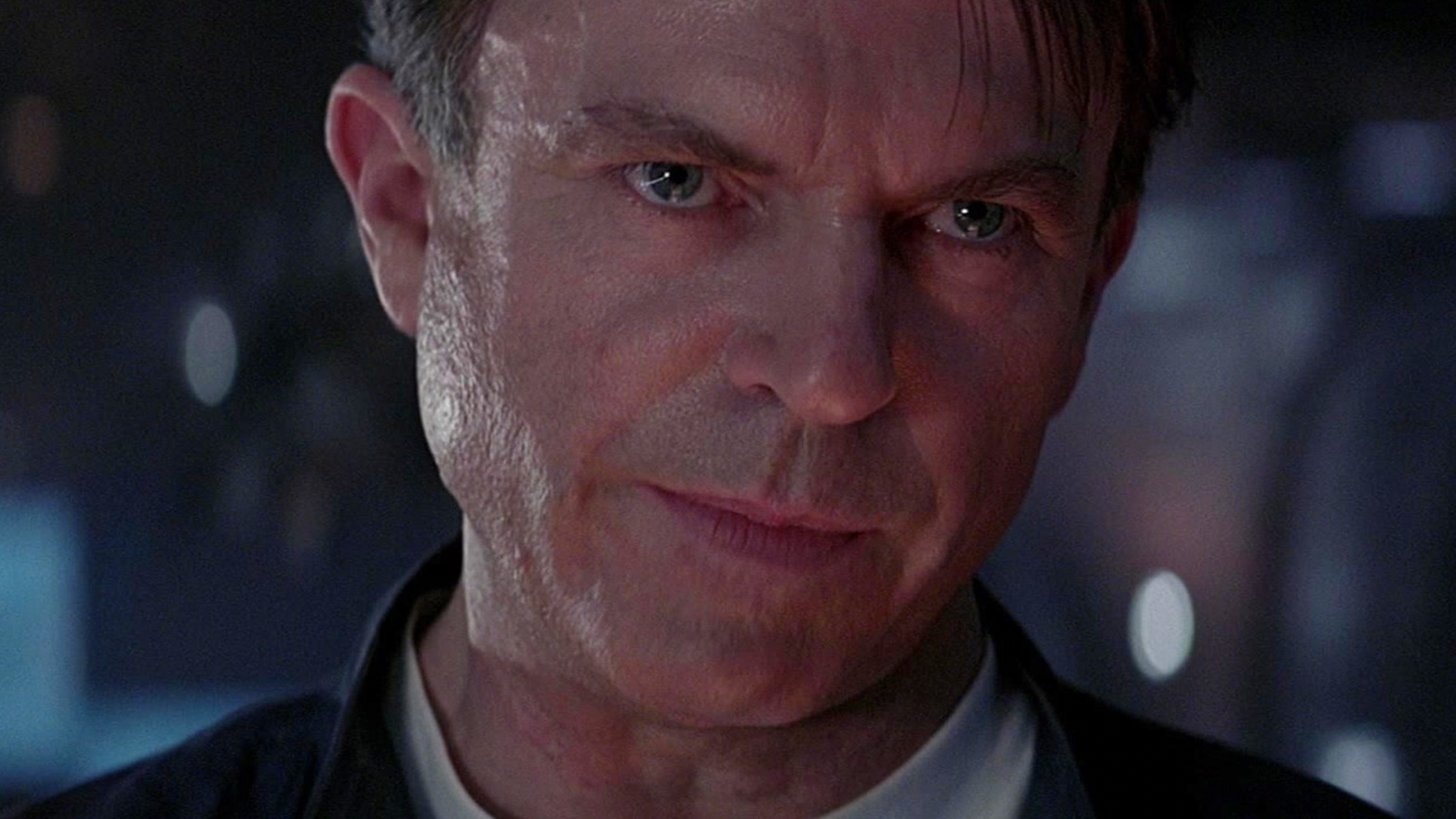 Image: Paramount
Cosmic horror has never been more popular. Over the past decade, filmmakers have explored the genre in fascinating ways, whether through the inescapable loops of Justin Benson and Aaron Moorhead's The Endless, the terrifying beauty of self-destruction in Alex Garland's Annihilation, or the claustrophobic nightmare of Steven Kostanski and Jeremy Gillespie's The Void. The existential dread of a suburban dinner party fuels the relentlessly underappreciated Coherence, while more recently, Backrooms has reminded an entire generation that endless, empty spaces can be just as unsettling as any monster lurking in the dark.
I've loved every one of them. But in the wake of Sam Neill's passing, I kept coming back to the movie that still captures cosmic horror better than anything else.
Popularized by H.P. Lovecraft, the cosmic horror genre often focuses on humanity confronting something so incomprehensibly vast that understanding it is impossible, and surviving it is almost beside the point. The horror comes from realizing how small we are in a universe that doesn't know or even care we exist. Plenty of films have brushed against that idea over the years, but few have embodied it as completely as 1997's Event Horizon.
Directed by Paul W.S. Anderson, the cult classic was dismissed as a commercial flop when it first arrived in theaters. Critics derided it as shallow and needlessly gory, but over the decades Event Horizon found the audience it always deserved, earning its place as one of sci-fi horror's defining films. While Neill's legacy will rightly be tied to beloved roles in Jurassic Park, The Hunt for Red October, and Peaky Blinders, for horror fans he'll always be Dr. William Weir, the brilliant engineer whose obsession with faster-than-light travel leads to something infinitely worse than failure.
Event Horizon begins like a fairly straightforward rescue mission. The crew of the Lewis and Clark, led by a fierce Captain Miller (Laurence Fishburne), is sent to investigate the return of an experimental spaceship that vanished without explanation seven years earlier while testing a revolutionary new gravity drive. Joining the ragtag crew is the vessel’s creator, Neill’s Dr. Weir, who believes the faster-than-light engine simply folded space to bridge two distant points in the universe and it traveled forward in time. But as the film unfolds and the rescue crew spends more time on the strange vessel, it’s clear Weir’s ship crossed into a place beyond human comprehension, and the malevolent force it encountered there has no intention of letting anyone leave.
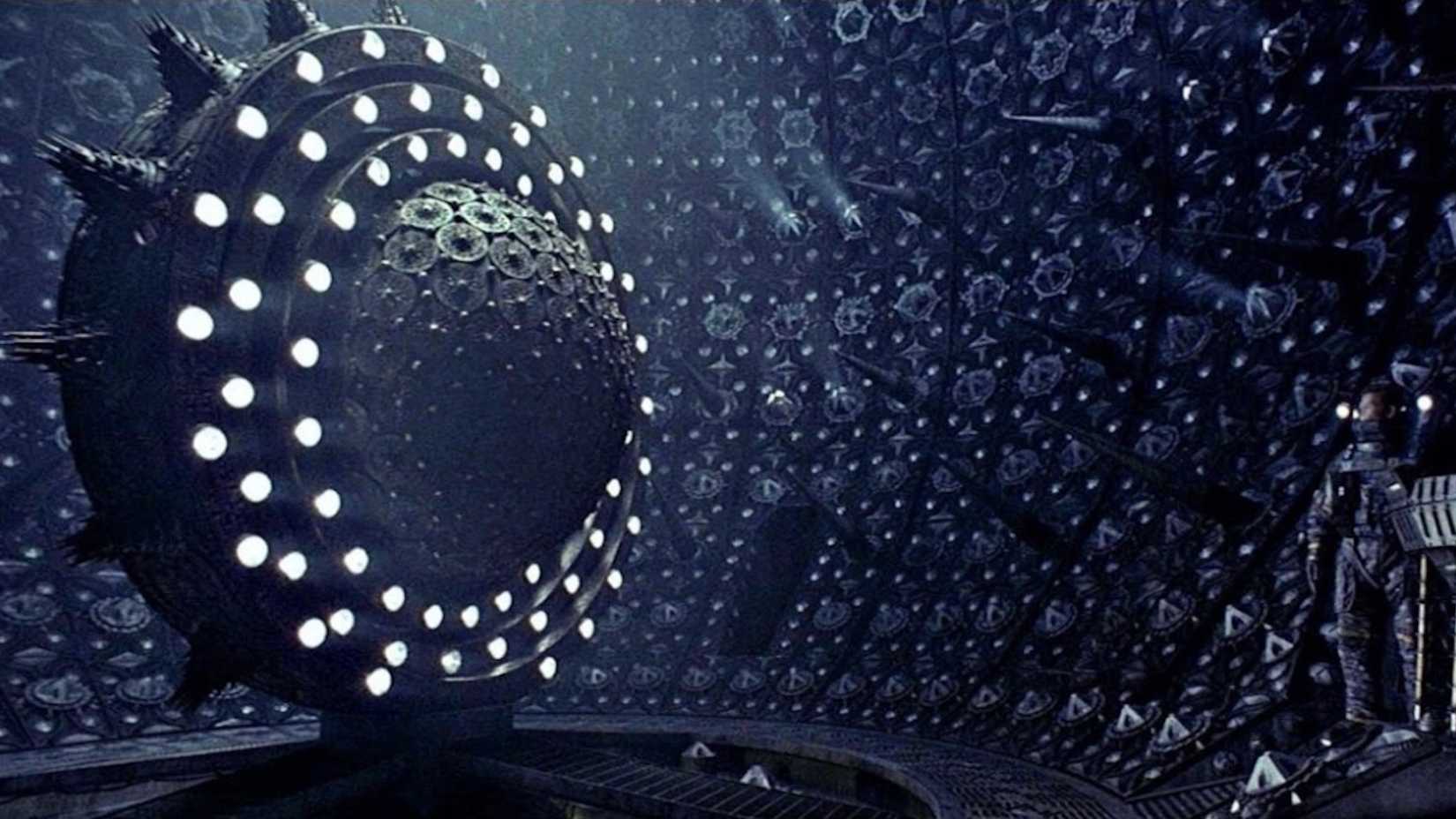 Image: Paramount Pictures
As a late-'90s horror flick, Event Horizon has plenty of flaws. It's drenched in bursts of excess gore that often veer into camp and includes dialogue that can be wonderfully melodramatic. For years, it was treated as little more than an ambitious curiosity from the director of Mortal Kombat. Yet beneath all of that is a film that understands the fundamental appeal of cosmic horror comes from what you don’t see. The terror doesn't derive from sickly monsters hiding in shadows, but from the realization that there are places beyond our comprehension — and that some knowledge can only end in madness.
Nowhere is that more evident than in Dr. Weir. Neill's performance works because he never plays Weir as a typical mad scientist. He starts the film as a character audiences instinctively trust: brilliant, reserved, and haunted by his wife’s suicide. Over time, Weir inevitably becomes the film's greatest victim, slowly unraveling as he realizes the truth behind his creation. What makes Neill's descent so unsettling is that he never seems like a man who has lost his mind, but one who has discovered something so profound and horrifying that madness is the only logical explanation. By the time he looks into the abyss and declares, "Where we're going, we won't need eyes to see," he's preaching more than he is threatening. Weir has seen something beyond human understanding, and the terrifying part is that he believes everyone else deserves to see it too.
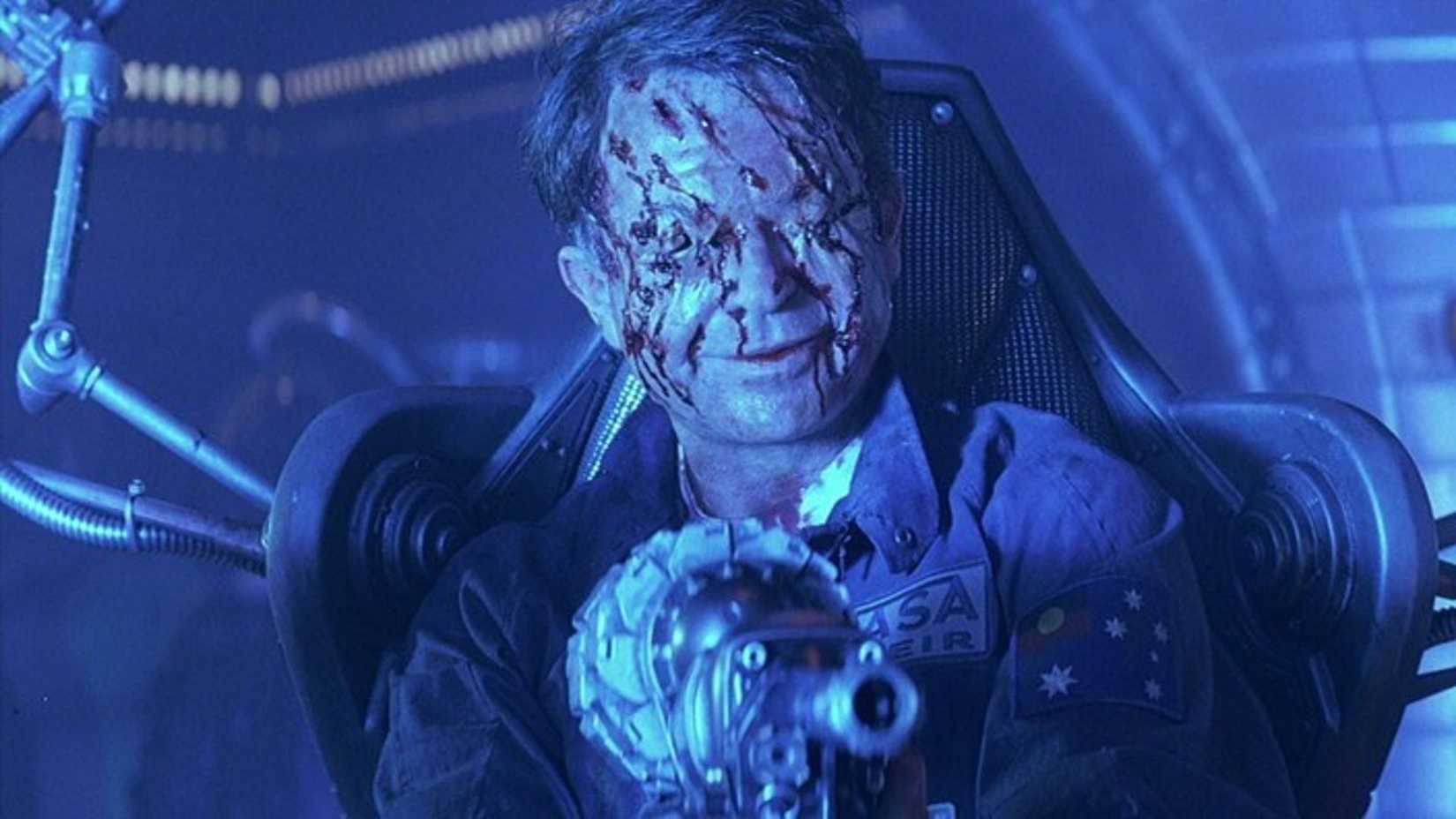 Photo: Paramount Pictures
Niell agreed. In an interview with The Guardian, he explained how the original film, before leaving tons of footage on the cutting room floor in a rushed post-production, looked even more terrifying because of that unnamed dread. "When they’re doing thrillers or horror films, people overlook: it’s what you don’t see that’s scary," Niell said. "If you can see the monster, you can deal with it. But if you can’t, who knows what’s going to happen? When I first saw the theatrical cut, I was surprised that we never had time for those eerie, darker moments. How they went missing permanently, I have no idea."
That's the ambition that makes Event Horizon work despite its faults. Anderson attempted to bring the existential dread of Lovecraftian horror into the realm of science fiction cinema. The ship's journey through a black hole wasn't just a technological breakthrough gone wrong; it was humanity reaching beyond its limits and accidentally opening a door it had no way of closing. The crew of the Lewis and Clark aren't fighting a defeatable enemy, they're confronting the terrifying possibility that the universe contains forces so ancient and incomprehensible that survival itself becomes irrelevant.
 Image: Paramount/Everett Collection
As many of its contemporaries faded away, Event Horizon still endures nearly 30 years later. Its influence can be felt in modern cosmic horror, from Pandorum to Dead Space, and it's impossible not to notice the similarities between the film and Satoshi Kon's "Magnetic Rose" segment from Memories, which also centers on a rescue mission into deep space where technology collides with something beyond human comprehension. The delayed success of Event Horizon is almost unprecedented, spawning its own comic book series years after release. Even the long out-of-print novelization has become a piece of cult memorabilia among fans, with copies under $100 notoriously difficult to track down.
That’s the irony of Event Horizon: a film about forbidden knowledge has seemingly become a piece of forbidden knowledge itself. Although it was dismissed upon arrival, time has only made its mysteries more compelling. There are cleaner, scarier, and more technically polished examples of cosmic horror, but few understand the genre's central fear as deeply as Anderson’s cult classic. The most frightening thing in the universe isn't a monster or ancient god, but knowledge that we were never prepared to learn in the first place.







![ELDEN RING NIGHTREIGN: Deluxe Edition [FitGirl Repack]](https://i5.imageban.ru/out/2025/05/30/c2e3dcd3fc13fa43f3e4306eeea33a6f.jpg)
 English (US) ·