.png)
 5 months ago
71
5 months ago
71

The latest iteration of D&D lost the magic that made 5e great
 Image by Polygon I Source images: Wizards of the Coast
It’s been a little over a year since Wizards of the Coast launched the latest iteration of Dungeons & Dragons in September 2024. Colloquially known as “D&D 2024,” this is a revised and expanded version of the fifth edition rules, presented as backward-compatible and based on the playtest cycle called “One D&D.”
“D&D 2024” is a weird name. No other edition names the year the product first came out. Ten years from now, calling it “D&D 2024” will feel even weirder, but at every step, Wizards has stressed the fact that this is not a new edition of the game, just a revision and improvement on what we already had. Hence, why they avoided the “5.5” label too: D&D 3.5 was quite different from its predecessor.
“What’s in a name?” lamented Juliet as she cried about her love for sweet Romeo, and my answer is: a lot. The truth is that D&D 2024 is a much bigger revision of 5e than Wizards wants us to believe, and that difference between presentation and reality has birthed a lack of identity that has hindered the first steps of this newborn baby.
That’s not to say that D&D 2024 hasn’t sold well. Wizards reported that the 2024 Player’s Handbook was the fastest-selling D&D product ever, and they had to order a massive print run. However, there are also no public or audited sales numbers. Wizards never shared anything official besides PR statements, and those claims may just as easily refer to what they were selling to stores and retailers, not to how much they were selling to players. One year later, new data seems to tell a less endearing story.
But from the perspective of a Dungeon Master and player who has been gaming with D&D 2024 for the past year, I have to wonder: Was this truly an improvement over 5e, and a necessary step forward for the product?
How many D&D 2024 products were released in one year?
Counting both physical and digital-only, Wizards of the Coast released 12 products (not counting the no-cost D&D 2024 Free Rules), from the Player’s Handbook in September 2024 to Forge of the Artificer in December 2025. Of these, three have been digital-only expansions (Lowryn: First Light, Astarion’s Book of Hungers, and Netheril’s Fall). Besides the three core rulebooks, there have also been two new starter sets, Heroes of the Borderlands and Stranger Things: Welcome to the Hellfire Club, and one adventure anthology, Dragon Delves. There was one Forgotten Realms campaign setting, split into two books: Heroes of Faerûn and Adventures in Faerûn. Finally, Eberron also got some love with Forge of the Artificer, which introduces the Artificer class for the 2024 rules while expanding the lore and setting a bit.
From this first year of publications, a design shift is apparent. 5e’s main products were “adventure modules” (more properly described as campaign modules) such as Curse of Strahd or Rime of the Frostmaiden. These thick, juicy books had everything a DM needed to run a narrative campaign, and these were a big part of 5e’s success. They catered to DMs who didn’t want to prep too much or create an entire campaign on their own, but they also provided a sandbox that could be changed and expanded at will. So many were great adventures to run or play that explored beloved locations in the game’s worlds. In its first year, 5e published four of these books (the two-part Tyranny of Dragons storyline, Princes of the Apocalypse, and Out of the Abyss). No adventure modules have appeared for D&D 2024 so far.
Still, the first year of D&D 2024 had a little bit for everyone. Two starter sets to introduce new players to the game, an adventure anthology spotlighting the most famous monster in the franchise, a campaign setting for the most popular (maybe too popular) D&D world, and some neat expansions with a smaller focus.
 Image: Wizards of the Coast
The two new starter sets have been generally praised as a good introduction to the game, which is what a starter set should be. They lean a lot into board game design to appeal to that player base, but they’re not on the same level as Lost Mine of Phandelver.
Dragon Delvesset the tone for this new edition, providing adventures that are easy to prep and quick to run. That’s a useful thing to have around for any DM, but the adventures themselves don’t particularly shine for writing or design. Still, if you like dragons, this is a no-brainer, especially for the amazing art selection.
I’ve talked extensively about the Forgotten Realms books here and here. I still think that these are good products to buy if you want to run a campaign in Faerûn, even with their shortcomings. Speaking of campaign settings, Forge of the Artificer is a good complement to 2019’s excellent Eberron: Rising from the Last War.
The digital expansions have been mostly disappointing. Astarion’s Book of Hungers is a publicity stunt that you can skip without fear of missing anything. Netheril’s Fall showcases the uninteresting adventure design template that seems to be the new standard for this edition (more on that later).
Still, the core rulebooks are what make or break an edition, and in the case of D&D 2024, they’re a mixed bag.
The core rules
The Player’s Handbook is the essential resource for D&D 2024. All the rules to play and run the game are here, but the book’s main focus is on character classes. Among all the mechanical changes from 2014, changes to backgrounds feel like one of the biggest missteps. In D&D 2024, backgrounds now provide the stat modifications that once came from races (now called species), and the very important origin feats. Previously, we had tables to determine characteristics: personality traits, ideals, bonds, and flaws. These helped flesh out a character’s personality to make role-playing that much easier and were very helpful for players who didn’t have a clear backstory in mind.
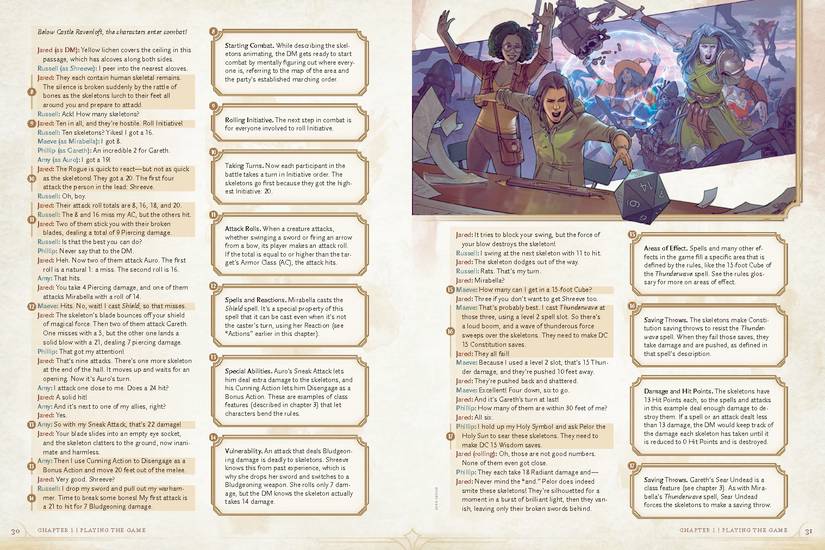 Image: Wizards of the Coast
Of course, you can still use the old characteristics tables, but why take something good out of the book? It’s a sign of the negative consequences of a design approach that focuses too much on streamlining and simplification. While it may seem that the changes to races and backgrounds made character design more flexible, I think the opposite happened. Now, if you want to optimize a build, you’re forced to choose a background not for role-playing reasons, but because it gives the correct feat and stat boosts.
Even the revamped 2024 Monster Manual strips away a lot of the lore and guidelines for using and creating monsters present in the 2014 edition, rendering it an overly simple bestiary with little more than stat blocks.
The core book where this “design by subtraction” approach shows its worst results is surely the 2024 Dungeon Master’s Guide. The 2014 version suffered from bad layout and disorganization that made information hard to find, but once you learned how to navigate it, the book became an essential resource for all DMs. The 2024 version, instead, is clearly tailored for new DMs. There’s a ton of advice on how to run sessions, create campaigns, and the like, but it lacks depth. The quantity is there, but everything is minimalistic.
What is D&D 2024’s goal?
D&D 2024 seems to have two main goals. First, introduce new players to the game, and second, make D&D faster and “easier” to play. Two starter sets that draw inspiration from tabletop games and mainstream media — Stranger Things, actual play shows, and even Baldur’s Gate 3 — try to cover the first goal. Making the game easier to play, on the other hand, has informed the majority of the design choices behind the new rules. The definition of “easier,” however, is where D&D 2024 begins to rub many veteran players, myself included, the wrong way.
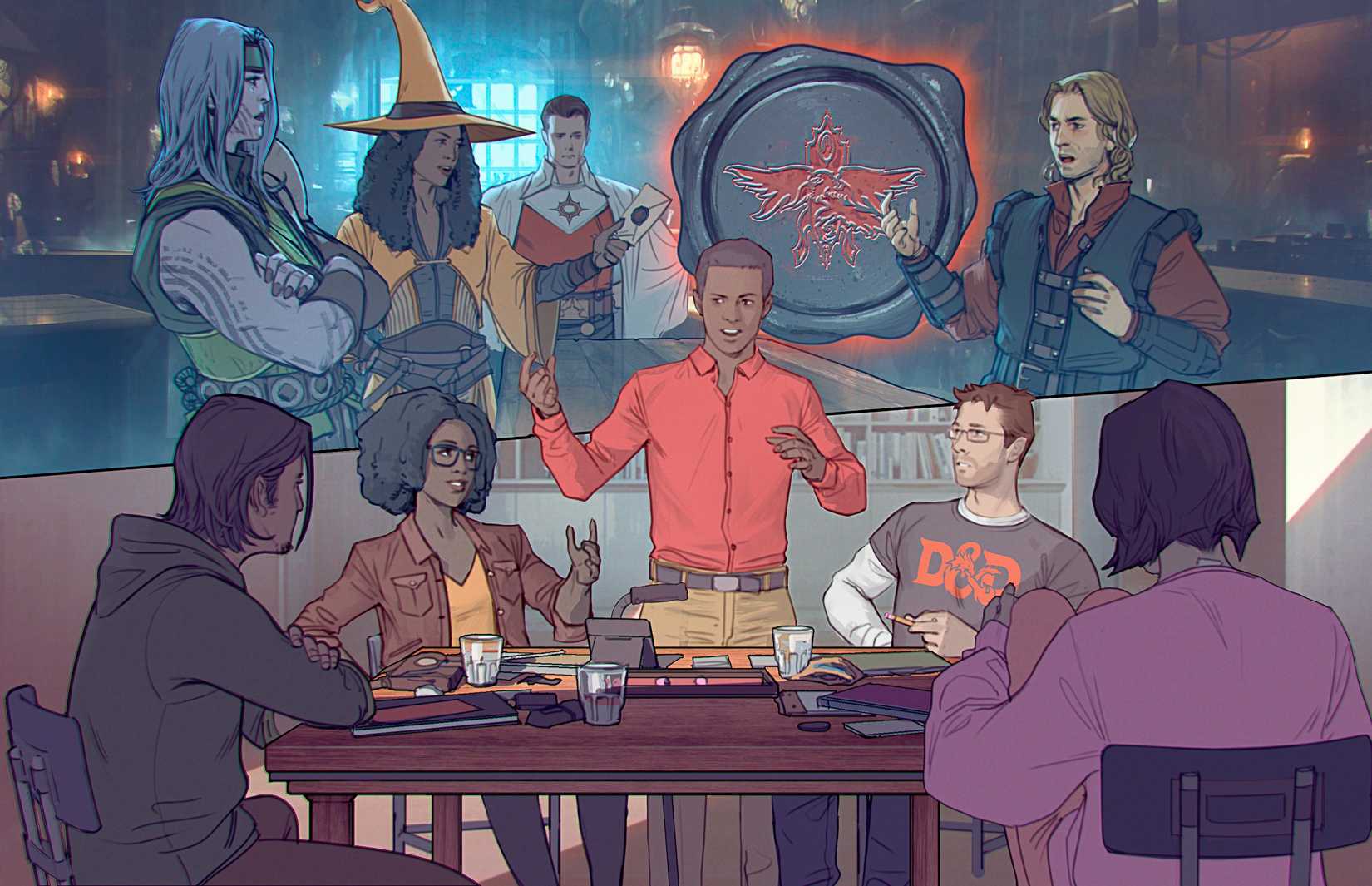 Image: John Grello/Wizards of the Coast
While D&D is not a competitive game, the players and the DM are often put in adversarial positions. The balance between what the player characters can do and how the DM can challenge them (read: monsters, traps, and similar) is important. 5e struggled with this, making it challenging (but far from impossible) for the DM to balance the game at medium and high levels. D&D 2024 makes it much harder. The impression I have after one year is that everything is designed to make things as easy as possible for the players. Across class design, feats, and encounter guidance, the 2024 rules consistently remove friction that once gave DMs tools to create tension.
Every class can now do more things, and more efficiently. For example, every character can get the Magic Initiate feat, giving them access to a couple of cantrips and one first-level spell. This may not look like much, but it allows for powerful combinations for melee classes (I’m looking at you, Booming Blade) and extra versatility for spellcasters (a Wizard can now cast Cure Wounds). Overall, limitations on what role a class should play has been blurred. This isn’t necessarily an issue in a game that is, let’s face it, a superhero power fantasy, but it becomes an issue for DMs who want to keep players on their toes and give them a meaningful challenge. It also does nothing, I think, to fix the main issues found within the 5e rules.
Take the rules for Weapon Mastery, for example. This D&D 2024 addition was designed to make melee classes more interesting, giving them more options in combat beyond simple attacks. However, they’re currently unbalanced, so some can be abused with little effort. More importantly, this rule does nothing to fix the issue of a melee character having to wait for their turn to roll an attack, miss, and do nothing until the next turn. The “Nick” property is an exception, as it frees up a bonus action for dual-wield builds, but it’s also one of the easiest to abuse (think about all the things a Rogue can do).
As I discussed in this article about the Forgotten Realms books, this “make it easier” approach is not limited to making player characters more powerful. DMs are encouraged to do more hand-holding for the players, both on a gameplay level (with things like exploration and combat) and on a narrative one (see the Epic Destinies section in Adventures in Faerûn). This is not merely a conceptual issue, it has a big influence on the type of products that D&D 2024 has been releasing and their content.
 One of the 50 adventures included in Adventures in FaerûnImage: Wizards of the Coast via Polygon
All the expansion books released, including Adventures in Faerûn, contain the new “one-page adventures” template introduced in the Dungeon Master’s Guide. Each includes a “situation” blurb summarizing the context, a “hook” to get the characters involved, and a sequence of encounters. They are linear, offer no options for branching paths or meaningful player agency, and usually consist of a sequence of fights. I have a hard time calling these “adventures,” but I wouldn’t have an issue if these were just meant as an alternative to provide quick and easy-to-run options for game sessions. However, the disappearance of 5e’s big adventure modules tells me that this will be the standard going on. Not just as a DM, but as a D&D customer, I will take one Curse of Strahd over 1,000 mini-adventures, any day.
Is D&D 2024 actually backward-compatible?
D&D 2024 also struggles with backward compatibility. You don’t need to throw all your 5e books out of the window, if that’s what you’re worried about. I’m currently DMing an Out of the Abyss campaign using the three core rulebooks from 2024, and it’s doable. But it isn’t smooth. Character classes changed the most with the 2024 rules, and that’s a massive part of the game. Some players may want to use subclasses that haven’t been ported to the 2024 rules, causing weird (and likely overpowered) interactions.
Character classes have all been boosted in one way or another, meaning that a DM has to re-evaluate all threats, challenges, and encounters. There are also changes to the rules that will make it hard to use monsters and NPCs from 5e. If you’re using a 5e adventure and a monster doesn’t appear in the 2024 Monster Manual, it’s best to try to update that stat block to the new rules first.
 Image: Wizards of the Coast
Spells also got a major overhaul. About 30 spells were redesigned, including often-used classics such as Counterspell, and many others were reworked. Some of these changes were pretty good, such as clarifying the “only one spell with a spell slot per turn rule,” which nerfs the much-dreaded Silvery Barbs, for example. The gist is that magic changed quite a bit.
Overall, the claim that the 2024 and 2014 rules are fully compatible is an exaggeration. You can mix and match on a case-by-case basis, but the 2024 rules largely assume that you’re not using the “legacy” rules, making this more similar to a new edition than an update, despite claims of the contrary made at the time of release.
What D&D 2024 wants to be — and what it’s leaving behind
D&D 2024 suffers from a lack of a clear identity. It’s a streamlining effort to further simplify an edition of the game that was already criticized for its “loose rules” approach. I actually didn’t mind the simplicity of 5e, because it allowed players and designers to focus on all the cool things that exist outside the rules. After the strictness of the rules-heavy 3.5e and 4e, 5e gave us a big canvas to paint with our creativity. If an update was truly needed, it should have focused on providing more resources for players and DMs to run games more smoothly, and on fixing some gameplay issues that emerged over the 10 years 5e has been around. While D&D 2024 did fix some of these things, it also changed enough of the rules to make this feel like a different game, creating new balance issues in the process.
In its effort to make the game easier and more accessible, D&D 2024 places a clear emphasis on lowering friction for players. For newcomers, that accessibility may be exactly what the game needs. New DMs will surely find the one-page and low-prep adventures useful, as well as the step-by-step guidance in the Dungeon Master’s Guide. For veteran players and Dungeon Masters, however, the question is less about ease of entry and more about what has been lost along the way. One year in, D&D 2024 hasn’t fully answered whether simplifying the game also makes it better — only that it has chosen a different path.




![ELDEN RING NIGHTREIGN: Deluxe Edition [FitGirl Repack]](https://i5.imageban.ru/out/2025/05/30/c2e3dcd3fc13fa43f3e4306eeea33a6f.jpg)

 English (US) ·