.png)
 5 months ago
103
5 months ago
103

Published Feb 3, 2026, 11:00 AM EST
Varanasi is a millennia-spanning adventure rooted in ancient Indian mythology. Will international audiences go along for the ride?
 Image: Sri Durga Arts
S.S. Rajamouli never set out to become an international success. The director of critically acclaimed action movies like the sword-and-sandals epic Baahubali, the revolutionary blockbuster RRR, and the upcoming globetrotting (and millennia-spanning) saga Varanasi has always endeavored to make deeply personal films.
“When I made RRR, I didn't think about the US audience or the Japanese audience,” Rajamouli told Polygon last November during a trip to Hyderabad, India, where Varanasi is still in production. “I was just thinking about how it connects to the local audience that I know, but it traveled because the emotions are real, and the culture is real.”
Varanasi is even bigger in scale than RRR, with a story that stretches from ancient Hindu mythology to modern times, and from the African safari to Antarctica icebergs. It’s also tied more to Indian culture, with one major sequence that directly adapts the Ramayana, a Hindu text that dates back to the 7th century B.C.E. That may sound like a lot to explain to American moviegoers, but Rajamouli isn’t worried.
“I firmly believe that if you want to go global, you have to be local,” he says. “That's a very simple formula I believe in, and I applied it to Varanasi. It is more about Indian culture and stories, but the emotions are universal. I hope that everyone will receive the film just like how they received RRR.”
A few months later, I check in with Rajamouli again. He’s deep into filming on Varanasi, which won’t arrive in theaters until April 7, 2027, but offers to catch up over Zoom on a Saturday morning for another round of questions. His local-first approach reminded me of another acclaimed international filmmaker attempting to explain his unprecedented reach Describing the universal appeal of his film, Parasite, director Bong Joon Ho once said:
“When directing the movie, I tried to express a sentiment specific to the Korean culture and I thought that it was full of Koreanness if seen from an outsider’s perspective. But upon screening the film after completion, all responses from different audiences were pretty much the same which made me realize that the topic was universal, in fact. Essentially, we all live in the same country called capitalism which may explain the universality of their responses.”
Rajamouli agrees.
“I resonate with the views of Bong Joon Ho in that the more rooted your story is in your culture or in yourself, the more reach it gets outside,” he says.
For Rajamouli, however, the universal aspect of his films isn’t his approach to complex concepts like capitalism. Instead, it’s the characters and their relationships that translate to international viewers.
“We resonate with characters,” he says. “The more believable the characters and the emotions become, the more we as audience would like to watch them.”
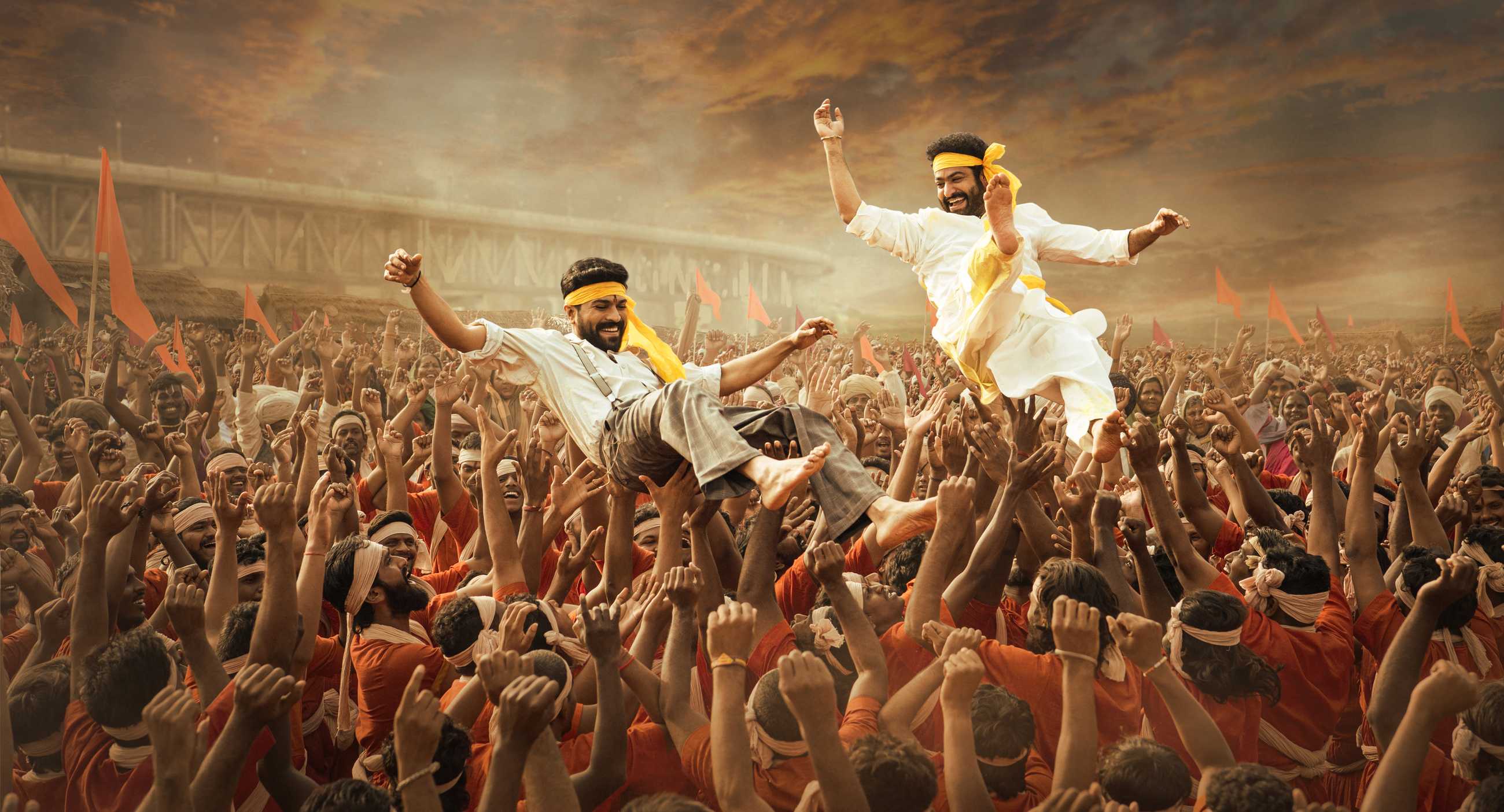 Image: Variance Films
Take RRR, for example. While the film’s story of revolutionary resistance against the British Empire in 1920s India may have tapped into a modern current of anti-colonialist sentiment (plus, the absurdly badass action scenes and banging musical number), Rajamouli argues that it's the immediate and deep friendship between RRR’s two protagonists that won the world over.
“The backdrop is revolution, but it's the story of friendship,” he says. “I think it is the friendship that caught on.” After all, while the story of those two real-life revolutionaries is likely unfamiliar to most non-Indian audiences, “the emotions are common for everyone.”
 Rajamouli (center right) with the cast and creative team behind VaranasiImage: Sri Durga Arts
The same goes for Varanasi, which will take more subtle aspects of Rajamouli’s past films and make them much more explicit, specifically when it comes to the Hindu texts that inspired this story: the legendary adventures of the powerful deity Rama, as recounted in the Ramayana.
“All my films are inspired by the epics of Rama,” the director says. “In this film, I have a chance to actually take an actual episode from Ramayana itself and present it in this way.”
But when I ask if fans should prepare for Varanasi by reading the Ramayana or watching some other adaptation, Rajamouli says that won’t be necessary.
“It is my job as a storyteller to make you not feel lost, to make the film in such a way that it's not taxing your mind” he says. “You might not understand the whole story of Rama, but there is no need to. If you understand the emotions of the characters, you'll understand what is happening.”
In Varanasi, Rajamouli says the character relationships that matter the most will be between “a father and son” (presumably Rama and his father Dasharatha) along with the dynamic between the film’s protagonist Rudra (played by Indian movie star Mahesh Babu) and a mysterious thief named Mandakini (Priyanka Chopra).
“It’s so endearing and relatable,” he says of Babu and Chopra’s onscreen dynamic. “Even when the canvas is gigantic, it’s these emotions that people will resonate with.”
 Image: Sri Durga Arts
Whether Varanasi will be received globally in the same way as RRR remains to be seen, but Rajamouli is confident that his local-first philosophy will work. After all, he never expected any of this success in the first place.
“When I made Baahubali, we were just a regional Telugu film,” he says. “We had never reached the whole of India before, but I made a film for the Telugu people — for my people — and it had a reach across the country.” The same thing happened again with RRR, which took Rajamouli all the way to the Oscars.
Varanasi has a chance to go even bigger: to reach a mainstream audience far beyond RRR and potentially even launch Rajamouli’s career into the stratosphere. After RRR’s success, he took Hollywood meetings, but remained focused on this next project. Once Varanasi is complete, however, anything seems possible. (Except Avatar 4. Rajamouli has struck up a friendship with James Cameron, but when I ask if he’d ever consider taking over the reins of that franchise, he responds, “That's way too big of a responsibility. I don't think I am capable enough.”)
The only thing certain about the future is that the director won’t stop making movies that are deeply personal to his own history. It’s a strategy that hasn’t failed him yet:
“The more rooted you are, the more global reach you will have.”
Varanasi releases in theaters on April 7, 2027.
Disclosure: This article is based on a press event held in India. The producers of Varanasi provided Polygon’s travel and accommodations for the event. You can find additional information about Polygon’s ethics policy here.





![ELDEN RING NIGHTREIGN: Deluxe Edition [FitGirl Repack]](https://i5.imageban.ru/out/2025/05/30/c2e3dcd3fc13fa43f3e4306eeea33a6f.jpg)
 English (US) ·