.png)
.png) 1 month ago
32
1 month ago
32


Published May 4, 2026, 3:00 PM EDT
Murillo Zerbinatto is an Editor at DualShockers specializing in JRPGs, RPGs, reviews, guides, and lists. He has been writing professionally since 2018 and covering games since 2020, with previous work published at Xfire, RPGInformer, IndieGameCulture, and GameRant.
A longtime JRPG enthusiast, Murillo has played more than 250 JRPGs and earned over 100 platinum trophies, giving him deep hands-on experience with the genre’s progression systems, side content, collectibles, and completionist challenges. His coverage often focuses on franchises such as Final Fantasy, Dragon Quest, Trails, Tales of, and Star Ocean.
Sign in to your DualShockers account
Gamescom Latam 2026 is the third edition of the event taking place in São Paulo. For the first time, it not only featured major upcoming releases, such as Phantom Blade Zero, Marvel Tōkon, and Invincible VS, but also brought in some stellar guests, including David Wise, Donkey Kong' composer; Maxence Carzola, the voice actor and mocap artist for Clair Obscur: Expedition 33; and the illustrious Mikael Kasurinen, creative director of the upcoming Control Resonant.
 Related
10 Upcoming Indie Games to Be Excited About from LVLUP Expo 2026
I went hands-on with dozens of cool indies a week ago, and these were my favorites.
I had the lovely opportunity to interview Mikael about Control Resonant. During our talk, he shared the gameplay influences that shaped the title, how Dylan will handle his role as a protagonist after being locked up for most of his life, and the shift Resonant is making toward the action RPG genre.
The interview has been slightly edited for clarity.
Interview with Mikael Kasurinen, Control Resonant's Creative Director

Q: Firstly, I want to address the fact that Control Resident is a direct sequel to Control. Do you think players should play the first game before delving into the second, or will they have a full experience if they play the second first?
They will have a totally good experience if they have never played a Remedy game before. They can jump in and start to understand the story. The main protagonist, Dylan, just woke up from a coma. He has no idea what's going on, trying to understand it himself. So, it's an easy entry point. It's a blank slate for everybody. Of course, he has a past. Things have happened, as we all know, and those are exposed. It's part of the story, part of the journey, and so on. So, we will learn about that, like in any game where you have a character that has a past, and so on. So, yes, you can fire up Control Resonant, play through it as a standalone experience. And yes, if you're excited about The Oldest House and want to learn more about what happened to Jesse in the past, you can play the first Control game. So, it works either way.
Q: You mentioned that people will learn more about Dylan's history. In the first Control, you could find a lot of supplementary lore throughout the world. You can find several documents and several lore pieces. That made sense because the scenario was an office. Now, the scenario is like the whole of Manhattan. Will there still be many supplementary documents scattered throughout the city that add to the story, or is the narrative more story-driven?
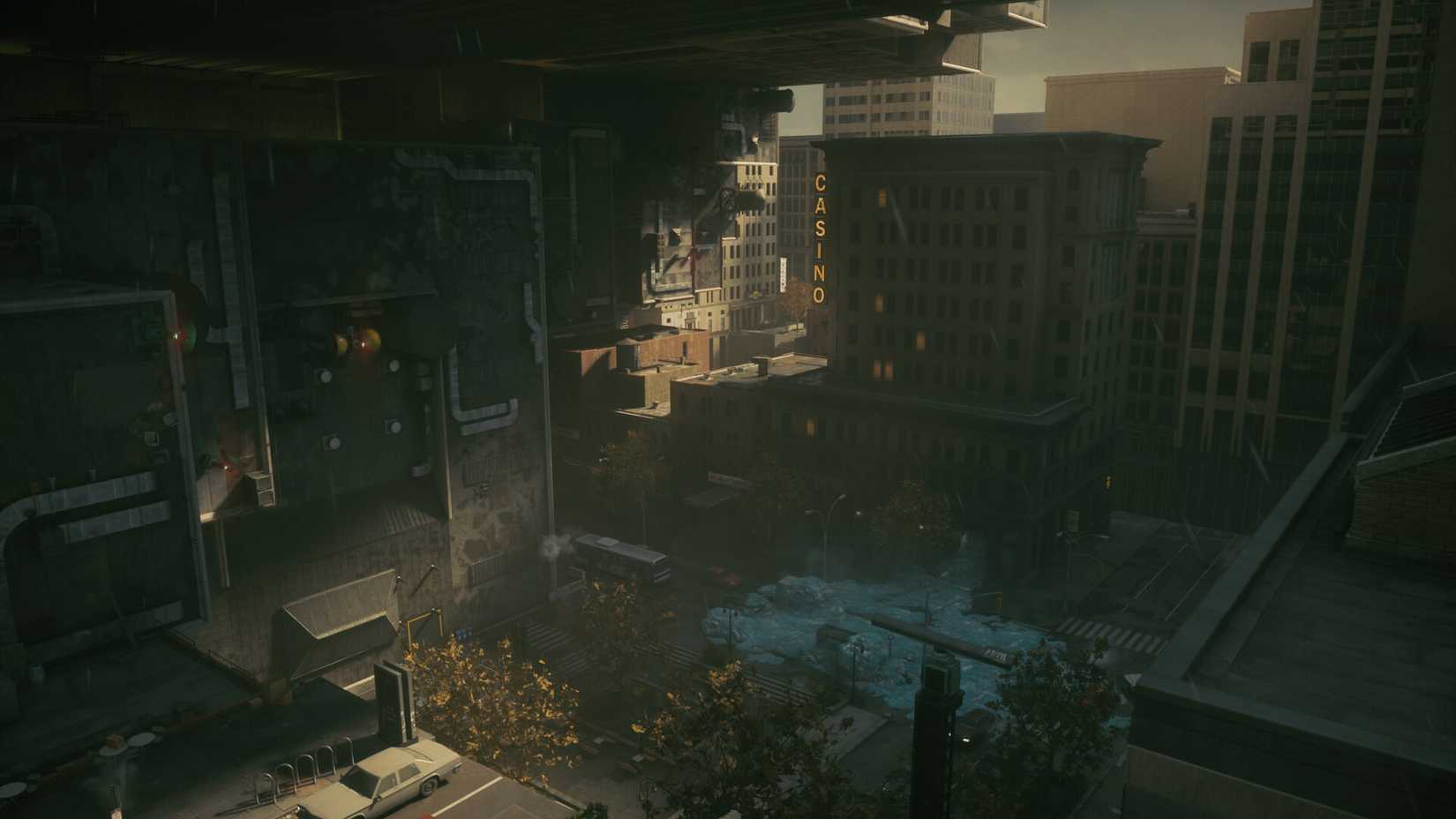
When we say Manhattan and New York, players immediately think about the Manhattan that we have here in the real world, and so on. But it's also a place that has the idea and the history of the FBC having been there for a long while. FBC is a bureau that exists within this world, right? So, they have side offices, and things are going on across Manhattan way before any of the events of Control 1 even happened, right? So, it's not like it's all contained within the Oldest House.
As you step into this world as Dylan, and of course, it's Manhattan that is now changed by this kind of supernatural event, and there's this threat that we don't understand, and so on, that is changing Manhattan. And the Oldest House is kind of broken, so all the forces inside, like the Hiss, and the Mold, and the Objects of Power, and all of those things have spread into the city. So, it's been affected by all of this. But still, as a storytelling layer, there's this kind of past of this present New York, so you will still find lore, you will still find narrative documents, all of those things are there. So, the fundamentals of storytelling that we had in Control 1 are going to be pretty much the same in Control Resonant.
 Related
Every Remedy Entertainment Game, Ranked
The Finnish company has become one of the best modern developers, and in this list we'll see why.
Q: Let's talk about some of the gameplay segments. You said in a previous interview that the genre shifting towards Action RPG felt like a natural progression. Was that a decision led by the gameplay of Control Resonant, or something like the presence of a dialogue system that can impact the narrative?
This is actually when I worked on Quantum Break back in the day. I always wanted there to be, and this is me thinking long-term, that there should be an RPG franchise for Remedy. And the question to me was, what would that look like, because it needs to be unmistakably Remedy still. So, the plan was essentially, we start with creating a world, it's less about the singular character, more about the world, how that world works, what are the key characteristics of that, and then we start to think of what are the different types of stories that could exist in that.
Control already worked like that. We didn't even think about the protagonist before we had the idea of The Oldest House and so on. So, when you think about pen and paper roleplaying games, and so on, you have the rulebook, and then you have the campaign. Those are two different things. I wanted to first establish what the rulebook is, and then we can start thinking about the campaign.
The first game already had that kind of thinking in it. It's more about the world, and then you basically have your character that you use to play in that world. The first game was Jesse. At the time, it was still called an action-adventure because I also realized it was a long-term proposition. It's not like we're going to immediately do this big leap into a genre and so on. I wanted to build it step by step. The first game started to take on RPG mechanics in different ways.
I always wanted there to be, and this is me thinking long-term, that there should be an RPG franchise for Remedy. And the question to me was, what would that look like, because it needs to be unmistakably Remedy still.
There are progression paths, you can upgrade your equipment, and you can actually make choices in conversations. Not something that we've really done before. And you would have a main campaign, but you also have these other quests that are part of the world, etc. A lot of things that we've never done before in a Remedy game. So, it already had action RPG characteristics in place, actually. And also the Metroidvania influence that the world unlocks as you gain more power. All of those pieces were already there. It was also us learning a lot, and as we stepped into doing the sequel, I think it was clear that we should call it what it is. It is an action RPG, and just go all in.

Q: Perfect! I saw previews that said the skill tree felt like something right out of Diablo, and others called the fast-paced gameplay akin to Devil May Cry. Do you think those are fair comparisons about the game? Or if not, did you draw inspiration from any other action RPG title that you feel is more appropriate?
This is always a tough question, because when you refer to other games, there's always a danger that people take more than what we actually took from it, and it starts to shape. Devil May Cry has its own singular, powerful identity, and it does what it does really, really well. And there's a range of other games in a similar vein that do certain things really, really well.
What we do is... I would like to imagine that we have this kind of central philosophy at Remedy that we do things in our own way, and we take influence from everywhere, right? And then what we want to do is package it in a way that nobody else has done before.
So, Devil May Cry, this kind of hack 'n slash, kind of action-oriented game. Even though this is not a Souls-like game, Elden Ring still had an influence in one way. Doom 2016, in one way, because it had a very fast-paced kind of combat, a traversal through the world that was exciting. All of these little things kind of come together into what Control actually is. So, I hesitate to say, oh, it's like this game out there, because that wouldn't be true.
 Related
8 Upcoming Open World Titles to Keep on Your Radar in 2026
Players should watch out for these eight promising open world games that are currently scheduled to launch later this year.
Q: Fair enough. There's something else I want to mention, and you can correct me if I'm wrong. In total, I believe Dylan is about 34 years old now. He was taken when he was 10 years old, spent 17 years sheltered, and Resonant takes place 7 years after the first game (Mikael said "right!"). How will the narrative portray him as a child raised in a sheltered environment, someone who knows very little about the world? Will the narrative show a more unrestrained Dylan, a more violent Dylan, or is there going to be something or someone that will drive him along the correct path?
What's important to understand about Dylan is that he has never had control over his own life, right? As said, he was basically taken as a kid, his parents are dead, he has no friends, and he's gone from one crisis to another throughout his own life, and he's made huge mistakes as well. What you have to understand about him is that these seven years, ever since Jesse cleansed him after the events of Control 1, he's been trapped inside his own mind.
He's been just basically there with his own thoughts, and processing all of the things that have happened to him and so on, and with really no hope of ever waking up. He's basically living his life in the middle of his own nightmares and so on. So that changes a person, that shapes them, right? And he knows who he is.
He's, in a weird way, made peace with himself. He doesn't accept, of course, the kind of mistakes and things that he did, but it's kind of ingrained into him. When the game starts, he realizes he can help, but at no point in the beginning does he think he's the hero, right? He's just there to help, do what he can, and in a kind of twisted fate, that's kind of what makes him a hero, because he's ready to throw himself into any kind of situation, do what he can, because what else would he do? And that's what makes him heroic.
And of course, through all of that, he's a fish out of water. He has no friends, he doesn't really know how to interact with people, how to talk with anybody, and so on. Everything familiar to everybody else is strange to him. It's an alien world that he's entering that's familiar to us, and that's what makes him interesting as a character, and that's what makes him an interesting person to root for, I hope at least.
Q: It's confirmed that Alan Wake is part of the same universe as Control, and do you think that all the Alan Wake awards and reception changed the way you were developing Control Resonant? And can players expect any Easter eggs or references to Alan Wake in Resonant?
I can't talk about the Easter eggs at this point, too early for that stuff. And it's more fun to find that stuff once the game is out, so I don't want to spoil anything. Every game we make influences the studio in different ways, and you have to remember that we are one studio that does a lot of different types of games. A lot of the people who worked on Alan Wake 2 started working on Control Resonant, bringing with them a lot of learning and understanding of what happened in Alan Wake, and the other way around.
Still, at the end of the day, of course, it's important to me, and I think for Sam as well. Like, Sam is leading the Alan Wake franchise, and I'm leading Control, so there's a strong identity on both franchises and so on. They influence each other in a kind of narrative and lore sense, but both have their own strong sense of identity about what they're trying to do. Alan Wake is a horror franchise to that kind of route, and that's important for that.
A lot of the people who worked on Alan Wake 2 started working on Control Resonant, bringing with them a lot of learning and understanding of what happened in Alan Wake, and the other way around.
Control is an action RPG and comes with a very different type of philosophy. So it's an intricate thing to navigate, where we blend the universes, where they don't erode but elevate each other's identity, and so on. So we take it very seriously, and we'll also be careful not to overdo it either.
Q: This year is packed with high-profile releases. In September alone, we have Blood of the Dawnwalker, Phantom Blade Zero, Wolverine, and, of course, GTA VI in November. How hard is it to plan a release date based on all these upcoming releases, especially because there's uncertainty about a specific game release that could be delayed?
It is, of course, incredibly hard to navigate all of that. I'm not going to comment more than, yes, it's very hard. We want to find a way for Control Resonant to be as successful as possible.
Q: Can we expect a release date soon?
No, sorry, I can't talk about it. Good try, though.
 Next
Next
8 Upcoming RPG Titles to Keep on Your Radar in 2026
If you want to see your actions have consequences, then these RPGs are right up your alley.

Released 2026
Number of Players Single-player


![ELDEN RING NIGHTREIGN: Deluxe Edition [FitGirl Repack]](https://i5.imageban.ru/out/2025/05/30/c2e3dcd3fc13fa43f3e4306eeea33a6f.jpg)
 English (US) ·