.png)
.png) 3 months ago
63
3 months ago
63

Published Apr 23, 2026, 9:00 AM EDT
Linda Güster is a natively German, UK-based gaming journalist specialising in video games and esports. Previously, she focused on news, features, reviews and interviews, reporting on gaming culture and industry developments, including on-site coverage from major international events.
There's a fantasy at the center of almost every cozy game, and it's worth examining, because it's not the fantasy most people would expect. It's not about magic, or adventure, or escaping into a world with higher stakes than our own. The fantasy is having a small group of people who know your name, meaningful work that produces visible results, and enough resources to live on without constant anxiety. A garden. A shop. A town that needs you. Neighbours who notice when you've been away.
That's it. That's the dream. And the fact that it is a dream for so many people — rather than just a description of life — tells you something important about the world we're living in.

Related
Top 10 Cozy Games With Satisfying Progression
An in-depth list of The Top 10 Coziest Games With Satisfying Progression.
When the Pandemic Handed Us a Mirror
 Steam
SteamIt's impossible to talk about the rise of cozy games without talking about COVID-19. Animal Crossing: New Horizons launched in March 2020, days into the first major lockdowns across the world. It sold over thirteen million copies in its first six weeks. Stardew Valley, which had already been quietly beloved since 2016, saw a massive resurgence. Suddenly, people who had never thought of themselves as gamers were tending virtual farms, decorating island homes, and logging in every day to see what their villagers were up to.
The easy explanation is that people were bored and stuck indoors. But I don't think that fully accounts for why these specific games, rather than fast-paced action titles or competitive multiplayers, became the thing people reached for. Lockdown took away the texture of everyday social life: the colleague you'd chat to on the way to your desk, the barista who remembered your order, the pub where you'd end up staying two hours longer than planned. It stripped out all the casual, low-stakes connections that most of us hadn't even consciously registered.
The Third Place We Stopped Talking About
 Steam
SteamSociologist Ray Oldenburg spent years writing about what he called "third places" — informal spaces that exist between home and work where community actually happens. The pub. The café. The library. The community center. Places where you didn't need an invitation, where you could just be, and where relationships formed through repeated proximity.
The cost of just being somewhere regularly enough to build relationships has crept upward, and with it, the kind of casual community that Oldenburg described has become harder to stumble into. You can still find it, but it increasingly requires effort, money, and a level of social infrastructure that not everyone has access to.
Research consistently shows that community engagement is one of the things people most want and least manage to achieve. Former Harvard professor Todd Rose has pointed to this as one of the defining paradoxes of modern life: the desire is widespread and genuine, but the gap between wanting it and actually experiencing it remains stubbornly wide. That gap isn't laziness or indifference. It's structural. The conditions that used to make community feel automatic have been dismantled.

Related
MMOs Had Already Solved this Once
 Steam / Square Enix
We've been here before. The hunger for online spaces that replicate the texture of real belonging isn't new. MMORPGs were doing exactly this, and doing it with remarkable success. World of Warcraft at its peak was more than just a game: it was a functioning social world with its own economy, politics, hierarchies, and culture.
Guilds in particular were rather sophisticated. They had ranks, internal divisions of labor, drama, inside jokes, and people who had known each other for years. You'd log in, and your guild was there. People noticed your absence. Contributions were remembered. The raid team needed your specific role filled. That's not a million miles from what Oldenburg was describing when he wrote about third places — it just existed inside a fantasy world with dragons.
The early MMORPG era produced real, lasting friendships, real romances, and genuine communities that most social media platforms, despite enormous investment in the idea, have never replicated. The structure of those games demanded interdependence, which in turn created the conditions for genuine bonds. You couldn't solo a raid. You needed a healer, and your healer needed to trust you, and that mutual reliance built something.
So Why Didn't It Last?
 Steam
SteamIf MMOs cracked the code on digital community, the obvious question is why cozy games are now filling a need that MMOs apparently stopped meeting. The answer involves a shift in design philosophy.
As MMOs grew larger and more commercially ambitious, the friction that made guilds necessary started getting smoothed away. Dungeon finder tools mean you can group with strangers automatically, completely removing the need to cultivate a network of people you actually know. Matchmaking systems make finding a raid group a bureaucratic process rather than a social one. Cross-server play expands the world but dissolves the specific community of your server, the place where your reputation used to follow you and people knew your name. One by one, the mechanisms that had made social investment feel worthwhile were replaced by more efficient systems.
It was a rational response to player feedback and churn rates. But the cumulative effect was that the social infrastructure, the very thing making early MMOs so binding, collapsed. What remained was often technically multiplayer but functionally solo, with optional social layers that most players learned to ignore.

Related
10 Games You'll Happily Play For 100+ Hours
Why stop at just 100 hours? We can play these games forever.
The Commitment Problem
 Steam
SteamThere's another dimension to why MMOs stopped working as a community for many people: real community inside those games required enormous amounts of time. Serious guild membership in the WoW era wasn't a casual hobby. It involved scheduled raid nights several times a week, hierarchies that needed to be navigated carefully, and in general, ongoing investment.
The people who thrived in that environment were often in a specific life stage. When this changes, often the time required to maintain those relationships stops being available. Guilds reformed, restructured, and eventually dissolved. And that version of community MMOs offered didn't really scale down to something sustainable for a person with two hours on a Wednesday evening.
Cozy games, by contrast, are almost aggressively compatible with a fragmented schedule. Half an hour before bed is enough. The game doesn't punish absence. Nobody is waiting on you to tank the boss. You can step away for two weeks and return to find your town exactly as you left it, patient and unhurried. That's a completely different relationship with time, and for a lot of adults navigating complex lives, it's the only version that's actually accessible.
Labour That Actually Means Something
 Steam
SteamOne of the things cozy games do that rarely gets enough credit is give you back a relationship with your own work that most jobs no longer offer. You plant something. You tend to it. You watch it grow. You sell it, or give it away, or use it to build something else. The chain between effort and outcome is short, legible, and satisfying. Nobody is going to move your farm to a different location for efficiency reasons. Nobody is going to tell you the carrots have been deprioritised this quarter.
MMOs had their own version of this, particularly through crafting economies. The blacksmith who supplied a whole server's raid gear had status, relationships, and a clearly visible contribution to something larger than themselves. But as those games streamlined their economies and made crafting more perfunctory, that specific source of meaning mostly disappeared too. What had been a social role became just another progression checkbox.
Stardew Valley in particular is almost aggressively pointed about what work should feel like. You leave a corporate job at the start, inherit a piece of land, and slowly rebuild something tangible. The people in Pelican Town have problems, histories, and preferences. Help the community center and the town visibly changes. The game is not subtle. It knows exactly what it's describing, and so do the people playing it.
Nobody is going to tell you the carrots have been deprioritised this quarter.
The Accumulation of Small Things
 Steam
SteamYou talk to the same character every day. They remember what you said last time. They have opinions about the weather and ask after things you mentioned weeks ago. Over time, something builds, through repetition and proximity.
That's how community actually works. Most meaningful relationships aren't forged in significant moments, they're built through accumulated small interactions. Ones that feel almost inconsequential individually and enormously important in aggregate.
Early MMOs understood this too, even if they didn't design for it explicitly. The guild chat that was always running in the background. The person who was always online when you logged in late. The shared history of a wipe on a boss you eventually killed together. The social texture emerged as a byproduct of the structure. Cozy games engineer it more deliberately, in a format that requires less infrastructure to sustain.
Related
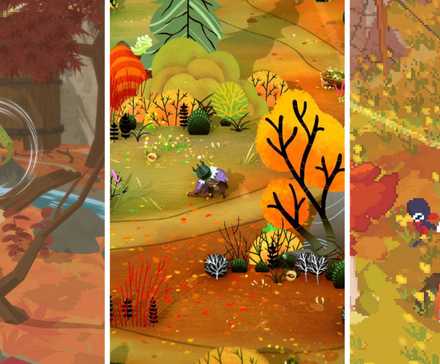
17 Best Cottagecore Indie Games, Ranked
No duds, no filler—just the best cottagecore games, packed with charm, depth, and cozy surprises.
This Isn't Nostalgia. It's a Diagnosis.
 Nintendo
It would be easy to frame all of this as nostalgia — for simpler games, simpler social lives, a version of the internet that felt less exhausting. And there's a version of that critique that has merit. Romanticising both early MMO communities and the third places that preceded them can obscure how exclusionary many of those spaces were, and how much progress has been made in expanding who gets to belong where.
But I don't think what cozy games are expressing is primarily nostalgic. It's more specific than that. People aren't reaching for them because they want to go back anywhere. They're reaching for them because they're expressing something quite precise about what's missing right now: structure, contribution, recognition, and the feeling that where you are and what you do there actually matters. MMOs offered that once, and mostly stopped. Real-world third places offered it before that, and have become harder to access.
The cozy gaming genre keeps growing because the underlying need keeps going unmet. That's not a trend driven by clever marketing. It's a response to something happening in real life, and it's been building for longer than the genre has existed.


Released February 26, 2016
ESRB Everyone 10+ / Fantasy Violence, Mild Blood, Mild Language, Simulated Gambling, Use of Alcohol and Tobacco
Developer(s) ConcernedApe
Publisher(s) ConcernedApe
Engine Proprietary
Cross-Platform Play Stardew Valley does not currently support crossplay between different consoles and PC





![ELDEN RING NIGHTREIGN: Deluxe Edition [FitGirl Repack]](https://i5.imageban.ru/out/2025/05/30/c2e3dcd3fc13fa43f3e4306eeea33a6f.jpg)
 English (US) ·