.png)
 3 months ago
26
3 months ago
26

Published Apr 1, 2026, 2:28 PM EDT
Forbidden Fruits is one for the Taylor Swift fans who grew up watching Mean Girls
 Image: IFC
“There’s a special place in hell for women who don’t help other women.” That’s a quote from former Secretary of State Madeline Albright, famously cited by Taylor Swift by way of Katie Couric (and/or Starbucks cups where it appeared). But Swift’s use of it — in response to some light awards-show joking from Tina Fey and Amy Poehler — is the one that echoes throughout the extremely millennial-coded new horror-comedy Forbidden Fruits. Swift only comes up directly once during the film, when Cherry (Victoria Pedretti), one of three fruit-named women in a witchy workplace clique, notes that she has a Scottish fold cat, just like the pop singer. But in a movie that’s largely about younger millennials’ precarious position in the world, Swift’s cultural cachet as the preeminent member of that generation extends far beyond her influence on Cherry’s pet.
Cherry and her friends work at the upscale mall store Free Eden, led by Apple (Lili Reinhart), though she’s notably not the store’s actual supervisor; that’s Sharon, who gives off a grown-up aura even as (or possibly because) she remains mostly off-screen. Cherry is Apple’s supposed best friend and sycophant. Fig (Alexandra Shipp), meanwhile, is a little less beholden to Apple, and more open to outsiders; she’s the one who identifies Pumpkin (Lola Tung), who works at the mall’s pretzel counter, as a possible fourth member of their group. After all, Pumpkin’s fall-themed fruit name would help complete their “retail cycle,” and round out the makeshift coven Apple has formed in the mall’s after hours.
As coven leader, Apple is the one who adheres to Swift’s weaponized version of queen-bee feminism. Her first rule of the coven is based in “shine theory” (a real thing, or at least one not invented for this movie): “Women illuminate when they surround themselves with other women who shine, and they don't do anything to dim their light.” Presumably those who dim those lights are bound for that special place in hell. At the same time, Apple is by far the most hate-filled and unforgiving of the bunch, sniping at her friends in the guise of enlightened female-forward empowerment. When Cherry innocently notes ambiguity about whether a pumpkin counts as a fruit or a vegetable, Apple snaps at her: “I’m sorry, Cherry, do you actually fucking hate women?” Soon after, she manipulatively adopts Pumpkin as her “Mini-Me,” as Cherry fearfully puts it. But Pumpkin’s glow-up gives her the power to challenge her new bestie.
This sounds like standard Mean Girls stuff, and that Tina Fey-penned classic does come to mind during Forbidden Fruits, not just because of the consistently funny dialogue. The eager-to-please Cherry is such a Gretchen Wieners, though she uses a slightly younger-skewing cultural touchstone to describe herself: When Free Eden gets a Hilary Duff fashion line in stock, she sighs, “I’m such a Gordo,” referring to the longtime dude sidekick on Lizzie Maguire. Apple corrects her: “No, you’re a Miranda. Fig’s a Gordo.” (Later, to extend the joke, Cherry appears in some hilariously Hilary Duff-like outfits.)
But while Mean Girls lightened up the pitch-black comedy of its ancestor Heathers with a lower body count and more sociological wit, Forbidden Fruits eventually moves in the opposite direction, closer to the fatal mishaps of Heathers or The Craft. These witches don’t need genuine supernatural powers to engage in power struggles. Their interpersonal clashes, especially between Apple and Pumpkin, lead to some nasty surprises. Though their conflicts eventually lead to horror-movie violence, the cruelest fate, the movie implies, may be a professional life consigned to malls, overpriced novelty coffee drinks, and other commercial/cultural remnants of a millennial youth.
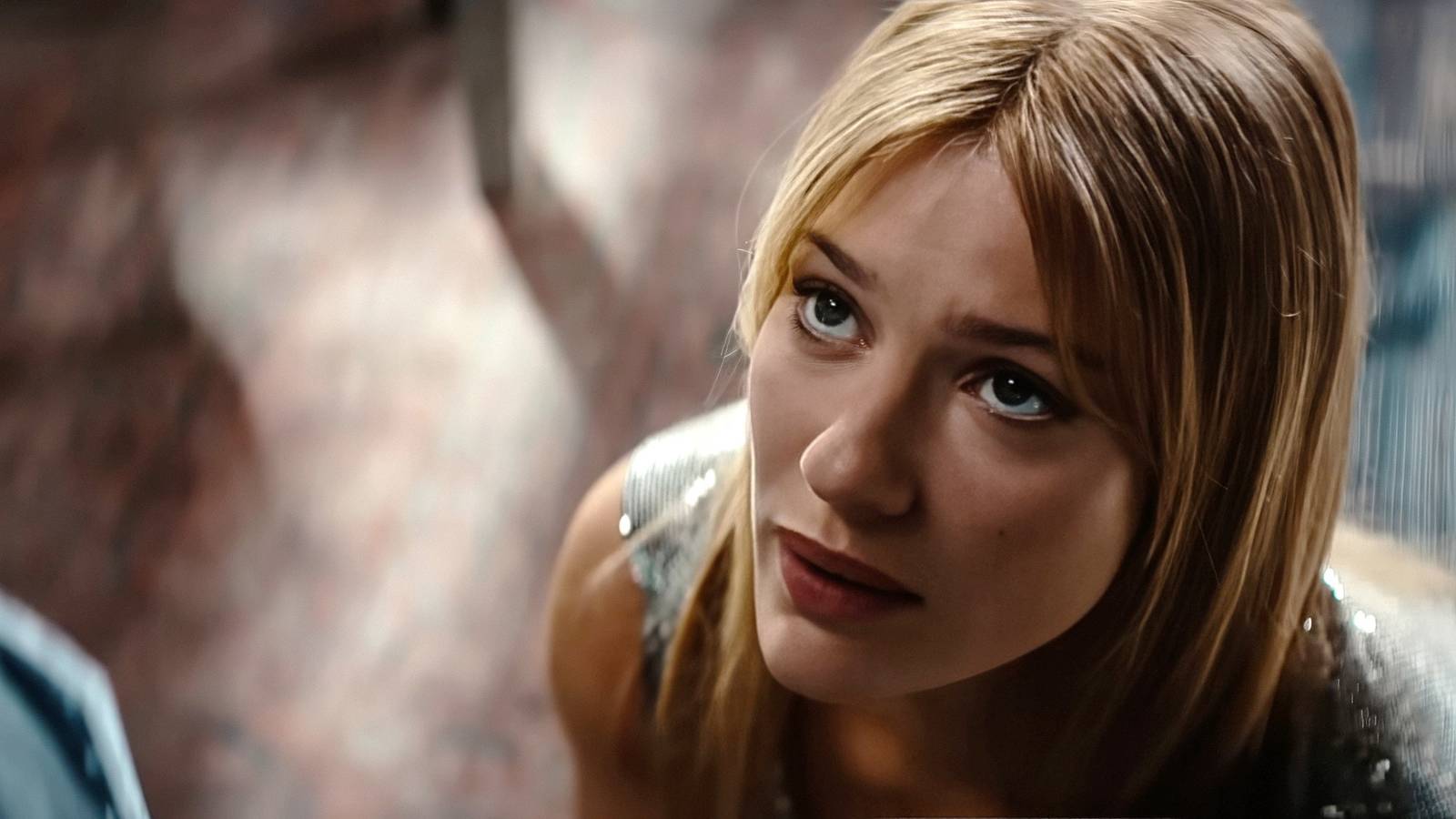
Forbidden Fruits began life as a play by Lily Houghton, who worked with writer-director Meredith Alloway to adapt it to the screen. (Apparently the play doesn’t have the same third-act violence.) In the translation to the screen, the story creates a clever generational dissonance. Theater actors often play well outside their age range without much scrutiny; with a standard suspension of disbelief, it’s easy to place the characters in whatever timeline seems right. Here, Alloway casts familiar faces from teenage roles like Betty on Riverdale (Reinhart), teenage Storm in the X-Men prequels (Shipp), and Belly from The Summer I Turned Pretty (Tung) — as teen-like characters. But except for the Gen-Z Tung, the actresses themselves are all solidly millennials, in or near their thirties.
 Image: IFC
The Forbidden Fruits characters seem to be somewhere between those extremes, likely in their twenties, ambiguously perched between young-millennial and Gen-Z-cusper status. Apple puts it in Britney Spears terms, at one point referring to when she was “a salesgirl, not yet a saleswoman.” These women might seem a little young to revere Britney, but they all have the little-sister energy of girls who could have looked at Spears the way other generations gazed at Disney princesses. No wonder a Taylor Swift shade of capitalist feminism seems more sophisticated by comparison. (The artist repeatedly name-checked as a running gag is Ed Sheeran, who Taylor Swift did not actually discover, Fig mutters to herself.) It’s similarly unsurprising that this material appealed to Forbidden Fruits producer Diablo Cody, who made her own horror-based observations about the complexities of sometimes-toxic female relationships in Jennifer’s Body.
As with Cody’s horror work, the funny slang and references of Forbidden Fruits conceal ennui, in this case the growing suspicion that Apple has invested herself in a thoroughly dead-end job as part of some greater mean-girl feminism. As Alloway peels back the funny dialogue and eye-popping outfits to expose darker motivations, she also inadvertently reveals the material’s theatrical origins. In the final half-hour, the characters’ entrances and exits often look like they would make more sense on a bare stage than a more three-dimensional space. (There’s also a horrible mid-credits scene that seems like a concession to horror-movie franchising.) The movie’s point of view also feels diffuse; on stage, it’s easier to manage a multi-character omniscience. It feels like Houghton and Alloway aren’t sure whose story this is — though maybe that uncertainty is appropriate to the purgatorial nature of post-adolescent life.
And what’s a spookier capitalist purgatory of millennial girlhood than a mall in the 2020s? The Dallas-area shopping center where the entirety of Forbidden Fruits takes place isn’t shot or lit to look menacing, or completely abandoned; Alloway favors a lighter, gauzier look that recalls a vintage VHS tape. But the architectural shopping-center standbys — an escalator, the big fountain beneath a skylight ceiling — figure into all the biggest physical conflicts. The story begins with nameless outsiders delivering the standard teen-movie murmuring about how hot and glamorous the Free Eden girls are, but that sense of outside idolization doesn’t stick around. By the movie’s final stretch, it’s just four girls stuck in a mall. Whether they’re helping each other “shine” or not, Apple and her fellow witches are already in hell. They just don’t recognize it until it’s too late.
Forbidden Fruits is in theaters now.





![ELDEN RING NIGHTREIGN: Deluxe Edition [FitGirl Repack]](https://i5.imageban.ru/out/2025/05/30/c2e3dcd3fc13fa43f3e4306eeea33a6f.jpg)
 English (US) ·