.png)
 4 months ago
39
4 months ago
39
Marathon is a hero extraction shooter, but it wasn’t always that way. Former franchise art director Joseph Cross detailed his time working on the game in a new interview, including a big change to a core aspect of the game midway through development. He also spoke about leaving Bungie after spending so much time working Destiny and the company’s upcoming multiplayer game.
“The game design itself having a pretty profound evolution midway through, and that changed the visual psychology a fair amount,” the veteran artist told Mikhail Klimentov’s newsletter ReaderGrev in a new interview. They Cross describes it, Marathon‘s runners were originally just generic throwaway mercenaries that players would customize to fit their own fantasy. It was only later on that the development team made the shift to actual characters with prescribed backstories, abilities, and unique visual identities.
Marathon Art Style (a short thread). First of all thanks to everyone for all the kind words and enthusiasm for the art style/direction in our announce trailer, it's been amazing to see. This was the result of many talented artists working together, with the support of an amazing pic.twitter.com/ePPi41KA6c
— Joseph Cross (@josephacross) May 30, 2023
“You’re going from designing one vehicle in a fleet of a thousand to now you’re designing the Millennium Falcon,” he said. “The psychology changes. I think that gets back to your original question, which is like, art relating to gameplay and at what point do those collide? And that certainly was a big one. In the case of this production it was a fairly significant event, and had to happen incredibly quickly, too.”
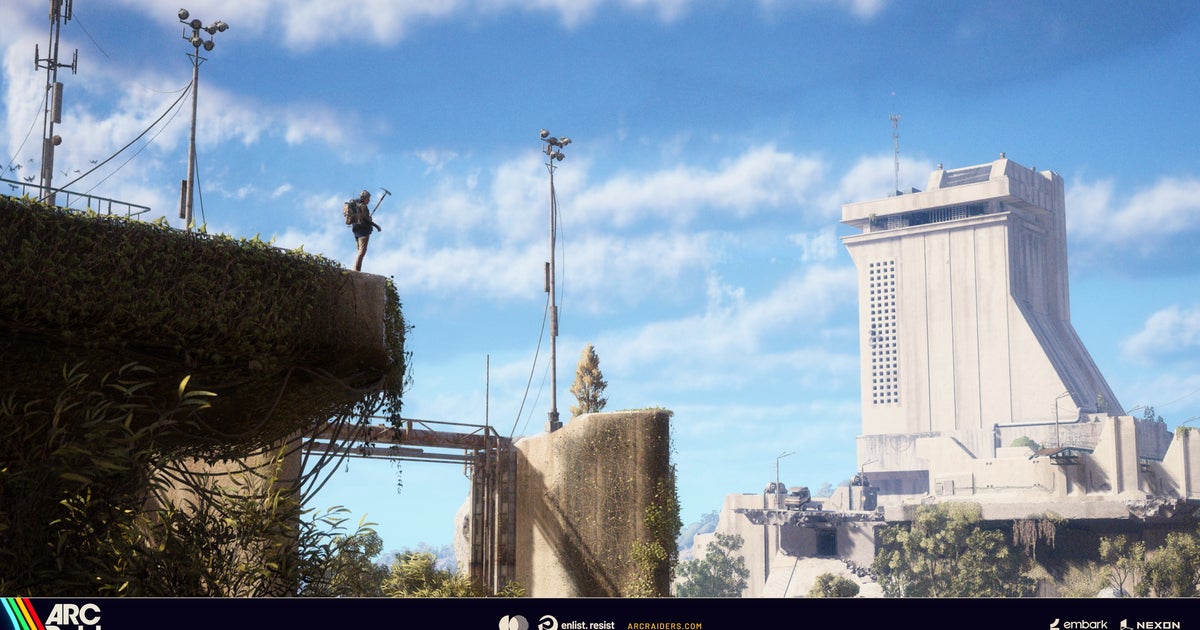
The hero aspect has become an important part of the marketing around Marathon‘s in-world fiction and a differentiator between it and genre rivals like Arc Raiders and Escape from Tarkov. But it also gives the game one foot in the realm of a genre that some players seem incredibly burnt out on. Elsewhere in the interview, Cross said the game is banking a lot on its striking art style, which borrows inspiration from things as wide-ranging as Nike sneaker culture and Ikea furniture assembly, to help set it apart.
He said:
There’s also something about the design of the game, where at a certain point I really did believe that art had potentially more of a responsibility for creating interest than it would if we were working on a different kind of game. The game design, nobody’s reinventing the wheel here. We’re putting compelling spins on established mechanics. The narrative is also not reinventing the wheel. It’s an abandoned space colony where something mysterious happened. We’ve seen this a lot. It’s about how you spin it, and at some point, for better or for worse, I told myself that this is an opportunity for art to sort of step up and provide a level of newness to this world.
Leaving Bungie on the eve of Marathon‘s release
So why did Cross, who spent over a decade working on art for the studio, beginning with the original Destiny, decide to recently leave before Marathon ships? He said he’s an artist first and increasingly conscious of the limited number of new projects he’ll actually get to work on in his lifetime. “I’m not a founder of Bungie,” he told Klimentov. “This is not my company. And I’m conscious of the number of projects I get to work on in my life. I’m not getting any younger. I’ve spent what will ultimately be 15 years, essentially, on two projects for Bungie: Destiny and Marathon, with film work in between.”
Cross’ decided on his departure just a couple weeks before Marathon‘s new March 5 release date was decided. “The natural cadence of the kind of work that happens post-launch in a live service game, I also understood what that was looking like,” he added. “It’s also true that at the level of seniority that I had, there are challenges there that don’t necessarily exist as an artist, and getting to this phase of a project like this at that level had its own challenges that contributed also.”

![ELDEN RING NIGHTREIGN: Deluxe Edition [FitGirl Repack]](https://i5.imageban.ru/out/2025/05/30/c2e3dcd3fc13fa43f3e4306eeea33a6f.jpg)
 English (US) ·