.png)
 5 months ago
42
5 months ago
42
You may be dead at the start of Gates of Krystalia, but your adventure’s only just beginning. A goddess welcomes you to a new world and offers you a second life as either a hero or a Deux (Krystalia’s word for the Game Master). From there, this indie TTRPG wastes no time indulging your anime wish fulfillment. Gates of Krystalia is billed as an “isekai style role playing game,” referring to the popular anime genre where a protagonist is transported to (or reincarnated into) an unfamiliar world, often one of magical fantasy.
Ahead of the launch for the game’s third Kickstarter campaign for the Lumina expansion, which begins Feb. 3 at 11 a.m. EST, Polygon took a deep dive into the core rulebook and first expansion, Last Deux. The original Gates of Krystalia release went live on Kickstarter in September 2024 and fully gamifies an anime isekai experience. It’s not shy about those anime influences, and doesn’t bother sanding down what defines the subgenre in the pursuit of wider appeal. Instead, it trusts that the right audience will appreciate how completely it understands the assignment, even when it feels delightfully shameless.
Transported to a magical land
One of Gates of Krystalia’s greatest strengths is in how gracefully it welcomes players into the fold. There aren’t any bland lore dumps or dense explanations of rules. The core rulebook opens with a direct address from Thenarix, the goddess who presides over the world of Lumina. She plucks potential heroes from death and offers them a second chance.
Nami, Thenarix’s assistant and a member of the fox-like Kemonomimi race, serves as your narrative guide throughout the book. Nami appears regularly in text bubbles to clarify mechanics, contextualize player decisions, and explain edge cases, often with a light, playful tone that feels conversational. She doesn’t read like a tutorial sidebar or a rules annotation. She feels like a character who exists within the world, speaking directly to you, occasionally getting annoyed or poking fun at you.
In other words, Gates of Krystalia fully commits to the bit and never lets up. Learning the game feels less like studying a manual and more like being invited into an anime world — with at least one fox girl who wants you to be there.
 Image: Top Notch International LTD
All Krystalia books are also peppered with QR codes linking to practical resources like character sheets, reference materials, and even battle music. These resources anticipate what a table will need, and the book delivers it at just the right time. It’s the kind of modern touch I wish we’d see in more TTRPGs, especially D&D.
One of Gates of Krystalia’s most distinctive mechanical choices is its use of a standard deck of 52 playing cards instead of dice. On its own, that decision isn’t revolutionary — card-based RPGs have existed for decades. But here, the system feels meaningfully integrated into the game’s identity. Suits matter. Affinities matter. The deck becomes a shared resource that reinforces tension and pacing in a way dice often can’t. Players aren’t just rolling and forgetting. They’re keeping tabs on what’s been drawn, what remains, and how their race and abilities interact with the deck’s structure. This foundational design choice influences how players approach risks.
Unapologetically anime with familiar frameworks
At a glance, Gates of Krystalia looks delightful and familiar to just about any anime fan. The 256-page core rulebook contains art depicting dozens of fantasy characters that remind you of heroes from shows you’ve seen and games you’ve played. Flipping through, various pieces of art reminded me of properties like Frieren: Beyond Journey’s End, Final Fantasy Tactics, Sword Art Online, and more.
In terms of character options, the base game offers 10 playable races and 10 classes, many of which map cleanly onto archetypes from more mainstream TTRPGs like Dungeons & Dragons. Berserkers channel the rage of a barbarian. Assassins fill the expected rogue role. Engineers echo the fantasy of an artificer, while Tamers feel like the ranger with their beast companions.
 Image: Top Notch International LTD
How do these archetypes work within an anime-inspired framework? Shamans, for example, capture the souls of defeated enemies and wield them as tools. Healers and Priests offer different flavors of support, rather than a single catch-all role like D&D’s Cleric. Ultimately, the class lineup winds up feeling approachable and flavorful in equal measure.
The races follow a similar pattern. Alongside your typical humans and elves, Gates of Krystalia includes Demons and Oni as similar (but different) horned humanoids. The most novel option is the Kemonomimi, the humanoid foxfolk, like Nami, renowned for their agility and cunning. Each race has modifiers tied to the four card suits, subtly reinforcing how they fit into the world of Lumina. Though the game never spells out things like “Clubs mean X” or “Spades govern Y,” the differences in suits are present across various systems, mapping to different competences or elements to convey an implicit consistency. This doesn’t reinvent the wheel by any means, but it’s clean, smart design.
Power fantasy with consequences
One of the more striking mechanics in Gates of Krystalia is how it handles the emotional cost of an adventure. There are trauma, madness, and corruption systems that force players to reckon with the fact that being transported to a violent fantasy world probably isn’t good for your mental health. Killing for the first time, watching an ally die, and witnessing some kind of abuse can all inflict trauma. Fail enough checks, and those experiences begin to shape your character in lasting ways. A character might even descend into madness, forcing you to make a new hero entirely.
I couldn’t help but think of Kirito from Sword Art Online, the series protagonist who was one of the thousand individuals trapped within the titular game. He’s effortlessly skilled and almost carefree early on, but after all of his companions die in a dungeon run, Kirito carries survivor’s guilt for a long time. Gates of Krystalia forces the player to deal with these sorts of thematic outcomes through its mechanics, rather than present them as narrative speedbumps with no impact.
Trauma isn’t just a penalty, either. Face the same fear repeatedly and overcome it, and your character can become immune, making resilience something you earn through literal character development. Madness can also be treated with rest and recovery, like through an on-theme visit to a thermal bath — a popular staple in all sorts of anime. Moral corruption, meanwhile, tracks the long-term impact of selfish or cruel decisions, pushing characters toward darker paths and sinister transformations if left unchecked.
These systems put weight behind the various kinds of decisions that players make and experiences they have. Gates of Krystalia is all about letting players live out extravagant anime power fantasies, but it’s not going to let them run wild — they still have to reckon with what that power does to them.
 Image: Top Notch International LTD
Romance in TTRPGs is rarely handled well, typically left to improvisation or vague roleplay agreements. Gates of Krystalia does the opposite and builds romance directly into its mechanics. Let’s be clear: Every anime fan wants their own harem.
The core rules present 10 NPC allies (five male and five female), each with distinct personalities, story hooks, and preferences. Player choices influence those relationships, which in turn grant concrete mechanical benefits, including bonuses and special abilities. But there are guardrails in place. If you neglect one ally and pay too much attention to another, they might leave altogether. Building up a harem is possible, and optional, but it’ll take a lot of work to juggle. Truly, Gates of Krystalia embraces every single anime trope you can think of and translates it into meaningful mechanics. The romance works because it’s integral to the gameplay, and not just included for flavor.
A sprawling anime multiverse
The core rulebook may have established Gates of Krystalia as a fantasy isekai with all the familiar trappings, but the first expansion, Last Deux, digs deep into the lore to establish a multiverse where the Deux created various worlds. This sprawling multiverse makes it so every possible genre and subgenre of anime is available to explore: sci-fi, horror, supernatural, or even slice-of-life high school drama.
With Lumina at the center of the cosmos, Last Deux presents another 10 parallel universes shaped by primordial gods in various ways. Alchimera feels like D&D's Eberron or the world of Fullmetal Alchemist, where science and magic have fused for steampunk vibes. Mecha-Genesis is a post-apocalyptic planet with synthetic humanoids defending against massive kaiju (somewhere between the Destiny game series and Kaiju No. 8). Neo-Aether feels like an obvious riff on My Hero Academia in a world where those born with "Resonances" register as "Authorized Heroes." Want something more like Inuyasha? The world of Edo-X is a good fit. Is your fursona a buff shark or other aquatic species? Look no further than the endless seas of Marea Eterna.
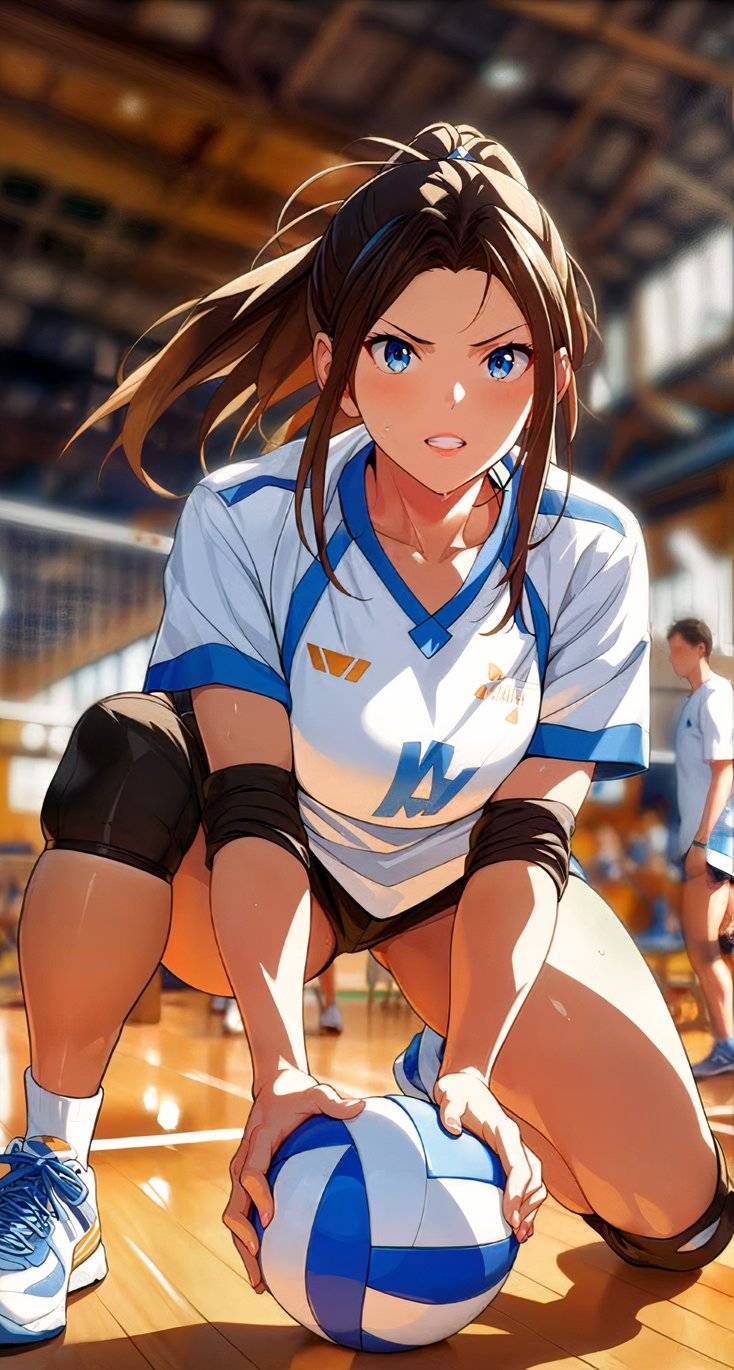 Image: Top Notch International LTD
The biggest draw of Last Deux, however, is in the 75 or so pages dedicated to the real world, detailing mechanics for everything from playing sports like badminton or volleyball to participating in school clubs, along with cultural festivals — and even beach trips. If Dandadan or Jujutsu Kaisen is your bag, then Last Deux also offers options for occult exploration and other horror stories in this world that closely resembles our own. There are also 10 new, real-world classes like the Idol, Class Leader, Occultist, and even the Otaku. (Hilariously, the Otaku gets a technique where they describe a scene from a hentai manga in detail to inflict the bleeding status on all humanoid enemies.)
The upcoming Lumina expansion goes all-in on the world of Lumina, which is one of the 11 worlds in the Gates of Krystalia multiverse. Assuming the next Kickstarter campaign is a success, then we’re bound to get even more releases that each focus on the other worlds merely teased in Last Deux.For players who love anime, isekai stories, and JRPG-style game experiences — and want a TTRPG that commits to those fantasies without apology — Gates of Krystalia delivers so much sincerity and love in its presentation. The designers understand what makes these genres compelling and have built systems to reinforce those ideas, trusting players to come into the experience with the same level of sincerity and enthusiasm. Is there a great TTRPG here even if you don’t like anime? It sure seems like it, but without enthusiasm for anime culture, you won’t really appreciate the copious amounts of fan service provided here.
In a tabletop landscape often hesitant to lean too far into niche appeal, Gates of Krystalia stands out by doing exactly that — and by doing it well enough that it has me excited to design my own hybrid game of real-world high school drama and epic adventuring. Now I just have to convince my D&D group to give it a shot.

![ELDEN RING NIGHTREIGN: Deluxe Edition [FitGirl Repack]](https://i5.imageban.ru/out/2025/05/30/c2e3dcd3fc13fa43f3e4306eeea33a6f.jpg)
 English (US) ·