.png)
.png) 3 months ago
31
3 months ago
31


Published Apr 12, 2026, 9:00 AM EDT
Shane Limbaugh (He/Him) is a Contributor from the US. While he hasn't been writing about games for very long he has certainly been playing them. His degree in Game Design and Criticism let him better understand the fundamentals of the industry and the games themselves. There aren't many games he hasn't at least put hands on thanks to his time working at GameStop.
Sign in to your DualShockers account
Recently, I was given a fantastic opportunity to talk with Kaja Chan, the voice of Mio from Split Fiction. We took some time to speak in-depth about what it was like working on the project and dove into some interesting topics as it became much more conversational as we went. She was truly a delight and gave some intriguing answers.
The interview mostly focuses on her time playing Mio during Split Fiction as the game is up for several awards at the BAFTA ceremonies. Kaja herself is on the longlist for Best Performer in a Leading Role for her incredible performance as Mio. While that is the main point of the interview, we got a little sidetracked discussing all manner of things surrounding gaming as a whole.
You can read all about it down below, and while I couldn't manage to get any information out of her about upcoming gaming projects, it would seem she's at least involved in a few. This means we'll certainly be seeing more of Kaja in the future, and that's a very exciting thought! Enjoy the interview.

Related
Split Fiction: 10 Best Boss Battles, Ranked
Sassy kittens, demon dentists, and everything in between.
Interview with Kaja Chan

Q. Let's jump right in. I have some questions here. Feel free to take as much time as you'd like to answer them. So, as far as I can tell, this was your first time voicing a main character for a video game. You've done some others, as you did Emma Lee, in Cyberpunk Phantom Liberty. But this is the first time I think you've done the main player character. So, how was that sort of different from some of your other experiences as an actress?
Kaja Chan: So, interestingly, Mio and Split Fiction was my introduction to the game world, video game world. But, because it took 3 years to make that, other games that I did came out first. So, my first experience of working in games was as the lead playable character, which is pretty insane. I kind of walked into this industry blindfolded, and then accidentally hit the jackpot. Which is wild, and it's not normally how the acting hustle works. But since then, I have had the fortune of playing other lead characters and playable characters, like Soa in FoamStars, but Mio definitely being the most, I would say, meaty, three-dimensional playable character.
I guess the main difference is that you have so much more agency as an actor with roles like that. If you're coming in to play someone like Emma Lee in Cyberpunk, I had one recording day. It's an NPC in Dogtown. And I go in, I deliver the lines, and I didn't know what the game was for Cyberpunk until I was in the recording booth, and I realized, "Wait a minute, these words are… Cyberpunk Phantom Liberty coded, is that correct?" And they basically said, "We're not gonna tell you anything." I'm like, "Bro, I am doing your job. You can tell me whether I am doing this game, alright?"
Whereas with Mio and Split Fiction and other lead characters in games, you have such a long journey to play with as a character. You can fiddle with how they start, you can have some creative control over how their character progresses, and that, I think, is the main difference, which I love.
Q. Awesome! That's pretty funny about Cyberpunk, that they wouldn't just tell you this is for Cyberpunk. Okay, so it sounds like you're kind of a gamer; I would assume, based on your knowing what Cyberpunk is. Not that I think it's a super weird, out-there series, but it's definitely not something I would think people who don't play video games know anything about. Are you a gamer? Do you play a lot of games, or is it just something you think is cool, or do you keep up with it for work?
Kaja Chan: I played a lot of web games growing up. The things that I grew up with were Poptropica, Neopets, Club Penguin… Back in that era of Facebook games, when Tetris was on Facebook, Pet Society was on Facebook, It Girl, Zoo Paradise. That whole world of games was my jam, and I think it's because my parents never bought us a console, because I think they were like "Scary, scary consoles. Console will steal our children from us."
So, in terms of graduating from that world of games into games like Cyberpunk and Spit Fiction and the like, I'm newer to that world. But I think why I knew about Cyberpunk and why I know anything about games now is just because I've got my ear pressed to the floor, finger on the pulse of the video game industry, because I've had the fortune of working so much in it recently. Cyberpunk is made by CD Projekt Red and is a Polish team, and I'm Polish, so I heard about it through the Polish film and video game industry grapevine.
Q. Awesome. I'd like to ask, since working for Hazelight was your first foray into voice acting and whatnot, Split Fiction is Hazelight's sort of second iteration on the formula that they have, the first one being It Takes Two. Were you sort of aware of the game that they were making when you went in for your audition or anything? Or was it just like, "This seems cool?"
Kaja Chan: So, the audition tagline that I received from my agent was, the next game of BAFTA award-winning producers of It Takes Two. And as an actor, you're not gonna go "Ehh." You're gonna go, "uhh question mark, question mark? Exclamation mark, hashtag? Maybe I should put some effort into this one." So, I wasn't aware of It Takes Two before that. I googled them, researched them, learned more about Hazelight, and It Takes Two, and started playing the game as well.
So I knew what I was going into. I had a little look, and I was just floored. I was amazed by the storytelling being so front and center in that game. I think I previously would have been intimidated by games that were so focused on mechanics or strategy and things like that, so the fact that It Takes Two almost reads like a Disney animation or a Pixar animation was so accessible to me as someone drawn to games with story first. So yeah, so that's what I knew about them.

Q. Okay, awesome. I know, there are a lot of voice actors or other actors that I've talked to who just think, "Yeah, man, they asked me to do it, it was a job," so doing research is awesome.
Kaja Chan: The thing I think that a lot of people who are outside of this industry will assume that there's a lot of build-up to booking these roles. And sometimes, yeah, sometimes it is an audition, a self-tape, and then another self-tape, and a recall audition, and then a meeting with the directors, and the meeting with the… and then it becomes a thing. But most of the time, with the voiceover in the video game world, my agent will call me. "Oh yeah, someone came across your reel on a website and would like you to do this. Do you wanna do it?"
And I'm like, "Oh yeah, sure, why not? I mean, I'm free this Friday afternoon, you wanna go?" And then you go, and then it's Cyberpunk. It is a lot of that in this industry, a lot of serendipity and just magical goings-on behind the Wizard of Oz screen. But I think there's some fun and magic in it, because you never know what you're gonna be doing next week in this industry.
Q. Let's flip back to Split Fiction. Mio, in my opinion, is arguably the more, I think, emotionally resonant character. Not that I think our other co-star is not pulling their weight. I just think that it feels like Mio's story is sort of the center of the whole game. But was there anything about Mio that you felt like you really connected with, on any kind of level?
Kaja Chan: A lot of people have asked me this question, especially because I don't think that I externally present very Mio-like, but I would say what I can instantly connect with in Mio is the deep desire to reach people, and to connect with people, and to want to be seen, and held, and loved. But on top of that, the constant fear of being hurt. And whereas I think, for me, that manifests in me trying extra hard to maintain my friendship. "Oh, I don't want to lose you. You're everything to me. Let me hold onto you." Mio shuts down. She doesn't want to be hurt, and so I'm not even gonna try to reach out to you.
Two different ways in which the fear of losing people or losing connection manifests. And I, yeah, I think that a lot of people relate to that. A lot of people have said what you said, that, you know, they resonated with Mio. Despite her tough outer shell, she sometimes has quite an abrasive character.
They see themselves in her, and I just think in this modern day and age, it's become so hard to reach out to our village, and to admit that we're vulnerable, and admit that we need friends and connection, and loneliness epidemic, post-COVID and all of that. And I think a lot of people know what it's like to want desperately to be seen and held and loved, but not know how to ask for that.
Q. Yeah, yeah, for sure. Oh, man, that was a great answer. Wow. Oh, now I'm over here emotional, I can't do this. Oh my gosh.
Kaja Chan: But hey, we're connecting now! Over this game, and I think that's something that's so incredible about characters like Mio being in games like Split Fiction, is that people like you and I are on, I'm assuming, opposite sides of the planet. But, where here we are, connecting over this magical thing that I've been working on for 3-4 years. So yeah, I think, in some weird meta level of characters like Mio in games like this, there's a character trying to connect, and then here we are connecting, talking about… connection!

Related
Q. It's all connected. So as I said, Mio was a really great character, and I think a lot of that is attributed to the voice work that you give her. It's really deep and meaningful, but she's also, like you said, she's a very gruff, hard outer shell kind of girl. And at the beginning, she definitely seems like she's gonna be kind of more of an obstacle than she is gonna help figure out what's going on. But it was really awesome to kind of watch her character development throughout the story. So I wanted to ask, how did you feel as she sort of developed throughout the story, going from sort of this gruff and stern kind of person to someone who can be emotionally vulnerable and be open about something with someone who is effectively a complete stranger?
Kaja Chan: I think that was one of the things I was most excited about going into playing Mio. That brittle quality within her is… It's very uncomfortable to play. In a way, that's very exciting to me as an actor, but it almost infects your system. You feel a tension in your core as you're playing that… fear and animosity. I think for Mio, from the start, it always came from a good place, a genuine desire to escape the simulation and defeat Rader, basically. But she couldn't do that in a way that was kind, and she didn't feel like she needed to waste time befriending Zoe in order to achieve that goal.
As the years progressed, we continued to play with the scenes and develop Mio through the motion capture and the voiceover. It's almost like I could feel my system start to melt. That brittle quality kind of turns to warm butter. And the heat was Zoe, and Elsie's performance of Zoe is so wonderful, warm, and infectious in its love that it becomes hard for Mio to hold on to that, because how can you insist on holding that tension with someone like Zoe?
You just can't do it. And so, my favorite scenes in the game are the ones where Mio starts to release that fear and relinquish control and surrender to this friendship with Zoe. Yeah, it was just such a beautiful thing to play with and explore.

Q. It's great, and you guys have such great chemistry; it's not on-screen, I don't know what the terminology would be. But, you guys had really great chemistry throughout the whole thing. They're very different but similar characters. They both have trauma, they both have issues, which they both deal with by writing about things. Which I thought was an interesting take, just from a writing perspective. But yeah, you guys played off of each other really, really well.
I thought that was really phenomenal, because sometimes you have that situation where both of the actors, or voice actors, or whoever, are really good separately, and then you put them together, and it's just not quite jazzing. But you guys, I thought, did really well. And nothing felt sort of out of place, even though the whole premise of the story is insane.
So, it was really awesome to kind of have that sort of connection between you guys. What was it like working with her? Was that different, maybe, than you expected, or was it just fantastic?
Kaja Chan: It was fantastic from beginning to end. Chemistry is a funny thing because I don't know if any science will ever be able to nail it down, but the moment that I looked at her in the audition waiting room, I thought, "Yeah, I connect with her. And if I book this job, it's gonna be with her." And it was instant, and I don't know how to describe it. Platonic love at first sight, as it were. After we finished the audition, we connected on Instagram. And there was this weird feeling of, "Oh, bye, I'll see you later." And this calm certainty that I would actually see her, whether it was on this game or another.
Working with Elsie is incredible because she is so funny, charming, positive, friendly, and also so easygoing. She is not the kind of actor who will labor over every single line. She is not the kind of actor who will do something and go, "Oh, that was shit. Well, we must stop, because I need to do that again," because this, that, the other. She is so easygoing, so funny, so practical. So down to earth. And I do feel so grateful that I think I have her in my life, for the rest of my life, I think.
We're gonna always stay in touch. Like, I'm voice-noting her in this very instant. She hasn't replied to me, but I still think she loves me anyway. But yeah, it was amazing.
Q. Awesome, yeah, it sounds like it! Oh, great, oh my gosh, that's phenomenal, I love that. Okay, we'll try to circle back to a little bit more to specifics about Split Fiction. I always like to ask this. I usually don't get something, like, super deep, or anything like that, but I always love asking it.
So on occasion, actors, voice actors, everyone sort of ad-libs, or may add something in, or might say, "Hey, let's try it, you know, let's do it this way." And I always think those are really interesting moments, because my degree is in video game design, so I'm a wannabe writer, all that kind of stuff. I always think it's really interesting when you, as a writer, make a character, and then someone else is playing that character, and you kind of watch them sort of embody them, and show you maybe some things that you didn't know about the character.
Did you ad-lib anything, or was it all just, "Do the line the way it's written," whatever? I can't imagine that being that way at Hazelight, just based on, sort of, the past, but I'm very curious to know.
Kaja Chan: I think when I started Split Fiction, I was so new to acting in games that I was very shy of ad-libbing and testing the lines. The more we got to know the Split Fiction team, the more we played these characters, the more they became ours. At a certain point, Seba (Sebastian Antonios Johansson), the director, told us, "You know, you and Elsie know Mio and Zoe better than I do." And, he started to rewrite scenes according to our natural rhythm and timbre. We would be rehearsing the motion capture scenes and feeling "That doesn't feel quite right."
"What if we tried this? What if we tried that?" It was never like we were totally improvising in the motion capture volume, because something really important in that space is that you can't flub up lines. If you flub a line, they cannot use that take. It has to be, from beginning to end, a usable take, and so it does mean that improv is limited. Because you want to get the beats right, and you can't overlap when you're speaking, because then it makes it really hard for them to edit. But in terms of rehearsing the scenes, we had a lot more agency over what we felt Mio or Zoe would say.
And then, in the voiceover work, when it comes to in-game barks, for example, that was where we had a lot of fun, because there would be efforts, for example, Mio is in a toilet in a porta-potty, and Zoe has to fling the porta-potty across to the other side of the space to get to the other side of whatever. And, you know, go, "Zoe, what are you doing! Oh my god, what did that person eat?" That's where we could really, really have fun, because you have freedom to play, they can cut it around, they can cut lines together. That was where most of the play and the improv happened.
Q. Yeah, love it! Awesome! I always think it's really nice when they let actors contribute a bit to how things are going. I notice a lot of the time when things are really stern and hard, it gets really weird, because you might have a really strong beginning. But then things sort of get a little wonky, because they say "We want it this way specifically," and you just have to go "Okay, well, that works, but there could be some improvements." So it's nice and I always love hearing that there are some fun things, and I vividly remember the porta-potty thing, which was wild. I was like, "What the… what is happening?"
Kaja Chan: Yeah, they threw me into that. But I think you're picking on something really interesting here, where the best directors and storytellers who work with actors are the ones who trust their actors to take the character and run with it. I don't think you're gonna get the best performance from a voice actor if you try to house them within your very limited idea of what that character has to be. You'll end up with a stunted, stilted, stiff performance, and players are very sensitive to that.
Whereas if you cast well, you need to cast the actor that's right for the role so that you can then trust them to run with it. The freedom, the play, and the fun that they might have with that, players will sense that as well. And fortunately, Josef Fares and the Hazelight team, they trusted Elsie and me. 100%. So we could absolutely play and take those characters with us and run with them. Yeah, I think that's my take on it.
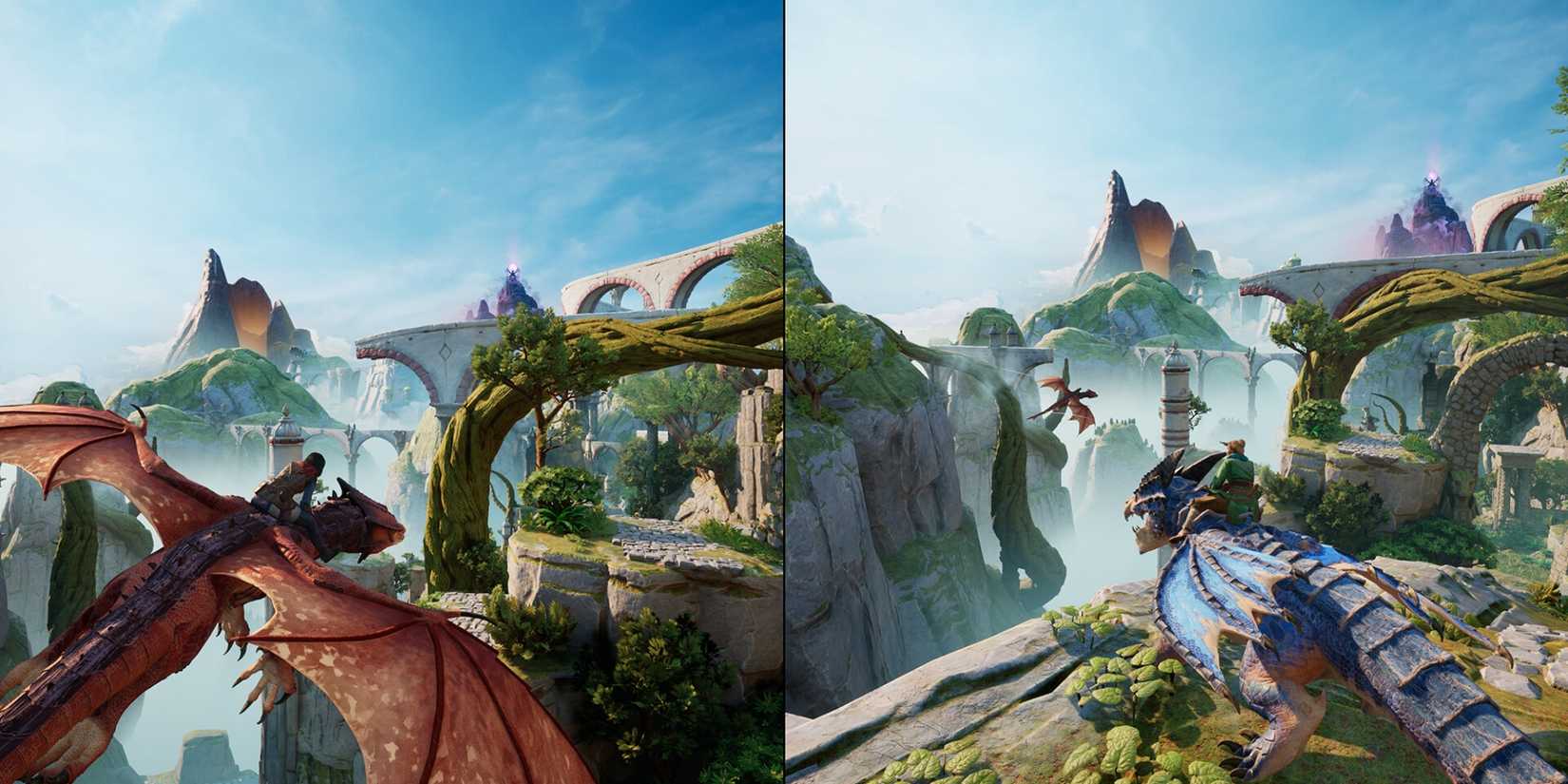
Q. I love it. It's a great take to have. I think it's right, so you've got my vote. So we sort of touched on it a little bit earlier, but what was it like doing the voice work for Mio? Well, I mean, the voice work and the mocap when she has such an emotional journey and rollercoaster throughout the entirety of the story?
She's got some really, really high highs, some really low lows, and she's really all over the place, which is great. I loved her character, but I was really curious, what it was like doing that from your perspective? How did it feel for you? Was it just something really difficult? Being this sort of emotional, because you're very bubbly, and very, very nice, and Mio is very, very hard, so you are different in a lot of ways. What was it like doing that voice work for you?
Kaja Chan: Honestly, it was not hard; it was fun. It was a joy to be able to escape myself and immerse myself in that world, and in Mio's character. I feel like I walked away from this job more grounded, because I was basically practicing Mio's groundedness so, so regularly. And the more intense emotional moments, they were challenging to put on their feet, only because I wanted to make sure that they came across well in the story, you know? "How does this line come across? Does this line come across a bit too sappy? How can Mio convey her feelings to Zoe in a way that doesn't betray the fact that she doesn't like to connect?"
You know, it wouldn't be appropriate for her to go on some massive monologue about her feelings when she hasn't practiced talking about her feelings. So it would be challenging in terms of figuring out the storytelling around that, but in terms of actually playing those beats and doing that, it was only joy. And I felt like I was in a total flow state of discovering what it is to be in her state of mind, and because it is so different from my natural rhythm, it was fun to transform into that.
And then when they called cut, I would be like, (Making silly faces and voices) "My name's Kaja, and I'm back in the room now." And they say action, (Getting serious) "I'm Mio, and I don't want to talk to you."
Q. It's great! It's always nice when the character you get to be a part of sort of teaches you something, and you get to walk away with not just having contributed to bringing something to life, but also walking away with something that's gonna stay with you.
Kaja Chan: Players say that playing the game taught them something about themselves, because they identified with Mio and Zoe, or taught them something about their relationship to the people they were playing the game with. But I don't think people realize how much we learn about ourselves by making the games.
Q. It's really interesting, because I think acting in general is so unlike a lot of other things. You're portraying something that you probably, in most cases, didn't come up with, so you're sort of becoming something different. Obviously, you wanna do it justice, you wanna make it good, but it's so different from everything else.
I love talking to voice actors and actors in general, just because it's so interesting what you guys do, and it's really difficult. But it's also amazing, and really incredible. As you said, it shows people a lot about themselves, and it's great that it can show you some things about yourself, too.
Kaja Chan: I think voice is such an important instrument. When I came to London and started acting professionally, I didn't go to a 3-year drama school or anything like that. And I was initially really insecure about it, but several people, actors, teachers, and directors would say, "Don't worry about anything in drama school, just train your voice."
And they weren't video game people, they weren't voiceover directors, they were in all of acting as a medium, film, TV, theater, and games. Voice is, in my opinion, one of the strongest access tools, a way of accessing different territories within your system. Within the way that you tell stories. So I always encourage everyone, actor or not, to play with what their voice can do.
Q. 100%. I mean, I'm behind you on that. I always think even when someone is a good, I guess, physical space actor, I think the way that they talk, the cadence they use, or how they play off a line matters a lot more than a lot of other things. I'm a big video games and anime nerd. So I see it all the time where you've got someone who is a big-time actor or whatever, but they don't do a lot of voice acting.
So, it's good, but you're definitely feeling that, well, it would be better if they'd gotten a real voice actor. I definitely agree that I think voice is a big, sort of, contributor to when something is really, really good.
Kaja Chan: Yeah, because it's so effective, you don't need to understand the language to be affected by the meaning. When you hear an argument on the street in a foreign language, you have no idea what they're talking about. They could be arguing about the groceries, or they could be arguing about their inheritance. You have no idea of the stakes, but I bet you could guess what the stakes are just by the quality of their voice. And I think that's really amazing, and that translates into games and in so many different acting mediums.

Q. That's a perfect example. Okay, so let's talk about these awards, because that's really cool. So, I know Split Fiction has been nominated at the BAFTAs, and it's won a couple of other awards as well. It won the Ultra Game Awards for Best Multiplayer to Enjoy Together, and then it's got a gajillion nominations. I know that, because I had to look that up, because I thought this had to have won something. Although the year was really stacked, I'm not gonna lie.
Kaja Chan: Some incredible titles that came out this year. The only thing missing from the pool is GTA 6. Where is she?!
Q. For the BAFTA awards, obviously, you knew that Hazelight's previous game had won BAFTA awards before. They definitely won Game of the Year the year it came out. I was working at GameStop, and I remember that everyone always asked, "What game should I play with my friend?" and I always responded with It Takes Two.
This is kind of a wonky question to ask, but you never know, because the studio is really popular, or anything could happen. Did you expect the game to get nominated or do really well while you were either auditioning or performing on it? Or was that something you just thought, "That would be nice,"?
Kaja Chan: You know, I think as actors, you always have to try and divorce yourself from the result, and focus on the process, because the number of times that you do incredible work, and I'll be on a Netflix production, I'll be like, "This is the one, guys. This is gonna be epic," and it comes out, and some global catastrophe happens the same week, and no one is watching your show, even if it's great. Or, it is great, it comes out, and then, you know, the big phenomenon of the year on Netflix comes out the day after, and completely wipes out any interest or chatter around your show.
I've done enough jobs to know better than to try to envision what the future holds for any project. With Split Fiction, we knew it'd be incredible. I'd say we knew that millions of people would be playing it. But I don't think I quite understood what that meant. I don't think I understood until Split Fiction came out, and I think, what, they sold 2 million copies within the first week, or some crazy number like that, probably more. Which means that 4 million people might have been playing it in the early days, because it's a couch co-op.
And I think it was only when those statistics came out that I started to realize, "Hang on, my voice, and my movement, and my craft is in millions of living rooms this week. That's insane!" And that was when it really dawned on me the scale of the work that we were doing. But when you're making the game, you're just focused on the joy of creating and building that story and that world. If you stress out too much about how it's gonna be received, you kind of kill it where it begins.

Q. Yeah, 100%. I'm a big proponent of the process. Doing something the right way is the award. Getting an award is great, winning is nice, but doing something right is still pretty good.
Kaja Chan: Having said that, every now and then, Josef Fares would come into the motion capture room. You know, maybe he's like, "Just come from the gym, guys, I'm feeling great, we're gonna win a bunch of awards, we're gonna win the BAFTAs, Game of the Year, let's go!" And it was so funny. It was just out of context, out of nowhere, just hype manning, but it was for fun, and it was jokes. I don't think we ever really sat down and contemplated nominations or what the awards circuit might look like for the game.

Related
Split Fiction: 7 Most Fun Powerups, Ranked
Zoe and Mia have some pretty cool powerups, but some are cooler than others.
Q. Yeah, well, now you kind of do, because it's on the award circuit, and you are on the award circuit, which is really cool. Right? Because you have, according to the information I have, you are longlisted for the Best Performer in a Leading Role as Mio, which is pretty cool!
Kaja Chan: Yeah, it was exciting, and I definitely was not ready. It took me by surprise. I was scrolling on Instagram, "Oh, cool, oh, the BAFTA game? What? Is that my name? What?" That was my experience of it.
Q. Yeah, I'm sure. I mean, well deserved. As I said, you brought a lot of character and heft to a character that I think was really difficult to sort of play for anyone. I mean, Mio, as we've talked about, she's complex, she's complicated, she's got a lot going on, you know? She's not particularly a protagonist that a lot of people are going to like right out of the gate, and that's okay. But you did a great job of doing her such justice in the way that she comes off, especially in the beginning.
I played as Mio when I played the game, because my girlfriend was like, "No, I wanna play the fun fantasy girl, she's bright and sunshine, and I love that," and I thought, "Okay, sure, I'll play the hardcore cyberpunk chick, I'm down." And the whole time I was playing the beginning, I was thinking, "She is really not happy. She is a very unhappy camper."
Kaja Chan: Question for you, though, did it ever turn you off of Mio?

Q. I think at the beginning, it was one of those things where you could sort of tell that's gonna change. I'm also a weird person when I play video games; I'm a very narrative-oriented person. The way I consume media, I guess, is a little different. I like to think about sort of the way things are gonna go. So when Mio first appeared when they're in the elevator going up, and you're like, "Okay, this is gonna be how it is."
She's our no-nonsense lady, and then we've got our bright sunshine girl, and they're gonna mix, and things are gonna happen. But I don't think it ever turned me off, necessarily, but I will say it was very… She was much more... God, what's the word? Not grounded, per se, but she was confrontational.
Kaja Chan: I ask you that because one of the more challenging aspects of playing Mio, which Josef and I had to discuss a lot, was how to honor that strength and abrasiveness that she has without pushing away the players. It would be so much for a player to commit to playing Mio for 14 hours of gameplay, and for them not to like her off the bat.
And so we were definitely takes where I would come off really strong, and then Josef would be like, "Just… don't yell at her. Maybe don't do that. Can you, can you do that, but, like, nice?"
Q. Boo. Let me be mean.
Kaja Chan: "What do you mean, I can't just be abusive?" And, a good friend of mine who's a gamer, she started playing Split Fiction, and she had to stop playing because she said, "It's so weird to hear your voice with that character, and that personality," and she was really honest with me, she's like, "It pissed me off. I just know that you're nicer than that, so hearing your voice be so standoffish, I had to stop playing." So she's not for everyone. But I think more people see themselves in it than are totally pushed away by it.
Q. I definitely think there are a lot of people who are gonna say, "Well, she's just really mean," and yeah, but it's not like she's mean for no reason. And shoot, I remember one of the first things I thought was I definitely really identified with Mio, because I try to be personable, I try to be nice and everything, but there's definitely, in the back of my mind, where I'm thinking, "No, don't talk to me, I'm here to do a work, bro, we're not here to be friends."
Kaja Chan: It's so liberating to play a character as a player, or me as an actor who has no desire to people-please. Not a shred of patience for lying to herself. No, I take that back. Not a shred of desire to lie to other people, but she is constantly lying to herself about how much she actually does need friendship and love.
Q. You did a great job, I think, of bringing that kind of confrontationalness to a character who does come off standoffish, like you said, and sort of progresses throughout the story without losing herself in any of it, because it can be really hard. Especially when what they go through is definitely super traumatic, and I know we frame it as "Oh, look at all these fun adventures." Nah, man, this is trauma.
Kaja Chan: Yeah, actually, when you dig deep, it's like that. Mio and Zoe go through something really horrifying. Imagine being trapped in a simulation. That's actually really insane. But that's why it was so easy to play, because the circumstances that Josef set out for us were so easy to tap into; that circumstance is just so scary. Scary, scary, scary.
Q. Yeah, it is. But it was really good. You guys did a phenomenal job, obviously. The game sold like hotcakes, so…
Kaja Chan: These might have done 50 million copies sold across their games this week.
Q. And then that's not counting the potential, because I'm sure they don't count the friend pass as some of it, so that could be 100 million copies, technically.
Kaja Chan: Yeah, exactly.
Q. It takes two people, so you know.
Kaja Chan: It Takes Two.

Q. It does take two, oh my gosh, full circle. Okay. I've only got a couple of questions left, so voice acting and stage acting… acting… regular acting? I don't know. It's all acting to me. They're substantially different, but they're also really similar, and I've asked this question to other voice actors before.
Is there anything that you maybe like about voice acting that you maybe don't like more, but is a little bit different? Or is there something maybe that you didn't think that you would really enjoy, that you did really enjoy, or maybe vice versa? Something that you prefer for regular acting over voice acting?
Kaja Chan: I can be quite Type A. Maybe it's the Hong Kong side of me that just likes to be on top of everything. I'm always on time, trying to get things right, maybe a little bit of a perfectionist. And any actor, artist, or storyteller will know that perfectionism is the death of creativity. And I think voiceover work is so allergic to control and perfectionism. That's the one medium where I truly feel like I can let go of all of that. When I step into a voiceover booth. Especially if there's no camera on me, sometimes they're filming you.
You know, the clients are watching you do your thing, and you're like, "Please don't look at me." But if there is no camera, it's just you and the words, and the words kind of flow through my body and my system, and I become a medium for the language, and I feel like I'm a puppet. And the words are puppeteering me. And that level of play, you can't find that in film acting in the same way, I think, because you have to hit your mark. You have to make sure that the work that you're doing is within the realm of the camera frame. You have to make sure that you're hitting the light. You know what I mean?
There are so many more technical aspects of making sure that you're within, you're telling the story effectively. Because you can go explode and be crazy on a film set, I just don't think it will necessarily translate in the way that you want to. Whereas with voice, there is an infinite amount of room to play. And if something that you played with doesn't work, you just retake that line, and it doesn't take more than 2 minutes. Whereas in film and TV acting, if you go for a really, really bold choice, resetting around that takes longer, and that costs money, and so you're limited by the way that that medium works.
Theater has a lot of room to play as well. And, you know, actors have a scary amount of agency in theater, because once the audience is seated and the curtains go up, and the lights go down, the audience is in the actor's hands. You are at their mercy; they can do whatever the heck they want. They can stop spitting Shakespearean verse and decide to take a poo on the stage, if they so desire. But you are being observed by anything between two, if it doesn't sell well, or a thousand people. Whereas voiceover, it's just you. It's just you and the mic, baby! It's just you and the mic, and that is really special.

Q. Yeah, awesome, great answer. Okay, cool. So, this one, this one's gonna be wonky, but I always like to ask, because I'm a cheeky little gremlin for information. So you've been a part of a lot of projects in the last few years, and I mean a lot. So, you've been doing a lot for both video games and TV. I think you're at, I wanna say, I counted 9 games?
I know all of them now, but it's either 8 or 9, either way. From Cyberpunk being the first released one, not the first one you did, apparently, so from Cyberpunk to your most recent show, Grace. Do you have, sort of, anything coming up in the pipeline, maybe, that you're really particularly excited for that you can talk about without getting sued? That face tells me a lot.
Kaja Chan: Alright, cheeky little gremlins! Give me a second to dab the sweat off my forehead. I don't think I can talk anything about games. I think if I open my mouth and talk about any games, then I'll be mysteriously hit by a bus tomorrow. So maybe let's not do that. Maybe, okay, I'll talk about, I just wrapped on an independent feature film with this incredible director, Maria Pawlikowska.
And I'm really, really excited about that. Sometimes you go on a feature film set, and it goes horribly, horribly wrong, but there was something magical on this set. And so I'm really excited for that to come out, and I think when I sit in that cinema and watch it for the first time, maybe at the cast and crew screening or the first premiere.
I have no idea what that film's gonna look like, which is really exciting. Because normally, from a script, you have an idea of what it might look like. This one, I have no idea what I've been filming for the last month, let me tell you that. So I'm excited for that to come out. But I don't know anything more about it than you do, to be frank.
Q. It's fair. It's a good way to keep it under wraps. If I don't tell you too much, then you don't have enough to share. Awesome. Well, that's great! That sounds really cool. I'll be really interested to hear more about that. But I'm glad that it seems like there is more video game work to come.
I'm very excited for that. I mean, you're a phenomenal actress in general, so it's really great that you're nominated for long-listed, whatever the term is, for Performer in a Leading Role, for the BAFTAs. I'd love to see Split Fiction win a lot more awards. I think it's well-deserved.
Kaja Chan: What I would say is that the team at Hazelight... Can I speak for them? Maybe I will. I don't think they need more awards to know that their game was not only well-received, but has made such an impact on so many people's lives, in wonderful ways. I mean, you can see it when I'm at conventions, and fans come up to me to introduce themselves, and they're radiating with this light and this joy, and they're talking about how they connected with their 5-year-old son, and it was his first game, and I'm thinking, "How is a 5-year-old playing this game? I struggled with it!" Or their wife, or their new boyfriend, and I think that the Hazelight team is living off of that high, just as much as they might live off the high of nominations and awards.
 Image Via Hazelight Studios
Q. I'll never forget when It Takes Two came out, because I was reading up on it, like I said, at the time I was working at GameStop, so I was sort of privy… this was well before I was writing about games or involved in the game industry, in any way, shape, or form, so… I was very consumer-based ear to the ground, so I didn't have a lot of information behind the scenes, which, by the way, is so much more fun.
But I remember when it came out, and I thought, "I have to play this game. This is one my girlfriend can play, it's not gonna be a big deal, it's not hard or anything." And then we started playing it, and I didn't delve too much into the story, because it's a multiplayer game, split screen, "Great, I can sit on the couch, awesome." And then they're rolling into the story, and I'm thinking, "Oh, this is about divorce. That's great. That's so much fun to play with my girlfriend."
Kaja Chan: Yeah, they smack you with that early on, don't they?
Q. Yeah, cause there's nothing, there's virtually nothing about it in the trailer. You're just thinking, "Oh, okay, maybe they're in a rough spot in their relationship, and they're trying to learn to love each other again," and no. hey're just, you know, going through a divorce. What! And then from that story, that's where I realized, o"Okay, whatever they make next, I'm gonna play, no matter what."
And then they did it again, and I was thinking, "They can't keep getting away with this." I mean, just phenomenal writing from top to bottom, the character development, the story. I love their ability, I guess, it's really uncanny, I don't see it a whole lot, but, for Split Fiction specifically, I thought it was crazy that they can take such absurd stakes and absurd settings and just make them work, and you never sit there and question them, because it works so well, and everything sort of fits together.
Kaja Chan: There's some genius there from Josef, because it's pretty brave to try and mash two genres together, sci-fi and fantasy. They match each other in scale and in stakes. But otherwise, I would not have thought them to be a natural match, and I would imagine that if I were to greenlight Split Fiction in its early development stages, I'd be thinking, "Are the audiences gonna buy this? Is this similar to having your cake and eating it?" You know? Come on, don't sit on the fence, I mean, commit to something, goodness sake, right?
Will audiences buy the transitions between the two? But I've been watching through a lot of the Split Fiction scenes lately. And it works so well, because there's an emotional, grounded through-line through the story. It ties the worlds together. And I think that is the mastery and the genius of Josef Fares in action.
Q. Good. Well, he needs to keep making games, so I can keep playing them.
Kaja Chan: He's not gonna stop anytime soon, Shane.

Q. Good, he better not. Awesome. I play a lot of video games, because I'm a little gremlin. But I think for story stuff, especially Split Fiction, and this is definitely in part to, sort of, the way you and Elsie played your respective characters, right from the jump, you can sort of get that there is something deeper going on. I especially think the fantasy realm opening is really great, because it's very, "This is how it's gonna work."
If you've played It Takes Two, you kinda already know. But then we transitioned to Mio's First World. And you're really getting a sense that there's something different about this one. Not just that it's sci-fi or cyberpunk and hardcore, but the stakes are significantly different, and the way that she is as a character really starts to come out.
So kudos to you for being able to represent that. She's just a really complicated character, but as I said, I think everything comes together really well and meshes into a really phenomenal video game. Okay, I am officially out of questions, and this has gone well over the amount of allotted time I think we were given.
Kaja Chan: It really has hasn't it? I did invite that, didn't I?
Q. Thank you so much for your time and chatting with me. This was so much fun. I always love talking with actors, voice actors, actresses, whoever, whatever the terminology for the people who breathe life into the things that I love.
Kaja Chan: Yeah. Well, that's perfect.
Q. Yeah, so yeah, thank you so much, Kaja. This was phenomenal. I loved talking to you. You are so much fun. It's just so interesting now. I might play through Split Fiction again, just because it's like, now I… now I've met you and talked to you, and now it's gonna be so different. Like, hearing Mio talk, and it's like, "Oh, those are different [people]."
Kaja Chan: Yeah, no, you weren't talking to Mio today.

Next

Released March 6, 2025
ESRB T For Teen // Blood and Gore, Crude Humor, Language, Violence
Publisher(s) Electronic Arts



![ELDEN RING NIGHTREIGN: Deluxe Edition [FitGirl Repack]](https://i5.imageban.ru/out/2025/05/30/c2e3dcd3fc13fa43f3e4306eeea33a6f.jpg)
 English (US) ·