.png)
 4 months ago
45
4 months ago
45

Published Mar 19, 2026, 10:00 AM EDT
'To see with eyes unclouded by hate'
 Image: Toho
Michael B. Jordan is famously a big old nerd with a deep love for anime. In previous interviews, he has listed anime classics like One Piece, Naruto, and Hunter x Hunter as some of his most-watched shows. So it’s no surprise that, when asked about his favorite movie, the answer was also an anime classic.
Following his Best Actor win for Sinners at the 98th Academy Awards, Michael B. Jordan fielded the question while holding his Oscar. “Oh, man, I'm going to say Princess Mononoke,” the Creed actor replied without hesitation.
This is undoubtedly an excellent pick. Hayao Miyazaki’s 1997 historical fantasy was the result of accrued inspirations that the acclaimed animator had been mulling over since 1980, including literary classics, postmodern environmentalism, and feminist theory. These complex ideas about nature and conflict form the beating heart of Princess Mononoke, which is also one of the highest-grossing films in Japan. The movie marks the first instance of Miyazaki combining his stunning hand-drawn animation with computer-generated imagery, even though he maintains that the primary “tool of an animator is the pencil.” In yet another instance of notable firsts, Princess Mononoke is also Miyazaki’s angriest film to date.
 Image: Toho
Set in Japan’s Muromachi era, Princess Mononoke opens with the last Emishi prince, Ashitaka, getting cursed after he kills a boar god to protect his village. The boar god’s dying words are steeped in nihilistic hatred towards humanity, but Ashitaka remains undeterred in his hopeful search for a cure even after being exiled. A monk advises Ashitaka to seek out the Shishigami, a deer-like forest spirit who can grant all wishes related to life and death.
During his journey, Ashitaka encounters the formidable Lady Eboshi, who runs the settlement of Irontown by deforesting the area around it, leading to repeated conflicts with animal gods and forest spirits. Among them is the wolf god Moro and her feral human daughter San, who infiltrate Irontown and duel Eboshi. Ashitaka gets embroiled in this conflict and tries to protect San (our titular Mononoke) despite her distrust-fueled threats to kill him.
 Image: Toho
Miyazaki has underlined the futility of conflict throughout his vast body of work. Howl’s Moving Castle (2004) is a direct response to the 2003 Iraq War, with Miyazaki critiquing the senseless destruction and violence that reduces entire cities to rubble. One of his earliest films, Nausicaä of the Valley of the Wind, uses a post-apocalyptic lens to explore the ecological devastation humans bring through war, annihilating centuries' worth of art, technology, and culture. Princess Mononoke examines the eternal conflict between humanity and nature, where neither party is able to claim unblemished moral superiority.
Lady Eboshi’s actions might be tyrannical from the perspective of San and the animal gods, but her people perceive her as a brilliant leader who goes to great lengths to keep Irontown safe and prosperous. This assessment isn’t myopic either; Eboshi’s settlement is also a safe refuge for women forced into sex work and those ostracized after developing leprosy. The fact that Eboshi’s empathy does not extend to the forest spirits might be her fatal flaw, but she isn’t a flagrant evildoer with a thirst for violence. Similarly, the animal gods are just as flawed and multifaceted. Their desire to maintain the natural equilibrium comes with an inherent aggression towards humans, who are often at the receiving end of their sharp claws and jagged teeth. Blood is spilled on both sides, wounding everyone involved in an endless cycle of violence. Ashitaka must break this noxious cycle before the curse turns him into a mindless beast overcome with hatred and suffering.
 Image: Toho
Miyazaki isn’t interested in a classic good-versus-evil allegory. Human beings are defined by their innate contradictions and moral ambiguities, which burst forth in ugly ways during all-out conflicts. When both parties face each other with their palms preemptively curled into a fist, there’s little to no space for negotiation or open dialogue. While Eboshi refuses to grant the animal gods personhood or take accountability for disrupting the local ecosystem, deities like Moro view human lives as disposable and fail to understand what Irontown means for marginalized communities. This fosters a mutual “us versus them” mindset stained with prejudice that is difficult to undo by outsiders like Ashitaka, who feels like a fish-out-of-water pacifist in a land shaped by warfare.
Speaking of Ashitaka, our cursed prince also lives out a contradictory existence. His romantic feelings for San tint their charged interactions, which are marked by a tenderness even in the face of San’s instinctual distrust towards him. In the eyes of a girl raised by wolves, Ashitaka is just one among many — a ruthless perpetrator who has destroyed her forest home for centuries. She softens her perception of him after Ashitaka repeatedly appeals for peace, trying to explain that hatred is not unlike an incurable disease.
Ashitaka’s predicament is tragic. He wants to navigate the world with “eyes unclouded” even when his cursed arm pushes him deeper into the pit of resentment. The same curse grants him supernatural powers, allowing him to fight for what he deems right or intervene between two clashing parties. The only way to start anew and heal is to restore natural balance, but a clean slate often demands an enormous sacrifice.
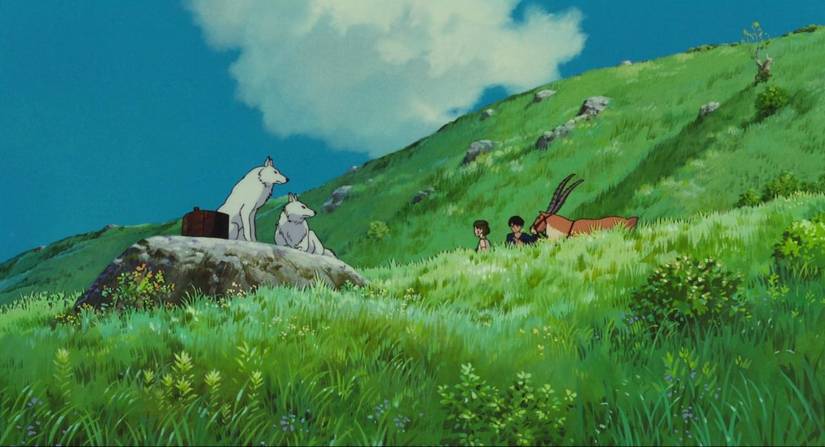 Image: Toho
Miyazaki’s dream-like animation creates a fantastical bridge between the film’s lush, chaotic world and its tortured inhabitants. This visually spell-binding spectacle reminds us of the painstaking labor that goes into creating art, and why the labor is the love that endures over the ages. Princess Mononoke might not tie our messy spectrum of emotions into a neat bow, but it leaves us with a silver lining worth fighting for. As nature finds a way to sprout new seedlings and bloom into gorgeous forest flora, so do humans try to co-exist with the forest and each other. While not everyone is able to let go of their ingrained instincts, there’s a newfound eagerness to weigh every action and indulge in thoughtful vulnerability.
Princess Mononoke can be streamed on Netflix and Prime Video.




![ELDEN RING NIGHTREIGN: Deluxe Edition [FitGirl Repack]](https://i5.imageban.ru/out/2025/05/30/c2e3dcd3fc13fa43f3e4306eeea33a6f.jpg)
 English (US) ·