.png)
.png) 2 hours ago
1
2 hours ago
1


Published Jun 28, 2026, 9:00 AM EDT
Maddie is a Contributor at DualShockers covering JRPGs, survival horror, arcade games, retro gaming, shooters, and features. She has been writing about games professionally since 2011, with more than a decade of experience across lists, reviews, guides, and games journalism.
Before joining DualShockers, Maddie contributed to WhatCulture, GameRant, and NowLoading, and has written extensively about games across multiple websites over the years. She is also a writer, journalist, and game developer, bringing both editorial experience and development perspective to her coverage.
2026 marks the twentieth anniversary of Mother 3, which first launched on the Game Boy Advance back in April 2006. It's hard to believe sometimes, as that era of gaming often feels like it was just a few weeks ago. In fact, Mother 3 is just one year shy from being able to order its own drink. Lucky.
The story of Mother 3 is an odd one, which isn't at all surprising considering both the previous works of director Shigesato Itoi and the franchise itself. It wouldn't be a Mother game without some sort of bizarre story, and while it fared a bit better than other games that went through frustrating development cycles, the story of how it crossed the finish line feels like an Itoi story on its own.
 RELATED
10 Best Games Like Deltarune
There are plenty of great games to tide you over until the next Deltarune chapter.
It's a story of perseverance and disappointment, while also acknowledging that it's okay to let things go sometimes. Mother 3's long, sometimes painful journey from concept to completion was filled with drama, console changes, cancellations, and a breathtaking rebirth. What started with potentially one of the most ambitious game concepts ever took quite a few turns to completion, and that surreal journey is a tale worth recounting.
Going Hollywood
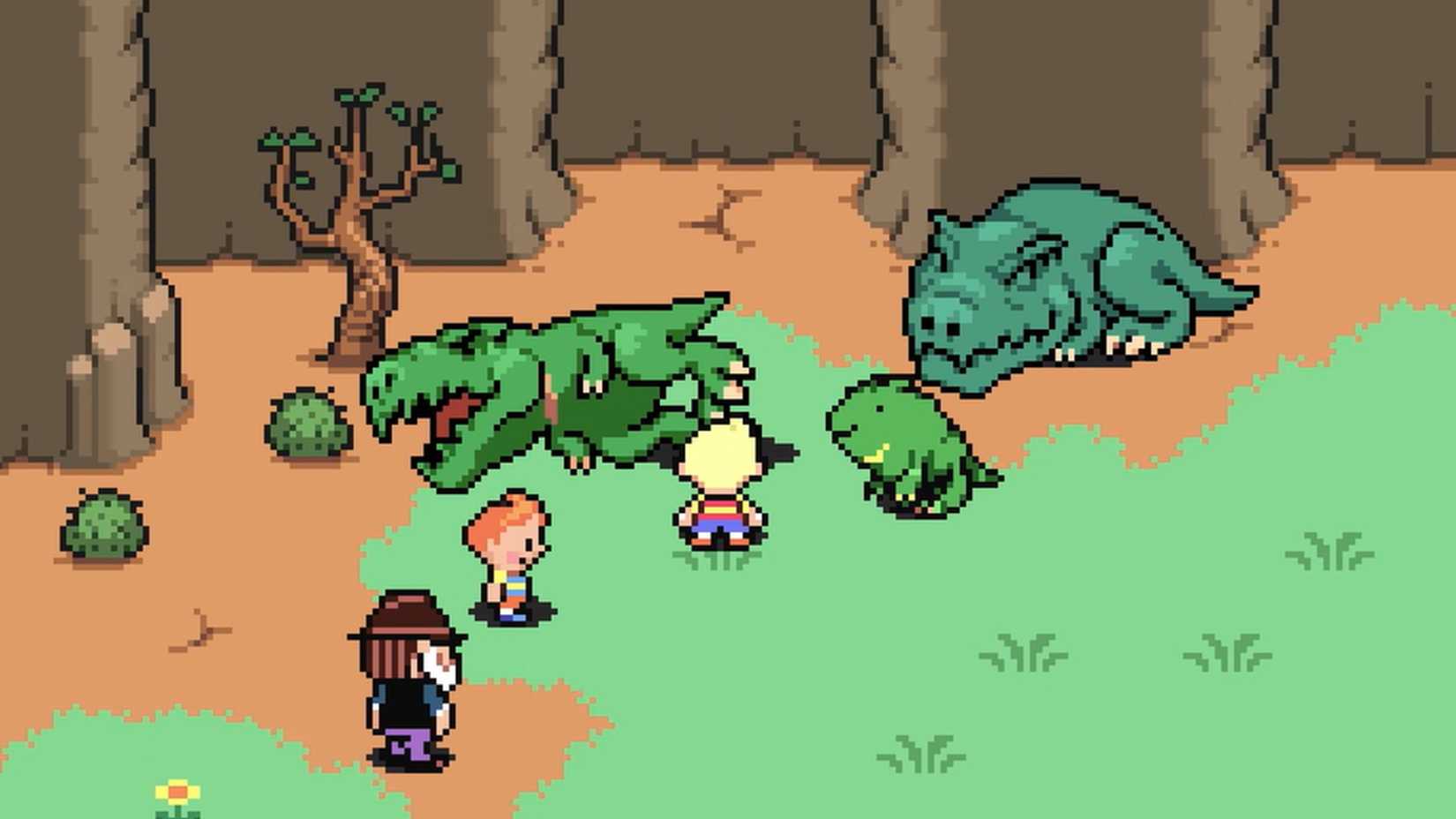
While the original Mother was a decently successful game, it was only released in Japan. It wouldn't find its way to North America until 2015, but the sequel would be released in the US under the title EarthBound for the SNES in 1995. Though it was incredibly successful in Japan, US sales were less than stellar. No matter which way you cut it, Nintendo saw their decision not to release Mother 1 in the US as a good one, but still saw the potential in a proposed third game succeeding in North America.
Shigeru Miyamoto gave Itoi something of a blank check, and bypassed the traditional prototyping phase. He told Itoi to go make something great, and while he reunited with a few team members from EarthBound, it was largely a new team. It was time for Itoi to unleash the title that had been cooking in his mind for quite a while.
Described by Itoi as a way to make a game that felt like a huge, blockbuster Hollywood film, what would later become known as EarthBound 64 first entered development for the SNES. That period wouldn't last long, however, as the 1990s were a time of radically changing technological shifts.
2D sprites and the SNES were on their way out, as 3D gaming was gripping the world by their collective throats. The SNES version of Mother 3 was ultimately scrapped, and all the team's progress was transferred to the Nintendo 64. EarthBound 64 was poised to become one of the biggest, most ravenously anticipated titles of the late 1990s.
An Ambitious Adventure
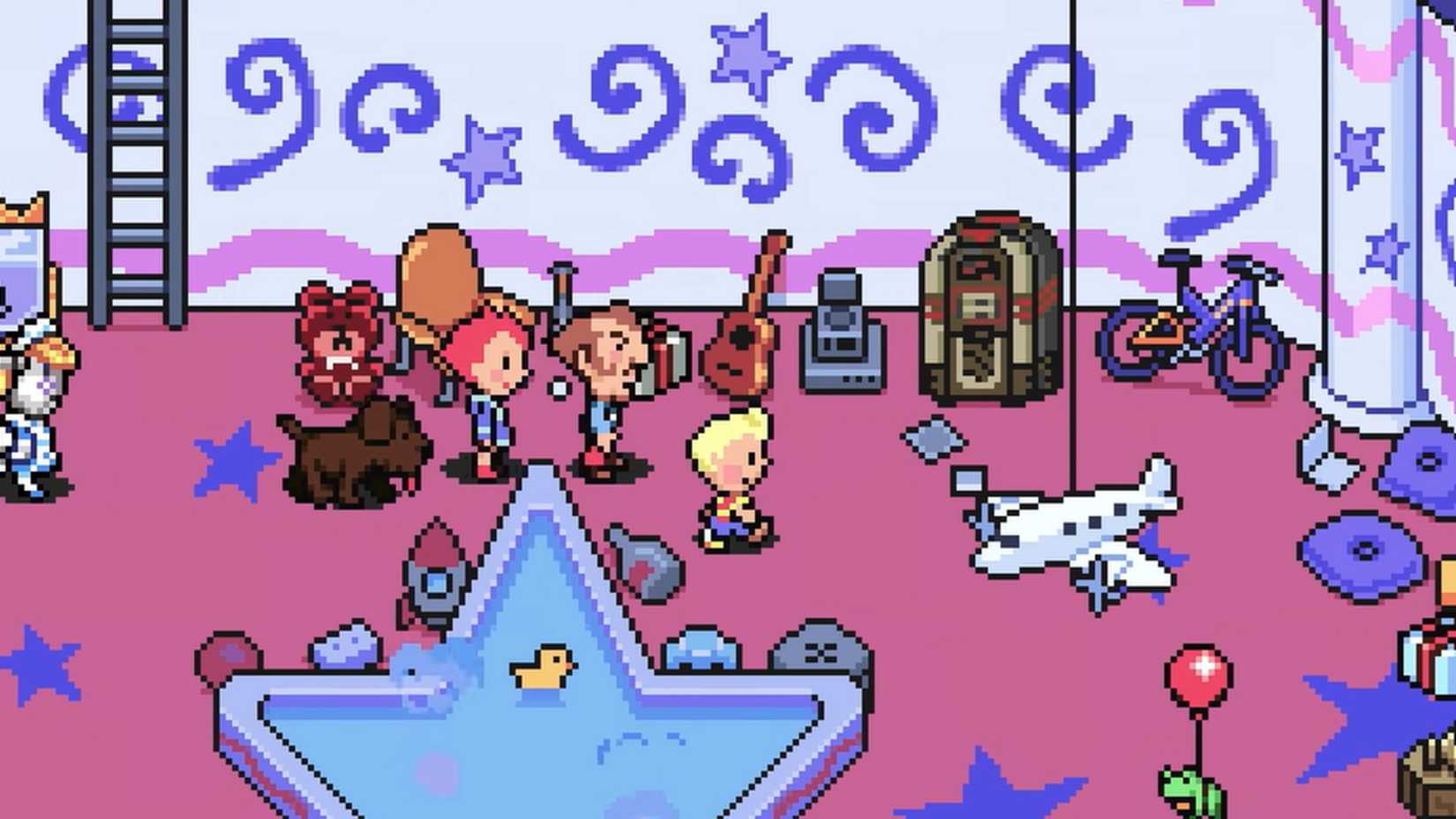
Itoi's vision for EarthBound 64 was that of a 12-chapter RPG that focused on the shifting, evolving nature of our world. Set within a town that would change over the course of each chapter, Itoi wasn't just looking to iterate. He was intent on creating one of the most ambitious games of the decade.
It was the 1990s as well, which meant that Nintendo's unlimited checkbook was open for business. They gave Itoi a sizable bit of money to work with, outfitting his team with 3D software and increasing the size. This was a huge RPG for the N64, which it didn't have enough of, and never truly did, so there was quite a bit of anticipation about what this game might become.
EarthBound 64 was poised to become one of the biggest, most ravenously anticipated titles of the late 1990s.
As development continued, Itoi's vision started to become solidified. The game was built to be a cinematic adventure with multiple playable characters, high-octane action set pieces, and a fast-paced combat system built around rhythmic inputs. This wasn't just a bunch of empty promises, either.
Back in the 1990s, Nintendo had their own dedicated media event every summer known as Space World. It was E3 before E3 was a thing, and Nintendo would eventually leave that behind to join those festivities every year. At the 1999 edition of Space World, Nintendo showcased the latest that EarthBound 64 had to offer.
It was an impressive display, and the mine cart scene in particular stood out. This was a game that clearly had a lot of things going on, and those who were lucky enough to see it in more detail at the show talked about how fabulous the game looked. Nintendo made it very clear that EarthBound 64 was going to come out in 1999, but Itoi and the team failed to meet that date and the game was canceled just one year later.
Handheld Rebirth
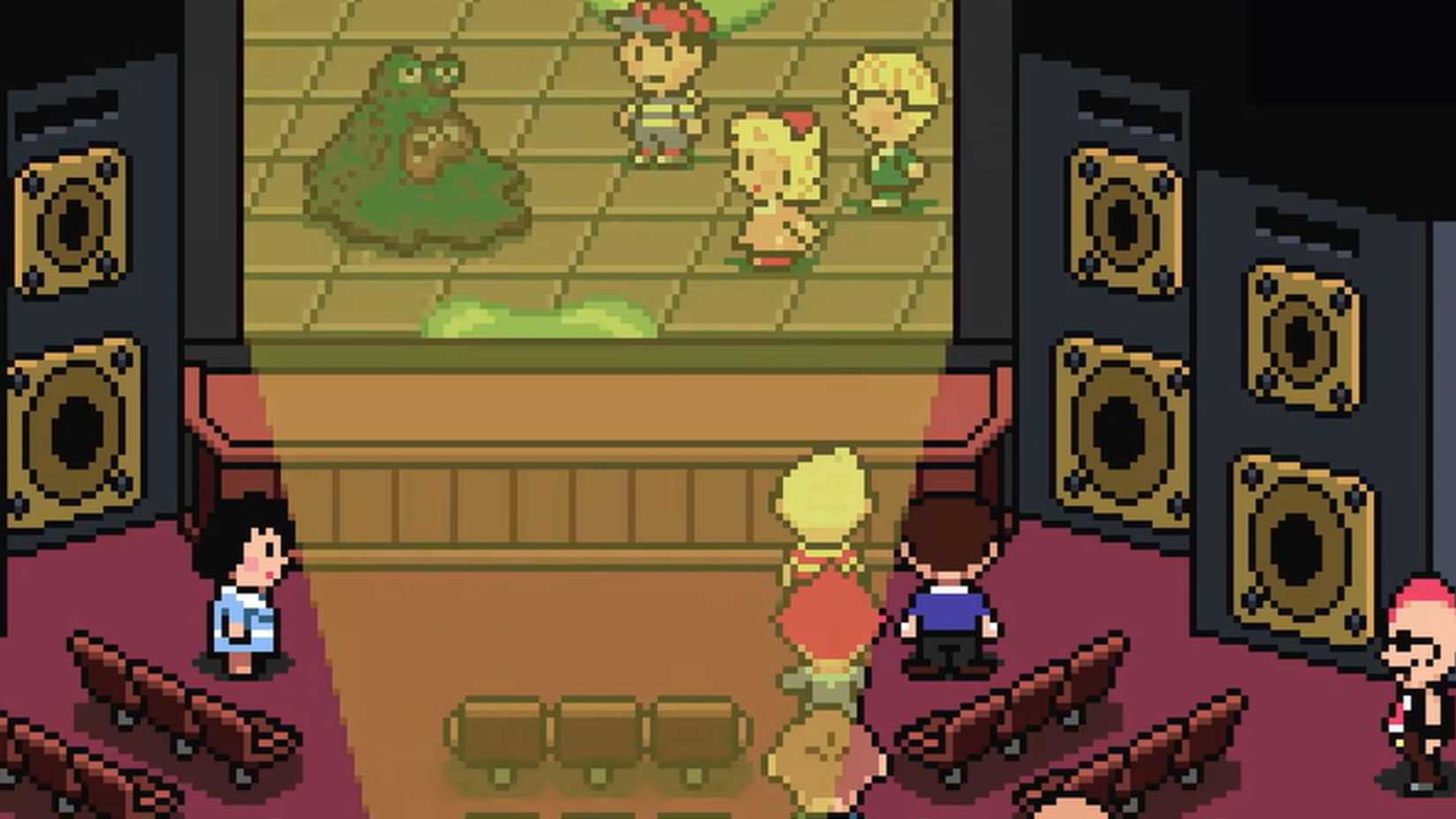
The cancellation hit Itoi and the team hard, so much so that they got together one night just to play the current version of the game all the way through. Itoi described it as a night of emotional whiplash, as people on the team were crying and laughing all at the same time. Something about this game and the way it affected people was truly astonishing.
Despite the cancellation, Miyamoto and the late Satoru Iwata came together with Itoi to figure out the next steps. The three of them conceived a Nintendo GameCube version, as that console's production was partly why the game was canceled to begin with. Nintendo needed all hands on deck, pulling team members from EarthBound 64 to assist, and feeling like the funds being poured into it were taking away from other projects.
Nintendo made it very clear that EarthBound 64 was going to come out in 1999, but Itoi and the team failed to meet that date and the game was canceled just one year later.
Though it was brief, the GameCube version didn't make it very far, and it seemed like the game would remain lost forever. While the N64 version would never see the light of day, Itoi and Nintendo weren't one to give up. Seeing the potential in what the Game Boy Advance could do, Itoi decided to take one last crack at it.
Mother 3 would finally see daylight, launching on the Game Boy Advance on April 20, 2006. Infamously, it came and went without a US release. That has remained true over twenty years later, and has become one of the most requested localizations of all time. It's playable in English thanks to a phenomenal fan translation, and anyone who has wanted to play it by now has, but Mother 3 is still without an official North American release.
Or anywhere for that matter, as it has stayed Japan-exclusive for two decades. Sometimes, it's hard to believe, as this is a game that had a profound, lasting impact on me. Almost ten years ago, I played the fan translation for the first time. Much like Itoi and his team, I laughed, I cried, I felt like I had experienced one of the most important video game stories ever written.
I was not familiar with the franchise during EarthBound 64's troubled development, but I was still in tune with the industry enough to see what was going on. Its strange journey from development to cancellation and rebirth was one of the most fascinating things I'd ever witnessed. Looking back, it feels like the most Mother thing ever, and the emotional hook that the canceled game had on everyone is still utterly endearing.

 NEXT
NEXT
10 Game Boy Advance JRPGs Still Trapped on Original Hardware
For whatever reason, the GBA was home to many JRPG spinoffs.

Mother 3
Released April 20, 2006
ESRB e
Engine M4A sound/music engine

![ELDEN RING NIGHTREIGN: Deluxe Edition [FitGirl Repack]](https://i5.imageban.ru/out/2025/05/30/c2e3dcd3fc13fa43f3e4306eeea33a6f.jpg)

 English (US) ·