.png)
.png) 3 months ago
66
3 months ago
66
As the indie renaissance continues to dominate the gaming sphere at large this year, with one outstandingly creative hit after another, among them is a passion project from Sad Cat Studios that has been long in the making since its initial announcement in 2021. After years of anticipation from its growing fanbase, with nearly a million wishlists on Steam alone, REPLACED is finally here with much to show for its efforts.
I was one of those wishlisters, as the game drew me in almost instantly after just a few minutes with the demo. From its intricately crafted environments to its superbly smooth, John Wick-esque combat to its somber synth tunes that constantly loom in the background, I found myself utterly fascinated by what this team was cooking up. Still, I did my utmost to approach the full release with fresh eyes from the ground up.
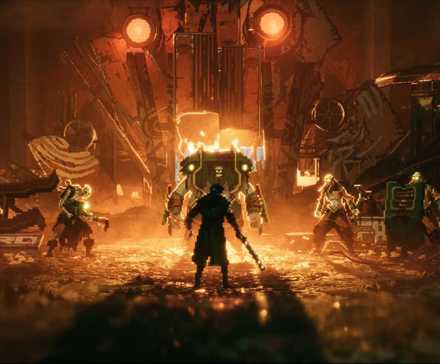
Related
Atari Is Not Surprised By REPLACED's Early Success
Despite releasing alongside some of the year's biggest games, Atari was confident that REPLACED would resonate with gamers.
Now with the scope of Warren Marsh's entire journey in full view, I can confidently say that REPLACED was very much worth the wait in so many ways. That said, there are a few gameplay-related issues that lead to some literal stumbles in certain areas, and they could definitely use some refinement. Nonetheless, despite these hiccups at initial release, the foundation and more are absolutely there for what is a fantastic debut IP for the studio.
A Captivating Cyberpunk World With Impeccable Detail

While 2D side-scroller games normally only let you see so much of their world from a perpetually fixed angle, Replaced does a surprisingly impressive job breaking that mold as much as it's technically able to. From the moment that you take control of Warren's body (who is, in turn, controlled by his creation, R.E.A.C.H.) at the start of the story, the world you step into is one of outstandingly intricate detail that seldom ever falters at any point in your journey.
While the more urban areas of the game are predictably where that attention to detail thrives the most, the rolling meadows and ruins outside Phoenix-City's walls don't necessarily lack for it. The same applies to even the darkest and grittiest areas in repugnant sewers and derelict subway systems, even if they're not necessarily the most appealing. Each area has its own story to tell as Warren fights his way back to the center of the city, and, honestly, the game's visual storytelling even supersedes the characters' at certain points.
It all gives more credence to the game's years-long development cycle, as it genuinely feels like they intended to leave no pixel unpolished. The uniquely cinematic camera work throughout each chapter only amplifies that immersion, and visual depth is seldom sacrificed anywhere, even as the camera effortlessly sweeps from one section of an area to the next. Admittedly, I did encounter a few blip-like hiccups during those scenic transitions in the latter half of the game, but nothing that caused actual gameplay issues.
All in all, I walked away from Replaced only wanting to know even more about its world and to explore what was technically unreachable. In this case, that yearning is far more positive than negative, as the game does let you in well enough to understand it, but the world-building did also do its part to leave plenty more to the imagination (and perhaps a sequel?).
Combat is a Thrill Ride That's Almost Too Overwhelming

Replaced's combat system is a fascinating focal point of the game, because behind its astoundingly impressive mechanics and fluidity, there's still a unique problem with it that almost subverts how much of a marvel it is otherwise.
Essentially, given that R.E.A.C.H. has taken over Warren's body and assumes complete control over his physical functions, that brings with it an impressive set of skills, as it were. This allows him to put up a formidable fight in even the most precarious situations that most normal humans would immediately fold to.
Throughout much of the game, you'll run into mobs of various types of enemies that wield different attacks, and certain ones are further reinforced with shields, hulking armor suits, or speed that renders your normal attacks useless. However, you're by no means left down and out on powerful upgrades that increase your vitality and ability to land stronger attacks more often. By the end of the game, if you don't miss those upgrades, your gun becomes almost ridiculously deadly.

Related
Psychological Horror’s Comeback is a Sign of the Times
Not only are the horror games of today scaring us to our core, but they're also holding up a mirror to our society and fears.
Each enemy encounter in the game brings with it a certain thrill factor, as you get to perform your skills with an incredibly satisfying fluidity that feels akin to John Wick's tiers of badassery. Each hit you make sounds and feels so, so gratifying, often complemented with a shake of the camera that only amplifies your strength. This is exactly how you create confidence in the player in terms of how they grasp a combat system and keep it enjoyable from the first encounter to the last.
As the game progresses, those mobs of enemies you run into become increasingly problematic, as you have to deal with waves of them, often doing multiple mechanics at once. Unfortunately, this is ironically where Replaced's thrilling action stumbles a bit.
Given that the game functions in a 2.5D setting, with all points of combat engagement on a single, fixed plane, those mobs of enemies can become more overwhelming than they should be. Their mechanics end up awkwardly overlapping and stuttering the flow of combat where they shouldn't. I found myself in stun-locks or instances where enemy attacks weren't avoidable despite executing the proper skill to counter them, simply because too much was happening at once.
It ironically feels like an underestimation of the combat system's prowess, and it just pushes things a bit too far, especially on the standard difficulty. This balancing issue, while one that doesn't necessarily ruin the combat experience in the game, is one that I'd suggest be addressed in a future update to help that aspect of the game shine as it deserves to.
Platforming Mechanics Prioritize Style Over Function

Perhaps one of the biggest priorities when it comes to crafting a 2D platformer is ensuring that its actual platforming mechanics stick the landing, literally. Traversal through each section or zone should be well-balanced (within a game's creative parameters), and executing the required abilities to progress should feel polished and reliable. In Replaced's case, its hardcore focus on immersion ends up jeopardizing the stability of those mechanics.
Warren's journey into and around Phoenix-City involves a consistent sequence of platforming mechanics that predictably get more complex as the story progresses. As with a number of modern games these days that involve some degree of platforming in their gameplay, physical points in Replaced's platform sequences are often denoted by all-too-familiar yellow gradients.
While this industry-meta creative design choice has a discourse all its own, it honestly works well enough in this scenario. It fits almost seamlessly into the game's cold corporate settings as well as the urban ones, and honestly didn't feel that distracting.
However, there are moments in the game's progression where a clear intent to do the opposite and camouflage those traversal points is to its detriment. Some of the game's darker-lit areas especially suffer from this, and I found myself awkwardly stumbling around, sometimes for several minutes, with no physical indication of where to go. Then I'd realize that the traversal point was there, albeit barely visible on the wall (particularly the grapple points for your pickaxe) or just under my feet.
This is why level design, especially in a 2D setting, is so pivotal to balance correctly. You can't hyper-focus environmental immersion at the detriment of a player's ability to progress, especially when there's no way to adjust the camera.
There are a few gameplay-related issues that lead to some literal stumbles in certain areas
This leads to one other notable issue with Replaced's platform mechanics: character movement. Despite Warren's amplified prowess in combat on behalf of R.E.A.C.H.'s control, it doesn't seem to carry over well when it comes to traversing environmental obstacles. I found myself struggling at a few too many points with making straightforward jumps or maneuvering across hazardous areas.
Simple actions ended up feeling over-calculated, forcing me to overshoot a landing or fall short of a ledge when I clearly shouldn't. This off-kilter movement left me feeling more and more anxious as the game went on, and I found myself plummeting into fatal mistakes considerably more often than I should, getting kicked back to unreasonable checkpoints (which the development team is in the process of fixing).
If Warren can perform expertly precise moves in a fight every time, why can't he do the same when he needs to get across a room via a simple row of pipes? This haphazard disconnect in the protagonist's physical abilities is something that perhaps could have been remedied with a bit more time in the oven, and hopefully still can be with the help of updates. It's something that the player shouldn't be left saddled with, and sadly tarnishes what can and should be a stellar gaming experience.
A Soundtrack of Insane Caliber and Talent

It's not all that often that an indie game, especially a debut IP, gets an impeccably stacked soundtrack with some truly outstanding vocal talent. Adhering to the game's 1980's grungy alternate America backdrop, Replaced's tracklist is full of surreal and moody synthwaves that are topped off by several powerful lyric songs performed by Marina Thorik, Igor Gritsay, and aygad.
As mentioned in my preview for the game, the song "Void" was a clever and welcome tease for fans during the game's ongoing development cycle. Upon release, there's also "Dusk" and "Rust", also by this incredibly talented trio, that I've since cemented onto my personal playlist.
As if to highlight how impactful this soundtrack is, you can find each of these tracks as unique cassette collectibles in the game itself, which you can then stop and play on Warren's Walkman whenever you want. I'd almost wish that you could run and gun with these songs playing from the cassette on your hip, but perhaps it'd break immersion too much. Nonetheless, it's a really cool feature to have in the game.
Not only that, but the vocal songs in particular are also tied to a certain character in the game, giving them yet another sentimental layer that shows just how beloved this album is by the Sad Cat Studios team.
A Familiar Story That's No Less Poignant Today
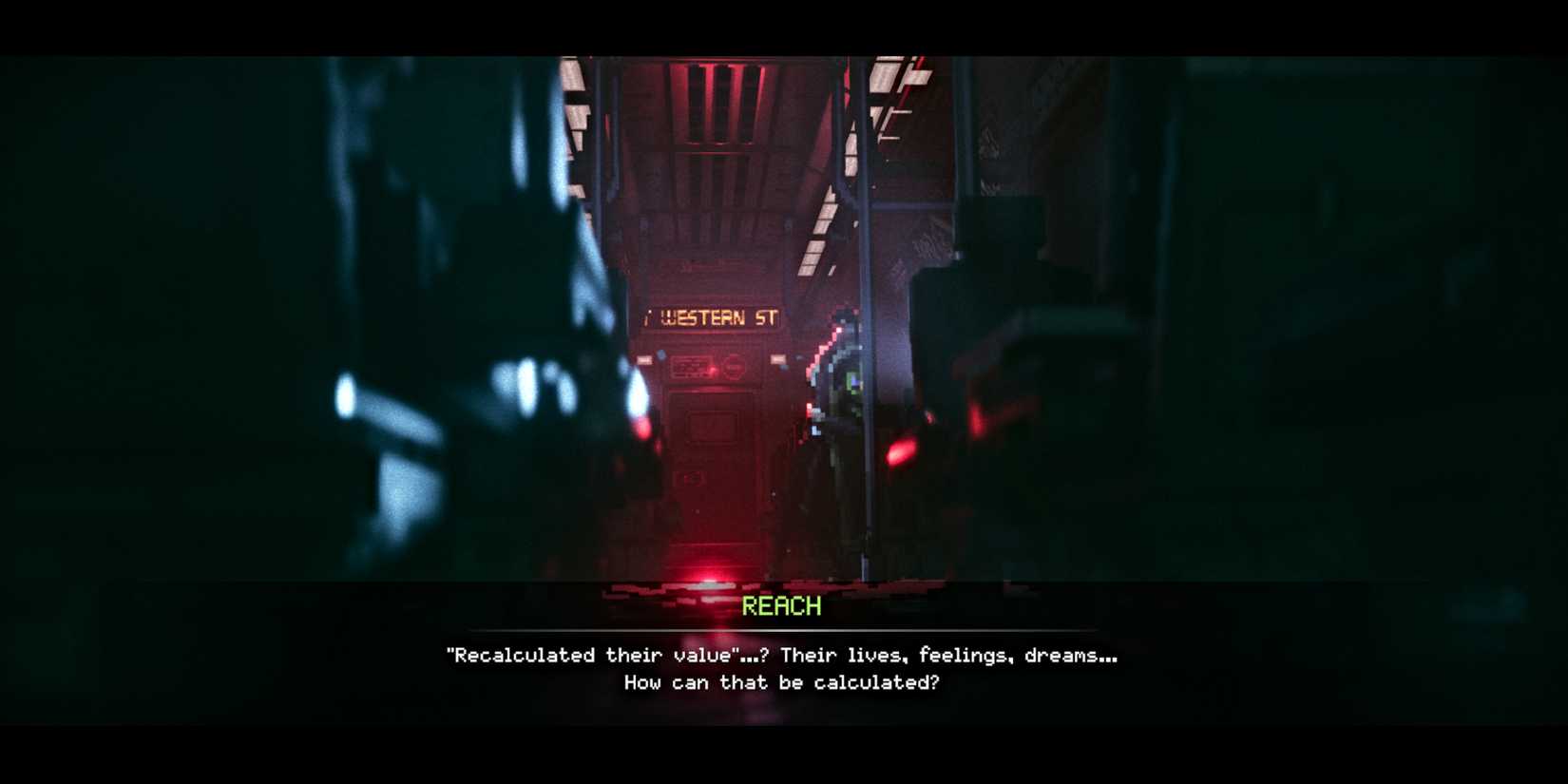
Alongside its pulse-pounding combat and extraordinarily detailed visual backdrops, at the core of Replaced is its emotionally compelling story. While its humanity versus AI premise is one that we're pretty familiar with in media by now, the game still executes its own version of it with exceptional grace, with a relatively small roster of characters that each play their own role quite well.
I found myself more connected to some characters than others. Some felt a bit too much like a narrative trope, while others were more relatable, and emotional twists in their personal arcs pulled at my heartstrings a good bit.
The story puts you in the shoes of Warren Marsh, the creator and mastermind behind an incredibly powerful AI known as R.E.A.C.H. that's set to bring sweeping change to the metropolis of Phoenix City and beyond. That change seems focused on medical advancements, specifically when it comes to matching organ donors, but there's evidently more to it than meets the eye.
At the start, Warren seems like little more than the tireless, self-obsessed scientist who can't stop his work even for a moment. That is, until catastrophe strikes R.E.A.C.H.'s headquarters and casts you out into the wilds beyond the city.
While its humanity versus AI premise is one that we're pretty familiar with in media by now, the game still executes its own version of it with exceptional grace
You're not alone, however, as R.E.A.C.H. managed to implant itself into Warren's consciousness. This leads to Warren's own creation assuming control of his body, for better or worse. From the outset, REACH's directive is to get you both back to headquarters, but that journey is far easier said than done.
The world in and around Phoenix-City is a harsh and unforgiving one, scarred by nuclear devastation and the socioeconomic consequences of an all-powerful corporate entity rising from those ashes to assume control over humanity in the guise of security and prosperity.
As you can guess, Phoenix Corporation is the all-encompassing antagonist of the game, rather than a specific villain sitting on their throne somewhere within it, waiting for you. There is a bit more to it as the story progresses, and a late-stage twist that does make the premise feel more compelling, but that side of the conflict is still pretty predictable.
Where the story truly thrives, honestly, is the journey along the way. R.E.A.C.H. comes face-to-face, quite literally, with the psychological spectrum of humanity through a variety of encounters that start to reshape its scope of understanding. Instincts versus probabilities, emotion versus rationality. Seeing people at their most selfless and compassionate, and also at their most depraved.
All in all, the game does an impressive job of nailing the more personal, human story, though somewhat at the expense of the game's wider scope. The alternate-reality universe in and beyond Phoenix-City alludes to so much potential, and the game's dozens of lore collectibles only exemplify that. But that's essentially where the line in the sand is drawn. In the end, the game intently focuses on one man and the impact of his creation on the world around him, and perhaps that's enough.

Closing Thoughts
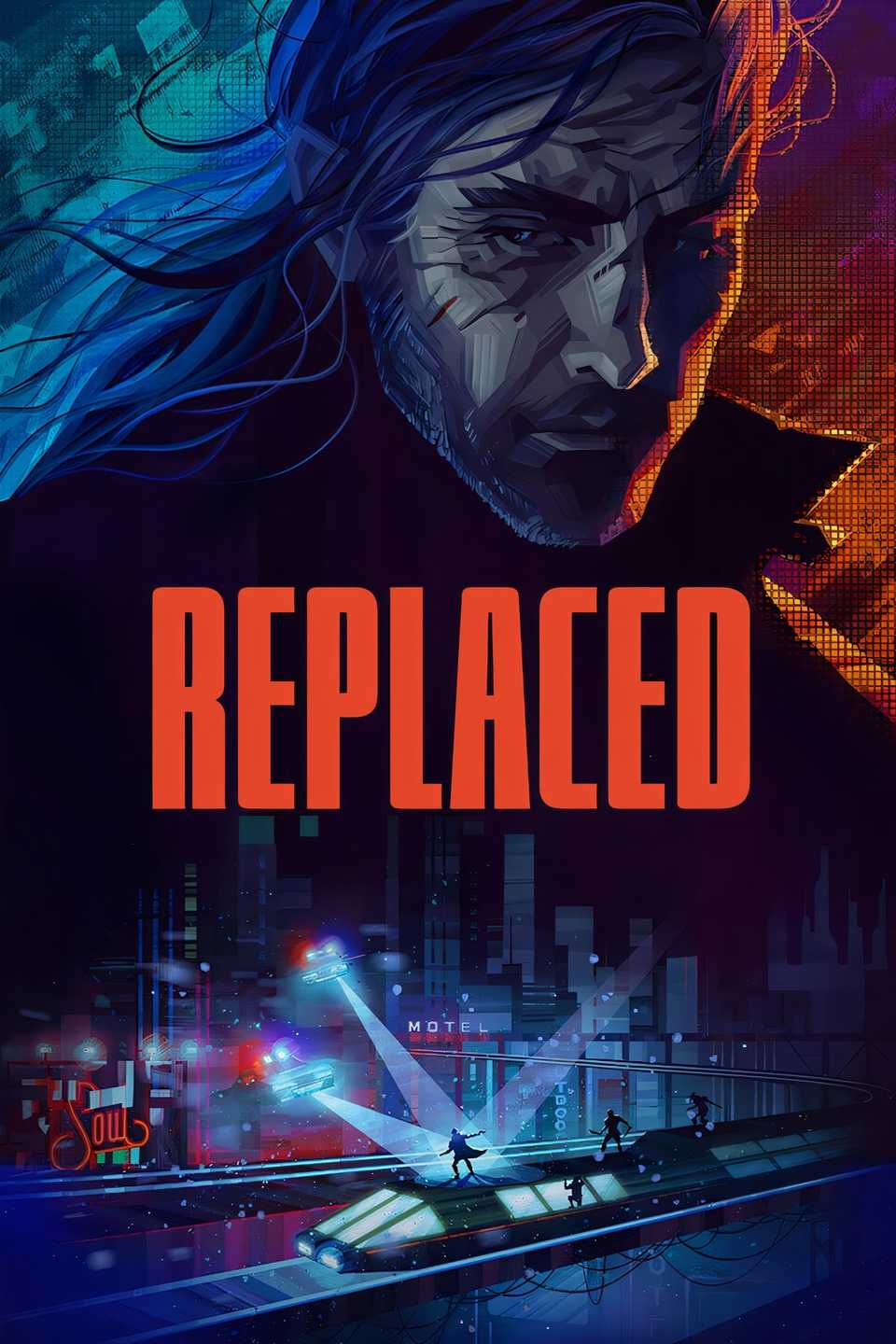
Replaced is a visually stunning 2D platformer that ambitiously strives to give a thrilling and emotional experience in the still relatively exclusive cyberpunk niche. Alongside its numerous incredibly detailed, hand-crafted backdrops, its splendidly fluid combat system feels dynamic and addictingly fun to play from one encounter to the next. That said, the game evidently still needs some polishing in terms of combat balance, along with notably disjointed character movement when traversing through each zone's platform mechanics. However, that doesn't diminish what the game has accomplished from its years of development and clear commitment to detail. It's a truly memorable indie experience that you shouldn't miss out on this year.
Systems


Released April 14, 2026
ESRB Mature 17+ / Violence, Blood, Strong Language
Developer(s) Sad Cat Studios
Publisher(s) Coatsink, Thunderful Development
Number of Players Single-player
Pros & Cons
- Stunning visual storytelling from start to finish
- Incredible soundtrack with memorable vocals
- Combat is fluid and satisfying despite its hiccups
- Platform mechanics feel awkward and unreliable
- Enemy combat needs rebalancing

Next
10 Games to Play if You Love Resident Evil Requiem
If you just beat Resident Evil Requiem and are looking for games that will give a similar experience, we've got you covered.





![ELDEN RING NIGHTREIGN: Deluxe Edition [FitGirl Repack]](https://i5.imageban.ru/out/2025/05/30/c2e3dcd3fc13fa43f3e4306eeea33a6f.jpg)
 English (US) ·