.png)
 7 months ago
157
7 months ago
157

The 1986 adaptation is his most deceptively simple, profoundly moving film
 Photo: Columbia Pictures/Everett Collection
Stand by Me isn’t the first masterpiece from the late Rob Reiner. That title belongs to his directorial debut, 1984’s This is Spinal Tap, the semi-improvised rock mockumentary that had an outsized influence on decades of film and TV comedy that followed it, from Judd Apatow’s movies to The Office (both versions).
Stand by Me is, however, the film that announced Reiner as a studio craftsman of the highest order. It’s a showcase for his deceptively plain shooting style, his brilliant way with actors, and his intuitive but firm grasp of story structure. It equally revealed him as a heartful, compassionate humanist who could forge powerful, empathetic bonds between his characters and the audience.
It’s also the film that began one of the greatest mainstream Hollywood filmmaking runs of all time. In the short span between 1986 and 1992, Reiner made one genre-defining movie after another, with a speed, facility, and apparent effortlessness that still defy belief. He followed Stand by Me, a coming-of-age classic; with 1987’s gorgeously witty meta-comic fairy tale The Princess Bride; 1989’s When Harry Met Sally…, which reframed the romantic comedy forever; 1990’s Misery, a brutally nasty and prescient Stephen King-derived thriller about toxic fandom; and 1992’s A Few Good Men, a consummate courtroom drama that stages a duel for the ages between two eras of film stardom by pitting a burningly hungry Tom Cruise against a snarling Jack Nicholson.
You can pick your own favorite from this wonderful quintet — there are no wrong choices. Stand by Me is the smallest of the five movies, but it might also be the most profound and touching of the lot, and it’s certainly the most quietly sorrowful.
 Rob Reiner on the set of Stand by Me in 1985.Photo: Columbia Pictures/Everett Collection
Stand by Me is adapted from The Body, a Stephen King novella about a gang of 12-year-old Maine boys who set out in the late summer of 1960 to seek out the dead body of a boy they knew, reportedly lying by some railroad tracks, more than a day’s walk away from their homes. It’s a grounded, realist boys’ adventure story, full of mischief and misadventure. It’s also a deeply personal key text for King that distills many of his core themes (bullies, bad dads, friendship, mortality) and some of his biographical details (the narrator, Gordie, is a gifted writer whose father didn’t believe in him) into a simple story that has the feeling of a parable without betraying its naturalism and authenticity.
Reiner tapped deep into that authenticity in his adaptation. He encouraged the screenwriters, Raynold Gideon and Bruce Evans, to refocus the script more fully on Gordie, and foreground his relationship with one of the other boys: Chris, a tough, sensitive, cool-headed boy from the wrong side of the tracks. When the distributors balked at the title of The Body, Reiner had the stroke of genius to rename the film after the classic Ben E. King song that plays over the end credits, emphasizing the story’s nostalgia and bonds of loyalty, and allowing its dread and heartache to recede into a low but powerful background hum.
 Photo: Columbia Pictures/Everett Collection
Most importantly, Reiner nailed the casting of the four boys. Wil Wheaton, as Gordie, has just the right combination of defiance and nerdy frailty. Jerry O’Connell brings subtle shading to the role of Vern, the innocent fool. Corey Feldman is, sadly for him, a one-to-one match for Teddy’s messed-up volatility. And River Phoenix, as Chris, has a natural authority, mixed with a kind of wounded magnetism, that’s astonishing in such a young actor. Each boy carries the specters of their distant or abusive fathers, and traces of a lingering post-war trauma that seems baked into the hopeless backwater they live in. Yet they also have a capacity for joy, loyalty, and bravery that would be the envy of any adult.
Around these four boys, Reiner built a deeply textured, living world through expansive rural location shooting. It’s a short movie, covering about two days’ worth of events in a tight 90 minutes. But the boys’ journey still has a kind of immensity, born from both the film’s inch-by-inch intimacy with the landscape, and the quiet way the script and performances underline the outsize importance of these two days to the four kids’ delicate, developing souls.
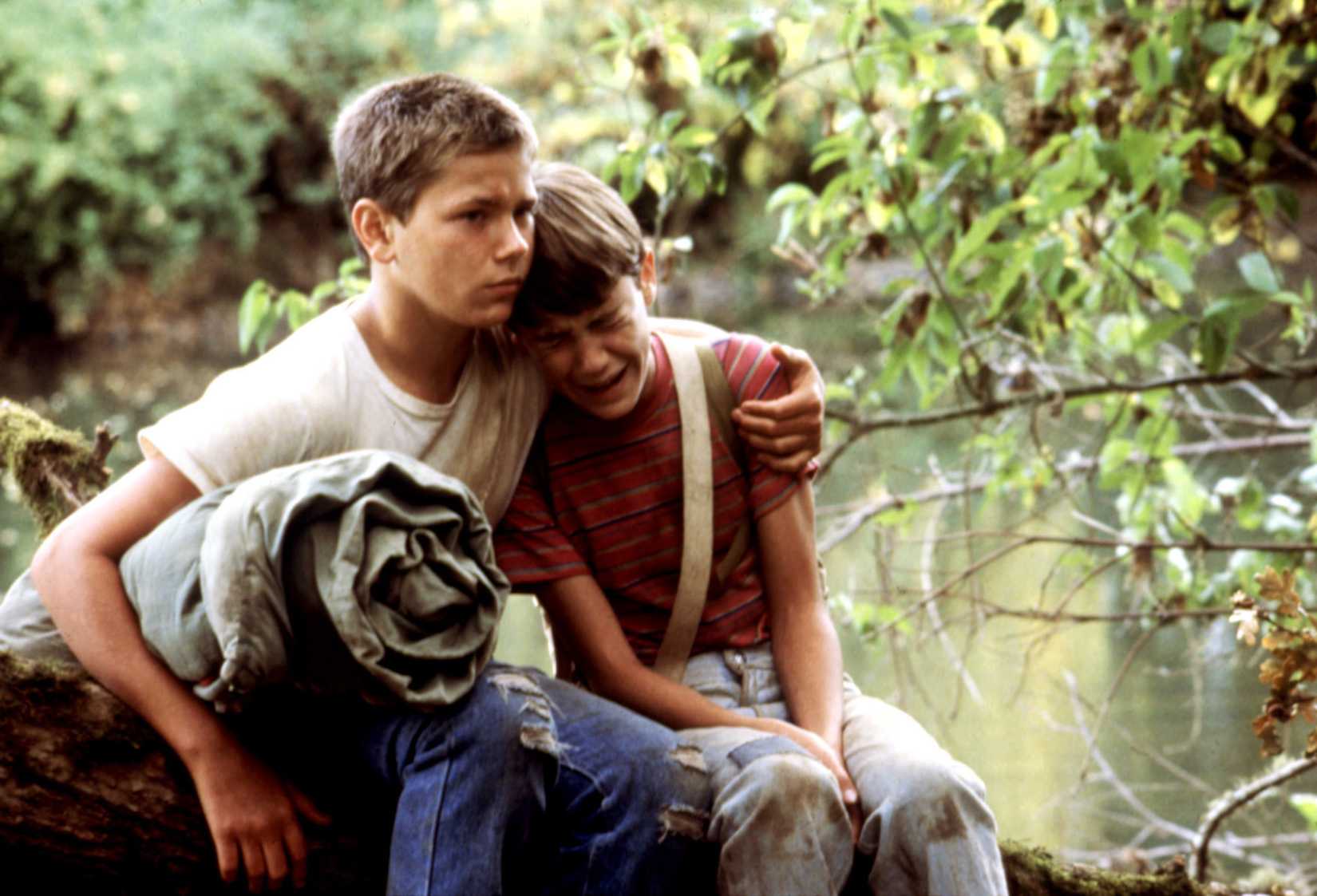 Photo: Columbia Pictures/Everett Collection
The profanity and rawness of some of the boys’ conversations can still be shocking almost 40 years later, not because it’s transgressive, but because it seems so real. Next to the boys, some other characters seem two-dimensional, even cartoonish — like Kiefer Sutherland’s absurdly menacing heel, leader of a gang of teen rebels that wants to beat the boys to the body. But these broad strokes work as a contraction of the boys’ world, throwing their complex inner lives into relief against an adult world that’s either idealized, remote, or threateningly larger than life.
In King, Reiner found a perfect match for his sensibility: complex people in simple stories, ribald humor mixed with an insistent empathy and morality. Stand by Me was instrumental in establishing the author as more than just “the horror guy.” After collaborating again on Misery, Reiner furthered that narrative by bringing King’s novella Rita Hayworth and Shawshank Redemption to the screen at his production company, Castle Rock (named after the town from Stand by Me). The story goes that Reiner was desperate to make it his next film after A Few Good Men, but ultimately relented to screenwriter Frank Darabont, who wanted to direct it himself. It’s easy to see what drew Reiner to Shawshank: its hope, humor, and a sentimentality that comes with a dose of grit.
But Reiner already had his perfect King adaptation. Stand by Me doubles as a perfect expression of Reiner’s warmth and generosity as an artist, and his universal appeal as a storyteller. It’s a joyous film that doesn’t hold sadness, fear, or ugliness at bay. Instead, it welcomes and accepts them as necessary components of a life well lived. There couldn’t be a better time to watch it.
Stand by Me is available to stream on Netflix, or to rent or buy from Amazon, Apple, and similar services.








![ELDEN RING NIGHTREIGN: Deluxe Edition [FitGirl Repack]](https://i5.imageban.ru/out/2025/05/30/c2e3dcd3fc13fa43f3e4306eeea33a6f.jpg)
 English (US) ·