.png)
.png) 4 months ago
99
4 months ago
99


Published Feb 8, 2026, 9:31 AM EST
Elena Chapella (She/Her) is a current Writer for DualShockers, formerly an award-winning journalist for local news stations and newspapers in central Indiana.
Elena is passionate about writing, playing Dungeons & Dragons with her friends, and, of course, playing video games.
When she's not writing, Elena is actually a high school teacher by day. She teaches students essential life skills for adulthood, including job readiness, financial literacy, and college preparation.
Sign in to your DualShockers account
If you've read any of my work, ever, you'd know that I love the Silent Hill games, with Silent Hill f being my latest and greatest obsession since its release. Everything about this game is masterfully done, cementing it as not only one of my favorite Silent Hill games, not only one of my favorite horror games, but one of my favorite games of all time.
Many veteran Silent Hill fans also adore this game, and for many reasons — most of all, though, is how faithful it is to the Team Silent games. There are countless little details that basically reinforce that this game is the most Silent Hill since Silent Hill itself.

Related
Interview: NeoBards Talks Silent Hill f Development, Team Origins and Next Steps
NeoBards, the team behind Silent Hill f, spoke to DualShockers about the development and the strength of the studio itself.
Not only are there tons of parallels between Ebisugaoka and Silent Hill, there are actually just as many similarities between the towns' most important residents: Shimizu Hinako and Alessa Gillespie. In fact, there are so many parallels between the two, it feels like you're playing a Silent Hill game from Alessa's point of view, just in Japan instead of New England.
It's not obvious at first, but as you continue through Hinako's story, the mirroring is indistinguishable.
10 Themes Surrounding Loss of Childhood
Silent Hill has Always Been About Abuse
The Silent Hill series, at its core, has always been about trauma and abuse, and how that leaves people afterward. However, in both Alessa and in Hinako's cases, there are even more themes surrounding the sudden, abrupt loss of childhood and the dizzying effects of having that ripped away from you.
With Alessa, ever since she was in single digits, she had been forced to live as a martyr, with a cult (called The Order) expecting her to become pregnant with god; her mother, Dahlia Gillespie, made sure that she was tunnel-visioned with this outcome, much to her detriment. Even if this included burning her in a ritual.
With Hinako, her loss of childhood stems from her fears of marriage, best represented by one of the in-game monsters, the oi-omoi. In Japanese, oi-omoi can have several meanings depending on the kanji — and purposefully, no kanji was revealed for this creature, so the translation could be anything from "many thoughts" to "large responsibility" to even "drive out heaviness," all phrases that can work in Hinako's situation.
The oi-omoi is composed of several dolls that look similar to the one we see Hinako throw away, and it continuously cries and wails, desperate to be heard — and it even hop-scotches to you instead of walking. Throwing away your childhood is an absolute tragedy, and it's exactly what happened to both of these girls.
9 The Girls had One Close Friend
But Were They a Good, TRUE Friend?
When we first play Silent Hill, it seems that Alessa is completely isolated and alone; it's not until Silent Hill 3 that we learned that she had one, true friend: Claudia Wolf. Claudia had looked up to Alessa, with the girls seeing each other as sisters, but Claudia ended up taking things way too far by the time we met her again as Heather Mason.
Claudia is working tirelessly to carry out The Order's wishes, even though Alessa (and eventually Heather) had made it clear to her that she does not want to go through with this. The very idea is torturous, but Claudia develops a sick sense of justice, and an even sicker sense of worship, in making sure that Alessa carries it out.
In Hinako's case, we see the immediate friendship and chemistry between her and Shu Iwai, a boy with a gift for pharmaceuticals. They were childhood best friends, playing Space Wars together and seeing each other as equals. He gives Hinako medicine for her headaches, which seems all fine and well — until we learn that the red capsules are actually comprised of White Claudia, a dangerous, hallucinogenic drug — and Shu knew about these effects, still giving them to her anyway because he didn't want to watch her get married.
While both of these girls had friends that appeared to care about them, they ultimately followed their own agendas, putting the entire friendship into question in the first place.
8 Involvement with White Claudia
Directly and Indirectly
Speaking of the White Claudia, it plays a crucial component in the entire Silent Hill franchise, but most especially in the first game and in SHf, especially when it involves Alessa and Hinako.
White Claudia (when processed and made into a liquid, called PTV) is The Order's go-to for rituals and sacrifices, and Alessa's rituals were no different. Even worse, while she was recovering from her burns, she was given White Claudia to keep her alive, causing her horrific pain and hallucinations on top of her current suffering.

Related
In Ebisugaoka, the White Claudia is called the kakura-makakura, referring to how users of the drug end up face-to-face with their inner selves — just as we see happening to Hinako in her bedroom. The Red Capsules that we take throughout the entire game are comprised of White Claudia, and Shu knew this, knowing what it would do to her, and gave them to her anyway.
The White Claudia is essentially a hidden character present in the entire series, slipping under the radar for many in the first game, but returning with a vengeance in nearly every game onward.
7 Their Personalities Changed After Trauma
They Used to be Cheerful
When Silent Hill f was first being introduced and advertised, Shimizu Hinako was described as: "A teenage girl struggling under the pressure of expectations from her friends, family, and society. Cheerful and energetic as a child, she's grown to become much more restrained, and now hardly smiles."
Even in the game (most prominently in the Shimizu Residence) we see all the various events in her home, social, and school lives,
Tragically, Alessa is very similar; she was just a little girl that just wanted to be with her mommy, but the trauma and abuse that she endured made her into a complicated "antagonist" of the games. By the time we finally meet Alessa ourselves, she's a shell of the memories that we saw of her earlier.
In fact, the only time we see either of these girls genuinely smile is in fan art.
6 Hometown Filled with Horrors
Ebisugaoka and Silent Hill are Also Parallels
It's easy to talk about the countless parallels between Hinako and Alessa, but their hometowns, Ebisugaoka and Silent Hill respectfully, are also parallels of each other. So much so, in fact, I referred to them as sister cities in my official review of the game.
Some wouldn't immediately think of how this would be related to the girls, but the thing is, your environment directly influences the kind of person you grow up to be. The fact that both of these environments are so similar could only mean that the kind of people it produces are going to also be similar.
Both Ebisugaoka and Silent Hill are poorer coal-mining towns that house an intense religious following, leading to a unique foundation for both of the girls' lives.
5 Bullying Made Them Outcasts
Fitting in has Never Been Harder
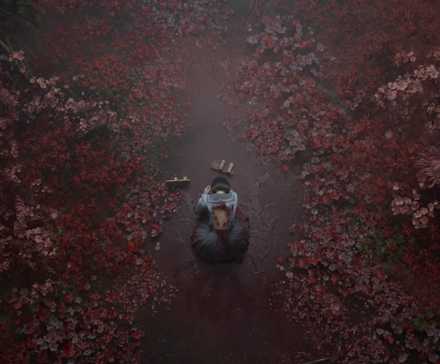
Silent Hill f showcases bullying in a slightly different way — one that's more fitting to how bullying actually happens in Japan. Hinako, being a tomboyish teenager who doesn't immediately fit in, is a prime target of this bullying, whether it's directly from her so-called friends or indirectly with the Origami of Grievances.
The bullying Hinako faces reinforces her position as an outcast, known for not acting like a proper woman and being ostracized because of it. We see this prominently with the origami that we find in Ebisugaoka Middle School — with many of them in Rinko's handwriting.
Related
Alessa, on the other hand, faces the bullying that's commonplace here in America: direct, in-your-face, and inescapable. Look no further than what we find in Midwich Elementary School, all the way down to multiple carvings on her desk, saying that she's a witch, a thief, and that she needs to drop dead.
Alessa's bullying is a prominent plot point in the game, to where, as a form of vengeance, her classmates were manifested as three different monsters: the Grey Children, Mumblers, and Larval Stalkers. The Grey Children are directly linked to the classmates that would bully her.
Oh, on a more lighthearted note in relation to their schools: their uniforms are even similar, as Alessa's uniform was initially inspired by typical Japanese school uniforms. It was adjusted to look more Americanized with Silent Hill: Origins, however.
4 Grew Up in Abusive Homes
Some People Shouldn't be Parents
In the opening cutscene of Silent Hill f, we see immediately that the Shimizu household is toxic, with an alcoholic, violent father, and a spineless, enabling mother. We get a solid taste right off the bat, but we don't get the full extent of their abuse (such as Kanta, Hinako's father, throwing a knife at her and selling her off as a bride) until later on.
On the other hand, with Alessa, her mother Dahlia is a leader of Silent Hill's underground cult, The Order, and is raising her daughter in the exact same faith. However, unlike normal church indoctrination, Dahlia had made the discovery that Alessa was particularly special, so she was selected to become impregnated with their god, later birthing that god after a grueling incubation.
Neither of the girls had the chance to truly be children, forced to grow up unbelievably quickly in response to the abuse they're facing at the very people who should be protecting them. Some people are simply unfit for parenthood, and it's clear that the parents highlighted in these games are part of that demographic — everyone, that is, except for the one and only Chad, Harry Mason.
Oppression is a common motif with both girls, with Hinako's parents representing post-war traditionalism and Alessa's mother being a literal cult figurehead, their lives are so suffocating we can feel it from here.
3 Cults Targeted and Groomed the Girls
Both May Even be The Order
If you've played any Silent Hill game at all, you'd have at least heard about The Order, the antagonistic doomsday cult that serves as catalyst of essentially everything that's going on with Alessa (and by extension, Silent Hill itself).
Cults have played such a predominant role in the Silent Hill games, so many of us were wondering how this was going to manifest on the other side of the world in an entirely different country. In f, we see that the main "cult" figure is actually a family (which, given the setting, is honestly fitting) — the Tsuneki Clan. This is the clan that Fox Mask (real name Kotoyuki) is from.
Based on how the kudzu Kamon (family crest) looks when compared to the Mark of Samael/the Halo of the Sun (The Order's primary symbol), many fans are left theorizing if the Tsuneki Clan is actually an extension of The Order, especially considering how the White Claudia was brought in by a missionary. There is no such thing as coincidence in the Silent Hill games.
For reasons that we discover later on, both girls were highly coveted by these cults, and were targeted as such, with cult members trying to groom them into the exact person they need for their agendas.
2 Splitting in Two for Happiness
A Tragic Resort
Silent Hill f predominantly focuses on the internal struggle Hinako has about getting married, with two versions of her living within her mind: Shimizu Hinako, who she has known since birth (catch the maiden name), and just Hinako, who is wanting to go through with her wedding to Kotoyuki. However, this becomes more than just metaphorical, but literal, by the time we get through the Shimizu Residence and encounter the Shiromuku.
It's easy to think that this is the result of the White Claudia, however, there's one particular detail that reframes everything. When trying to get all the endings in Silent Hill f, specifically, in The Fox's Wedding, Hinako confesses to Shu that she wishes that she could just split herself in two, with one side getting married and the other staying behind and playing pretend forever. With one little wish, there's a high likelihood that Hinako actually manifested this herself, and the two Hinakos are literal.

Related
Silent Hill f: 10 Best Omamori Charms
You can equip different omamori charms to help you throughout encounters in Silent Hill f. These are the best ones.
Similarly, in Alessa Gillespie's case, after she was burned alive, she manifested a split of herself directly and intentionally, pulling out her last resort to make sure The Order couldn't get what they wanted. She was just so desperate to experience any form of happiness in her life, that she split herself in two so that it could happen. While Alessa herself stayed behind in her torturous existence in Silent Hill, constantly drugged and under spells that kept her in pain, her other self was found, adopted by Harry and Jodi Mason, named Cheryl, and actually got to experience this joy.
In the first game, Cheryl and Alessa end up together again, merging to be reborn as Heather Mason, who takes over her own life from there. However, in Silent Hill f, both versions of Hinako don't merge with each other, but rather, learn to co-exist in spite of their fears, a far more hopeful ending than the tragic last resorts Alessa had to run down.
1 Both Girls Hold Immense Divine Power
They Never Stood a Chance
What makes these two girls so important in the first place? They're ostracized in essentially every aspect of their lives, yet coveted by cults (which is something that often happens with IRL victims; cults target the vulnerable), so on the surface it wouldn't make much sense. That is, until you get to the true ending of Silent Hill f, Ebisugaoka in Silence — while in Alessa's case, it was made clear from the very start.
The answer is simple: both Alessa and Hinako are girls born with immense divine power, so it's only natural for bad people (or even gods) to want to get their hands on that power. When there is someone young with immeasurable talent, there will always be someone far older and far more evil who plans to exploit them.
The only difference is that Hinako was unaware of her powers her whole life, while Alessa was raised with them front-and-center in her mind, allowing her to be much stronger by the time she reaches Hinako's age. Plus, after the events of the first game, Alessa is regarded as a saint, a martyr despite everything she tried to erase herself from The Order entirely.
So when we finally learn this tidbit about Hinako, it slowly starts to dawn on us that we've basically been playing as Alessa, but in an entirely different way — and it's magnificent.

NEXT
10 Details From Silent Hill f Western Audiences Would Completely Miss
If you aren't Japanese, don't live in Japan, or haven't even studied abroad, there are many details that you might miss in Silent Hill f.
Released September 25, 2025
ESRB Mature 17+ / Blood and Gore, Intense Violence, Partial Nudity
Developer(s) Neobards Entertainment




![ELDEN RING NIGHTREIGN: Deluxe Edition [FitGirl Repack]](https://i5.imageban.ru/out/2025/05/30/c2e3dcd3fc13fa43f3e4306eeea33a6f.jpg)
 English (US) ·