.png)
 7 months ago
95
7 months ago
95

A bigger, more international jury does not mean one with broader taste
 Image: The Game Awards
Analysis of the makeup of the jury for The Game Awards — which comprises specialist gaming outlets, mainstream media organs, and influencers from around the world — reveals a voting body that is continuing the steady growth and internationalization that have characterized its last five years or so. But the bigger and more diverse the jury gets, the more conservative its choices seem to be.
The Game Awards publishes a full jury list every year on its website. In 2024, the jury had 134 member organizations. In 2025, the number has risen to 154, a 14% increase. The balance of international representation remains more or less the same, but the presence of some geographical or linguistic areas grew more slowly than others. In real terms, the influence of the U.S. — which didn’t grow its presence at all — shrunk, as did that of East and Southeast Asian countries. Meanwhile, Latin American and (particularly) European outlets increased their standing on the jury.
The biggest winner was France, which almost doubled its presence from five jury members to nine. Among the more influential nations, Brazil, Mexico, and the U.K. increased their representation by more than one vote, but Japan, China, and South Korea did not grow at all.
Hungary is represented on the jury for the first time, as are Hong Kong and Taiwan. The latter two additions feel particularly notable, increasing the Chinese-language voting bloc considerably, although these areas are quite culturally distinct from mainland China and won’t necessarily share the same gaming tastes.
 The U.S. has the biggest representation of any country on the jury, but unlike others, it's not growing.Image: The Game Awards
With 24 outlets, the U.S. still has by far the largest representation of any single nation on the jury, but it makes up just 16% of the vote. Rolled together with other English-language publications from the U.K., Canada, and Australia, it creates the largest bloc on the jury, at 30.5% of the vote. But only just. With 26.6% of the vote, Europe is just behind, and closing the gap.
A few mainstream publications — like Esquire, Wired, the London Times, and French-Canadian newspaper Le Devoir — rank among the new jury members. But the specialist gaming press still forms the overwhelming majority of the jury. There seems to be a minor effort to improve the jury’s doubtful expertise in mobile gaming, with the addition of Pocket Gamer and Pocket Tactics in the U.K., although this is balanced by the loss of Touch Arcade.
The overall picture is still of an earnest attempt to create a jury that’s genuinely globally representative, only more so, and at an ever-larger scale. But — unlike the Oscars, where a fast-growing film Academy has led to more adventurous choices and better representation for international cinema — the growth of The Game Awards jury isn’t leading to a more diverse selection of nominated games.
In fact, it’s quite the opposite. Up to the addition of non-English-language publications in 2019, nominations and winners in some (if not all) categories were noticeably more likely to favor smaller and more creatively risk-taking games. Pre-2019, the winners of the art direction category were solely indie games: Ori and the Blind Forest, Inside, Cuphead, and Return of the Obra Dinn. Since the internationalization of the jury, it has rewarded the art direction of much bigger productions like Ghost of Tsushima, Elden Ring, and Alan Wake 2.
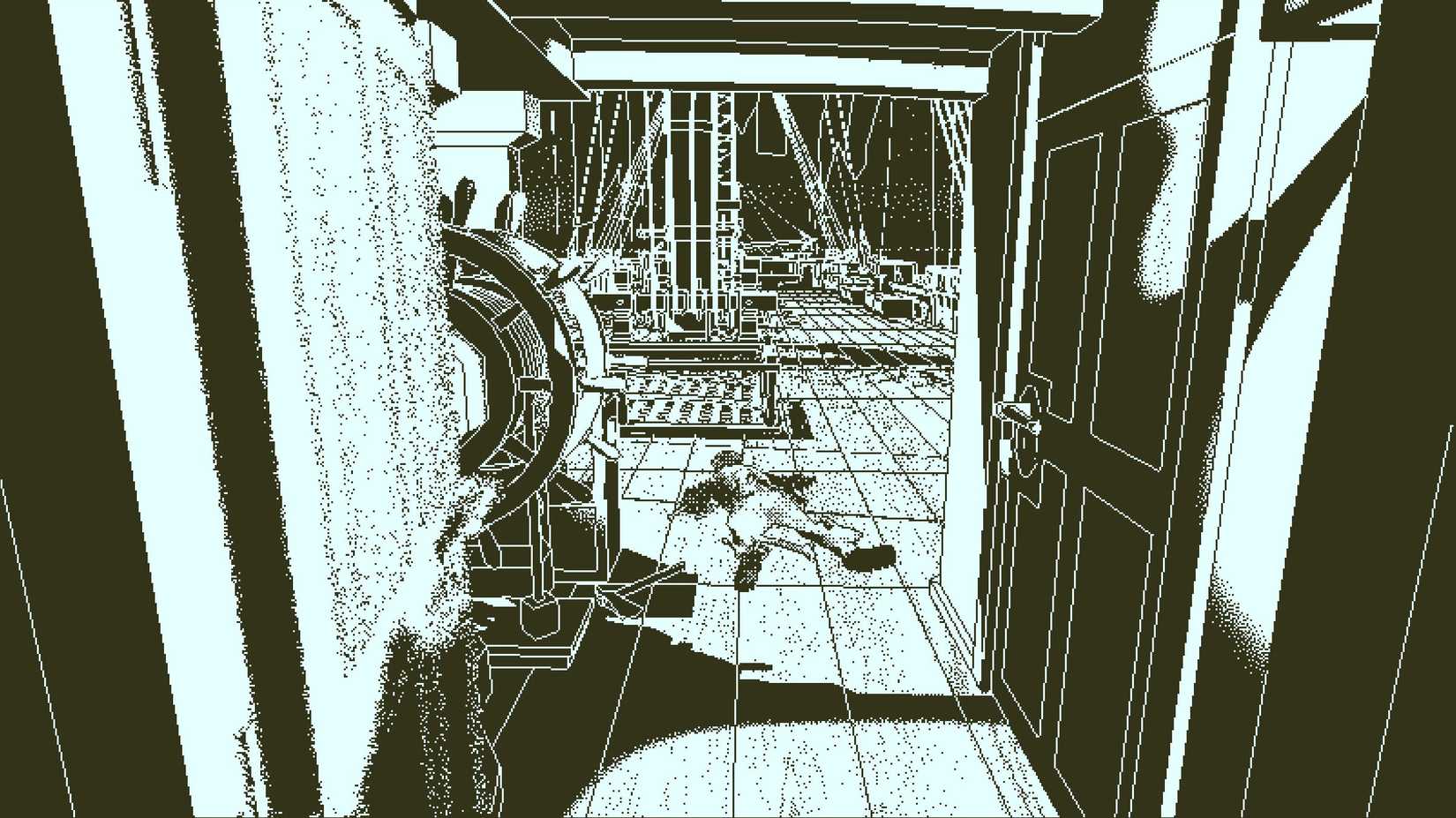 Return of the Obra Dinn: this used to be what a Game Awards winner for Art Direction looked like. Not anymore.Image: Lucas Pope/3909
It’s a similar story in the Narrative category, which up to 2019 featured winners like Her Story, What Remains of Edith Finch, and Disco Elysium. Since then, it’s been more likely to see something like The Last of Us Part 2, God of War Ragnarӧk, or Guardians of the Galaxy be recognized for storytelling.
Variety in the nominees is being squeezed, too. In 2025, three games — Clair Obscur: Expedition 33, Death Stranding 2: On the Beach, and Ghost of Yōtei — make up three of the five nominations across all the major craft awards: Best Game Direction, Best Narrative, Best Art Direction, Best Score and Music, and Best Audio Design. With just two further nominees in each category, that doesn’t leave a lot of space for other games to fight for recognition.
It’s not that the craft of AAA games is less deserving of recognition than the artistry of the indies. But it does seem to be true that smaller games are having a harder time penetrating the consciousness of the large international jury, and the jury’s aggregate taste is becoming ever more mainstream and homogenized.
This surely wasn’t the intention of The Game Awards’ organizers as they grew the voting body, but it's an issue that has to be reckoned with. Perhaps a new nomination process, relying more heavily on small specialist juries of the kind The Game Awards employs for its esports and accessibility awards, is what’s needed. Otherwise, we’ll continue to see an awards ceremony where a more diverse jury chooses less diverse games.





![ELDEN RING NIGHTREIGN: Deluxe Edition [FitGirl Repack]](https://i5.imageban.ru/out/2025/05/30/c2e3dcd3fc13fa43f3e4306eeea33a6f.jpg)
 English (US) ·