.png)
 1 month ago
38
1 month ago
38

Published May 4, 2026, 3:02 PM EDT
Why Thrawn’s greatest enemy in Star Wars isn’t the Rebels
 Image: Del Rey
Few Star Wars characters are as intriguing and complex as Grand Admiral Thrawn. Born Mitth’raw’nuruodo of the Chiss Ascendancy, the blue-skinned, red-eyed strategist isn’t just another Imperial villain — he’s the closest thing the galaxy has to a pure intellect. He rarely relies on brute force or ideology. Instead, Thrawn studies art, culture, and behavior, turning entire civilizations into solvable equations.
First introduced in Timothy Zahn’s 1991 novel Heir to the Empire and later folded into canon through Star Wars: Rebels season 3, Thrawn has remained remarkably consistent across timelines. He’s a tactician who believes anything can be understood if you look closely enough. However, that belief runs headfirst into Star Wars’ defining contradiction. For all his precision, Thrawn operates in a universe governed by the Force — something fundamentally irrational by design. No matter the timeline, it’s the one variable he’s never been able to solve.
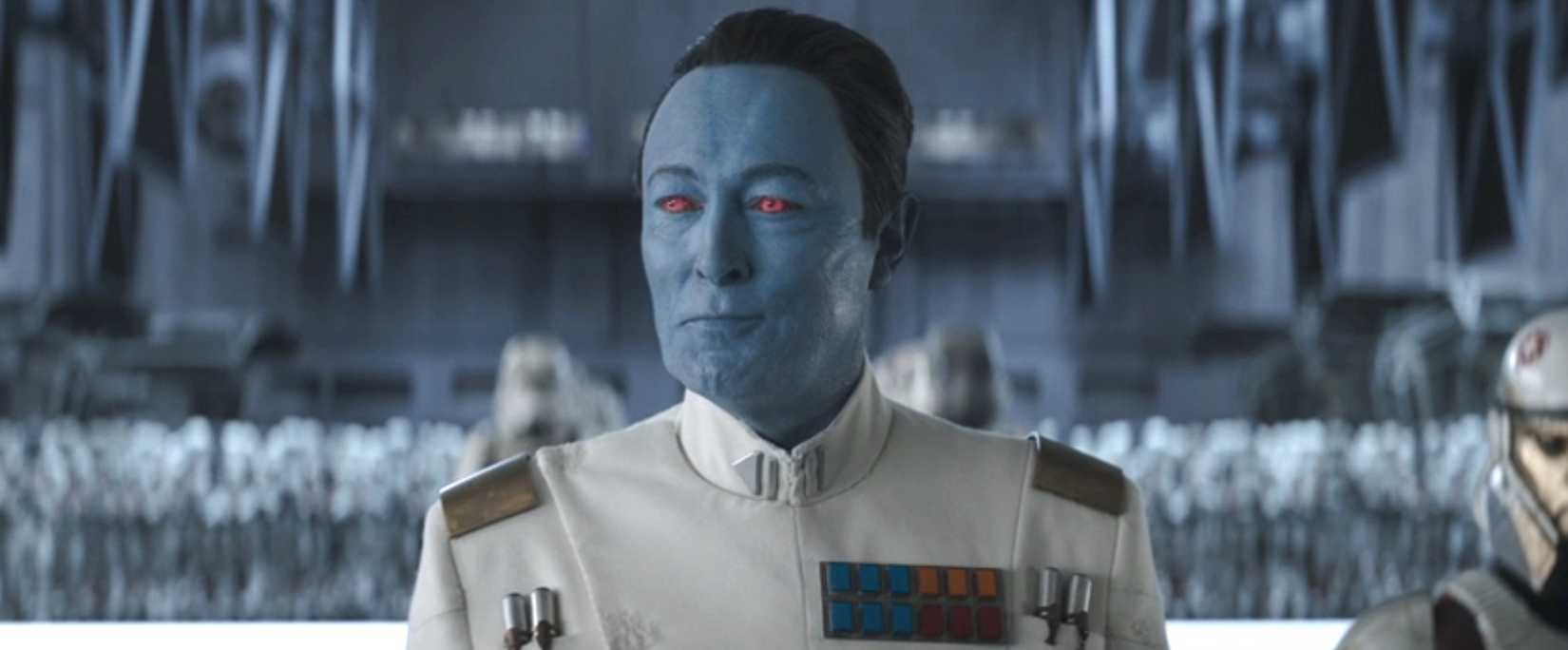 Image: Lucasfilm Ltd.
The Force becomes Thrawn’s first real roadblock when he enters canon in Rebels. He comes face-to-face with the ancient Bendu on Atollon, a Force-sensitive creature that claims to exist in the center of the Force. Neither ally nor enemy, Bendu sits completely outside Thrawn’s framework. As with everything he’s previously faced, Thrawn approaches the encounter tactically, attempting to eliminate the variable outright — only to have Bendu laugh in his face. You can’t outmaneuver something that isn’t trying to win.
Poetically, Bendu even foreshadows Thrawn’s next encounter with the supernatural and unknowable: “I see your defeat,” he says. “Like many arms surrounding you in a cold embrace.” The line pays off in the Rebels finale, when Thrawn is dragged into exile by the purrgil, massive space whales that can jump into hyperspace at will. He isn’t cleanly defeated so much as removed from the board. Moments like these don’t just challenge Thrawn, they totally break the logic he relies on.
Thrawn wasn’t seen again in Star Wars screen media for more than a decade, until his live-action debut in season 1 of Ahsoka. Time has clearly taken a toll on him, but he’s adapted, expanding the limits of his own framework to survive. Stranded on the desolate planet of Peridea, the long-forgotten home world of the Dathomiri people, he aligns himself with the Great Mothers, an ancient sect of Nightsisters, and begins to use their mysticism to his advantage rather than rejecting it outright. Still, the tension remains between Thrawn and the unknowable. The Force continues to elude him, subtly framed by the Great Mothers as a “loose thread” they didn’t foresee, and one Thrawn may not be able to account for.
This conflict between Thrawn and the supernatural isn’t new — it’s been baked into the character since Heir to the Empire. Long before the Nightsisters, Thrawn attempted to solve the Force by controlling it with the ysalamiri, lizard-like creatures that can nullify the Force, and the unstable clone Jedi, Jooruus C’baoth. Yet both of these elements prove unstable and unnatural, constantly threatening to evade Thrawn’s control, reinforcing the limitations of the way he accounts for systems, but not for forces that refuse to behave rationally.
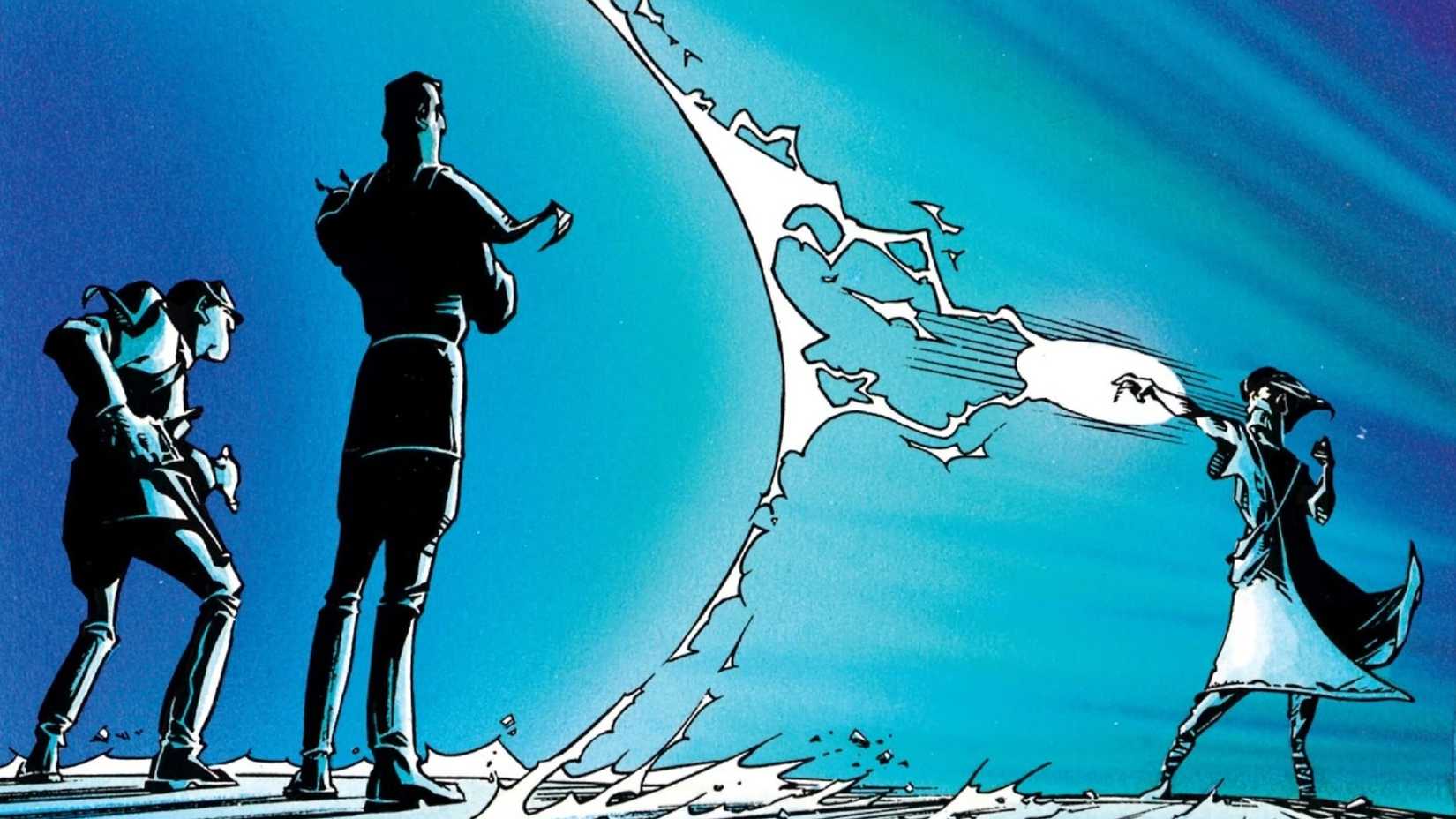 Image: Disney/Dark Horse
It makes total sense to constantly put a character like Thrawn up against something unseen, unknown, and often misunderstood. His militaristic mindset and tactical precision represent a kind of intellect and order, whereas the Force is both total ambiguity and contradiction rolled into one. Thrawn reduces people to pieces on a board, but the board itself doesn’t follow consistent rules.
Can Thrawn’s genius ever fully account for the unknowable? Star Wars still hasn’t answered that question. Across books, animation, and the Mandoverse era, Thrawn continues to survive, adapt, and recalculate. But his greatest strength — his ability to understand everything — may also be his greatest limitation. That’s why the gap between Thrawn and true victory may never truly be reconciled. He can solve any war put in front of him, but the Force isn’t a war. It’s a rogue element that makes winning impossible to define.

![ELDEN RING NIGHTREIGN: Deluxe Edition [FitGirl Repack]](https://i5.imageban.ru/out/2025/05/30/c2e3dcd3fc13fa43f3e4306eeea33a6f.jpg)
 English (US) ·