.png)
 5 months ago
122
5 months ago
122

Published Feb 4, 2026, 1:45 PM EST
Overwatch is back (again)
 Image: Blizzard Entertainment
In 2022, Blizzard Entertainment released Overwatch 2, the next iteration of its team-based hero shooter that promised the next era of Overwatch. Three new heroes, sweeping hero reworks, a new seasonal, free-to-play model, and cooperative Story Missions that would push the world of Overwatch in new directions were implemented to establish Overwatch 2 as a proper sequel.
Reception to the "2" in Overwatch 2 was mixed at the time. The original Overwatch was subsumed by Blizzard's retitled game, and some changes, like the scuttling of Assault maps and new game mode Push, perturbed many players. The game's PvE Story Missions weren't as "highly replayable" as promised. They were boring. Overwatch went from a one-time purchase to a game supported by paid battle passes, pricey cosmetics, and pay-to-play heroes.
In recent years, Blizzard's Overwatch team has focused on what has resonated with players. All heroes became free to play. Loot boxes returned. In 2025, with the addition of a new Perks system and Stadium mode, Overwatch 2 finally justified itself as a sequel. But as of Feb. 10, Blizzard is walking that 2 back, renaming Overwatch 2 to... Overwatch. It's a decision that will no doubt leave some fans puzzled and onlookers in disbelief.
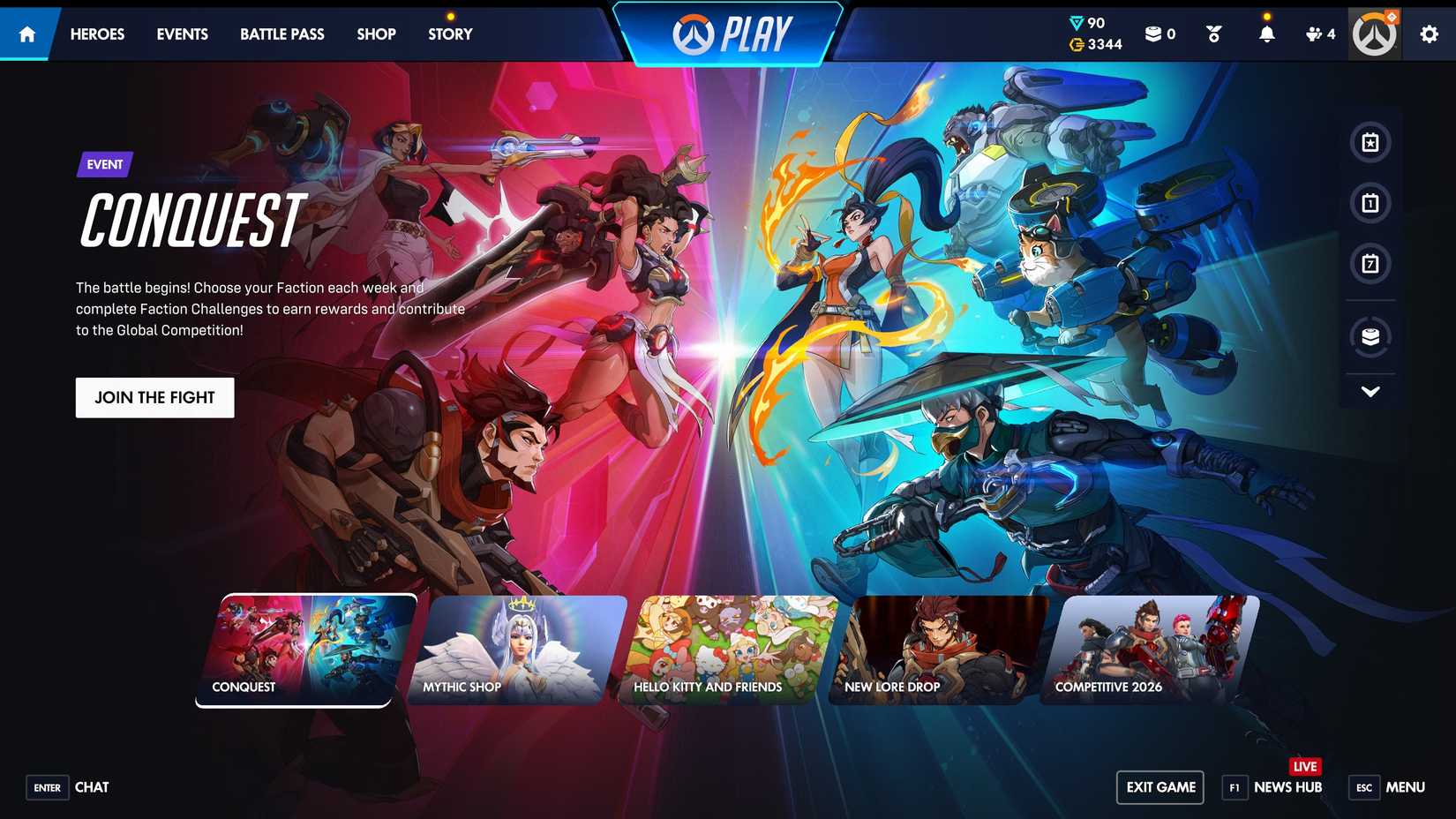 Image: Blizzard Entertainment
During a recent visit to Blizzard, Polygon got to ask Overwatch developers and Blizzard executives why they're making such a dramatic reversal. The decision came from reinforcing Overwatch as a forever game — meaning, there would never be an Overwatch 3 — and as part of a concerted effort by dozens of developers on the team.
"We've talked about this a lot over the last year and the team," said Blizzard president Johanna Faries during a media briefing. "Probably 20 to 30 people came and said, 'Hey, we want to go bold, not just with the content swings that we're going to take in season 21 — now season 1 — but also drop the 2.' [...] To a person, it felt like it was in unison and in chorus that everyone said emphatically, 'Yes, we think this is the right time for Overwatch as a universe to turn a corner in a big way.'"
Faries said she "completely agreed" with the decision. "Overwatch is a pillar for Blizzard that we believe is a timeless game," she said. "It's not limited to chronology, it's certainly not limited to number structures. As we think about putting a forever game mindset to this universe, not only for what it is today but what it can continue to grow to become multiple experiences, this is by no means the capstone of what people should expect from the Overwatch universe in terms of how Blizzard's going to wrap our arms around it. I loved that the teams all felt cross-functionally aligned to that decision. It also sets us up for a much broader conversation on where the future of this universe and these characters are going to go."
 Photo: Blizzard Entertainment
Walter Kong, head of development for live games at Blizzard, and formerly general manager of Overwatch, acknowledged that Overwatch has gone "through some tough times," and that the name change is representative of where the game is now. He said it will be up to players to decide if they've earned the rebranding.
"Something that we've talked about internally at the team as a stretch goal that we wanted to hit was something that we described as a return to form, and it really is confidence that we could achieve that," Kong said. "That made us such that we felt good about changing from Overwatch 2 to Overwatch. It's actually not up to me or anyone here to decide whether we've achieved that or not, but that was really our internal goal: To feel like we could position this game and present it as the best version of Overwatch that has ever been. We want players to experience it and let us know if we are doing the right things.
"So it felt right that this was a moment to just kick that 2 off the logo and go to Overwatch."
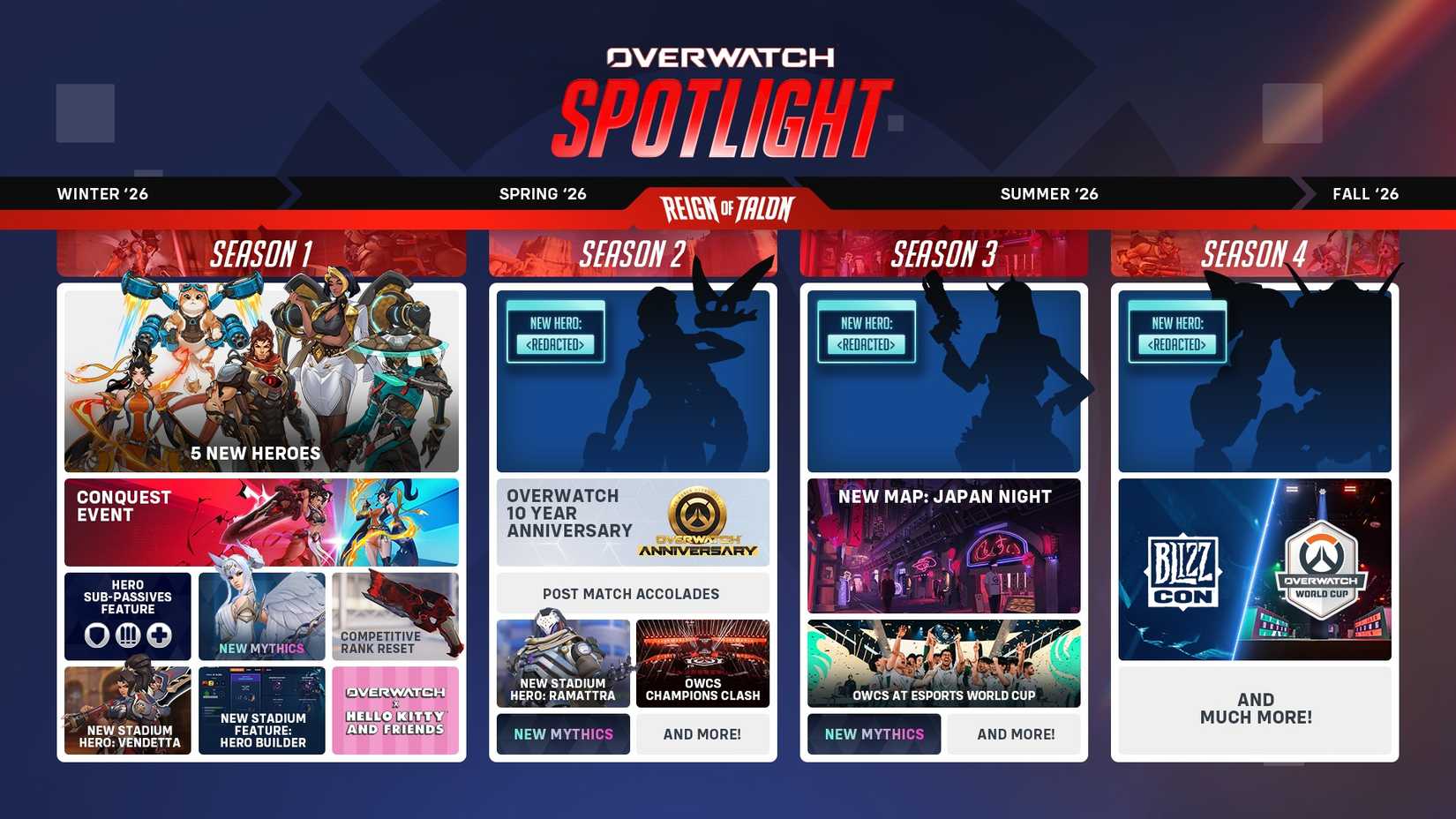 Image: Blizzard Entertainment
2026 will be a big test for Blizzard in convincing players that Overwatch is back, not just as a title, but as a return to form. To accomplish that, the team is going big with five new heroes arriving in one big drop on Feb. 10, and a year-long story arc that will play out in-game and across multiple media formats. Additionally, Blizzard is committing to adding one new hero per season for the next five seasons.
"This is a huge launch for us," said game director Aaron Keller. "What we hear from our players is that Overwatch is in the best state it's ever been in, and in many ways, we've earned the 2 at this point. But like Johanna said, Overwatch, we see it as a forever game. We don't want players wondering when it's going to get replaced by Overwatch 3. And with season 1 of 2026, this is the biggest launch we've ever had in Overwatch’s history. What we hope that this conveys to people is our path forward, which are these really big annual moments that almost feel like expansions.
"Dropping the 2 is our way of conveying to players that Overwatch isn't something that you're supposed to move on from. We want to gain players’ confidence, we want them to have trust in the game, in the team behind it, in the company that's supporting it so that they can look forward to continue playing this game that's always improving for years to come."
Overwatch is available on Nintendo Switch, PlayStation 4, PlayStation 5, Windows PC, Xbox One, and Xbox Series X. Sometime this spring, with the launch of season 2 of Overwatch, Blizzard plans to release a native Nintendo Switch 2 version of the game.


![ELDEN RING NIGHTREIGN: Deluxe Edition [FitGirl Repack]](https://i5.imageban.ru/out/2025/05/30/c2e3dcd3fc13fa43f3e4306eeea33a6f.jpg)
 English (US) ·