.png)
.png) 5 months ago
116
5 months ago
116
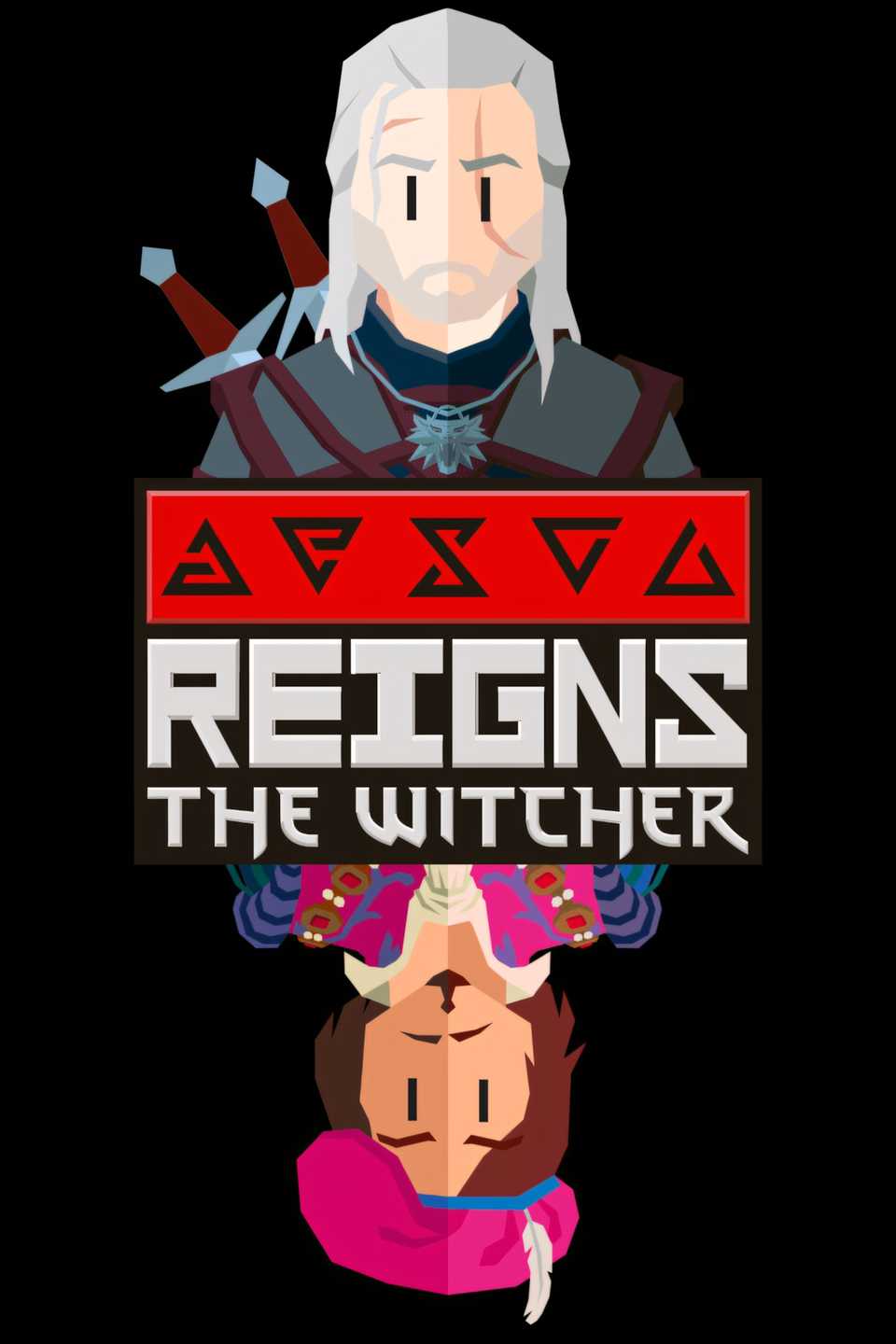
Reigns: The Witcher is the newest entry in the Reigns series and seeks to bring the world of the Witcher to life in a new way. It's a lot like the choice-based card game you already know and love, but Witcher-themed and with a few major differences. Easy to play, but difficult to master, this Reigns game puts the Butcher of Blaviken's story in your hands.
From the creators of the original games, Nerial, and made in partnership with CD PROJEKT RED, it attempts to bring a simplified and a bit sillier take to the world of the Witcher. However, this one is a bit different, as you aren't so much taking on the role of the Witcher as you are taking over the tale from his whimsical, often disruptive bard, Dandelion.
Filled to the brim with characters you know and love from the series, along with some ones you're probably not fond of, it's an interesting way to experience some of the tales of Geralt of Rivia. Though the game isn't perfect, it does a fantastic job of bringing some aspects of Geralt's stories to life in a new way, if you don't mind a bit of craziness, because no good bard could tell a boring story.

Related
8 Most Morally Bankrupt Decisions You Can Make in The Witcher 3: Wild Hunt
Create Geralt's darkest (and most out of character) moments in the Witcher 3 with these decisions.
What is Reigns: The Witcher?
This will sound a little crazy, but it's mostly just more Reigns. If you've never played the original games or any of the older ones, like Reigns: Game of Thrones, it'll feel a little odd at first. Basically, it's a game all about choices, and those choices culminate in a story that almost always ends in disaster. The ultimate goal is survival, but dying a hilarious death isn't half bad either.
Each run of this roguelike will see you making choices for Geralt. Every action has a consequence, whether it starts a new storyline, unlocks a new character to meet, or puts you into a fight against one of the many monsters available. Just like the original games, you'll have to precariously balance your relationships with up to three factions: humans, nonhumans, and magic users.
At its core, it's a pretty uncomplicated game. Make choices, balance your reputation, and attempt to complete quests to write the most interesting ballad with Geralt as the centerpiece. Every choice you make will either raise or lower one of your reputation stats, and your combat reputation, which, when full, forces a fight with some random monster.
This gets a bit more complex when adding in various Inspiration cards, which add new quests and objectives for you to complete on your journey. Some are simple, like slaying monsters, while others are more complicated, like forcing you to make choices quickly. They also provide a way to increase your score as you complete their objectives, but more than that, they can have a ton of effects on your choices and reputation gains and losses.
The Cards Are Everything
Gameplay-wise, the Inspiration cards give you a lot of variety in how you tackle your next run. Each card can give access to quests and new characters, but most importantly, they can have some different effects on your reputation. Some make you gain or lose the same amount of reputation for certain factions, despite your choices.
It's an interesting way to keep each run fresh, since after a bit, you'll start to put things together about how much gain or loss specific scenarios give. The Inspiration cards are randomized at the start of each run, but you can redraw one up to three times. It gives you just a bit more control over the variance and lets you get a chance to try out new cards that you've acquired.
They all have up to three stars that you can earn on a run, and of course, the more stars, the better the score. The better your score, the higher your level goes, giving you access to more cards. While that isn't the only way to gain access to more cards, it is the easiest way. The most satisfying part isn't just watching the numbers go up; every time you get all three stars on a card, you'll be rewarded with the level-up sound from The Witcher 3.
Other than the bonus points from completing objectives, there's not much else that cards do. They'll open up new storylines for you to explore and give you some new, more interesting characters to mess around with, but ultimately, they're there to sort of guide your run for more than just survival.

Related
9 Best Games Where Choice Is An Illusion
Whether in gameplay or story, some games make you think you have more say than you really do.
Perform Across the World
One of the coolest and most interesting aspects of the game is the performances that Dandelion can put on for various people as you level up and unlock new characters. These operate a bit differently from the rest of the game, as your choices will need to match whatever it is the song actually needs.
It was a good way to break up the gameplay and keep things from getting monotonous without feeling like it's taking away from the actual game. In these performances, you'll be given some background on the individual you're performing for, and then you'll have to guess which of your Inspiration cards fits the situation best. It's fairly simple, but they get pretty complex in what they're asking for.
Gameplay-wise, the Inspiration cards give you a lot of variety in how you tackle your next run. Each card can give access to quests and new characters, but most importantly, they can have some different effects on your reputation.
It became a real brain-teaser after the first few, since you could justify more than one card fitting a description, but there's only ever one answer, it seemed. Luckily, failure didn't mean you lost it for good, but it certainly made you think about what the riddle meant and how many of the cards could fit that description.
Usually, one or two words would give it away, but as the difficulty amped up, things got much more complicated. The rewards were more Inspiration cards, which is a fun reward for figuring things out, although some of the cards earned this way aren't particularly good or enjoyable to use.
Tons of Replayability, but Repetitive
The biggest issue with the game is that if you're not constantly making progress, and sometimes when you are, the game feels a bit repetitive. Each run will be a little different from the last, but overall, you'll encounter many of the same storylines until you progress far enough into the game.
This isn't necessarily a problem, since it'll give you an excellent grasp on how you want to progress these storylines to their finish. The bigger problem is that even when you seem to finish them, they'll just show up again in the next run. It wasn't annoying at first, but there are a few storylines that seem pretty ingrained, and you'll get them basically every time you make a run.
One of these storylines follows a cult that seems to believe monsters won't hurt you if you don't pose a threat to them, and anyone who knows anything about the world of The Witcher will know that's total malarkey. This storyline appeared in almost every run I made from beginning to end.
At first, it was interesting to see the different choices play out, but after a few times, it just became annoying to see again. There are a ton of storylines to see and enjoy, but you'll need to progress deep enough into the game to get anywhere meaningful. Depending on how skilled you are and how lucky you might be, you can get through a majority of the levels in about five hours, but there's still plenty to do and see that'll keep you interested.
Related
10 Games That Will Make You A Roguelike Fan
If you're not a fan of roguelikes already, these games will get you on your way.
The Wonderful World of Witchers
For people who aren't big fans of the world in which The Witcher takes place, the game may feel fresh and interesting if a bit confusing. Fans of The Witcher will find themselves right at home and with a distinct advantage, as they'll know and understand the world and characters a bit better.
It felt like it struck a decent balance between incorporating characters and stories from the games without making it feel like you had to play the games to get any enjoyment out of it. The biggest problem on this front is that, with limited knowledge, some players may find themselves frustrated due to not understanding the world and some of the more nuanced choices.
For example, you'll often be approached by noblemen or women who want to hunt a monster. Experienced players will understand that the monsters they name are often some of the most deadly, while newer players may think differently. The game does help you out on this front, but with so many similar prompts that have different results, it can be a bit confusing.
Other than that, the game is actually a pretty good representation of The Witcher, if you view it through the eyes of being a story told by Dandelion. It does have a good bit of comedy, but it's mostly dark humor, minus the bits where Geralt meets his end by drinking a bit too much. The only spot that wasn't a very good representation was combat, but that's to be expected in a card game that isn't the mighty Gwent.
Combat for Combats Sake
Combat in this game is more like a mini-game you'll experience every so often rather than something that feels like a driving force. I imagine a lot of people will enjoy the sort of simplicity of combat brought to the game, but it just never struck a chord with me personally. You can turn combat off, although this does impact your ability to increase cards that deal with killing monsters.
It isn't bad combat, but early on, it's incredibly simple, and as you defeat new monsters for the first time, you'll unlock new signs to use in combat. It's also incredibly easy to screw up badly and end a great run. Since it's all timing-based, one mistake can end up costing you majorly, which isn't bad; it's just really high-stakes for combat you don't see often.
Some of the harder monsters are super annoying and just end up stretching out combat in frustrating ways. For instance, the Tarasque has a built-in ability that allows it to poison any of the falling cards. Even if you manage to get in one of your attacks, it's likely you'll end up poisoned and take a hit regardless. It also means that any hit you receive will also end up costing you multiple hits or potentially killing you outright.
One of these storylines follows a cult that seems to believe monsters won't hurt you if you don't pose a threat to them, and anyone who knows anything about the world of The Witcher will know that's total malarkey. This storyline appeared in almost every run I made from beginning to end.
In reality, it's a pretty solid way to represent the high-stakes combat of The Witcher, but it felt a little out of place in this kind of game. I was expecting something more choice-based before running into the combat. For some, it'll be really enjoyable, but for others, they'll find the easy monsters too easy and the harder monsters a significant jump in difficulty.
All that being said, some of the monsters are fascinating and fit their in-game counterparts perfectly. Wraiths need to be hit with a Yrden sign occasionally to make sure they can take damage. Otherwise, you'll just hit the air. It was a pretty neat way to bring those aspects in when they weren't necessary.
Overall, Reigns: The Witcher does pretty much exactly what it sets out to do. It's a fun and humorous time that represents aspects of the world of The Witcher well. While it could do better in some respects, there's a lot to enjoy here. If you're a fan of The Witcher, it's a great way to have a new experience in the world, and if you aren't a fan, then it's still a good time with some very dark and silly moments mixed in. Reigns: The Witcher is a great take on the world of The Witcher and is an enjoyable, new way to experience it.
Systems


Released February 25, 2026
Developer(s) Nerial
Franchise Reigns
Number of Players Single-player
Pros & Cons
- Lots of Replayability
- Interesting Storylines
- Filled with Funny Moments
- Gets Repetitive Eventually
- Unideal Combat


![ELDEN RING NIGHTREIGN: Deluxe Edition [FitGirl Repack]](https://i5.imageban.ru/out/2025/05/30/c2e3dcd3fc13fa43f3e4306eeea33a6f.jpg)
 English (US) ·